If you’re planning a Tanzania safari with KiliPath African Safari, understanding how leopards hunt in the wild will make your game drives far more exciting. Leopards are among Africa’s most elusive and intelligent predators. Spotting one in action is rare — but knowing their behavior increases your chances of witnessing unforgettable moments in the bush.
In this expert guide, we’ll explain how leopards hunt, where to see them in Tanzania, and what safari travelers should know.
Meet the Leopard: Africa’s Silent Predator
The African leopard (Panthera pardus) is one of the Big Five animals and is famous for its:
- Incredible stealth
- Night hunting skills
- Tree-climbing ability
- Powerful bite strength
Unlike lions that hunt in prides, leopards are solitary hunters. They rely on patience, camouflage, and precision rather than teamwork.
How Do Leopards Hunt in the Wild?
Leopards are ambush predators. Their hunting technique involves four key stages:
1. Silent Stalking
Leopards use their spotted coats to blend into tall grass, bushes, or riverine forests. They move slowly and stay low to the ground, often getting within 5–10 meters of their prey before launching an attack.
They prefer areas with cover such as:
- Riverbanks
- Woodland areas
- Rocky outcrops
- Tall savannah grass
This is why sightings are common in places like the Serengeti National Park and Tarangire National Park, where vegetation provides perfect camouflage.
2. The Explosive Chase
Unlike cheetahs that rely on speed over long distances, leopards sprint only for short bursts. If the prey is too far away, they usually abandon the hunt rather than waste energy.
Their success depends on surprise.
3. The Killing Bite
Leopards use a powerful suffocating bite to the throat. For smaller prey, they may break the neck instantly.
Common leopard prey in Tanzania includes:
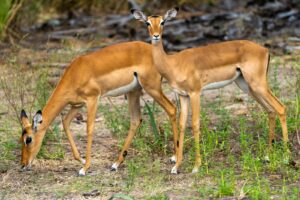
- Impala
- Gazelles
- Warthogs
- Baboons
- Young wildebeest
4. Dragging the Kill into a Tree
This is what makes leopards unique.
After a successful hunt, leopards often drag their prey up into a tree. This protects the carcass from scavengers like:
- Lions
- Hyenas
- Wild dogs
In the Ngorongoro Conservation Area, it’s not uncommon to see impala hanging from acacia branches — a clear sign a leopard is nearby.
Do Leopards Hunt During the Day?
Leopards are mostly nocturnal hunters. They prefer hunting:
- Late evening
- Night
- Early morning
However, in quieter areas of southern Tanzania such as Nyerere National Park, daytime hunting can occasionally occur — especially where human disturbance is minimal.
For safari travelers, early morning and sunset game drives offer the best chances to see active leopards.
How Successful Are Leopards When Hunting?
Leopards have a hunting success rate of around 20–30%, which is higher than lions but lower than African wild dogs.
Their patience and ability to adapt to different habitats make them one of Africa’s most successful big cats.
Best Places to See Leopards in Tanzania
If seeing a leopard is on your safari bucket list, consider these top destinations:
Serengeti National Park
Excellent riverine areas and rocky kopjes provide prime leopard territory.
Lake Manyara National Park
Famous for tree-climbing lions — and also strong leopard sightings.
Ruaha National Park
Less crowded and offers incredible predator action.
Tarangire National Park
Great during dry season when animals gather around the Tarangire River.
KiliPath African Safari guides are trained to track leopard behavior and identify signs such as alarm calls from monkeys or impala.
Expert Safari Tips for Spotting Leopards
If you’re planning your Tanzania safari, here are insider tips:
Book early morning game drives
Focus on riverbanks and acacia trees
Watch for prey alarm calls
Be patient — leopards reward quiet observation
Visit during dry season (June–October) for clearer visibility
Why Leopards Are Hard to Spot
Leopards are solitary and territorial. Each adult maintains a large territory and avoids other predators.
They are also masters of camouflage. Even when a leopard is just a few meters away, it can remain invisible in tall grass.
This is what makes a leopard sighting so special during a Tanzania safari.
Frequently Asked Questions
Are leopards dangerous to humans?
Leopard attacks are extremely rare in safari areas. With experienced guides and proper safety protocols, Tanzania safaris are very safe.
How strong is a leopard?
A leopard can carry prey heavier than its own body weight into a tree — sometimes over 60 kg.
What is the best time of year to see leopards?
Dry season (June to October) offers the best wildlife visibility, especially in the Serengeti ecosystem.
Experience Leopard Sightings with KiliPath African Safari
Witnessing a leopard hunt in the wild is one of the most thrilling safari experiences in Tanzania. Whether you’re exploring the Serengeti plains or the baobab landscapes of Tarangire, our expert guides maximize your chances of spotting this elusive predator.
If you’re planning your Tanzania safari and want to include prime leopard territory in your itinerary, our team at KiliPath African Safari can design a personalized wildlife experience tailored to your interests.
Plan Your Tanzania Safari Today
Ready to see Africa’s most mysterious big cat in action?
Contact KiliPath African Safari to create your unforgettable Tanzania adventure.