A private Tanzania safari itinerary vacation offers one of the most comfortable, flexible, and personal ways to explore Tanzania’s famous wildlife destinations. Instead of sharing a safari vehicle with travelers you do not know, you travel with your own family, partner, friends, or private group. You also have a dedicated professional guide and a private 4×4 safari vehicle throughout the journey.
Private safaris are ideal for honeymooners, families with children, photographers, senior travelers, small groups, and anyone who wants greater freedom during their vacation. You can choose when to begin your morning game drive, how long to stay at a wildlife sighting, which parks to visit, and what type of accommodation suits your budget.
A carefully designed private safari can include destinations such as Tarangire National Park, Lake Manyara National Park, the Ngorongoro Crater, Central Serengeti, Northern Serengeti, Ndutu, Lake Eyasi, Lake Natron, and Arusha National Park. It can also be combined with Mount Kilimanjaro, cultural activities, beach relaxation in Zanzibar, or a hot-air balloon safari.
This guide explains how to plan the right itinerary, how many days you may need, what a private safari includes, the best time to travel, accommodation choices, estimated costs, and answers to the most common questions.
What Is a Private Tanzania Safari?
A private Tanzania safari is a wildlife journey organized exclusively for you and the people traveling with you. You do not share your safari vehicle, guide, or daily program with unrelated travelers.
Your guide collects you from your hotel or airport and travels with you throughout the safari. The vehicle normally remains dedicated to your group until the end of the itinerary.
This arrangement gives you more control over your experience. For example, if you find lions hunting, elephants bathing, or a leopard resting in a tree, you can spend more time observing and photographing them. On a shared safari, the group may have to leave because other travelers want to continue.
A private safari also makes it easier to customize:
Travel dates
National parks
Number of safari days
Daily departure times
Accommodation category
Meal preferences
Cultural activities
Airport and hotel transfers
Photography requirements
Special celebrations
Zanzibar extensions
Although a private safari can cost more than a shared group safari, it generally provides greater comfort, privacy, and flexibility.
Why Choose a Private Tanzania Safari Itinerary Vacation?
Complete privacy
The safari vehicle is reserved for your group. You can relax, communicate freely with your guide, and enjoy the journey without adjusting your plans to suit strangers.
Privacy is especially valuable for couples on honeymoon, families traveling with young children, professional photographers, and friends celebrating a special occasion.
A flexible daily schedule
Private safaris do not have to follow the strict schedule usually required on group departures. Your guide can recommend the best departure time depending on wildlife activity, driving distance, weather, and park regulations.
Some travelers prefer to begin before sunrise and enjoy a full-day game drive. Others prefer a slower morning followed by an afternoon safari. Your program can be adapted accordingly.
More time at wildlife sightings
Wild animals move freely, so sightings cannot be guaranteed. However, having a private guide allows you to spend more time searching for particular animals and waiting patiently when an interesting situation develops.
If you are interested in big cats, birds, elephants, the Great Migration, or wildlife photography, your guide can adjust the game drive to reflect your priorities.
Personalized service
A private itinerary can be planned around your individual requirements. These may include vegetarian meals, accessible accommodation, child-friendly lodges, romantic room arrangements, specific bed configurations, or guides who speak languages other than English.
Better experience for photographers
Wildlife photographers often need extra time, the right vehicle position, and a patient guide. A private vehicle allows the guide to position the car according to the light, animal movement, and desired camera angle whenever park conditions permit.
Because you are not sharing the vehicle with unrelated guests, camera equipment can be managed more comfortably.
Ideal for families
Families can arrange shorter game drives, regular rest stops, family rooms, and accommodations with swimming pools. Parents can also decide when children need a break without inconveniencing other travelers.
Which Destinations Can Be Included?
Tarangire National Park
Tarangire is famous for its large elephant population, ancient baobab trees, seasonal river, and beautiful landscapes. During the dry season, animals gather around the Tarangire River, creating excellent wildlife-viewing opportunities.
Visitors may see elephants, giraffes, zebras, wildebeest, lions, leopards, buffaloes, warthogs, and many bird species. Tarangire is commonly included as the first destination because it is approximately two hours from Arusha.
One full day is suitable for many itineraries, although two days can provide a more relaxed experience.
Lake Manyara National Park
Lake Manyara is a compact but diverse park located near Mto wa Mbu. Its environment includes groundwater forests, open grasslands, wetlands, and the alkaline lake.
The park is known for monkeys, baboons, elephants, giraffes, hippos, and birdlife. Tree-climbing lions are associated with Lake Manyara, but sightings are never guaranteed.
A game drive normally takes half a day or one full day. Lake Manyara works well in longer itineraries or for travelers interested in varied scenery and birdwatching.
Ngorongoro Crater
The Ngorongoro Crater is one of Tanzania’s most impressive wildlife destinations. The crater was formed after a large volcano collapsed millions of years ago, creating a natural enclosure with grassland, forest, swamps, and a soda lake.
Visitors descend to the crater floor for a game drive lasting several hours. Wildlife may include lions, elephants, buffaloes, zebras, wildebeest, hippos, hyenas, and black rhinoceroses.
Because the crater offers a high concentration of animals within a relatively small area, it is an important part of most northern Tanzania safari itineraries.
Central Serengeti
Central Serengeti, particularly the Seronera area, provides rewarding wildlife viewing throughout the year. Its rivers, valleys, and open plains support many resident animals.
The region is especially known for lions, leopards, cheetahs, elephants, giraffes, buffaloes, and several antelope species. Spending at least two nights in Central Serengeti is recommended because the park is large and reaching it requires considerable driving time.
Three nights may be more appropriate for travelers who want a relaxed schedule or stronger photography opportunities.
Northern Serengeti
Northern Serengeti is most popular from July through October, when migrating wildebeest and zebras may attempt to cross the Mara River. These crossings are dramatic but completely natural and unpredictable.
No safari operator can guarantee the exact date or time of a river crossing. Herds may wait near the river for hours or days before crossing, and they can sometimes change direction without crossing.
A private itinerary is normally required because the northern region is not included in standard shared safaris. Travelers should spend at least two or three nights there to improve their chances of witnessing migration activity.
Ndutu
Ndutu lies within the southern Serengeti ecosystem and the Ngorongoro Conservation Area. It is particularly famous for the calving season, generally experienced between December and March, although movement varies with rainfall.
Large herds travel to the nutrient-rich plains to give birth. The presence of young wildebeest also attracts predators such as lions, cheetahs, leopards, and hyenas.
Ndutu is best included in a customized private safari because its accessibility and wildlife concentration are seasonal.
Lake Eyasi
Lake Eyasi offers a cultural experience rather than a traditional Big Five safari. Visitors can meet communities such as the Hadzabe and Datoga when visits are arranged respectfully.
The Hadzabe are known for their traditional hunter-gatherer lifestyle, while the Datoga are recognized for pastoralism and metalworking. Cultural visits should be conducted with sensitivity and genuine respect for local communities.
Lake Eyasi usually requires an additional day and an overnight stay nearby.
Lake Natron
Lake Natron is a remote destination known for volcanic landscapes, flamingos, waterfalls, and views of Ol Doinyo Lengai. It is suitable for adventurous travelers who appreciate scenery and cultural experiences.
The roads can be rough, and driving distances are long. Therefore, Lake Natron should be included only when enough days are available.
Recommended Private Tanzania Safari Itineraries
Three-Day Private Safari
A three-day itinerary is suitable for travelers with limited time. It commonly covers Tarangire, Ngorongoro, and Lake Manyara.
Day 1: Arusha to Tarangire National Park
Depart Arusha after breakfast and drive to Tarangire. Enjoy a game drive among baobab trees and along the river. Afterward, continue to your accommodation near Karatu or Mto wa Mbu.
Day 2: Ngorongoro Crater
Travel to the Ngorongoro Conservation Area and descend into the crater. Spend several hours exploring the crater floor before returning to your accommodation.
Day 3: Lake Manyara and return to Arusha
Enjoy a game drive in Lake Manyara before driving back to Arusha.
This itinerary offers excellent variety but does not include Serengeti. Travelers who consider Serengeti essential should choose at least four or five days.
Four-Day Private Safari
A four-day safari can combine Tarangire, Serengeti, and Ngorongoro.
Day 1: Arusha to Tarangire
Drive to Tarangire for a full or partial game drive. Stay near Karatu, Mto wa Mbu, or inside the park.
Day 2: Transfer to Central Serengeti
Travel through the Ngorongoro Conservation Area toward Serengeti. Enjoy wildlife viewing along the way and an afternoon game drive.
Day 3: Serengeti game drive and transfer toward Ngorongoro
Begin with a morning Serengeti game drive. Later, travel toward the Ngorongoro area for your overnight stay.
Day 4: Ngorongoro Crater and Arusha
Descend into the crater early in the morning. After the game drive, return to Arusha.
This is an exciting itinerary, but it includes long driving periods and only a limited amount of time in Serengeti.
Five-Day Private Safari
A five-day private safari provides a better balance between driving and wildlife viewing.
Day 1: Arusha to Tarangire
Enjoy an afternoon or full-day game drive in Tarangire.
Day 2: Tarangire or Karatu to Central Serengeti
Drive through the Ngorongoro highlands and enter Serengeti for an afternoon game drive.
Day 3: Full-day Central Serengeti game drive
Explore the Seronera region and surrounding plains. Your guide will plan the route according to recent wildlife movements.
Day 4: Serengeti to Ngorongoro area
Enjoy another Serengeti game drive before traveling toward Ngorongoro.
Day 5: Ngorongoro Crater and return to Arusha
Descend into the crater, enjoy a game drive and picnic lunch, and return to Arusha.
This is one of the most popular choices for first-time visitors.
Six-Day Private Safari
A six-day itinerary allows travelers to include Lake Manyara or spend additional time in Serengeti.
A possible route is:
Day 1: Arusha to Tarangire
Day 2: Tarangire to Serengeti
Day 3: Full-day Serengeti
Day 4: Full-day Serengeti
Day 5: Serengeti to Ngorongoro
Day 6: Ngorongoro Crater and Arusha
Alternatively, the third Serengeti night can be replaced with Lake Manyara. Travelers whose main priority is wildlife should usually keep the extra Serengeti day.
Seven-Day Private Safari
Seven days provide a comfortable pace and more time for wildlife observation.
A balanced itinerary can include:
Day 1: Arrival in Arusha
Day 2: Tarangire National Park
Day 3: Transfer to Central Serengeti
Day 4: Full-day Serengeti
Day 5: Another Serengeti game drive
Day 6: Transfer to Ngorongoro
Day 7: Ngorongoro Crater and return to Arusha
Depending on the season, additional days can be dedicated to Northern Serengeti or Ndutu.
Eight- to Ten-Day Private Safari
An extended itinerary is recommended for travelers who want deeper exploration, seasonal migration areas, cultural activities, or a slower vacation.
During the river-crossing season, an itinerary may include Tarangire, Central Serengeti, Northern Serengeti, and Ngorongoro. During the calving season, it may include Tarangire, Central Serengeti, Ndutu, and Ngorongoro.
With eight to ten days, travelers can spend multiple nights in important wildlife areas instead of constantly changing accommodation.
What Is the Best Time for a Private Tanzania Safari?
Tanzania is a year-round safari destination, but each season offers a different experience.
January to March
This period is excellent for visiting Ndutu and the southern Serengeti plains. Wildebeest calving normally occurs during this season, attracting predators and creating exciting wildlife interactions.
January and February are particularly popular. Accommodation should be reserved early.
April and May
These months generally bring heavier rainfall. Landscapes become green and beautiful, and there are often fewer tourists.
Some camps close because of road conditions or lower demand. However, travelers who accept occasional rain may benefit from attractive seasonal rates.
June
June marks the beginning of the dry season in many areas. Wildlife viewing improves as vegetation becomes less dense. Migration herds may move through the western Serengeti, depending on rainfall.
July to October
These are popular safari months. Conditions are usually dry, and animals gather near permanent water sources.
The Great Migration may be found in Northern Serengeti, where Mara River crossings can occur. Because demand is high, lodges, camps, and flights should be booked well in advance.
November and December
Short rains may begin in November, turning the plains green. Wildlife remains active, and the migration gradually travels south.
December is a popular holiday period. By late December, some herds may reach the Ndutu region, but their exact position depends on rainfall.
Understanding the Great Migration
The Great Migration is a continuous natural movement involving wildebeest, zebras, and other grazing animals. It does not happen in one fixed location throughout the year.
The herds move in search of fresh grass and water. Rainfall strongly influences their location, making the movement difficult to predict with complete accuracy.
A simplified seasonal guide is:
December to March: Southern Serengeti and Ndutu
April to May: Central and western areas
June to July: Western and northern movement
July to October: Northern Serengeti and Mara River region
November: Gradual movement south
These periods are approximate. Your itinerary should be based on current conditions, historical patterns, travel dates, and the number of days available.
Accommodation Options
Budget camping
Budget camping is the most affordable accommodation style. Guests normally sleep in tents at public campsites. Basic camping equipment, such as tents, mattresses, sleeping bags, and pillows, may be provided.
Meals are prepared by a safari chef, while bathrooms and showers are shared. Hot water is not always guaranteed at public campsites.
Camping offers an adventurous experience but may not be suitable for travelers who require private bathrooms or hotel-style comfort.
Mid-range lodges and tented camps
Mid-range accommodation offers a balance between comfort and price. Rooms or permanent safari tents generally include proper beds, private bathrooms, and hot showers.
Tented camps allow guests to experience the sounds and atmosphere of the wilderness without giving up essential comfort. Many also provide restaurants, lounges, electricity, and charging facilities.
Luxury accommodation
Luxury properties provide spacious rooms, high-quality meals, excellent locations, and personalized service. Some include swimming pools, spa services, private decks, and outstanding views.
Luxury camps inside Serengeti reduce daily driving distances and allow guests to remain close to wildlife areas.
High-end and exclusive camps
High-end camps focus on privacy, unique locations, fine dining, and detailed service. Some have only a small number of suites and may offer private plunge pools or butler services.
These accommodations are suitable for honeymoons, anniversaries, and travelers who want a premium safari vacation.
What Does a Private Tanzania Safari Usually Include?
Inclusions differ between safari operators, so every quotation should be checked carefully. A typical private safari may include:
Private 4×4 Toyota Land Cruiser
Professional English-speaking safari guide
Park entrance fees
Ngorongoro Crater service fee
Accommodation during the safari
Meals stated in the itinerary
Drinking water
Game drives
Government taxes
Airport or hotel transfers when specified
Camping equipment and chef for camping itineraries
Common exclusions may include:
International flights
Tanzania visa
Travel insurance
Tips
Alcoholic beverages
Personal purchases
Optional activities
Laundry services
Balloon safari
Vaccinations and medical expenses
Zanzibar accommodation unless specified
Always request written clarification about inclusions and exclusions before confirming your reservation.
How Much Does a Private Tanzania Safari Cost?
The cost depends on several factors:
Number of travelers
Number of safari days
Travel season
Accommodation category
Parks included
Driving distances
Domestic flights
Optional activities
Room arrangements
Private safaris often become more affordable per person when several people share the same vehicle. A solo traveler pays most of the vehicle and guide expenses alone, while two or four travelers divide these costs.
Park fees and accommodation rates also affect the final price. Serengeti and Ngorongoro itineraries normally cost more than short trips to parks closer to Arusha.
Instead of choosing the lowest price without comparison, examine the accommodation names, park fees, game-drive duration, vehicle type, transfers, taxes, and number of nights included.
Private Safari Versus Group Safari
Feature Private Safari Shared Group Safari
Vehicle Reserved for your group Shared with other guests
Schedule Flexible Fixed
Route Customizable Predetermined
Accommodation Selected according to preference Usually predetermined
Photography More freedom and patience Must consider the group
Price Generally higher More affordable
Best for Couples, families, photographers and private groups Solo travelers and budget-conscious guests
Seasonal migration routes Easier to arrange Often unavailable
A shared safari is a good option for reducing costs, but a private safari provides more control and can reach destinations that are difficult to include in scheduled group departures.
Can a Private Safari Start From Zanzibar?
Yes. Travelers staying in Zanzibar can fly to Arusha, Kilimanjaro, or directly into Serengeti, depending on the itinerary and available flights.
For a northern circuit road safari, guests commonly fly from Zanzibar to Arusha and begin from there. Because many safaris depart early, an overnight stay in Arusha before departure may be necessary.
For a fly-in safari, travelers can fly directly from Zanzibar to a Serengeti airstrip. A guide meets them at the airstrip and begins the game drive. This option saves driving time but usually costs more.
Very short Serengeti safaris should be planned carefully because flight schedules and park-permit timing can significantly reduce wildlife-viewing time.
Can You Combine Safari and Zanzibar?
Yes. A safari-and-Zanzibar vacation is one of Tanzania’s most popular combinations.
Many travelers spend five to eight days visiting the national parks before flying to Zanzibar for beach relaxation. This creates a balanced vacation combining wildlife, landscapes, history, culture, and the Indian Ocean.
A typical combination may include:
Arrival in Arusha
Tarangire safari
Central Serengeti
Ngorongoro Crater
Flight to Zanzibar
Stone Town visit
Beach accommodation
Departure from Zanzibar
Your domestic flight and airport transfers should be coordinated carefully to avoid missed connections.
What Type of Safari Vehicle Is Used?
Private safaris usually use a customized 4×4 Toyota Land Cruiser with a pop-up roof. The raised roof allows travelers to stand safely during game drives and enjoy unobstructed wildlife views.
Depending on the operator, a vehicle may include:
Comfortable individual seats
Window access
Charging sockets
Cooler or refrigerator
Radio communication
First-aid kit
Seatbelts
Binoculars
Storage space
Ask whether every traveler is guaranteed a window seat, particularly when traveling with a larger group.
Wildlife Sightings and Expectations
Tanzania offers exceptional wildlife viewing, but nature remains unpredictable. Animals move between different areas in response to water, food, weather, breeding behavior, and human activity.
A guide uses experience, animal tracks, recent information, radio communication, and knowledge of the landscape to find wildlife. Even so, no responsible company should guarantee a specific animal, hunt, river crossing, or migration event.
Patience often produces the most memorable sightings. Travelers should allow their guide to make reasonable route adjustments based on current wildlife information.
Optional Activities
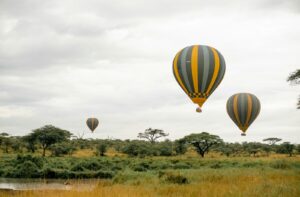
Serengeti hot-air balloon safari
A balloon safari normally begins before sunrise. Guests are collected early from their camp and taken to the launch site.
The flight usually lasts approximately one hour, depending on wind conditions. After landing, travelers may enjoy a celebratory drink and breakfast.
The balloon safari must be booked in advance, especially during high season.
Maasai cultural visit
A respectful Maasai village visit can provide insight into local traditions and community life. Travelers should select experiences that benefit the host community and avoid treating cultural interaction as entertainment alone.
Hadzabe and Datoga visit
These cultural activities are usually arranged near Lake Eyasi. They require an additional day and are best included in itineraries of six days or longer.
Night game drive
Night game drives are available in selected areas and require special arrangements. They provide an opportunity to search for nocturnal animals that are rarely active during daytime game drives.
Walking safari
Guided walking safaris are available in certain parks and conservation areas. They focus on tracks, plants, insects, birds, smaller animals, and ecosystem interpretation.
How to Prepare for Your Safari
Pack comfortable, neutral-colored clothing that can be layered. Mornings in Ngorongoro and Serengeti can be cold, while afternoons may become warm.
Useful items include:
Light jacket or fleece
Comfortable trousers
Long- and short-sleeved shirts
Closed walking shoes
Sun hat
Sunglasses
Sunscreen
Insect repellent
Personal medication
Camera and batteries
Power bank
Binoculars
Small backpack
Reusable water bottle
Travel documents
Avoid packing excessive luggage, especially when using domestic flights. Soft-sided bags are often easier to transport than large hard-shell suitcases.
Health and Travel Insurance
Travelers should consult a qualified medical professional regarding vaccinations and personal health requirements before visiting Tanzania.
Comprehensive travel insurance is strongly recommended. It should cover medical emergencies, evacuation, trip interruption, cancellations, delayed luggage, and activities included in your itinerary.
Carry essential medication in your hand luggage and bring enough for the entire vacation.
How to Choose a Safari Operator
Choosing a reliable safari company is an important part of planning your vacation.
Check the following before booking:
Company registration and tourism licenses
Recent traveler reviews
Clear itinerary and quotation
Named accommodation
Detailed inclusions and exclusions
Payment and cancellation terms
Emergency support
Vehicle condition
Guide experience
Professional communication
Be cautious if a quotation is significantly cheaper than every alternative. Important fees, suitable accommodation, or proper staff payments may have been excluded.