A photography Serengeti safari holiday is one of the most rewarding ways to experience Tanzania’s extraordinary wildlife. Instead of simply moving from one attraction to another, a photography-focused safari gives travelers more opportunities to observe animal behavior, wait for the right light, and capture memorable images of the Serengeti’s landscapes and wildlife.
The Serengeti is particularly attractive to photographers because of its enormous open plains, abundant predators, seasonal Great Migration movements, dramatic skies, and diverse habitats. From lions resting on rocky kopjes to elephants crossing the savannah and wildebeest stretching toward the horizon, every game drive can produce completely different photographic opportunities.
This guide explains how to plan a Serengeti photography safari, when to travel, what animals you can photograph, what equipment to bring, and how to choose an itinerary that gives you enough time in the field.
Why Choose the Serengeti for a Photography Safari?
The Serengeti is famous for wildlife density and expansive landscapes. For photographers, however, its biggest advantage is variety.
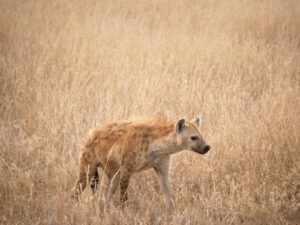
During a single safari, you may photograph lions, leopards, cheetahs, elephants, giraffes, buffaloes, zebras, wildebeest, hippos, hyenas, gazelles, birds, and numerous smaller species. The open terrain can also make it easier to observe animals from a distance compared with heavily forested environments.
A photography Serengeti safari holiday is therefore suitable for both experienced wildlife photographers and travelers using photography simply as a way of preserving their safari memories.
You do not necessarily need professional equipment. A modern mirrorless or DSLR camera with a suitable telephoto lens is excellent, but travelers can also achieve impressive results with compact cameras and smartphones, particularly for landscapes and wider wildlife scenes.
What Makes a Photography Safari Different?
A standard safari normally balances wildlife viewing with completing the day’s planned route. Photography safaris place greater emphasis on patience and positioning.
You may spend longer watching one pride of lions instead of immediately searching for another animal. Your guide may position the vehicle according to the direction of sunlight or wait patiently for an animal to move into a better photographic position.
For example, finding a leopard resting in a tree is exciting. On a photography-oriented game drive, however, you might remain nearby and wait to see whether the leopard changes position, descends from the tree, interacts with another animal, or becomes illuminated by better light.
This slower approach can produce more meaningful photographs and a deeper understanding of wildlife behavior.
Best Time for a Photography Serengeti Safari Holiday
The Serengeti provides excellent photographic opportunities throughout the year, but different seasons create different conditions.
January to March
The southern Serengeti and nearby Ndutu ecosystem become particularly interesting during the wildebeest calving period.
Large numbers of wildebeest gather across the short-grass plains, and thousands of calves are born during the broader calving season. This concentration of animals can also attract predators.
Photographers may encounter:
- Wildebeest with young calves
- Lions and cheetahs
- Spotted hyenas
- Large herds across open plains
- Dramatic predator-prey interactions
- Beautiful green landscapes
The greener scenery can create colorful backgrounds for wildlife photography.
April and May
These months generally fall within Tanzania’s long-rain period. Visitor numbers are often lower, while landscapes can become exceptionally green.
Cloud formations, dramatic skies, wildflowers, and lush vegetation can make this an interesting season for landscape-oriented photographers.
Rain may occasionally interrupt game drives, so photographers should carry appropriate protection for cameras and lenses.
June
As conditions become drier, wildlife movements continue and visibility often improves.
June can be an attractive transition period for travelers seeking a combination of wildlife, landscapes, and comparatively moderate visitor numbers.
July to October
These are among the most popular months for Serengeti safaris.
Depending on rainfall and migration movements, large wildebeest and zebra herds can move toward the Western Corridor and Northern Serengeti.
The north is particularly famous for potential Mara River crossing activity during the migration season. River crossings are natural events and cannot be scheduled or guaranteed, but witnessing one can provide extraordinary photographic opportunities.
Even without a crossing, Northern Serengeti offers excellent wildlife and beautiful landscapes.
November and December
The short rains can transform sections of the Serengeti into greener landscapes.
Migrating herds gradually begin moving south again as conditions change. Fresh vegetation, dramatic clouds, newborn herbivores of various species, and changing light can provide excellent photography opportunities.
Photographing the Great Migration
For many visitors, photographing the Great Migration is the ultimate Serengeti experience.
The migration involves huge numbers of wildebeest accompanied by zebras and other grazing animals moving through the Serengeti-Mara ecosystem in response to seasonal rainfall and fresh grazing.
However, travelers should understand that the migration does not follow an exact calendar.
Rainfall determines where the herds move, meaning their precise location can vary from year to year.
A successful migration photography safari therefore requires flexibility.
Rather than selecting accommodation simply because it is famous, it is better to choose camps according to the expected location of the herds during your travel period.
Photographing Lions in the Serengeti
Lions are among the Serengeti’s most photographed animals.
Central Serengeti, particularly the Seronera region, is well known for year-round predator sightings. The combination of grasslands, river systems, kopjes, and resident prey creates excellent lion habitat.
Early mornings are especially productive.
Lions may still be active after hunting during the night, while cooler temperatures encourage movement. As temperatures increase, they frequently rest in shaded areas.
Photographers should watch for behavioral moments rather than taking only portraits.
Interesting subjects include cubs playing, adults greeting one another, lions climbing rocks, mothers interacting with cubs, and prides moving through grassland.
Cheetah Photography
The Serengeti’s open plains provide excellent habitat for cheetahs.
Because cheetahs rely on speed, they often favor areas where vegetation allows them to identify prey from a distance.
Photographing a stationary cheetah is relatively straightforward. Capturing one running is much more challenging.
A fast shutter speed, continuous autofocus, and burst shooting can improve your chances of capturing action.
However, patience remains essential.
A cheetah may spend a long period observing gazelles before deciding whether to hunt.
Leopard Photography
Leopards are more elusive than lions and cheetahs.
They frequently use trees for resting, feeding, and observing their surroundings. Riverine woodland around Central Serengeti can therefore be productive leopard habitat.
A telephoto lens is extremely useful because leopards may remain high in trees or at considerable distance from safari vehicles.
When photographing a leopard in a tree, consider including some of the branches and surrounding environment rather than concentrating exclusively on a tight portrait.
Environmental images often tell a stronger story.
Elephant Photography
Elephants offer wonderful opportunities for both portrait and landscape photography.
Close portraits can highlight their eyes, skin texture, tusks, and trunks. Wider photographs can show family groups moving through the Serengeti landscape.
Young elephants interacting with adults can provide particularly memorable photographs.
When photographing elephants, observe their behavior carefully and always follow your guide’s instructions. Responsible safari guides maintain appropriate distances and avoid interfering with the animals.
Photographing the Serengeti Landscape
Wildlife may be the main attraction, but the landscape deserves equal attention.
The word Serengeti is commonly associated with the idea of endless plains, and the scenery often feels remarkably expansive.
Excellent landscape subjects include:
- Acacia trees
- Rocky kopjes
- Sunrise over the plains
- Sunset silhouettes
- Storm clouds
- Grasslands filled with wildebeest
- Seasonal pools
- Riverine woodland
- Safari tracks disappearing toward the horizon
A wide-angle lens can be useful for capturing these scenes.
Including an animal, vehicle, tree, or person within a wide landscape can also provide a sense of scale.
Sunrise Photography in the Serengeti
Early morning is one of the most valuable periods for safari photography.
The light is softer, temperatures are cooler, and many predators remain active.
Depending on your camp location and park regulations, an early departure can place you in productive wildlife areas as conditions brighten.
Morning light can create warm tones across the grasslands and beautiful side lighting on animals.
Photographers should prepare their equipment before leaving camp so they can begin shooting immediately when opportunities arise.
Golden-Hour Photography
Golden hour refers to the period shortly after sunrise and before sunset when sunlight is softer and warmer.
For wildlife photography, this light can transform an ordinary sighting.
Side lighting can reveal fur texture, while backlighting can create glowing outlines around animals.
Dust can become particularly dramatic when illuminated by low sunlight. A herd of wildebeest or elephants walking through dusty terrain near sunset can produce spectacular photographs.
Recommended Camera Equipment
Your equipment should depend on your photography experience, baggage allowance, and objectives.
A practical Serengeti photography kit may include:
- DSLR or mirrorless camera
- Telephoto zoom lens
- Wide-angle or standard zoom lens
- Extra batteries
- Several memory cards
- Lens-cleaning equipment
- Camera bag
- Dust protection
- Rain cover
- Portable storage device or laptop
- Power bank where appropriate
- Beanbag or other vehicle-friendly camera support
You do not need every piece of professional equipment to enjoy the safari.
A simple, reliable setup is often better than carrying excessive equipment that becomes difficult to manage inside the vehicle.
Best Lens for Serengeti Wildlife Photography
A telephoto zoom is one of the most useful lenses for a Serengeti safari.
A range around 100–400mm or 200–500mm can provide considerable flexibility. The shorter end works for larger animals that approach the vehicle, while the longer end helps photograph smaller or more distant subjects.
A 70–200mm lens can also be extremely useful for elephants, giraffes, larger groups of animals, and environmental portraits.
For landscapes, a standard or wider lens such as a 24–70mm range offers greater versatility.
Professional photographers may bring prime super-telephoto lenses, but these are heavier and require more careful handling.
Bring More Memory Than You Expect
Wildlife photography can generate enormous numbers of photographs.
Action sequences alone may produce hundreds of images within minutes.
Carry multiple high-quality memory cards instead of relying on a single card.
Where possible, back up photographs regularly during the safari.
Keeping images in at least two locations reduces the risk of losing your entire collection because of card failure or accidental deletion.
Battery and Charging Preparation
Battery management is particularly important on multi-day safaris.
Charge batteries whenever electricity is available and carry several fully charged spares.
Many modern safari vehicles provide charging options, while lodges and tented camps generally have charging facilities. However, availability can vary according to the accommodation and power system.
Before traveling, confirm:
- Plug type
- Electricity availability
- Charging hours
- Vehicle charging facilities
- Whether high-powered devices are supported
A simple charging routine every evening can prevent disappointment the following morning.
Protecting Cameras From Serengeti Dust
Dust is part of safari travel, particularly during the dry season.
Keep unused equipment inside a closed camera bag and avoid unnecessary lens changes when conditions are dusty.
A blower and microfiber cloth can help with routine cleaning.
When changing lenses, try to do so inside the vehicle with windows closed where possible.
Never perform aggressive sensor cleaning unless you understand the correct procedure.
Photography From a Safari Vehicle
Safari vehicles provide elevated viewing positions and mobility, but photographers need to learn how to work effectively within them.
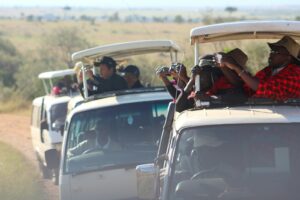
A 4×4 Land Cruiser with a pop-up roof is commonly used for Serengeti game drives.
Photographers can shoot through the open roof while standing or from windows depending on the animal’s position.
A beanbag can provide excellent support for larger lenses without requiring the space of a full tripod.
Communication with your guide is equally important.
If the light is better from another angle, politely explain what you are trying to achieve. An experienced safari guide can often reposition the vehicle when regulations and wildlife conditions allow.
Private vs Shared Safari for Photography
This is an important decision for serious photographers.
A shared safari is more economical and can still provide excellent photography opportunities. However, several travelers share the same vehicle and naturally have different interests.
One guest may want to photograph a lion for 45 minutes while another wants to continue searching for elephants.
A private safari provides considerably more flexibility.
You can decide how long to remain at sightings, when to move, and what subjects deserve priority.
For dedicated wildlife photographers, a private photography Serengeti safari holiday is generally the better option.
How Many Days Should Photographers Spend in Serengeti?
A short visit can produce excellent photographs, but photography improves significantly when travelers have sufficient time.
For a dedicated Serengeti photography experience, consider spending at least three or four nights in the park.
Five or more nights provide even greater flexibility.
Additional time means you are less dependent on one particular game drive.
If rain, difficult lighting, or limited wildlife activity affects one day, you still have several opportunities remaining.
Longer stays also allow photographers to revisit productive areas.
Example Photography Safari Structure
A well-balanced photography itinerary could include Tarangire, Serengeti, and Ngorongoro Crater.
For example:
Day 1 – Arusha to Tarangire
Travel to Tarangire National Park for your first game drive. Photograph elephants, baobab landscapes, giraffes, antelopes, and other wildlife.
Day 2 – Tarangire to Serengeti
Travel toward Serengeti while photographing changing landscapes along the journey.
Day 3 – Full-Day Serengeti Photography
Spend the entire day exploring productive wildlife areas. Focus on predators, large mammals, birds, and landscapes.
Day 4 – Full-Day Serengeti Photography
Another full day allows you to revisit interesting sightings or explore a completely different region.
Day 5 – Serengeti to Ngorongoro Area
Enjoy additional Serengeti wildlife viewing before traveling toward the Ngorongoro Conservation Area.
Day 6 – Ngorongoro Crater
Descend into the crater for another highly productive wildlife photography experience before continuing toward Arusha.
Longer itineraries can dedicate additional days to the Serengeti.
Combining Serengeti and Ngorongoro Photography
Serengeti and Ngorongoro complement one another extremely well.
The Serengeti provides vast landscapes and extensive opportunities to follow wildlife across different habitats.
Ngorongoro Crater offers a more concentrated wildlife environment within a spectacular volcanic landscape.
Photographers may encounter lions, buffaloes, zebras, wildebeest, hippos, hyenas, elephants, gazelles, and, with good fortune, black rhinos.
The crater walls also create an impressive background for wider compositions.
Combining Serengeti and Tarangire
Tarangire adds another visual dimension to a northern Tanzania photography safari.
It is famous for elephants and enormous baobab trees.
During the dry season, wildlife becomes increasingly dependent on the Tarangire River, creating excellent opportunities to photograph animals around water sources.
The combination of baobabs, elephants, dusty landscapes, and warm evening light makes Tarangire particularly photogenic.
Bird Photography in Serengeti
Do not overlook the Serengeti’s birds.
Tanzania has extraordinary bird diversity, and the Serengeti ecosystem supports everything from large raptors to colorful smaller species.
Potential photographic subjects include eagles, vultures, secretary birds, ostriches, storks, rollers, bee-eaters, bustards, hornbills, and numerous waterbirds.
A long telephoto lens is particularly helpful for bird photography.
Ask your guide to point out smaller species rather than concentrating exclusively on large mammals.
Wildlife Photography Ethics
The welfare of wildlife must always come before obtaining a photograph.
Never ask a guide to chase, surround, block, or intentionally disturb an animal.
Avoid excessive noise around sightings and respect park regulations.
Photographers should be especially careful around animals with young.
The best wildlife photographs document natural behavior rather than behavior caused by human interference.
Ethical photography also produces more authentic images.
Photographing Predators Responsibly
Predators frequently attract multiple safari vehicles.
When you encounter a lion, leopard, or cheetah, patience and responsible positioning are essential.
Do not pressure guides to push ahead of other vehicles or move dangerously close.
Sometimes remaining slightly farther away creates a better composition because you can include the environment around the animal.
Long telephoto lenses also make respectful distances much easier.
Smartphone Photography in Serengeti
Travelers without professional cameras can still capture excellent safari memories.
Modern smartphones are particularly useful for:
- Landscapes
- Sunsets
- Videos
- Close wildlife encounters
- Safari vehicle photographs
- Lodge photography
- Wide scenes containing large herds
For distant wildlife, dedicated cameras with telephoto lenses still have a significant advantage.
Keep your smartphone readily available because wildlife moments can happen unexpectedly.
Should You Photograph or Simply Watch?
It can be tempting to experience the entire safari through a camera viewfinder.
Occasionally put the camera down.
Watch elephants interacting, listen to lions calling, observe thousands of wildebeest moving across the plains, and appreciate the scale of the Serengeti.
Some moments are worth experiencing without concentrating on camera settings.
A great photography safari should provide both outstanding images and unforgettable personal experiences.
Choosing Accommodation for a Photography Safari
Location matters enormously.
Staying inside or close to the area you intend to photograph reduces unnecessary morning and evening transfers.
Mobile and seasonal camps can be particularly useful for migration-focused itineraries because their locations are designed around seasonal wildlife movements.
Central Serengeti offers excellent year-round access to resident wildlife.
Northern Serengeti becomes especially attractive during the northern migration season, while southern areas become important during the calving period.
Your accommodation should therefore be selected according to the season and photographic objective.
Fly-In Photography Safaris
Travelers with limited vacation time may consider flying between Arusha and Serengeti.
A fly-in safari reduces some long road transfers and allows more time around the national park.
However, photographers must carefully check airline baggage restrictions.
Small aircraft frequently have stricter luggage allowances than international flights, and soft-sided bags may be required.
Large professional lenses and multiple camera bodies therefore require advance planning.
Packing Tips for Photographers
Beyond camera equipment, pack clothing suitable for changing temperatures.
Early mornings in northern Tanzania can feel surprisingly cool, while afternoons can become warm.
Neutral-colored clothing is generally practical for safari.
Useful items include a light jacket, comfortable trousers, hat, sunglasses, sunscreen, sturdy footwear, reusable water bottle, and personal medication.
Avoid carrying unnecessary equipment. Safari vehicles have limited space, particularly when traveling with several guests.
Photography Safari With a Professional Guide
The guide can significantly influence your photographic experience.
An experienced safari guide understands animal behavior, positioning, park regulations, and wildlife habitats.
For photography, communication is particularly important.
Explain your priorities before the first game drive.
Tell your guide whether you are interested primarily in predators, birds, migration herds, landscapes, behavioral photography, or a balanced mixture.
This allows the guide to plan game drives around your objectives.
Tips for Better Serengeti Wildlife Photographs
Good wildlife photography involves much more than owning an expensive camera.
Try to photograph animals at eye level whenever circumstances allow.
Leave space in the frame in the direction an animal is looking or moving.
Pay attention to backgrounds. A beautiful lion portrait can become distracting if several vehicles or branches dominate the background.
Experiment with both tight portraits and wider environmental compositions.
Most importantly, anticipate behavior.
If an animal appears ready to move, hunt, jump, interact, drink, or yawn, prepare your camera before the action begins.
Is a Photography Serengeti Safari Suitable for Beginners?
Absolutely.
You do not need previous wildlife photography experience.
A safari actually provides an excellent environment for learning because you encounter many different subjects, lighting situations, and distances.
Before traveling, practice changing basic settings quickly.
Understand:
- Shutter speed
- Aperture
- ISO
- Autofocus
- Exposure compensation
- Burst mode
Knowing these fundamentals will allow you to react quickly when wildlife appears.
Family and Couple Photography Safaris
Photography safaris are not exclusively for professional photographers.
Couples can combine wildlife photography with romantic lodges and beautiful sunset experiences.
Families can use photography to encourage children and teenagers to observe wildlife more carefully.
The itinerary simply needs to balance photographic patience with everyone’s interests.
Photography Safari Costs
The cost of a Serengeti photography safari depends on several factors.
These include:
- Number of safari days
- Private or shared vehicle
- Accommodation category
- Travel season
- Serengeti region visited
- Domestic flights
- Number of travelers
- Special photography arrangements
A private photography safari generally costs more than joining a shared safari because the vehicle and guide are reserved exclusively for your group.
However, photographers often consider the additional flexibility worthwhile.
Planning Your Photography Serengeti Safari Holiday
Start by deciding what you most want to photograph.
If your priority is calving and predator activity, consider the southern ecosystem during the appropriate season.
If your dream is photographing the migration farther north, plan around the expected northern movement.
If you want excellent general wildlife photography without focusing exclusively on migration, Central Serengeti is an outstanding year-round option.
Then determine how many days you can spend inside the Serengeti.
Avoid creating an itinerary with too many destinations and too little photography time.
For serious photographers, fewer destinations with longer stays are usually preferable.
Final Thoughts
A photography Serengeti safari holiday is about much more than returning home with beautiful photographs. It gives travelers time to observe the details of the natural world: a lion watching the horizon, a cheetah scanning the grasslands, elephants walking through evening dust, or thousands of wildebeest disappearing across seemingly endless plains.
Successful wildlife photography depends on patience, preparation, responsible guiding, good positioning, and sufficient time in the field.
Rather than rushing through the Serengeti, build an itinerary that allows you to experience its wildlife at different times of day and across several game drives.
Whether you travel with professional equipment or a simple camera, the Serengeti provides endless opportunities to capture the landscapes, animals, behavior, and atmosphere that make Tanzania one of the world’s great safari destinations.