Skip to content

A Ngorongoro Crater safari Northern Circuit adventure offers one of the most rewarding wildlife experiences in Tanzania. The Ngorongoro Crater is famous for its spectacular scenery, high concentration of animals and excellent opportunities to see the African Big Five.
The crater is part of the wider Ngorongoro Conservation Area in northern Tanzania. Unlike a traditional national park, this protected region allows wildlife and Maasai communities to coexist. Travelers may therefore see Maasai pastoralists tending livestock around the highlands before descending into a volcanic caldera filled with wild animals.
Ngorongoro is normally included in Tanzania’s Northern Safari Circuit alongside Serengeti National Park, Tarangire National Park, Lake Manyara National Park and Arusha. This makes it easy to combine the crater with several different landscapes and wildlife experiences.
Whether you are organizing a private honeymoon, family safari, photography expedition or affordable group tour, Ngorongoro deserves a place in your Tanzania itinerary.
What Is the Ngorongoro Crater?
The Ngorongoro Crater is a vast volcanic caldera formed after a large volcano erupted and collapsed millions of years ago. Today, the crater floor covers approximately 260 square kilometres and is surrounded by steep walls that rise hundreds of metres above it.
Inside the crater, travelers encounter several habitats within a relatively compact area, including:
- Open grasslands
- Acacia woodland
- Freshwater springs
- Seasonal wetlands
- Lake and marsh environments
- Forested areas
- Dry plains
These habitats support an extraordinary concentration of resident wildlife. Because many animals remain inside the caldera throughout the year, Ngorongoro provides reliable game viewing in both the dry and green seasons.
The crater is often called the “Garden of Eden” because of its natural beauty and abundant wildlife. Although that description is popular, Ngorongoro is still a wild ecosystem. Animal sightings and behavior can never be guaranteed.
Where Is Ngorongoro Crater Located?
Ngorongoro Crater is located in northern Tanzania, within the Ngorongoro Conservation Area. It lies west of Lake Manyara, southeast of Serengeti National Park and approximately 180 kilometres from Arusha.
The town of Karatu is the most common base outside the conservation area. It offers a wide selection of budget hotels, comfortable lodges and luxury properties.
Approximate driving times are:
- Arusha to Ngorongoro: About 3½–4 hours
- Tarangire to Ngorongoro/Karatu: About 2½–3½ hours
- Lake Manyara to Ngorongoro: About 1½–2 hours
- Central Serengeti to Ngorongoro: Around 4–6 hours, depending on road conditions and wildlife stops
- Northern Serengeti to Ngorongoro: Approximately 6–8 hours or longer
Driving times are estimates. Weather, road conditions, park traffic and game viewing stops can affect the journey.
Why Visit Ngorongoro on a Northern Circuit Safari?
Ngorongoro offers a different experience from Tanzania’s larger national parks. The wildlife is concentrated within a relatively small area, making the crater particularly suitable for travelers with limited time.
Excellent Big Five opportunities
Ngorongoro is one of Tanzania’s strongest destinations for seeing the Big Five:
- Lion
- Leopard
- Elephant
- Buffalo
- Rhinoceros
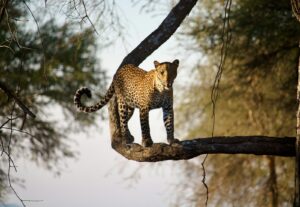
Black rhinoceroses are among the crater’s most sought-after animals. They may be seen on the open grasslands, although they frequently remain at a distance. Leopards are present in the wider conservation area but are less commonly seen on the open crater floor.
Dramatic scenery
The drive from the crater rim to the floor reveals one of Tanzania’s most memorable safari landscapes. From the viewpoint, the grasslands, forests and lakes appear enclosed by the enormous caldera walls.
Year-round game viewing
Many animals remain in the crater throughout the year. Consequently, visitors can enjoy productive wildlife viewing outside the traditional dry-season months.
Easy combination with other parks
Ngorongoro connects naturally with Tarangire, Lake Manyara and Serengeti. It can therefore form part of anything from a two-day safari to an extensive Northern Circuit expedition.
Cultural significance
The Ngorongoro Conservation Area protects natural, archaeological and cultural heritage. Maasai communities live within parts of the conservation area, giving the destination a distinctive character.
Wildlife Found in Ngorongoro Crater
The crater supports thousands of large mammals and an impressive variety of birds. Sightings change according to season, weather, food availability and natural animal movement.
Lions
Lions are among the most commonly observed predators in the crater. Visitors may find prides resting beside safari tracks, hunting on the plains or feeding on a recent kill. The crater’s open terrain often provides clear photographic opportunities.
Black rhinoceroses
The endangered black rhinoceros is one of Ngorongoro’s signature animals. Rhinoceroses sometimes appear on the open plains during the morning, but sightings are never certain. Binoculars and a patient guide are valuable because the animals may be far from the road.
African buffaloes
Large buffalo herds can be found around marshes, grasslands and forested areas. Older males may appear alone or in small groups. Buffaloes are powerful wild animals and should always be observed from the safety of the safari vehicle.
Elephants
Most elephants seen on the crater floor are mature bulls. Family herds are more frequently encountered in the surrounding highlands and nearby parks. Lerai Forest is one of the places where elephants may be observed.
Wildebeest and zebras
Wildebeest and zebras are widespread across the grasslands. Although the crater does not host the huge Mara River crossings associated with the Serengeti migration, its resident herbivore populations provide excellent sightings throughout the year.
Spotted hyenas
Ngorongoro has a healthy spotted hyena population. Hyenas are skilled hunters as well as scavengers. They can often be seen walking across the plains, resting near water or competing with lions around a carcass.
Hippos
Hippos inhabit pools and wetlands on the crater floor. The designated picnic area near a hippo pool is a popular place for visitors to eat lunch while watching wildlife from a safe distance.
Other mammals
Other possible sightings include:
- Thomson’s gazelles
- Grant’s gazelles
- Elands
- Warthogs
- Jackals
- Servals
- Bat-eared foxes
- Waterbucks
- Bushbucks
- Baboons
- Vervet monkeys
- Hartebeest
- Small antelopes
Giraffes are generally absent from the crater floor, partly because the steep descent makes access difficult. They can, however, be seen elsewhere in the conservation area and across the Northern Circuit.
Birdlife in Ngorongoro
Ngorongoro is a rewarding destination for bird enthusiasts. Its combination of forests, lakes, wetlands and grasslands attracts resident and migratory species.
Birds visitors may encounter include:
- Greater and lesser flamingos
- Grey crowned cranes
- Kori bustards
- Secretary birds
- Ostriches
- Sacred ibises
- Egyptian geese
- Yellow-billed storks
- Black kites
- Augur buzzards
- Martial eagles
- Ostriches
- Various vultures
Flamingo numbers around Lake Magadi change according to water conditions and food availability. Travelers should therefore avoid assuming that large flamingo gatherings will always be present.
What Happens During a Ngorongoro Crater Game Drive?
A typical crater safari begins early in the morning. Travelers staying near the rim or around Karatu leave their lodge after breakfast, enter the conservation area and drive toward one of the crater descent roads.
The safari vehicle descends from the cool highlands to the crater floor. During the game drive, the guide searches for wildlife across grasslands, wetlands and forest areas.
A typical day includes:
- Early departure from the lodge
- Crater-rim views
- Descent into the caldera
- Morning game drive
- Picnic lunch at a designated site
- Afternoon wildlife viewing
- Ascent from the crater
- Transfer to Karatu, Arusha or the next destination
Visitor time on the crater floor is regulated, and itineraries normally allow approximately six hours for the game drive. Your operator should plan entry times, permits and the onward journey carefully.
Private safaris provide more flexibility at sightings than shared group tours. On a private tour, the guide can adjust the pace around your interests, such as photography, birds, predators or family travel.
Best Time for a Ngorongoro Crater Safari
Ngorongoro is a year-round destination. The best season depends on whether you prioritize dry weather, green landscapes, birding, quieter conditions or price.
June to October: Dry season
The dry season generally brings cooler mornings, limited rainfall and easier wildlife observation. Animals may gather around permanent water sources, while vegetation is often shorter.
Advantages include:
- Good general game viewing
- Lower chance of prolonged rainfall
- Clearer wildlife visibility
- Convenient combination with Northern Serengeti during the river-crossing season
Possible disadvantages include:
- More safari vehicles
- Higher accommodation demand
- Higher seasonal prices
- Cold mornings around the crater rim
November to December: Short rains
The short rains can transform dry landscapes into fresh green plains. Rain usually occurs in showers rather than continuously, although weather patterns vary.
This period can offer:
- Green scenery
- Fewer visitors than peak months
- Attractive photography conditions
- Migratory bird activity
January to March: Green season
The green season provides lush landscapes, dramatic skies and excellent photographic colors. It also combines well with the Ndutu region, where the Great Migration’s calving season normally occurs between approximately December and March, with timing determined by rainfall.
Benefits include:
- Beautiful green scenery
- Newborn animals in the broader Ndutu ecosystem
- Predator activity
- Strong birding
- Excellent migration itineraries when combined with Ndutu
April and May: Long rains
These are generally the wettest months. Some roads can become muddy, but the crater remains accessible under normal conditions.
Benefits may include:
- Fewer visitors
- Lower seasonal lodge rates
- Green landscapes
- A quieter safari atmosphere
Travelers should bring waterproof clothing and allow some flexibility for road and weather conditions.
Ngorongoro Crater and the Great Migration
The famous Great Migration does not remain inside Ngorongoro Crater. However, the wider Ngorongoro Conservation Area includes the Ndutu and southern plains used by migrating wildebeest during part of the year.
The migration’s approximate annual pattern is:
- December to March: Ndutu and the southern Serengeti ecosystem
- April to May: Movement through central and western regions
- June: Western and central corridors
- July to October: Northern Serengeti and Maasai Mara region
- November: Movement south, influenced by rainfall
These dates are broad guidelines—not a timetable. Wildebeest follow rainfall and fresh grass, so their exact location changes every year.
A January or February Northern Circuit itinerary can combine Ngorongoro Crater with Ndutu. An August or September itinerary can combine the crater with Central and Northern Serengeti for the possibility of seeing Mara River crossings.
Crossings are unpredictable and cannot be guaranteed, even during the appropriate season.
Recommended Northern Circuit Itineraries
Three-day safari
Day 1: Arusha to Tarangire
Travel to Tarangire National Park for a game drive. Look for elephants, giraffes, zebras, lions and baobab landscapes. Overnight near Karatu or Mto wa Mbu.
Day 2: Ngorongoro Crater
Descend into the crater for an extended game drive and picnic lunch. Overnight near Karatu.
Day 3: Lake Manyara and return to Arusha
Explore Lake Manyara National Park before returning to Arusha.
This itinerary is suitable for travelers with limited time, although it does not include Serengeti.
Four-day Serengeti and Ngorongoro safari
Day 1: Arusha to Serengeti
Day 2: Full-day Central Serengeti game drive
Day 3: Serengeti to Ngorongoro/Karatu
Day 4: Ngorongoro Crater and return to Arusha
This is a compact itinerary. Driving distances are significant, so travelers seeking a more relaxed pace should consider five or six days.
Five-day Northern Circuit adventure
Day 1: Arusha to Tarangire
Day 2: Tarangire to Central Serengeti
Day 3: Full-day Serengeti game drive
Day 4: Serengeti to Ngorongoro highlands
Day 5: Crater game drive and return to Arusha
This classic route balances major destinations without adding too many stops.
Seven-day Tanzania safari
Day 1: Arrival and overnight in Arusha
Day 2: Tarangire National Park
Day 3: Drive to Central Serengeti
Day 4: Full-day Central Serengeti
Day 5: Additional Serengeti game drive and transfer toward Ngorongoro
Day 6: Ngorongoro Crater
Day 7: Lake Manyara or cultural experience, followed by Arusha
Nine-day migration adventure
For July to October:
- One night in Tarangire
- Two nights in Central Serengeti
- Three nights in Northern Serengeti
- One night near Ngorongoro
- One crater game drive
- Arrival or departure night in Arusha
For January to March, the Northern Serengeti nights can be replaced by Ndutu accommodation.
Combining Ngorongoro with Other Northern Circuit Parks
Serengeti National Park
Serengeti offers a much larger wilderness, extensive predator viewing and seasonal Great Migration experiences. Ngorongoro provides concentrated wildlife within a dramatic caldera, while Serengeti offers scale, openness and longer game drives.
Including both destinations produces a more complete safari.
Tarangire National Park
Tarangire is known for elephants, baobab trees and the Tarangire River. During the dry season, the river attracts animals from surrounding areas. Tarangire adds a distinctive woodland and river ecosystem to the itinerary.
Lake Manyara National Park
Lake Manyara contains groundwater forest, woodland, lake environments and escarpment scenery. Wildlife distribution changes with lake levels and seasonal conditions. It can be included on longer itineraries, though travelers with limited time may prioritize additional time in Serengeti.
Arusha National Park
Arusha National Park is convenient for an arrival-day excursion. Activities can include game drives, walking safaris and canoeing when available. It is not a substitute for Serengeti or Ngorongoro, but it can complement a longer trip.
Lake Eyasi
Lake Eyasi is commonly included for cultural visits involving Hadzabe and Datoga communities. Such visits should be arranged responsibly, with respect for the communities rather than treating them as entertainment.
Accommodation Options
Budget accommodation
Budget travelers can use public campsites or simple lodges outside the conservation area.
Camping packages generally include:
- Tent
- Mattress
- Sleeping bag
- Pillow
- Camping equipment
- Safari chef
- Shared toilets and showers
Public campsites provide an adventurous experience, but facilities are basic. Hot water and charging access may be limited.
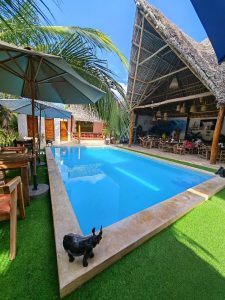
Mid-range accommodation
Mid-range lodges and tented camps generally provide:
- Private bathroom
- Comfortable bed
- Restaurant
- Hot shower
- Electricity during scheduled hours or continuously
- Wi-Fi in selected areas
- Garden, forest or highland views
Staying around Karatu is normally more affordable than staying directly on the crater rim.
Luxury accommodation
Luxury properties may offer crater views, larger rooms, fireplaces, premium dining, private decks, spa treatments and personalized services. Rim accommodation can also allow earlier access to the descent road.
However, luxury does not automatically mean better wildlife sightings. The quality of your guide, itinerary and time in the field remains extremely important.
Private Safari or Shared Group Safari?
Private safari
A private safari gives your party exclusive use of the vehicle and guide.
It is particularly suitable for:
- Couples and honeymooners
- Families
- Wildlife photographers
- Travelers with specific dietary or mobility needs
- Visitors wanting flexible game-drive times
- Travelers visiting Northern Serengeti or Ndutu
- Guests preferring lodge accommodation
Shared safari
A shared safari allows travelers to divide vehicle and guide costs with other guests.
It is a good choice for:
- Solo travelers
- Budget-conscious visitors
- Social travelers
- Guests with flexible expectations
Shared safaris operate according to fixed routes and schedules. Northern Serengeti and specialized migration routes are usually better arranged privately because of the distance, logistics and accommodation requirements.
Before booking, ask about vehicle capacity, guaranteed window seats, luggage restrictions, accommodation type and the exact itinerary.
Safari Vehicles and Guides
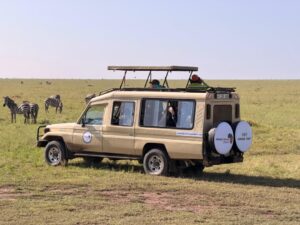
The standard vehicle for a Northern Circuit adventure is a customized 4×4 Land Cruiser with a pop-up roof.
A well-equipped vehicle may offer:
- Individual window seats
- Pop-up viewing roof
- Seatbelts
- Charging sockets or USB ports
- Cooler or refrigerator
- Drinking water
- First-aid kit
- Radio communication
- Binoculars
Your guide plays an essential role in the experience. A professional guide should understand animal behavior, park rules, road conditions, wildlife identification and responsible viewing practices.
Photographers should request a private vehicle or a reduced number of passengers. This provides more space for equipment and greater control over positioning.
What Is Included in a Safari Package?
Inclusions differ between operators, but a standard package may include:
- Private or shared 4×4 safari vehicle
- Professional English-speaking guide
- Park entry fees
- Ngorongoro conservation fees
- Crater service or descent fees
- Accommodation
- Meals indicated in the itinerary
- Drinking water
- Airport or Arusha transfers where specified
- Government taxes
- Camping equipment and chef for camping tours
Common exclusions include:
- International flights
- Tanzania visa
- Travel insurance
- Alcoholic beverages
- Tips
- Personal purchases
- Optional activities
- Vaccinations and medical expenses
Always request an itemized quotation. Confirm whether the price is per person or per vehicle and whether it is based on single, double, twin or family-room occupancy.
Understanding Ngorongoro Safari Costs
The price of a safari depends on:
- Number of travelers
- Private or shared vehicle
- Travel season
- Number of days
- Accommodation category
- Room arrangement
- Park and conservation fees
- Domestic flights
- Airport transfers
- Optional activities
Ngorongoro can be comparatively expensive because safari packages must include conservation-area and crater-related fees in addition to vehicle, guide and accommodation costs.
A longer safari does not always have a proportionally higher daily price. Vehicle expenses can be divided across more travelers and days. Couples and solo travelers usually pay more per person than a group using the same private vehicle.
Ask whether the quotation includes all taxes and compulsory fees so that there are no unexpected charges.
Photography Tips
Ngorongoro is excellent for both landscape and wildlife photography.
Recommended preparation includes:
- A wide-angle lens for crater views
- A telephoto lens for distant rhinoceroses and predators
- Spare batteries
- Extra memory cards
- Lens-cleaning materials
- A bean bag or stable camera support
- Dust-resistant storage
- Neutral clothing
Morning light can be beautiful, but mist sometimes covers the rim. On the crater floor, light can become bright during the middle of the day.
Never ask your guide to leave authorized tracks or disturb animals for a photograph. Responsible positioning protects wildlife and the environment.
What to Pack
Pack lightly and use a soft-sided bag where possible, especially when domestic flights are included.
Essential items include:
- Neutral-colored clothing
- Comfortable trousers or shorts
- Long-sleeved shirts
- Warm jacket or fleece
- Waterproof outer layer
- Sun hat
- Sunglasses
- Sunscreen
- Insect repellent
- Comfortable closed shoes
- Camera and binoculars
- Personal medication
- Passport and travel documents
- Reusable water bottle
- Small daypack
The crater rim can be surprisingly cold, especially early in the morning. Layered clothing is much more practical than one heavy garment.
Avoid bright colors and military-style camouflage. Camouflage clothing may be restricted or culturally inappropriate in some destinations.
Responsible Safari Practices
Visitors can help protect Ngorongoro by following a few principles:
- Remain inside the vehicle except in designated areas.
- Never feed wild animals.
- Keep noise low near wildlife.
- Do not pressure guides to drive off-road.
- Carry reusable items where possible.
- Avoid leaving rubbish.
- Respect Maasai residents and ask permission before taking photographs.
- Choose operators that treat guides and staff fairly.
- Follow all conservation-area regulations.
- Keep a safe distance from animals.
Responsible tourism helps preserve Ngorongoro for its wildlife, communities and future visitors.
Final Travel Advice
A successful Ngorongoro Crater safari Northern Circuit adventure depends on more than visiting famous places. The best trip allows enough time for wildlife viewing, uses a realistic route and matches the accommodation style to your comfort and budget.
For a balanced first safari, consider combining Tarangire, Central Serengeti and Ngorongoro over at least five days. Travelers interested in Mara River crossings should add Northern Serengeti between July and October. Those visiting between December and March can add Ndutu for the southern migration and calving season.
Book with a reputable Tanzania safari operator, confirm every inclusion and avoid itineraries that attempt to cover too many distant destinations in too little time.
With a knowledgeable guide, reliable 4×4 vehicle and thoughtfully planned itinerary, Ngorongoro can become one of the most memorable chapters of your Tanzania adventure.
Call to Action
Ready to experience the Ngorongoro Crater and Tanzania’s legendary Northern Circuit?
Contact Kilipath African Safaris for a customized private or shared safari itinerary. We can help arrange accommodation, park fees, professional guides, airport transfers and extensions to Serengeti, Tarangire, Lake Manyara, Ndutu or Northern Serengeti.