

Nyerere Tanzania Wildlife Safari Guide
A Nyerere Tanzania wildlife safari can take you from a woodland game drive in the morning to a boat on the Rufiji…
Read articleArusha City - Tanzania
Safari & Travel Tips
July 21, 2026 · 12 min read
A photography Tanzania safari itinerary deal is designed for travelers who want more than ordinary wildlife viewing. It gives photographers the time, positioning and flexibility needed to capture Tanzania’s animals, landscapes and golden light at their best.
From elephants walking beneath ancient baobab trees in Tarangire to lions resting on the Serengeti plains, Tanzania presents remarkable photographic opportunities throughout the year. The Ngorongoro Crater adds dramatic scenery and a high concentration of wildlife, while Lake Manyara introduces forests, flamingos and beautiful Rift Valley landscapes.
Kilipath African Safaris can customize your photography safari according to your travel dates, preferred parks, budget and level of photographic experience. Whether you use a smartphone, a beginner camera or professional equipment, our team can create an itinerary that helps you return home with meaningful images and unforgettable memories.
A regular safari usually follows a general wildlife-viewing schedule. A photography safari is planned differently. More time is allowed at important sightings, game drives may begin earlier, and the guide considers the direction of light before positioning the vehicle.
The main advantages include:
Wildlife cannot be controlled, but good planning significantly improves your chances of being in the right habitat at the right time.
This sample itinerary combines Tarangire National Park, Serengeti National Park and the Ngorongoro Crater. It can be shortened, extended or upgraded according to your preferences.
Upon arrival at Kilimanjaro International Airport or Arusha Airport, a Kilipath African Safaris representative will welcome you and transfer you to your accommodation in Arusha.
Depending on your arrival time, you can relax at the lodge or prepare your photography equipment. Your safari guide will provide a briefing covering the route, weather, wildlife expectations and practical camera considerations.
Accommodation: Arusha lodge or hotel
Meals: Depending on arrival time
After breakfast, depart for Tarangire National Park. The journey from Arusha normally takes approximately two hours.
Tarangire is particularly rewarding for elephant photography. Large herds often move through the woodlands and gather near the Tarangire River during the dry season. Ancient baobab trees create distinctive backgrounds for wide-angle wildlife and landscape images.
Possible subjects include:
Your guide will allow time at productive sightings whenever park conditions permit. In the late afternoon, continue to your selected lodge or tented camp.
Accommodation: Lodge or tented camp near Tarangire
Meals: Breakfast, lunch and dinner
After an early breakfast, travel toward Serengeti National Park. The drive passes through the Ngorongoro Conservation Area, offering excellent landscape and cultural photography opportunities.
You may stop at selected viewpoints before continuing across the plains. As you enter the Serengeti ecosystem, the scenery gradually opens into vast grasslands.
Depending on the route and season, photographic subjects may include:
Arrive at your camp in time for dinner and an overnight stay.
Accommodation: Serengeti tented camp or lodge
Meals: Breakfast, lunch and dinner
Begin before or around sunrise to take advantage of the soft morning light. Predators are frequently more active during the cooler hours, while the warm sunrise can create beautiful silhouettes and backlit images.
Serengeti National Park is one of Africa’s greatest wildlife photography destinations. Its open terrain can provide clean backgrounds and clear views of animals.
Potential sightings include:
Your guide will assess wildlife movement, vehicle activity and lighting conditions before selecting the best position available. The day can include a picnic lunch in the park or a return to camp, depending on your preferred photography schedule.
Accommodation: Serengeti tented camp or lodge
Meals: Breakfast, lunch and dinner
A second full day gives you more time to explore different habitats and revisit promising areas. Photography requires patience, and an additional day helps reduce the pressure to move quickly from one sighting to another.
You may concentrate on a particular subject, such as big cats, elephants, birds or the Great Migration. Your guide can also look for storytelling moments, including hunting behavior, social interactions, territorial displays and animals caring for their young.
An optional Serengeti hot-air balloon safari can be arranged. It offers aerial views of the plains and a different perspective for landscape photography.
Accommodation: Serengeti tented camp or lodge
Meals: Breakfast, lunch and dinner
Enjoy another morning game drive before leaving the Serengeti. Morning light offers a final opportunity to photograph animals against the open plains.
Continue toward the Ngorongoro Conservation Area. Depending on timing and personal interests, optional stops may include a Maasai village or Olduvai Gorge.
Arrive at your accommodation near the crater for dinner. Lodges near the rim may provide beautiful highland and crater views, while accommodation in Karatu can offer comfort and good value.
Accommodation: Ngorongoro or Karatu lodge
Meals: Breakfast, lunch and dinner
After an early breakfast, descend into the Ngorongoro Crater for a photographic game drive.
The crater floor contains grasslands, wetlands, forests and freshwater habitats within a relatively compact area. This diversity supports an impressive concentration of wildlife.
Possible subjects include:
After lunch and a final game drive, ascend from the crater and return to Arusha. An airport or hotel transfer can be arranged according to your onward travel plans.
Meals: Breakfast and lunch
A four-day itinerary can include:
This option suits travelers with limited time, although the driving schedule is relatively active.
A five-day trip provides more time in the Serengeti:
It offers a strong balance between price, travel time and photographic opportunities.
A longer itinerary is recommended for serious photographers. Extra days can be used to explore:
The exact route should reflect the season and the subjects you want to photograph.
The Serengeti is famous for open plains, big cats and the Great Migration. Its variety of wildlife makes it suitable for both first-time visitors and experienced photographers.
Central Serengeti is productive throughout the year. Northern Serengeti becomes especially attractive during the river-crossing season, while Ndutu and the southern plains are popular during the calving season.
Ngorongoro offers wildlife, landscapes and dramatic weather within one destination. The crater’s highlands can produce misty morning scenes, while the floor provides opportunities to photograph predators, herbivores and waterbirds.
Tarangire is ideal for elephants, baobabs and environmental portraits of animals. Its dry-season wildlife concentrations can be outstanding.
Lake Manyara offers varied scenery, including groundwater forest, acacia woodland, escarpments and lake environments. It is also rewarding for bird photography.
Nyerere is an excellent choice for travelers interested in a quieter southern Tanzania experience. Boat safaris can provide distinctive images of hippos, crocodiles, birds and animals approaching the water.
Ruaha is known for rugged scenery, large elephant populations and predators. It is particularly suitable for experienced travelers who prefer remote locations and fewer vehicles.
Tanzania can be photographed throughout the year, but every season offers different conditions.
The dry season generally provides easier wildlife viewing as animals gather near permanent water sources. Vegetation is often thinner, making subjects easier to photograph.
This period is excellent for:
Short rains can transform the landscape into rich green scenery. The southern Serengeti and Ndutu region become important during the migration’s calving period.
This season can offer:
These are traditionally wetter months. Some travelers avoid this period, but photographers may appreciate the dramatic clouds, green landscapes, lower visitor numbers and softer atmosphere.
Road conditions can be challenging, so the route and accommodation should be selected carefully.
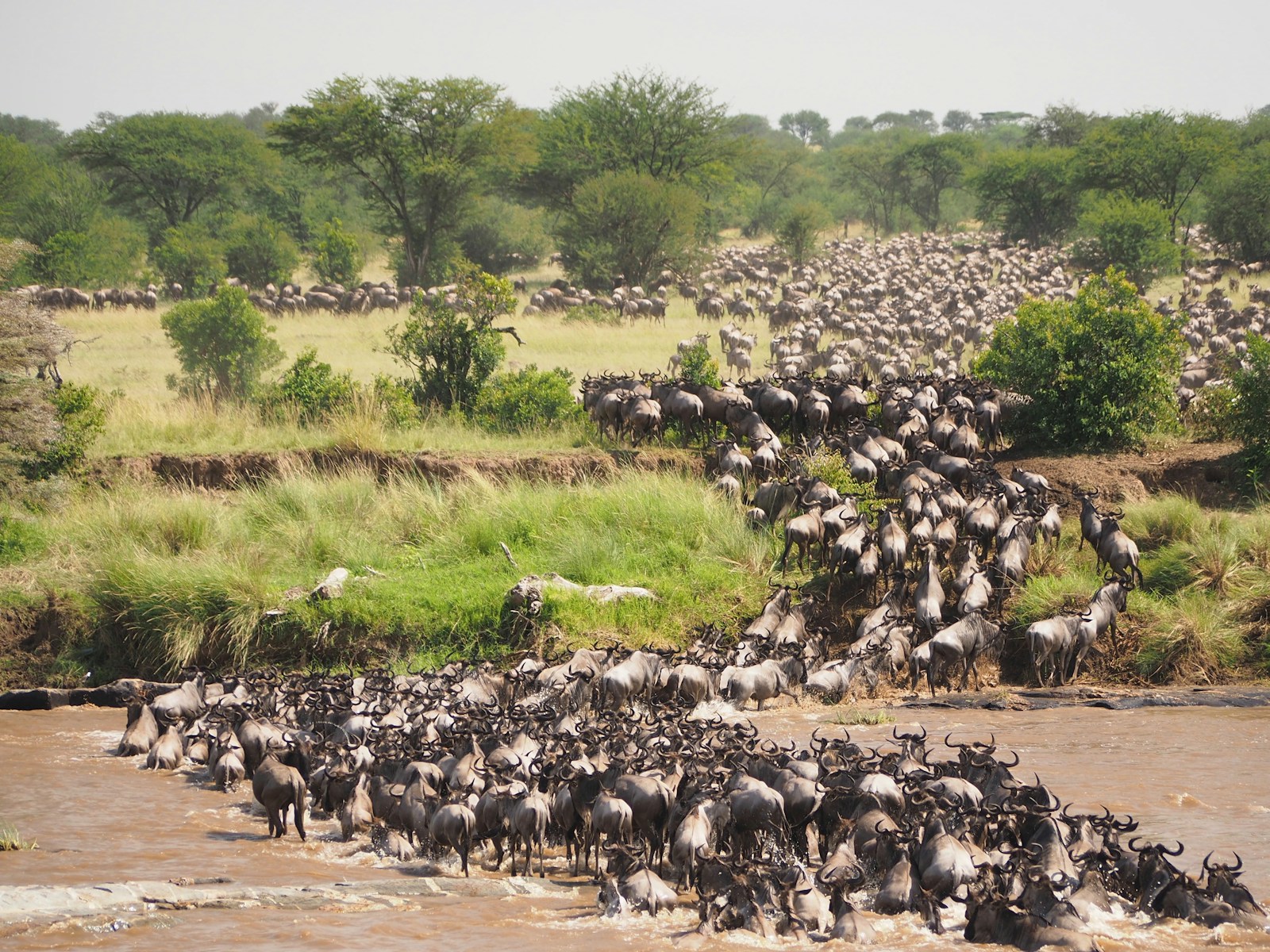
The Great Migration is a continuous movement rather than a single event. Its location changes according to rainfall, grazing conditions and natural wildlife behavior.
A general seasonal guide is:
These periods are approximate. River crossings and other natural events cannot be guaranteed.
For migration photography, Kilipath African Safaris recommends a private itinerary with multiple nights in the relevant region. This allows greater flexibility than a standard shared safari route.
Your safari is conducted in a 4x4 Land Cruiser with a pop-up roof. The raised roof provides wildlife viewing and photography access while offering protection during travel.
Depending on the package, vehicle features may include:
For photographers carrying large equipment, booking fewer passengers per vehicle is recommended.
Useful equipment may include:
Avoid changing lenses unnecessarily in dusty environments. Keeping one wide or medium lens on a second camera body can help protect equipment and prevent missed moments.
A flexible wildlife kit could include:
You do not need professional equipment to enjoy the safari. Modern smartphones and compact cameras can produce beautiful images, particularly for landscapes and nearby wildlife.
Accommodation can be selected according to your budget and photographic priorities.
Camping offers an adventurous experience and can help keep costs manageable. Tents, mattresses and sleeping equipment can be provided, depending on the package.
Midrange camps combine comfortable beds, private facilities and convenient locations. They are a popular choice for photographers who want comfort without luxury-level pricing.
Luxury accommodation may provide premium rooms, excellent service and strategic locations. Certain properties overlook plains, waterholes or crater landscapes, creating photography opportunities even outside game-drive hours.
A typical photography Tanzania safari itinerary deal may include:
Unless specifically added, the package may exclude:
A detailed quotation will clearly show the exact inclusions and exclusions before booking.
The total cost depends on:
Private photography safaris generally cost more than standard shared departures because they provide exclusive vehicle use and schedule flexibility. However, the price per person may decrease when two or more travelers share the vehicle and accommodation costs.
Contact Kilipath African Safaris for a personalized quotation based on your dates and preferred experience.
Responsible photography protects the animals and improves the safari experience for everyone.
Travelers should:
The welfare of wildlife must always come before obtaining a particular photograph.
Kilipath African Safaris is a Tanzania-based safari company offering customized wildlife experiences across the country.
When you plan with us, you receive:
We listen to your photography interests before building the route. Tell us whether your priority is big cats, elephants, birds, migration action, landscapes or cultural storytelling, and we will recommend suitable parks and travel periods.
Tanzania offers extraordinary possibilities for photographers. Every game drive can bring a new composition: a leopard resting in an acacia tree, elephants crossing a dusty road, wildebeest beneath a stormy sky or the sun rising over the Serengeti.
Let Kilipath African Safaris create an itinerary around your preferred subjects, travel dates and budget.
Send us the following details to receive your personalized quotation:
Contact Kilipath African Safaris today and start planning your Tanzania photography adventure.
A Nyerere Tanzania wildlife safari can take you from a woodland game drive in the morning to a boat on the Rufiji…
Read articlePlanning a Tanzania safari that combines Lake Manyara National Park and Nyerere National Park is an excellent way to experience the country's…
Read articleDiscover Tanzania’s untamed wilderness without exceeding your travel budget. A budget Ruaha safari adventure offers incredible wildlife encounters, spectacular landscapes, authentic African…
Read articleA Nyerere Tanzania wildlife safari offers an extraordinary opportunity to discover one of Africa's most spectacular wilderness destinations. From magnificent elephants and…
Read article

