Skip to content
Planning a safari with children is one of the most exciting ways to experience Africa together. Tanzania offers extraordinary wildlife, family-friendly lodges, private safari vehicles, experienced guides, and famous destinations such as Serengeti National Park, Ngorongoro Crater, Tarangire National Park, and Lake Manyara.
But before booking, most parents have one important question: What is the family Tanzania wildlife safari cost?
The answer depends on the number of travelers, children’s ages, safari duration, accommodation level, season, parks visited, and whether you choose a private or shared safari. The good news is that families can often enjoy better per-person value because vehicle and guide expenses are divided among several travelers.
This guide explains the main Tanzania family safari costs, what is normally included, where families can save money, and how to plan an unforgettable wildlife holiday.
How Much Does a Family Tanzania Wildlife Safari Cost?
A family Tanzania wildlife safari cost can range widely depending on comfort and itinerary.
As a general 2026 planning guide, a private Northern Circuit safari for a family can fall into these broad categories:
| Safari Style | Approx. Cost Per Person | Typical Experience |
|---|---|---|
| Budget / camping | $180–$300 per day | Public campsites, private or joining vehicle |
| Mid-range | $250–$450 per day | Comfortable lodges and tented camps |
| Luxury | $500–$1,000+ per day | Luxury camps, premium lodges and exclusive services |
Recent Tanzania safari pricing guides show that group size can significantly lower the cost per traveler because the vehicle and guide expenses are shared. One 2026 analysis estimates a seven-day mid-range Northern Circuit safari for a family of four at roughly $5,600 total, although actual quotes vary considerably by accommodation, season and children’s ages.
Another current pricing source puts seven-day Tanzania safaris generally around $1,456–$2,000 per person for budget options, $2,496–$3,800 for mid-range trips, and upwards of $5,200 for luxury arrangements, showing just how much accommodation level can affect the final price.
These figures should therefore be treated as planning estimates rather than fixed prices.
What Determines the Cost of a Family Safari in Tanzania?
Understanding where your money goes makes comparing safari quotations much easier.
1. Number of Family Members
Safari transportation is one of the largest costs. A private 4×4 safari vehicle generally costs almost the same whether it carries two people or five.
For example, parents traveling alone divide the vehicle cost between two travelers. A family of four divides much of that same vehicle expense between four travelers.
This means the family Tanzania wildlife safari cost per person can actually become more affordable as the family group grows.
A private safari is particularly attractive for families because you have your own vehicle and guide. You can stop longer when children are watching elephants, return to your lodge earlier when they become tired, or adjust game-drive times according to the family’s needs.
2. Ages of the Children
Children can receive reduced rates on several safari expenses.
Tanzania National Parks distinguishes between adults and children for conservation fees. TANAPA states that children under five can enter its national parks free of conservation fees, while child rates apply from ages 5 to 15.
Some lodges also provide:
- Reduced children’s accommodation rates
- Free stays for very young children sharing with parents
- Family rooms
- Triple or interconnected rooms
- Discounted meals
- Special family packages
Always provide the exact ages of your children when requesting a safari quotation. A quotation for two adults and two children aged 6 and 9 may be considerably different from one for a family traveling with teenagers.
3. Safari Accommodation
Accommodation is one of the biggest factors affecting family safari costs.
Budget Camping
Camping is the lowest-cost way to explore Tanzania’s major wildlife parks.
A camping package can include tents, mattresses, sleeping bags, meals prepared by a safari chef and shared campsite bathroom facilities.
Camping is suitable for adventurous families who want more time in Tanzania’s national parks while keeping the overall budget lower.
Mid-Range Lodges and Tented Camps
This is one of the most popular choices for families.
Mid-range properties normally offer comfortable beds, private bathrooms, restaurants and permanent facilities while still providing the feeling of being close to nature.
Tented camps in Serengeti can be especially memorable because families experience the sounds of the African wilderness while still enjoying comfortable accommodation.
Luxury Family Safari
Luxury safaris may include spacious family suites, swimming pools, premium meals, exclusive camps, personalized activities and high-end service.
Luxury tented camps can increase the safari budget dramatically, with some properties costing many hundreds of dollars per person per night.
Best Parks for a Tanzania Family Wildlife Safari
Choosing the right destinations also determines your final cost.
Serengeti National Park
For many families, Serengeti is the highlight of the entire trip.
Children may see:
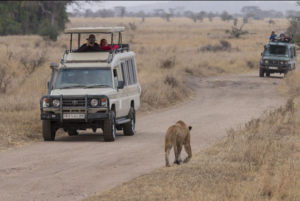
- Lions
- Elephants
- Giraffes
- Zebras
- Wildebeest
- Cheetahs
- Leopards
- Hyenas
- Hippos
- Gazelles
The park is also famous for the Great Migration.
Because Serengeti is farther from Arusha and usually requires several park days, it can make a safari more expensive than itineraries visiting only Tarangire and Ngorongoro.
However, families who have enough time should strongly consider including at least two nights in Serengeti.
Ngorongoro Crater
Ngorongoro Crater provides one of Tanzania’s most concentrated wildlife experiences.
Families descend into the crater for a game drive where wildlife can include lions, elephants, buffalo, wildebeest, zebras, hippos and, with luck, the endangered black rhino.
Ngorongoro involves both conservation-area charges and a vehicle crater-service fee, so it can be one of the more expensive safari destinations. The crater vehicle fee is shared across passengers in the safari vehicle, another reason families traveling together can achieve better value per person.
Tarangire National Park
Tarangire is an excellent choice for families and is famous for its large elephant populations and enormous baobab trees.
It is also conveniently located for Northern Circuit itineraries starting from Arusha.
During the dry season, animals concentrate around the Tarangire River, creating excellent wildlife-viewing opportunities.
Families visiting Tanzania for only three or four days can combine Tarangire, Serengeti and Ngorongoro for a compact but rewarding adventure.
Lake Manyara National Park
Lake Manyara can provide a relaxed addition to a family itinerary.
The park is known for diverse birdlife, monkeys, baboons, giraffes, elephants and beautiful Rift Valley scenery.
It is particularly convenient when families are traveling between Arusha, Karatu, Tarangire and Ngorongoro.
Example 5-Day Family Tanzania Safari
A good family safari does not have to be extremely long.
Day 1 – Arusha to Tarangire
Meet your safari guide and drive to Tarangire National Park.
Spend the day searching for elephants, giraffes, zebras, antelopes and predators before continuing to your accommodation.
Day 2 – Tarangire to Serengeti
Travel toward Serengeti through the spectacular landscapes of northern Tanzania.
Enter Serengeti and enjoy an afternoon wildlife drive.
Day 3 – Serengeti National Park
Enjoy a full day exploring the Serengeti.
This gives children plenty of opportunity to observe lions, elephants, giraffes, wildebeest and many other animals.
Families using a private vehicle can adjust the day’s timing depending on everyone’s energy levels.
Day 4 – Serengeti to Ngorongoro
Enjoy another Serengeti game drive before traveling toward the Ngorongoro Conservation Area.
Spend the night close to the crater.
Day 5 – Ngorongoro Crater to Arusha
Descend into Ngorongoro Crater early in the morning.
After the game drive and lunch, return to Arusha.
This itinerary offers three of Tanzania’s most famous wildlife areas without making the holiday unnecessarily long for younger travelers.
Example 7-Day Family Safari
Families wanting a slower pace could choose:
Day 1: Arusha National Park or Tarangire
Day 2: Tarangire National Park
Day 3: Serengeti National Park
Day 4: Full-day Serengeti safari
Day 5: Serengeti to Ngorongoro
Day 6: Ngorongoro Crater
Day 7: Lake Manyara and return to Arusha
Adding more days means higher accommodation and park-fee costs, but it also reduces long driving days and allows families to enjoy the safari at a more comfortable pace.
Private vs Shared Family Safari Cost
Families should carefully compare private and shared safaris.
Shared Safari
Joining safaris normally have lower prices because travelers share the vehicle, guide and transportation costs with other guests.
They work particularly well for families focused on budget.
However, schedules are less flexible.
Private Safari
A private family safari provides:
- Your own safari vehicle
- Dedicated guide
- Flexible departure times
- More control over stops
- Extra time at interesting wildlife sightings
- Easier management of children’s needs
- More luggage flexibility
For families with several travelers, the price difference between joining and private safaris can sometimes be smaller than expected because the private vehicle cost is divided among more passengers.
When Is a Tanzania Family Safari Cheapest?
Season makes an important difference to the family Tanzania wildlife safari cost.
Green Season – March to May
Accommodation prices can be significantly lower.
The landscape is beautifully green, birdlife is excellent and parks can be less crowded.
Some 2026 market estimates suggest accommodation-related safari prices can fall around 25–35% during parts of the green season compared with peak periods, although discounts vary by property.
June to October
This is Tanzania’s main dry season and one of the most popular safari periods.
Wildlife viewing is excellent, but lodge availability can become limited and accommodation prices are generally higher.
July through September is particularly popular for travelers hoping to experience the Great Migration in northern Serengeti.
December to February
This is another excellent family travel period.
From approximately December through March, the southern Serengeti and Ndutu ecosystem becomes especially important for migration viewing, with the calving period usually at its strongest around January and February.
Booking early is recommended for Christmas and New Year travel.
What Is Usually Included in a Family Safari Price?
A properly prepared Tanzania safari quotation commonly includes:
- 4×4 safari Land Cruiser
- Professional English-speaking safari guide
- National park entry fees
- Ngorongoro fees when included in the itinerary
- Accommodation
- Breakfast, lunch and dinner during the safari
- Drinking water
- Game drives
- Government taxes
- Camping equipment and chef for camping itineraries
- Transfers specified in the itinerary
Always read the inclusions before comparing two safari companies.
A cheaper quotation may look attractive until you discover that important items such as park fees, airport transfers or certain meals are excluded.
Costs Usually Not Included
Travelers should normally budget separately for:
- International flights
- Tanzania visa
- Travel insurance
- Tips
- Alcoholic drinks
- Personal shopping
- Optional activities
- Balloon safari
- Zanzibar extensions unless specified
- Additional hotel nights not included in the package
Ask for an all-inclusive safari quotation wherever possible so you understand the complete holiday budget before arriving.
How Families Can Reduce Tanzania Safari Costs
There are several ways to make a wildlife holiday more affordable without sacrificing the experience.
First, travel as one private family group instead of booking separate arrangements. Vehicle costs can then be divided across the whole family.
Second, combine mid-range lodges with one or two camping nights if your family enjoys adventure.
Third, avoid changing accommodation unnecessarily. Every additional transfer can increase driving time and costs.
Fourth, consider traveling outside July, August and the Christmas holiday period.
Finally, book directly with a Tanzania-based safari operator. Local operators can arrange vehicles, guides, accommodations and logistics directly, potentially avoiding extra layers of intermediary costs.
Is Tanzania Safe for a Family Safari?
Tanzania is a popular destination for family wildlife holidays.
Families should travel with an experienced safari guide and follow park regulations. Children should never leave vehicles in wildlife areas unless the guide confirms that it is safe to do so.
Parents should also choose accommodations carefully because some remote camps have minimum age policies for certain activities.
A private safari is often especially comfortable for families because your guide can adapt the day around the children’s needs.
How Many Days Are Best for a Family Safari?
For families visiting northern Tanzania:
3–4 days works well for a short safari.
5–7 days offers the best balance for many families.
8–10 days is ideal for families wanting a slower itinerary, deeper Serengeti exploration or cultural experiences.
Families combining safari and Zanzibar frequently choose approximately five to seven safari days followed by several relaxing beach days.
Plan Your Family Tanzania Wildlife Safari
The family Tanzania wildlife safari cost depends on much more than simply the number of safari days. Children’s ages, season, accommodation, parks and group size can all significantly change the final price.
The best approach is to design the itinerary around your family’s ages, interests, preferred comfort level and total budget.
At Kilipath African Safaris, we can arrange private or shared Tanzania safari experiences covering Serengeti National Park, Ngorongoro Crater, Tarangire, Lake Manyara, Arusha National Park and Zanzibar.
Whether you are searching for an affordable family adventure, comfortable lodge safari or private luxury experience, your itinerary can be customized to match your family’s travel style.
Contact Kilipath African Safaris today and let us create a personalized family Tanzania wildlife safari quotation for your dates, children’s ages and budget.