Nyerere National Park is one of Tanzania’s most rewarding destinations for wildlife photographers. Its vast wilderness, low visitor numbers, diverse landscapes and remarkable variety of safari activities create opportunities for photographs that are difficult to capture in busier parks.
Located in southern Tanzania, the park protects an enormous ecosystem of woodland, open grassland, wetlands, lakes and riverine forest. The Rufiji River—the park’s defining natural feature—supports elephants, hippos, crocodiles, buffaloes and countless birds. Predators such as lions, leopards and African wild dogs also inhabit this remote landscape.
A photography Nyerere National Park safari is ideal for travelers seeking more than standard vehicle-based wildlife viewing. Alongside traditional game drives, visitors can experience boat safaris and guided walking safaris, creating several different photographic perspectives during one journey.
This complete guide explains when to visit, what animals you may photograph, which equipment to bring and how to plan a successful Nyerere photography safari.
Why Choose Nyerere National Park for Photography?
Nyerere offers an appealing combination of wildlife, scenery and peaceful safari conditions. Its remote character allows photographers to slow down, observe animal behavior and compose images without frequently being surrounded by other vehicles.
Its principal photographic advantages include:
- Fewer safari vehicles than many northern Tanzania parks
- Beautiful river, lake and woodland landscapes
- Excellent elephant and buffalo photography
- Opportunities to encounter African wild dogs
- Boat safaris on the Rufiji River
- Guided walking safaris
- Abundant birdlife
- Attractive sunrise and sunset conditions
- Diverse habitats within one protected wilderness
The experience is particularly suitable for photographers who appreciate environmental portraits. Instead of filling every frame with an animal, you can photograph wildlife within the broader landscape—an elephant beneath an ancient tree, giraffes moving through woodland or hippos resting beneath the evening light.
The Rufiji River: The Heart of Nyerere
The Rufiji River is central to both the park’s ecosystem and its photography. Its channels, sandbanks, lakes and surrounding vegetation attract wildlife throughout the year.
During a boat safari, photographers may encounter hippos, Nile crocodiles, elephants, waterbuck and numerous waterbirds. Boat safaris also make it possible to photograph animals from a lower perspective than is normally available from a safari vehicle.
The river becomes especially beautiful during the late afternoon. Reflections appear on the water, birds return to their roosting areas and the warm light creates silhouettes along the riverbank.
Potential Rufiji River photographs include:
- Hippos emerging from the water
- Crocodiles resting on exposed sandbanks
- Elephants drinking beside the river
- African fish eagles perched above the water
- Malachite kingfishers near the riverbank
- Wildlife silhouettes at sunset
- Reflections of palms and riverine forest
- Boats moving through golden evening light
Protect your equipment from water spray and avoid changing lenses unnecessarily while on the boat. A weather-resistant camera bag is highly recommended.
Wildlife Photography Opportunities
Elephants
Nyerere supports significant elephant populations. They may be seen near rivers, lakes, woodland and open clearings.
Elephants are excellent subjects for both close portraits and wide environmental compositions. Watch for family interactions, young calves, dust bathing, drinking behavior and groups crossing open areas.
A telephoto lens is useful for detailed portraits, while a wider lens can show the scale of an elephant against the surrounding wilderness.
African Wild Dogs
The African wild dog is one of the continent’s most fascinating and endangered predators. Nyerere is among the important ecosystems where travelers may have an opportunity to see these highly social animals.
Wild dogs often travel over considerable distances, so sightings cannot be guaranteed. When encountered, however, they can provide exceptional behavioral photography—greeting one another, resting together or preparing to hunt.
Use a fast shutter speed when they are active because their movements can be sudden and difficult to predict.
Lions and Leopards
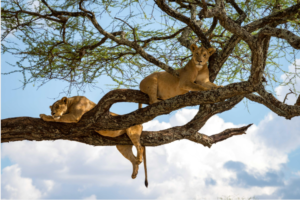
Lions inhabit the park’s woodland, grassland and river systems. They may be photographed resting beneath trees, walking along tracks or gathering near water.
Leopards are more elusive and sightings require patience and good fortune. Carefully observe tree branches and dense vegetation, particularly during the cooler hours of the morning and late afternoon.
For predators, a lens with good low-light performance is valuable because sightings often occur when the sun is low.
Buffaloes, Giraffes and Antelopes
Large buffalo herds can produce dramatic images, especially when dust or backlighting adds atmosphere. Giraffes offer elegant silhouettes, while impalas, waterbuck, kudu and other antelopes provide opportunities for portraits and action photographs.
Rather than photographing only individual animals, look for patterns, interactions and layers. A line of giraffes or a densely packed buffalo herd can tell a stronger story than a tightly cropped portrait.
Hippos and Crocodiles
The Rufiji River and associated lakes are excellent environments for photographing hippos and crocodiles.
Hippos are most interesting when interacting, yawning, splashing or leaving the water. Crocodiles may appear motionless, but reflections and textured skin can create striking compositions.
Always follow instructions from your professional guide and maintain a safe distance from both species.
Bird Photography in Nyerere
Nyerere National Park is an excellent destination for bird enthusiasts. Its combination of rivers, wetlands, woodland and open country supports an impressive diversity of resident and migratory species.
Photographers may look for:
- African fish eagles
- Kingfishers
- Bee-eaters
- Hornbills
- Herons
- Egrets
- Storks
- Pelicans
- Rollers
- Raptors
- Weavers
- Waders
A lens of approximately 400mm or longer is helpful for small birds. Modern autofocus tracking and a fast shutter speed will improve your chances of capturing birds in flight.
Boat safaris are particularly productive for bird photography because they allow access to riverbanks and nesting areas that cannot be approached by vehicle.
Best Time for a Nyerere Photography Safari
The best season depends on the type of photographs you want to create.
June to October: Dry Season
The dry season is generally considered the most reliable period for wildlife viewing. Vegetation becomes thinner, roads are usually easier to navigate and animals gather around dependable water sources.
Photographic advantages include:
- Easier wildlife visibility
- Concentrations near rivers and lakes
- Better road conditions
- Clear mornings
- Dusty, atmospheric scenes
- Strong predator-viewing possibilities
September and October can be hot and dry, but wildlife activity around the remaining water sources can be impressive.
November to March: Green Season
Short rains transform the landscape, creating fresh vegetation, dramatic skies and richer colors. This is a rewarding season for landscape photography, newborn animals and birds.
Photographic advantages include:
- Green scenery
- Dramatic clouds
- Cleaner backgrounds
- Migratory birds
- Fewer visitors
- Attractive light after rain
Rainfall can occasionally affect road conditions, and insects may be more noticeable. Nevertheless, photographers who value mood and color often appreciate the green season.
April and May: Long-Rain Period
The main rainy season normally occurs during April and May. Some camps may close temporarily, and access can become challenging.
Travel during this period requires careful planning and confirmation of camp operations, flights and road conditions.
Photography Safari Activities
Game Drives
Game drives provide access to woodland, plains, river systems and wildlife areas farther from camp. Early-morning departures are particularly productive because animals are active and the light is gentle.
A private vehicle is highly recommended for serious photographers. It allows you to:
- Spend longer at selected sightings
- Position the vehicle according to the light
- Avoid rushing between animals
- Keep camera equipment accessible
- Request fewer guests inside the vehicle
- Photograph from both sides when conditions permit
Ask for a vehicle with a pop-up roof and adequate space for equipment.
Boat Safaris
A boat safari is one of Nyerere’s signature experiences. It introduces a new perspective and subjects that may not be available during a normal game drive.
Bring a telephoto zoom rather than several separate lenses. Changing lenses on the river exposes your camera sensor to moisture and dust.
Image stabilization is useful because the boat may move gently on the water.
Walking Safaris
A guided walking safari focuses on the smaller features of the ecosystem: tracks, plants, insects, textures and signs of animal activity.
Photography during a walk is more deliberate. You may capture details such as footprints, bark patterns, seed pods, landscapes and the relationship between people and the wilderness.
Walking safaris are conducted under professional supervision. Always follow the guide’s safety instructions and avoid carrying more equipment than you can comfortably manage.
Recommended Camera Equipment
You do not need the most expensive camera to enjoy wildlife photography, but suitable lenses and preparation will make a considerable difference.
Suggested Camera Bodies
A DSLR or mirrorless camera with reliable autofocus and good high-ISO performance is ideal. Carrying two camera bodies is helpful because it reduces lens changes and provides a backup if one camera develops a problem.
A practical setup is:
- One body with a telephoto zoom
- One body with a wide-angle or standard zoom
Recommended Lenses
A versatile wildlife photography kit may include:
- 100–400mm or 200–500mm for wildlife and birds
- 70–200mm for larger animals and environmental portraits
- 24–70mm for landscapes, camps and people
- 16–35mm for wide landscapes and night skies
- Teleconverter for additional reach, when light permits
A zoom lens is often more practical than a fixed prime lens because animals may suddenly move closer to the vehicle.
Essential Accessories
Bring:
- Extra batteries
- Several high-capacity memory cards
- External storage for backups
- Lens-cleaning cloths
- Dust blower
- Beanbag or vehicle support
- Rain cover
- Protective camera bag
- Lens hoods
- Universal power adapter
- Portable charger
A tripod can be useful for landscapes or astrophotography, but it is often inconvenient inside a safari vehicle. A beanbag is normally more practical.
Camera Settings for Safari Photography
There is no single perfect setting, but the following starting points work well in many situations.
For moving animals:
- Shutter speed: 1/1000 second or faster
- Aperture: f/5.6 to f/8
- Auto ISO
- Continuous autofocus
- High-speed burst mode
For stationary wildlife:
- Shutter speed: approximately 1/320 to 1/800 second
- Aperture: f/4 to f/8
- Single-point or animal-detection autofocus
For birds in flight:
- Shutter speed: 1/2000 second or faster
- Continuous autofocus
- Wide tracking area
- High-speed burst mode
For landscapes:
- Low ISO
- Aperture around f/8 to f/11
- Exposure compensation when photographing bright skies
- Graduated filter if desired
Check your highlights regularly. Pale animals, bright sky and reflective water can easily become overexposed.
Practical Photography Tips
Focus on Animal Behavior
A technically perfect portrait is attractive, but behavior creates a stronger story. Watch for grooming, feeding, hunting, playing, drinking and communication between animals.
Photograph at Eye Level
Whenever it is safe and possible, a lower angle creates intimacy. Boat safaris naturally provide a lower perspective for river animals and birds.
Consider the Background
Before pressing the shutter, inspect the entire frame. A distracting branch, vehicle or brightly lit patch can weaken an otherwise excellent photograph.
Use the Available Light
Morning and evening light produces warmth, texture and long shadows. Midday light can be difficult, but it works for high-contrast black-and-white images, animals beneath trees and reflections on water.
Leave Space for Movement
When an animal is walking or looking in one direction, leave room in front of it. This makes the composition feel natural and allows the photograph to breathe.
Put the Camera Down Occasionally
Photography is part of the safari—not the entire safari. Take time to observe the landscape and appreciate the encounter without looking continuously through a viewfinder.
What to Wear and Pack
Choose neutral-colored, lightweight clothing in beige, olive, brown or khaki. Avoid extremely bright colors during walking safaris.
Your packing list should include:
- Lightweight long-sleeved shirts
- Comfortable trousers
- Warm layer for early mornings
- Hat with a secure strap
- Sunglasses
- Sunscreen
- Insect repellent
- Comfortable walking shoes
- Reusable water bottle
- Personal medication
- Dust protection for cameras
Soft-sided luggage is preferable, particularly when using a small domestic aircraft. Always confirm the airline’s current baggage allowance before departure.
How Many Days Do Photographers Need?
A minimum of three nights is recommended, although four or five nights provide better photographic possibilities.
A longer stay gives you more time to revisit productive areas, respond to weather conditions and wait for behavior instead of rushing from one sighting to another.
Sample Five-Day Photography Itinerary
Day 1: Arrival in Nyerere
Fly from Dar es Salaam or Zanzibar, meet your guide and begin an introductory game drive. Photograph wildlife around the river system before sunset.
Day 2: Full-Day Game Drive
Depart early with a packed breakfast or lunch. Concentrate on predators, elephants and wildlife activity near water.
Day 3: Game Drive and Boat Safari
Photograph terrestrial wildlife during the morning. In the afternoon, explore the Rufiji River by boat for hippos, crocodiles, birds and sunset landscapes.
Day 4: Walking Safari and Game Drive
Join a guided walk in the morning and photograph tracks, plants and wider landscapes. Continue with a game drive during the afternoon.
Day 5: Final Photography Session
Enjoy a final morning drive before transferring to the airstrip for your onward flight.
Responsible Wildlife Photography
Responsible behavior protects both wildlife and the quality of your experience.
Never pressure a guide to drive dangerously, block an animal’s path or move too close to wildlife. Avoid loud conversations and do not use sounds to attract animals.
Flash photography should not be used around animals at night unless it is permitted and professionally managed. Drones are generally restricted in Tanzanian protected areas and require official authorization.
Ethical photography depends on patience. The animal’s welfare must always be more important than obtaining a particular image.
Plan Your Nyerere Photography Safari
A photography Nyerere National Park safari combines remote wilderness, varied wildlife and exceptional access to the Rufiji River. It is an excellent choice for professional photographers, enthusiastic beginners, bird lovers and couples seeking a quieter safari experience.
Kilipath African Safaris can arrange private photographic vehicles, professional guides, domestic flights, accommodation, boat safaris and walking experiences. Your itinerary can also combine Nyerere with Ruaha National Park, Mikumi, Zanzibar or other Tanzanian destinations.
Contact us today to receive a personalized Nyerere photography safari itinerary designed around your travel dates, accommodation preference and photographic interests.