A fly in Tarangire safari holiday is one of the most convenient ways to experience the wildlife and landscapes of northern Tanzania while reducing time spent on long road transfers. Instead of driving all the way to the park, travelers can use a light aircraft to reach Kuro Airstrip, located inside Tarangire National Park, where a safari guide can meet them and begin the game-viewing experience.
Tarangire National Park covers about 2,850 square kilometers and is named after the Tarangire River, an important water source for wildlife, particularly during the dry season. The park is famous for elephants, huge baobab trees, varied birdlife and classic African savannah scenery.
For travelers combining Zanzibar, Serengeti, Ngorongoro or other destinations with a Tanzania safari, flying can make the itinerary considerably easier.
What Is a Fly In Tarangire Safari Holiday?
A fly-in safari involves traveling to or from the safari area aboard a small scheduled or charter aircraft rather than completing every transfer by road.
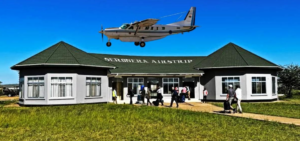
In Tarangire, flights normally use Kuro Airstrip, which is located within the national park. TANAPA confirms that scheduled and charter flights operate through Kuro, providing access to Tarangire and connections with other safari destinations.
Once your aircraft lands, your safari vehicle and professional guide can meet you at the airstrip. From there, your game drive begins almost immediately.
This makes a fly in Tarangire safari holiday especially attractive for honeymooners, families, photographers and visitors with limited time in Tanzania.
Why Choose a Fly In Safari to Tarangire?
The main advantage is time.
Northern Tanzania’s safari destinations can involve several hours of driving. Road safaris are enjoyable and allow travelers to see rural Tanzania, but those with shorter holidays may prefer to spend more of their available time inside the wildlife areas.
Flying can also make it easier to combine destinations such as:
- Zanzibar and Tarangire
- Tarangire and Serengeti
- Tarangire and Ngorongoro
- Tarangire and Lake Manyara
- Tarangire and Arusha
- Tarangire with a longer Northern Circuit safari
Current airline schedules show Tarangire/Kuro connected with locations including Arusha, Zanzibar and several Serengeti airstrips, although particular routings and departure times vary and should always be reconfirmed before travel.
Flying Into Kuro Airstrip
Kuro Airstrip is one of the most important features of a fly in Tarangire safari holiday.
Unlike arriving at an airport outside the wildlife area and then driving several hours, Kuro places travelers inside Tarangire National Park.
Your arrival might look something like this:
Your aircraft descends over northern Tanzania, revealing open savannah, woodland and seasonal wetlands below. After landing at Kuro Airstrip, you collect your luggage and meet your safari guide beside the airstrip.
Your safari vehicle then leaves the airstrip and begins exploring Tarangire.
Depending on your arrival time, you can enjoy an afternoon game drive before continuing to your lodge or tented camp.
Coastal Aviation, for example, currently lists Kuro Airstrip as its Tarangire destination and operates connections between Tarangire and other safari locations. Flight schedules remain subject to operational changes.
Wildlife on a Tarangire Safari
Tarangire offers far more than elephants, although its elephant sightings are one of the park’s major attractions.
Elephants
Large elephant herds are strongly associated with Tarangire.
During the dry months, wildlife becomes increasingly dependent on permanent water sources, including the Tarangire River. This can create excellent opportunities to see elephants feeding, drinking, interacting and sometimes crossing directly in front of safari vehicles.
Watching an elephant family walking beneath enormous baobab trees is one of Tarangire’s classic safari scenes.
Lions
Lions are another important predator found within the ecosystem.
Your guide may search river areas, grasslands and woodland for resting prides, particularly during cooler morning and late-afternoon periods.
Some visitors may also encounter lions resting in trees, although wildlife sightings can never be guaranteed.
Leopards
Leopards tend to be more secretive.
They may be found around woodland, riverine vegetation and areas with suitable cover. An experienced guide will look for tracks, alarm calls and other signs that might indicate a leopard nearby.
Giraffes
Giraffes are commonly seen moving through Tarangire’s woodland landscapes.
Their height combined with the park’s ancient baobab trees creates excellent photographic opportunities.
Buffalo, Zebra and Wildebeest
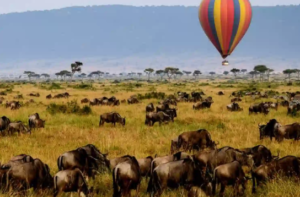
Buffalo, zebra, wildebeest, impala and other herbivores also occur throughout Tarangire.
During favorable periods, concentrations of wildlife around water can make game drives particularly productive.
The Famous Baobab Trees of Tarangire
Wildlife is only part of Tarangire’s attraction.
The national park is also known for its impressive baobab trees.
These giant trees can dominate the landscape, with enormous trunks and unusual branches creating some of the most recognizable scenery in northern Tanzania.
Baobabs provide wonderful backgrounds for wildlife photography, particularly when elephants, giraffes or antelope pass nearby.
For photographers, including Tarangire on a Tanzania itinerary gives a noticeably different visual experience from the open plains of Serengeti or the dramatic walls of Ngorongoro Crater.
Best Time for a Fly In Tarangire Safari Holiday
Tarangire can be visited throughout the year, but the experience changes considerably between seasons.
TANAPA describes the main dry periods as approximately June to October and January to February, while short rains commonly occur around November–December and the longer rains from roughly March to May.
June to October
This is one of the most popular periods for a Tarangire safari.
As surrounding areas become drier, animals concentrate around reliable water sources. Vegetation also tends to become thinner, which can improve visibility.
This period is particularly attractive for travelers focused strongly on wildlife viewing.
Because it is also a popular safari season, accommodation should be reserved well in advance. TANAPA similarly recommends early booking for the June–October peak period.
November to December
The arrival of short rains can transform the landscape.
Vegetation becomes greener and the scenery can be beautiful for photography. Visitor numbers may also differ from the busiest dry-season periods.
January and February
These months can offer warm conditions and good safari opportunities.
They are also useful when combining Tarangire with destinations such as the southern Serengeti and Ndutu during the broader calving-season period.
March to May
This is generally the wetter period.
Travelers can expect greener scenery, changing road conditions and fewer visitors in some areas. Safari vehicles need to be suitable for wet-season conditions.
Sample 3-Day Fly In Tarangire Safari Itinerary
A short fly-in itinerary can work particularly well for travelers staying in Zanzibar or combining Tarangire with another safari destination.
Day 1: Flight to Tarangire and Afternoon Game Drive
Take your scheduled flight toward Tarangire and land at Kuro Airstrip.
Your professional safari guide meets you on arrival.
After a short introduction, begin exploring Tarangire National Park. Depending on the schedule, you may have lunch before continuing with an afternoon game drive.
Look for elephants, giraffes, zebras, wildebeest, buffalo and predators while driving among baobabs and acacia woodland.
Later, continue to your lodge or tented camp for dinner and overnight.
Day 2: Full-Day Tarangire Safari
After breakfast, depart for a longer game drive.
Your guide can explore different habitats depending on current wildlife movements. Areas near the Tarangire River and seasonal wetlands may be especially productive.
Enjoy lunch during your safari day before continuing your game drive into the afternoon.
Return to your accommodation for dinner and overnight.
Day 3: Morning Safari and Departure
Begin with breakfast followed by another morning game drive.
Morning hours can offer pleasant temperatures and active wildlife.
Later, transfer back to Kuro Airstrip for your onward flight.
Depending on your overall Tanzania itinerary, you could continue toward Arusha, Zanzibar or another safari destination.
Combining Tarangire and Serengeti by Air
One of the biggest benefits of flying is the possibility of connecting Tarangire with Serengeti without returning to Arusha.
Current regional flight schedules include services linking Kuro with Serengeti airstrips, although availability and routings depend on season and passenger demand.
A possible itinerary could therefore include Tarangire first, followed by a flight toward the Serengeti.
For example:
Day 1: Fly to Tarangire and game drive
Day 2: Full-day Tarangire safari
Day 3: Fly from Kuro toward Serengeti
Days 4–5: Serengeti game drives
Day 6: Fly onward to Zanzibar or Arusha
This arrangement is particularly useful for honeymoon and luxury safari travelers who want to minimize road transfers.
Zanzibar to Tarangire Fly In Safari
Combining a beach holiday with safari is one of Tanzania’s most popular itinerary styles.
Visitors relaxing in Zanzibar can add Tarangire without necessarily spending days traveling overland.
Flights may involve stops or connections rather than always operating as nonstop services. Current published schedules, for example, show links between Kuro and Zanzibar with routing that can include Arusha.
Because schedules change seasonally, it is important to design the safari around the confirmed flight timetable rather than relying on an old schedule found online.
A Zanzibar and Tarangire combination gives travelers two dramatically different experiences: tropical Indian Ocean beaches followed by elephants and baobabs in the African wilderness.
Accommodation for a Fly In Tarangire Safari Holiday
Tarangire offers accommodation at different comfort levels, including tented camps and safari lodges.
TANAPA notes that options are available both within and around the park, including camps and lodges in several areas of the ecosystem.
Mid-Range Safari Accommodation
Mid-range accommodation usually provides comfortable rooms or permanent tents, private bathrooms, meals and convenient access to game-drive areas.
It can be an excellent balance between comfort and price.
Luxury Safari Lodges
Luxury properties may offer spacious tented suites, excellent dining, swimming pools, private decks and highly personalized service.
They work especially well for:
honeymooners, anniversary travelers, families seeking greater comfort and visitors combining safari with luxury Zanzibar accommodation.
Tented Safari Camps
A tented camp provides one of the most atmospheric ways to experience Tarangire.
Many permanent safari tents include proper beds, private bathrooms and verandas while still allowing guests to hear the sounds of the wilderness at night.
What to Pack for Your Tarangire Fly In Safari
Packing light is important because safari aircraft generally have stricter luggage restrictions than international flights.
Soft-sided bags are usually easier to load into small aircraft than rigid suitcases.
Useful safari items include:
lightweight neutral clothing, comfortable shoes, sun hat, sunscreen, sunglasses, insect repellent, camera, spare batteries or power bank, binoculars, light jacket and essential medication.
You should confirm the airline’s current baggage allowance before departure because limits can vary between operators and routes.
For Tarangire specifically, neutral-colored clothing is useful, particularly in areas where tsetse flies may occur. TANAPA also advises travelers to carry insect repellent and appropriate sun protection.
Fly In Safari vs Road Safari
Neither option is automatically better; they simply suit different travel styles.
A fly-in safari is particularly attractive if you have limited time, are traveling from Zanzibar, prefer fewer long road journeys or are building a premium multi-destination itinerary.
A road safari can be better for travelers who want to experience the landscapes between destinations and explore several Northern Circuit parks sequentially.
It is also possible to combine both.
For example, you could drive from Arusha through Tarangire, Ngorongoro and Serengeti and then fly back from Serengeti, avoiding the long return drive.
This road-and-air combination is one of the most efficient ways to organize a northern Tanzania safari.
Is Tarangire Worth Visiting?
For travelers interested in elephants, baobab landscapes, wildlife photography and a different environment from Serengeti, Tarangire deserves serious consideration.
It is particularly valuable in an itinerary because each northern Tanzania park offers something different.
Serengeti is known for enormous plains and large-scale wildlife movements.
Ngorongoro offers wildlife viewing inside an extraordinary volcanic caldera.
Tarangire provides riverine landscapes, ancient baobabs, elephant herds, woodland and seasonal wetlands.
Combining them creates a more varied safari experience.
Plan Your Fly In Tarangire Safari Holiday
A fly in Tarangire safari holiday combines convenience with one of Tanzania’s most distinctive wildlife destinations. Landing inside the park at Kuro Airstrip allows travelers to move quickly from aircraft to safari vehicle and begin exploring a landscape filled with elephants, baobab trees, predators and diverse birdlife.
Whether you are starting from Zanzibar, Arusha or another safari park, Kilipath African Safaris can arrange your flights, private safari vehicle, professional guide, park fees, accommodation, meals and transfers as one coordinated itinerary.
Contact Kilipath African Safaris to create your personalized Tarangire fly-in safari and combine it with Serengeti, Ngorongoro, Zanzibar or other destinations across Tanzania.