A Ruaha safari Nyerere itinerary combines two distinctive wildlife destinations in southern Tanzania. Ruaha brings dramatic landscapes and rewarding game drives, while Nyerere adds river scenery and opportunities to explore by boat. Together, they create a varied journey for travelers who want time to observe wildlife and experience different habitats.
The most useful starting point is a seven-day safari with three nights in each park. This gives you several opportunities for wildlife viewing while allowing for the journey between them. Your final route should reflect flight availability, accommodation locations, budget, and how much time you want to spend traveling.
Why Combine Ruaha and Nyerere?
Combining these parks changes the character of your safari halfway through the trip.
Ruaha sits west of Iringa in south-central Tanzania. Accommodation options include campsites, park bandas, and tented camps or lodges in different areas of the park. Your choice of accommodation therefore affects the landscapes you explore and the time spent driving each day.
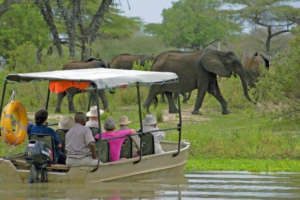
Nyerere offers a mix of woodlands, grasslands, floodplains, and river habitats. Boat safaris along the Rufiji provide a different perspective on wildlife, including crocodiles and waterbirds. Guided walking safaris can add another dimension where available and properly arranged.
For planning purposes, give each park its own time. A rushed visit can leave you spending much of your holiday moving between camps instead of enjoying the bush.
How Many Days Should You Allow?
Seven days and six nights is a practical suggested starting point for this combination. Spend three nights in Ruaha and three in Nyerere, with the middle day reserved for your transfer.
If you have fewer days, consider whether visiting one park would give you a more satisfying experience. If you have eight to ten days, add extra safari nights or leave room for overnight stays before and after the safari.
Remember that arrival and departure days are often partial safari days. A seven-day itinerary does not automatically include seven full days of game drives.
Suggested Seven-Day Ruaha Safari Nyerere Itinerary
This sample starts in Ruaha and finishes in Nyerere. It can be reversed if transport connections or your onward plans make that more convenient. Flights, activities, and camp availability must be confirmed for your travel dates.
| Day | Suggested plan | Overnight |
|---|---|---|
| 1 | Travel to Ruaha, settle into camp, and take a game drive if arrival time permits | Ruaha |
| 2 | Explore Ruaha on morning and afternoon game drives | Ruaha |
| 3 | Enjoy another wildlife day with a flexible guide-led route | Ruaha |
| 4 | Transfer to Nyerere and settle into your accommodation | Nyerere |
| 5 | Explore Nyerere on game drives | Nyerere |
| 6 | Combine a boat safari with another available wildlife activity | Nyerere |
| 7 | Depart, with a final activity only if the schedule allows | — |
Day 1: Arrival in Ruaha
Arrange your arrival around the transfer to your chosen camp. After check-in, lunch, and time to settle, you may have an afternoon game drive.
Keep the first day flexible. A late arrival may leave time only for the camp transfer and dinner. Booking an overnight stay before your safari can help if your international arrival does not connect comfortably with onward travel.
Day 2: A Full Day Exploring Ruaha
Begin with an early game drive and let your guide shape the route around recent wildlife activity. You may return to camp during the warmer part of the day or arrange a longer outing with a packed lunch.
Allow time for observation. Watching animal behavior, following tracks, and revisiting promising areas can be more rewarding than trying to cover the greatest possible distance.
Day 3: More Time in Ruaha
Use your second full day to explore further or revisit an area that produced interesting sightings. Wildlife encounters vary, so another day gives you fresh opportunities without promising a particular animal.
Photographers may prefer longer stops and outings timed for softer light. Discuss your priorities with the guide, especially when game drives are shared with other camp guests.
Day 4: Transfer to Nyerere
Treat this primarily as a travel day. If a suitable air connection is available, flying can reduce the time devoted to overland travel. Confirm whether the journey is direct or involves intermediate stops.
After reaching Nyerere, settle into your lodge or tented camp. An afternoon activity may be possible, but should remain optional until the transfer schedule is confirmed.
Day 5: Game Drives in Nyerere
Spend the day exploring the park by vehicle. Its varied habitats make the experience different from Ruaha, and your guide can choose a route according to local conditions.
Nyerere is also a destination for travelers interested in African wild dogs. Sightings depend on animal movements and luck; they should remain a possibility rather than a booking guarantee.
Day 6: Experience the River
Arrange a boat safari where your camp, operating conditions, and park permissions allow. The river offers opportunities to observe waterside wildlife and birds from a different viewpoint.
A guided walk may also be possible, subject to availability, appropriate supervision, and participation requirements. Confirm the activity schedule beforehand rather than assuming every camp includes all experiences.
Day 7: Departure
Enjoy breakfast before your departure transfer. A short final game drive may fit, depending on flight timing and the distance to the airstrip.
Allow enough time for onward connections. If continuing to Zanzibar or catching an international flight, check the complete journey before booking separate tickets.
Best Time to Plan the Safari
TANAPA identifies June to October as Ruaha’s dry season and November to May as its wet season. For a wildlife-focused itinerary, the dry-season window is a useful starting point when discussing dates with your operator.
Your final decision should also consider current conditions in Nyerere, camp opening dates, and the availability of boat activities. Travelers considering wetter months should confirm road access and accommodation operations before committing.
Seasonal patterns guide planning, but they do not guarantee weather or sightings.
Flying or Traveling by Road?
Choose transport after comparing the complete itinerary, rather than the ticket price alone.
For a shorter holiday, ask for a flight-based option that preserves time in the parks. Confirm departure points, airstrips, connections, baggage allowances, and transfers at both ends.
For an overland trip, request a longer route with realistic overnight stops. Road conditions and camp locations affect travel time, so avoid treating the journey between the parks as a quick transfer.
Accommodation and Budget Planning
Choose accommodation by location, comfort, and activity arrangements. Ask whether game drives are private or shared, whether rooms have private bathrooms, and which meals and drinks are included.
A meaningful quote should clearly show:
- Accommodation and meals.
- Flights or road transport.
- Airport and airstrip transfers.
- Park fees and applicable accommodation-related charges.
- Guiding and vehicle arrangements.
- Boat or walking activities.
- Exclusions, payment terms, and cancellation conditions.
There is no single fixed price for this itinerary. Dates, group size, camp category, transport, and inclusions all affect the total. Compare matching services when reviewing offers.
What Should You Pack?
Bring comfortable neutral-colored clothing, sun protection, a light warm layer, closed walking shoes, and any personal medication. Binoculars and spare camera batteries are useful for wildlife viewing.
If flying, confirm the airline’s baggage rules before packing. Soft bags may be required, and allowances should be checked for every flight in the itinerary.
Plan Your Southern Tanzania Safari
A well-planned Ruaha safari Nyerere itinerary gives each park enough time and keeps transfers realistic. Share your dates, group size, accommodation preference, and budget with Kilipath African Safaris to discuss a route suited to your travel plans.