

Budget Ngorongoro Crater Safari Holiday
Planning a budget Ngorongoro Crater safari holiday from Arusha? Compare a crater day trip, a two-day Tarangire and Ngorongoro safari, or a…
Read articleArusha City - Tanzania
Safari & Travel Tips
August 17, 2026 · 11 min read
A photography Serengeti safari trip is much more than an ordinary wildlife holiday. It is an opportunity to spend meaningful time in one of Africa's most celebrated wildlife destinations while focusing on the moments, light, landscapes, and animal behavior that make exceptional photographs possible.
The Serengeti offers an extraordinary combination of open plains, resident predators, huge herbivore populations, dramatic skies, seasonal migration movements, and beautiful African landscapes. Whether you are traveling with professional camera equipment or simply want outstanding photographs to remember your journey, a photography-focused safari gives you more flexibility to make the most of every wildlife encounter.
With Kilipath African Safaris, your Serengeti photography safari can be organized around your travel dates, preferred accommodation, budget, photography interests, and the wildlife experiences you hope to capture.
The Serengeti is one of Tanzania's most rewarding destinations for wildlife photography because of its diversity of habitats and animals.
Photographers may encounter:
The experience changes throughout the year, meaning every Serengeti photography safari has its own character.
A standard safari usually focuses on seeing as many animals and attractions as possible. A photography safari can take a different approach.
When an excellent photographic opportunity appears, patience matters.
You may want to remain with a pride of lions rather than immediately moving to another sighting. A cheetah may appear to be preparing to hunt. A leopard may be resting in a tree waiting to become active. Elephants may slowly approach a water source. The light may also improve dramatically as the sun gets lower.
A private photography safari provides greater flexibility to discuss these situations with your guide and spend additional time at sightings whenever park regulations and conditions allow.
For serious photographers, a private safari is generally the strongest option.
Having your own safari vehicle gives you greater control over the experience. Instead of following the schedule of unrelated travelers, your group can discuss daily priorities with the guide.
Depending on the itinerary and park regulations, this may allow you to prioritize:
Private safaris are especially suitable for professional photographers, content creators, wildlife enthusiasts, couples, families and small groups carrying substantial camera equipment.
The Serengeti supports an impressive population of lions. They can be photographed resting in the grass, interacting with cubs, feeding, walking across the plains or occasionally hunting.
Early morning can be particularly rewarding because predators may still be active and the light is often softer.
The Serengeti's open plains provide excellent habitat for cheetahs. Their preference for open country can create beautiful photographic compositions, particularly when an animal is positioned against expansive grassland.
Leopards are more elusive, making every encounter particularly memorable.
They are sometimes found resting on tree branches, moving through vegetation or observing their surroundings from elevated positions.
Patience can make a significant difference when photographing these secretive cats.
Elephants provide opportunities for both portraits and wider environmental photographs. Family groups, young calves and large bulls can all produce powerful images.
During different stages of the Great Migration, enormous concentrations of wildebeest and zebra can transform the landscape.
Wide-angle photographs can communicate the enormous scale of the herds, while longer lenses allow photographers to focus on individual animals and behavior.
For many travelers, photographing the Great Migration is one of the biggest reasons to visit the Serengeti.
However, the migration is a natural wildlife movement rather than a scheduled event. Its exact position varies according to rainfall, grazing conditions and other environmental factors.
Different seasons therefore provide different photographic opportunities.
Large numbers of wildebeest are generally associated with the southern Serengeti and Ndutu ecosystem during the green season.
The calving period is particularly interesting for photographers because newborn animals attract predators and create many opportunities for behavioral photography.
As conditions change, herds generally begin moving through other parts of the ecosystem. Landscapes can remain attractive following seasonal rains, and photographers may enjoy dramatic skies and greener scenery.
During this broad period, migration photography often focuses farther north as herds move through the northern Serengeti and wider Mara ecosystem.
River crossings are among the most famous scenes associated with the migration.
However, crossings cannot be guaranteed. Wildlife decides when and where movement happens, so patience is essential.
Short rains can begin influencing herd movements southward again as the annual migration cycle continues.
Central Serengeti, particularly the Seronera region, is one of the most important areas for year-round wildlife viewing.
Its combination of grasslands, rivers, woodland and rocky kopjes supports many resident animals.
It can be particularly rewarding for photographing:
Because significant wildlife remains in the region throughout the year, Central Serengeti can form the foundation of many photography safari itineraries.
Northern Serengeti is particularly attractive during the migration season.
The region offers rolling landscapes, woodland, rivers and more remote wilderness scenery. During the appropriate months, photographers may visit the area hoping to photograph large migrating herds and activity around the Mara River.
A northern photography itinerary normally requires additional time because of the distance from Central Serengeti.
There is no single best month for every photographer.
Your ideal travel period depends on what you want to photograph.
For predator photography, Central Serengeti can provide opportunities throughout the year.
For green landscapes and newborn animals, the green season can be especially attractive.
For migration herds and possible river crossings, July through October is generally an important period to consider.
For photographers who prefer fewer vehicles and atmospheric landscapes, shoulder and green-season travel can also be highly rewarding.
Early morning is one of the most valuable periods of a Serengeti photography safari.
The light can be soft and warm, creating beautiful conditions for wildlife portraits and landscapes. Temperatures are also cooler, and some predators may still be active following the night.
Starting early can create opportunities to photograph wildlife before the stronger midday sunlight develops.
Late afternoon provides another important photographic window.
As sunlight becomes warmer and lower, animals can be beautifully illuminated against the Serengeti landscape.
Possible compositions include:
Clouds, dust and changing weather can make these moments even more dramatic.
Your safari vehicle is an important part of the photographic experience.
A well-organized 4x4 safari vehicle provides elevated viewing and allows photographers to observe wildlife while remaining inside designated safari areas.
A pop-up roof is particularly useful because it provides a wider field of view when photographing animals.
For photographers carrying several camera bodies, telephoto lenses, binoculars and other equipment, a private vehicle can also provide more space and flexibility.
The exact equipment depends on your photography style, but travelers commonly bring:
A smartphone can also produce excellent travel photographs, particularly for landscapes, camp experiences and wider environmental scenes.
Dust is a normal part of an African safari, especially during the dry season.
Keep camera equipment protected whenever it is not being used. Avoid unnecessary lens changes while the vehicle is moving through dusty conditions.
A simple cleaning kit can be extremely useful.
Photographers should also bring sufficient memory cards and ideally maintain backups of important images during the safari.
For a photography-focused Serengeti safari, additional time is valuable.
Suitable for travelers with limited time who want an introduction to Serengeti wildlife and photography.
Provides more game-drive time and reduces some of the pressure of a short itinerary.
A strong option for photographers who want additional time observing animal behavior and exploring different habitats.
Excellent for serious photographers wanting slower-paced wildlife observation and potentially multiple Serengeti regions.
Recommended for dedicated wildlife photographers who want to build a diverse portfolio and maximize opportunities for changing light, weather and animal behavior.
Depart Arusha and travel toward Serengeti National Park. Enjoy changing landscapes along the journey before entering the Serengeti ecosystem.
Begin photographing wildlife as opportunities arise and continue toward your accommodation.
Start early to take advantage of morning light.
Spend the day searching for predators, elephants, giraffes, plains game and interesting animal behavior.
Rather than rushing between sightings, a photography-focused approach allows time to observe promising situations.
Another full day provides opportunities to explore different habitats.
Your guide can use previous sightings, wildlife movements and current conditions to determine productive areas.
The objective is not simply to repeat Day 2 but to expand the diversity of your photographic opportunities.
Enjoy another early game drive and focus on animals or scenes you may still want to photograph.
This additional day is particularly valuable because wildlife photography depends heavily on timing and chance.
Enjoy your final wildlife photography opportunities before beginning the onward journey according to your customized itinerary.
The safari can also be combined with Ngorongoro Crater, Tarangire, Lake Manyara or other Tanzanian destinations.
Combining Serengeti National Park with the Ngorongoro Crater provides photographers with two distinctly different environments.
Serengeti offers expansive landscapes and enormous wilderness areas, while Ngorongoro provides a concentrated wildlife experience inside a spectacular volcanic caldera.
A combined itinerary can increase the diversity of wildlife and landscape photographs you take home.
Tarangire is particularly famous for elephants, baobab trees and attractive dry-season scenery.
Adding Tarangire to a Serengeti photography trip can provide a different visual character and excellent opportunities for photographing elephants within classic Tanzanian landscapes.
Your photography safari can be organized according to different comfort levels.
Camping provides an adventurous experience close to nature and can help travelers keep overall safari costs lower.
Mid-range accommodation provides greater comfort while maintaining a strong connection with the safari environment.
Luxury accommodation offers spacious rooms or tents, excellent locations and additional comfort between game drives.
Seasonal camps may be strategically positioned closer to important migration areas during particular periods.
The best accommodation is not simply the most expensive property. For photographers, location is extremely important because reducing unnecessary driving can provide more time in productive wildlife areas.
A photography safari package can typically include:
Exact inclusions should always be confirmed in your individual quotation.
Depending on the package, exclusions may include:
Your final quotation should clearly identify all inclusions and exclusions before booking.
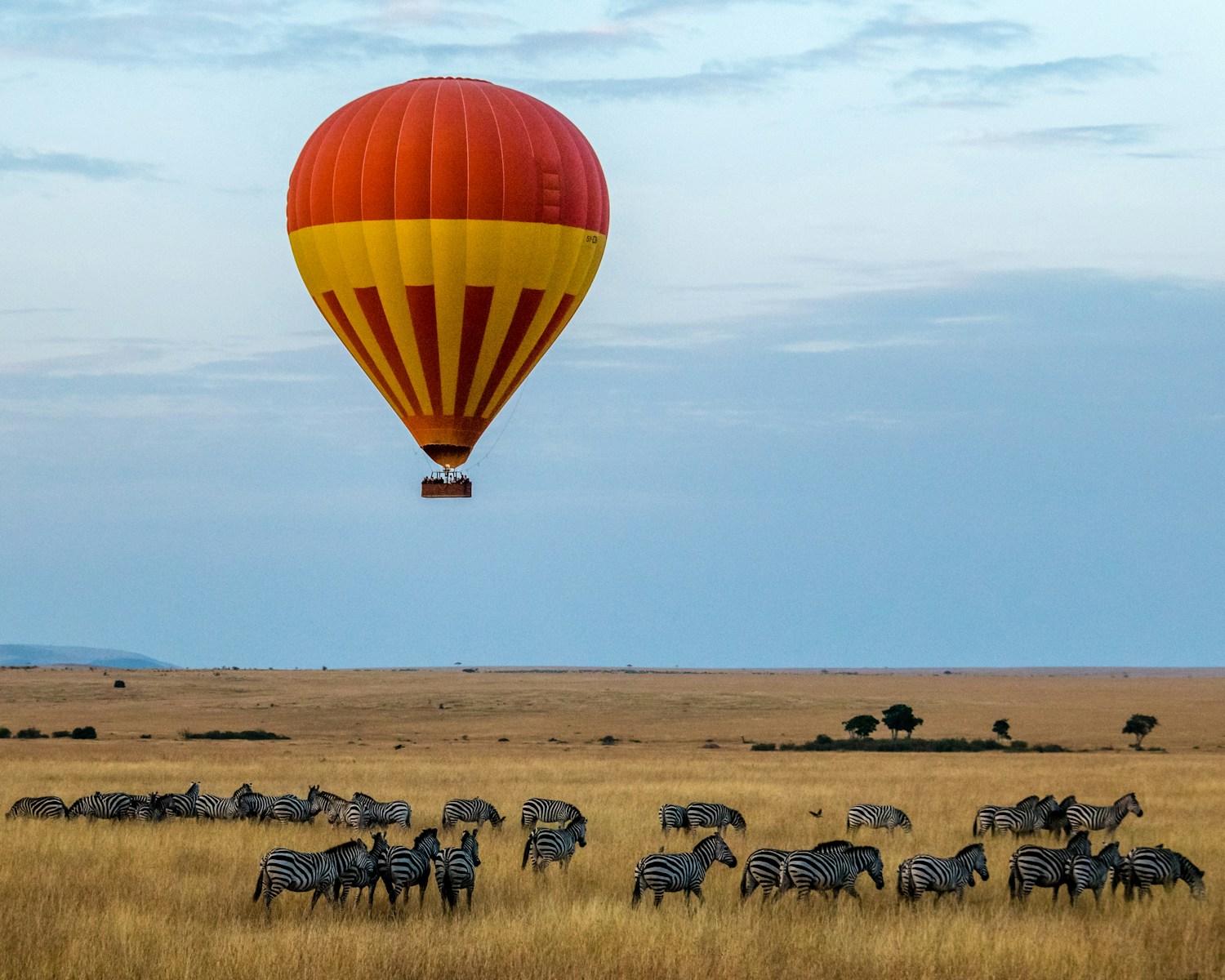
A hot-air balloon safari can add a completely different perspective to your photography trip.
From the air, photographers can capture wide landscapes, winding rivers, plains and wildlife from an elevated viewpoint.
Balloon flights usually operate around sunrise, making the experience particularly atmospheric.
Because balloon safaris are optional and availability can be limited, advance booking is recommended.
Couples can enjoy a private photography safari even when only one person is a serious photographer.
The itinerary can balance extended photographic opportunities with comfortable accommodation, scenic stops and relaxed safari experiences.
Photography safaris can also be incorporated into honeymoons and anniversary trips.
Professional wildlife photographers may require more specialized arrangements.
When requesting your safari, tell us about:
This information allows us to build a safari that is better suited to your working style.
You do not need to be a professional photographer.
Beginners can enjoy a photography safari just as much as experienced photographers.
The most important qualities are curiosity and patience.
Observing animals carefully also helps you anticipate behavior. Instead of photographing continuously, watch what the animal is doing. A lion looking toward a herd, an elephant approaching another family member or a bird preparing to fly may provide clues that something interesting is about to happen.
Excellent wildlife photography should never come at the expense of animal welfare.
Responsible photographers should:
The most powerful photographs are created by observing authentic wildlife behavior.
Kilipath African Safaris can organize a Serengeti trip according to your photography priorities rather than treating photography as an afterthought.
We can help arrange:
Our goal is to create enough flexibility for you to experience the Serengeti while maximizing your opportunities to return home with memorable photographs.
Every wildlife photograph begins with being in the right environment at the right moment.
A carefully planned photography Serengeti safari trip gives you the time and flexibility to search for those moments—from lions moving through golden grass and elephants crossing endless plains to migration herds disappearing toward the horizon.
Tell Kilipath African Safaris your travel dates, number of travelers, number of safari days, accommodation preference and approximate budget, and we can create a personalized Serengeti photography safari itinerary and quotation.
Ready to photograph the Serengeti? Request your customized safari and start planning your Tanzania photography adventure.
Planning a budget Ngorongoro Crater safari holiday from Arusha? Compare a crater day trip, a two-day Tarangire and Ngorongoro safari, or a…
Read articleA Tanzania safari from Zanzibar can mean a short mainland trip during your beach holiday or a complete package with flights, game…
Read articleLooking for a group Tanzania safari price from Kilipath African Safaris? A published example for our four-day shared camping safari through Tarangire,…
Read articlePair game drives on Tanzania’s mainland with a few days on Zanzibar’s coast. With Kilipath African Safaris, you can start in Arusha…
Read article

