Skip to content

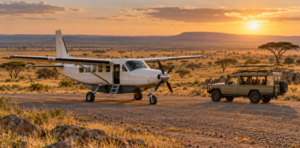
Land at Kuro Airstrip inside Tarangire National Park and meet your safari guide close to the Tarangire River. From there, you can start looking for elephants, giraffes, and zebra among the baobabs as you make your way to camp. Kilipath African Safaris can tailor a private fly-in safari around your travel dates, preferred lodge, and onward destination.
Request a personalized fly-in safari quote
What it’s like to fly into Tarangire
On the approach to Kuro, look out for the change from cultivated land to a landscape of woodland, open grass and scattered baobabs. Once you land, your guide will talk you through the plan for the afternoon. If there’s time for a drive before check-in, the airstrip transfer can become your first chance to see wildlife. You might stop for elephants crossing ahead or watch a giraffe pull leaves from the canopy before continuing to camp.
On a private safari, tell your guide what you’d most like to spend time on. You might want to wait quietly for a herd to come down to the water, give the children time to ask questions, or stay with a bird long enough to get a clear photograph. The guide can pace the stops around your interests, the day’s sightings, and the time you need to reach camp.
Choose your Tarangire safari package
| Sample package | Nights | Route | Best for |
|---|---|---|---|
| Two-day Tarangire fly-in | 1 | Kuro Airstrip → Tarangire → Arusha by road or onward flight if available | Travelers with a short break |
| Three-day Tarangire fly-in | 2 | Kuro Airstrip → Tarangire → Arusha by road or onward flight if available | Travelers who want a full day in the park |
| Northern Circuit extension | By request | Kuro Airstrip → Tarangire → Ngorongoro by road, with optional Serengeti extension | Travelers combining several parks |
Two-day fly-in Tarangire safari
Day 1 — From the airstrip to the Tarangire River
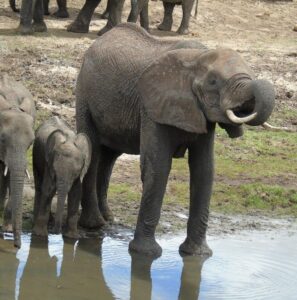
Your guide meets you at Kuro and loads your bags into the safari vehicle. Depending on your landing time and where you’re staying, you can explore on the way to camp or check in first and head out in the afternoon. Along the river, look for elephants moving between the shade and the water. In the more open stretches, your guide may scan for zebra and giraffes or stop to watch birds working the riverbanks. A private vehicle gives you time to linger when something catches your interest, whether that’s a herd crossing the track or a giraffe feeding among the trees.
Day 2 — One more drive before you leave
If your flight or road departure leaves enough time, head out after breakfast for a final look at the river and baobab woodland. Your guide can revisit an area that was active the day before or take a different track to cover new ground. Then return to Kuro for a confirmed flight or continue by road toward Arusha. With just one night, the arrival and departure times shape how much wildlife viewing fits into the trip. Share any fixed onward bookings when you request your quote.
With one night in Tarangire, think of your arrival afternoon and departure morning as two separate opportunities to explore. On the afternoon drive, your guide might follow the river to see what comes to drink, then work back through the baobab woodland toward camp. Over dinner, you can talk through what you saw and decide where to start the next morning. If you have a fixed onward flight, we’ll factor the airstrip transfer and check-in into the time available for that last drive.
Sample three-day fly-in itinerary
Day 1 — Fly to Kuro and explore Tarangire. Meet your guide at the airstrip and begin exploring, with time for a game drive depending on your arrival. Spend the night in a lodge or tented camp selected for your route and budget.
Day 2 — Spend a full day in Tarangire. Set out early, when the air is cooler and the light is soft on the baobabs. Your guide may follow the river first, then explore woodland or head toward Silale Swamp if track conditions and your camp location make it practical. Watch the edges of open ground for giraffes browsing and the river approaches for elephants. If your guide spots a lion resting in the shade, you can stop and give it time to move. A full day also leaves room for smaller sightings, from birds around the water to the tracks animals leave in the dust. Depending on the route and camp, break for a picnic at a designated site or return for lunch and head out again later.
Day 3 — Depart Tarangire. Fit in a morning drive if your departure allows. Transfer to Kuro for a confirmed onward flight or continue by road to Arusha or your next safari stop.
How a full day changes the experience
With no flight to catch on your second day, you can spend longer in one area or explore a wider part of the park. A drive might start with a slow pass along the river, where your guide looks for signs of recent movement. Later, if conditions suit, you can spend time around open grassland or the swamp, watching for movement along the edges. Bring binoculars even if you don’t plan to take photos. They help you pick out birds in the branches and see what the younger elephants are doing in the middle of a herd.
Let us know whether you’d prefer a picnic and a longer outing or lunch back at camp with time to rest before an afternoon drive. We’ll build the day around the location of your accommodation and the areas your guide expects to explore.
Flights, wildlife, and where to stay
Kuro Airstrip is inside the park. Arusha is a practical departure point, and if you’re starting in Zanzibar, we can check whether your dates work for a connection into Kuro or a flight to Arusha followed by a road transfer. Small aircraft can have specific baggage limits and bag requirements, which we’ll confirm for your booked route. Tanzania National Parks visitor guide · Coastal Aviation Tarangire routes
June to October is a popular period for watching wildlife gather around water. The greener months offer a different backdrop for birdwatching and photography. An inside-park camp can simplify game-drive logistics, while a lodge near the boundary may suit a road connection to your next stop. Tanzania National Parks visitor guide · Coastal Aviation Tarangire guide
Compare the flight routes from your starting point
| Starting point or onward plan | What we’ll check for your dates |
|---|---|
| Already in Arusha | Available flights to Kuro, how early you need to leave your hotel, and how much of the arrival day you’ll have in the park |
| Starting in Zanzibar | Whether a connection into Kuro is practical, or whether flying to Arusha and continuing by road gives you more usable safari time |
| Ending in Zanzibar or flying internationally | The transfer to your departure airport, check-in time, and whether your itinerary leaves room for a final drive |
| Continuing to Ngorongoro | A road transfer from Tarangire and where to stay so you’re well placed for the following morning’s crater drive |
When you send your inquiry, include the details of any flights you’ve already booked. We’ll show the proposed arrival and departure airports and identify which tickets and transfers are part of your package.
What Tarangire feels like through the seasons
During the drier months, the grass tends to be shorter and the Tarangire River becomes an important place to watch for animals coming to drink. An elephant sighting can turn into a long stop as different members of the herd emerge from the trees or cross the track. The river is a good place to start, but your guide can change course if another part of the park is more active that day.
After the rains, green grass and fresh foliage give the baobab country a different look. Wildlife can spread out when water is more widely available. If you enjoy birdwatching, landscape photography, or drives with frequent stops for smaller sightings, the green season offers plenty to look for. Rain can also affect which tracks are passable, so your guide will adapt the route to the conditions. Tanzania National Parks visitor guide
Choose a lodge or tented camp that suits your route
For a short fly-in, ask how long the transfer from Kuro takes and whether the drive can include wildlife viewing. An inside-park camp can work well if your priority is spending more time near the river or setting out early. A lodge near the park boundary may fit more naturally if you’re continuing to Karatu or Ngorongoro by road. If you’re traveling as a family or celebrating a honeymoon, tell us what matters most in the room, such as adjoining rooms, a private veranda, or space to relax between drives. We’ll name the proposed property and room category in your quote so you can see how each choice fits the itinerary.
Picture your evening at camp
Ask where you’ll spend time between drives as well as what the room looks like. A shaded veranda can be a pleasant place to read or sort through photos after lunch. If you’re traveling with children, let us know their ages and whether you’d like to share a room or have rooms close together. For a honeymoon, you might prefer a quieter room or a lodge where you can spend more of the afternoon on the property. We’ll explain how the proposed stay fits your game drives and your next transfer.
Continue to Ngorongoro or the Serengeti
For a longer Northern Circuit safari, spend your first nights in Tarangire, then continue by road to the Karatu area for a crater drive the following day. Tarangire’s baobab woodland and riverbanks give way to open grassland on the crater floor. If Serengeti is also on your list, we can build in additional nights and compare the road route with available flights for your dates. Your proposal will spell out which legs are by road, where you sleep each night, and where you have dedicated game-drive time.
What your quote covers
Your itemized quote will specify domestic flights, airstrip transfers, private guiding and game drives, park fees, accommodation, and meals. It will also identify exclusions and optional extras before you book. The total depends on your dates, group size, flight routing, and lodge choice.
What to look for in the written proposal
| Item | Details to confirm |
|---|---|
| Flights and transfers | Airports and airstrips, which flight legs are included, and which hotel or airport transfers are covered |
| Safari days | Where you meet your guide, which days have dedicated game drives, and how travel days affect drive time |
| Accommodation | Property name, room category, number of nights, and meals included |
| Total cost | Price for your party, included park fees, optional extras, and payment terms |
If you have a budget in mind, share it with us along with your dates. We can price a shorter stay or a two-night itinerary and explain what each option gives you in time on safari.