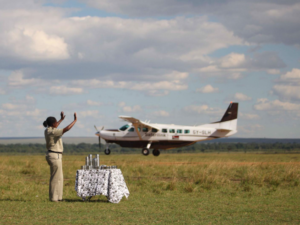
A fly-in Serengeti safari takes you by light aircraft to an airstrip near your safari camp. Your guide meets you on arrival, and if your flight lands early enough, you can begin looking for wildlife on the drive to camp. Flying is especially practical if you’re adding a few safari nights to a Zanzibar holiday or want to spend more of a short trip on game drives.
The most important decision is where to land. Choose your Serengeti region and camp first, then book the flight that gets you closest. An inexpensive flight can be poor value if it leaves you several hours from your accommodation.
Which Serengeti airstrip should you fly into?
| Where you’re staying | Airstrip to check | When it makes sense |
|---|---|---|
| Central Serengeti | Seronera (SEU) | A first safari, year-round wildlife viewing, and a short stay with one camp as your base |
| Northern Serengeti | Kogatende or Lamai | A camp near the Mara River, especially when your priority is the Great Migration |
| Western Serengeti | Grumeti or Kirawira, depending on the camp and flight | An itinerary based in the Western Corridor |
Ask your safari operator for the estimated drive from the airstrip to your camp and whether the transfer can include wildlife viewing. Some flights make intermediate stops, so check the full routing as well as the scheduled arrival time. Tanzania National Parks guide
Flying from Arusha or Zanzibar
From Arusha (ARK). Arusha Airport is a practical starting point if you’re already staying in town. If your international flight arrives at Kilimanjaro International Airport (JRO), check which airport your safari flight actually departs from. Allow time for baggage collection and a road transfer if you need to change airports.
From Zanzibar (ZNZ). Flying from Zanzibar is an option if you want to split your trip between the beach and the bush. Check whether your flight stops on the mainland and what time you’ll reach the Serengeti. For a beach–safari–beach itinerary, compare the return flight to Zanzibar with the timing of your next hotel check-in or onward flight. Coastal Aviation flight schedule
When is the best time for a fly-in Serengeti safari?
Central Serengeti works year-round. The Seronera area is a good starting point if you’re interested in big cats and a variety of wildlife. On a short trip, staying at one camp gives you more time to explore nearby river valleys, open plains, and rocky outcrops.
July to September is a common planning window for the Northern Serengeti. Stay near the Mara River if seeing the migration is your priority. Herd movements vary with rainfall and grazing, and even when the herds are nearby, a river crossing can be unpredictable. Allow several nights if a crossing is high on your wish list. Tanzania National Parks Mara River guide
January and February are commonly chosen for the Ndutu calving season. If you want to see newborn wildebeest on the southern plains, ask for a camp near Ndutu and have your operator confirm the best available flight and transfer for your dates.
A 3-day fly-in Serengeti safari itinerary
Day 1 — Fly in and take your first game drive. Fly into Seronera from Arusha or Zanzibar, meet your guide, and head toward your camp. With an early arrival, you may have time for an afternoon game drive before dinner.
Day 2 — Spend a full day in the Serengeti. Start early and explore different habitats with your guide. Choose a picnic lunch for a longer drive or return to camp for lunch and head out again in the afternoon. If you’d like a sunrise balloon safari, ask about availability and how it fits into the day’s schedule.
Day 3 — Enjoy a final morning in the park and fly out. Depending on your flight time, look for wildlife on the way to the airstrip, then continue to Arusha or Zanzibar.
If you have four or five days, consider adding a night in the Serengeti or flying in one way and returning to Arusha by road via Ngorongoro. Ask for enough time in the itinerary to visit the crater as well as make the onward drive.
What does a fly-in Serengeti safari cost?
The total depends on your travel dates, camp, number of nights, party size, and whether you book a private or shared safari vehicle. A one-way flight with an overland return can work well if you’re already planning to visit Ngorongoro. A round-trip flight can make sense when your time is limited or you’re returning to Zanzibar.
When comparing packages, ask for the total price per person and for your group. Check which flight legs, airstrip transfers, park and accommodation-related fees, meals, game drives, and taxes are included. Ask for optional extras such as a balloon safari to be priced separately. If you’re traveling solo, ask about any single-room supplement.
What should you pack for a Serengeti bush flight?
Use a soft-sided bag and confirm the baggage allowance for every flight on your ticket, including whether hand luggage counts toward the limit. If you’re combining a safari with a beach stay, ask about luggage storage before booking. Keep your binoculars, camera, sun protection, and a light layer easy to reach for the first game drive.
Plan your fly-in Serengeti safari with Kilipath African Safaris
Send us your travel dates, number of travelers, departure city, and preferred budget. Tell us if you’re most interested in big cats, the Great Migration, or combining the Serengeti with Zanzibar. We’ll put together a proposed route with the airstrip, accommodation, game-drive plan, and a quote showing what’s included.