A morning in Central Serengeti might begin with lions resting on a rocky outcrop and your guide scanning riverside trees for a leopard. A few days later in Ruaha, you could be watching elephants cross a sandy riverbed between towering baobabs. Combining these two parks gives you time to explore Tanzania’s open plains, river valleys, and woodland in one trip.
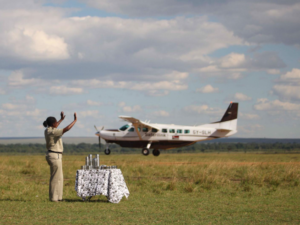
A 7-day fly-in safari can give you three nights in each park and two full days of game viewing in both. The most important detail to check early is the flight between the Serengeti and Ruaha, since it determines which camps and travel dates work together.
What to expect in Serengeti National Park
Central Serengeti is a good base for travelers who want to see big cats. Around Seronera, your guide can scan open grasslands for cheetahs, look for lions around rocky outcrops, and follow riverine tracks in search of leopards. You may also see giraffes, zebras, and hippos during your drives.
If the Great Migration is your priority, choose your camp according to your travel month. July to September is a common window for visiting the Northern Serengeti around Kogatende, while January and February are popular for calving season around Ndutu. Herd movements depend on rainfall and grazing, and river crossings are unpredictable. Give yourself time in the region you want to explore and check which airstrip serves your camp.
What to expect in Ruaha National Park
Ruaha’s game drives take you through baobab-studded savanna, woodland, and sandy river channels. During the dry season, elephants and buffalo may gather near remaining water sources along the Great Ruaha River and its surrounding river systems. On an early drive, your guide might look for lion tracks near a riverbed or pause along a woodland track to scan for greater kudu.
Your camp location shapes which parts of Ruaha you’ll explore. When choosing accommodation, ask which airstrip serves the camp, how long the transfer takes, and where most of your game drives will take place. Tanzania National Parks — Ruaha wildlife and habitats
Sample 7-day Ruaha and Serengeti safari itinerary
| Day | Route | Safari experience |
|---|---|---|
| 1 | Arusha to Central Serengeti | Fly to Seronera, meet your guide at the airstrip, and enjoy an afternoon game drive if your arrival time allows. |
| 2 | Central Serengeti | Spend the day around Seronera, searching for big cats across open grasslands and along riverine tracks. |
| 3 | Serengeti | Head out on an early game drive or add an optional sunrise balloon safari. Continue game viewing according to local conditions. |
| 4 | Serengeti to Ruaha | Fly to Ruaha using the routing available for your dates. Settle into camp and take an afternoon drive if time allows. |
| 5 | Ruaha National Park | Explore the Great Ruaha River area and look for elephants, buffalo, and lions. |
| 6 | Ruaha National Park | Visit another part of the park, with time to explore woodland and riverbeds, take photographs, or watch birds. |
| 7 | Ruaha to Dar es Salaam or Zanzibar | Transfer to the airstrip for your onward flight, depending on the available routing. |
This itinerary assumes you can reach Ruaha on Day 4. If your flight requires an overnight connection, allow an extra day to keep all six nights in the parks. Share your onward flight plans early so the safari can be arranged around them. Coastal Aviation — Ruaha flight routes
When is the best time to visit both parks?
June to October is a good starting window for dry-season game viewing in Ruaha. As seasonal water sources shrink, animals may gather around remaining pools and river channels. If you also want to visit the Northern Serengeti during the migration season, start by looking at July to September and check how flights from your northern camp connect with Ruaha.
How much does a Ruaha and Serengeti safari cost?
The price depends on your travel dates, the number of guests, the camps you choose, domestic flights, and whether game drives are private or shared. When comparing safari quotes, check that they cover the same number of nights and include the flights between parks, park fees, airstrip transfers, meals, and game drives. Ask for optional extras such as a balloon safari or onward travel to Zanzibar to be priced separately.
For the fly-in journey, pack a soft-sided bag, binoculars, sun protection, and a light layer for early morning drives. Confirm the baggage allowance for each flight, especially if you’re bringing camera equipment.
Plan your safari with Kilipath African Safaris
Ready to explore Ruaha and the Serengeti? Contact Kilipath African Safaris for a personalized itinerary and quote. Share your travel dates, number of guests, preferred accommodation, and onward destination. Tell us whether you’re most interested in big cats, the Great Migration, or more time in Ruaha so we can recommend camps and flight connections that fit your trip.