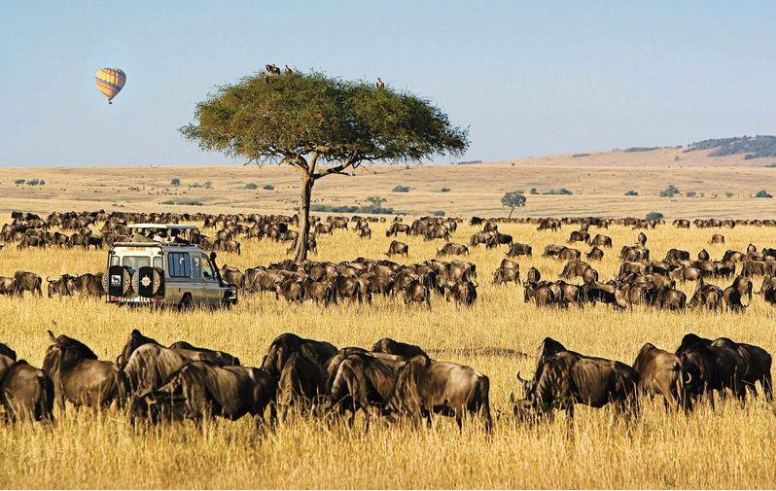
Budget Ruaha Safari Adventure
Explore Ruaha National Park’s baobab country on a guided safari built around your dates, group size and budget. Spend your game drives…
Read articleArusha City - Tanzania
Safari & Travel Tips
August 21, 2026 · 10 min read
A top Ruaha safari experience offers something increasingly rare in Africa: outstanding wildlife viewing in a vast wilderness without the heavy safari traffic found in more famous parks. Located in southern Tanzania, Ruaha National Park is the country's largest national park and one of the highlights of Tanzania's Southern Safari Circuit.
Ruaha is particularly attractive to travelers looking for an authentic, peaceful safari where wildlife encounters feel natural and unhurried. Its dramatic landscapes, enormous elephant populations, predators, baobab-covered plains, and the Great Ruaha River combine to create an exceptional safari destination.
This complete guide answers the most important questions travelers ask when planning a Ruaha safari.
Ruaha stands apart because of its combination of wilderness, wildlife diversity, and relatively low visitor numbers. The park covers more than 20,000 square kilometers, giving wildlife enormous areas in which to roam.
Unlike destinations where several vehicles may gather around a single animal sighting, Ruaha frequently provides quieter encounters. You may spend considerable time watching elephants, lions, giraffes, or antelopes without feeling rushed.
Some of the main reasons to choose Ruaha include:
For experienced safari travelers who have already visited Tanzania's Northern Circuit, Ruaha can offer an entirely different perspective on the country's wildlife.
Wildlife is the heart of the Ruaha safari experience.
Ruaha is famous for its lions. Large prides inhabit the park, particularly around productive wildlife areas close to rivers and seasonal water sources.
Visitors may encounter lions resting beneath trees, walking across open plains, watching herds from a distance, or interacting within their pride.
Elephants are another major highlight. Ruaha and the surrounding ecosystem support significant elephant populations.
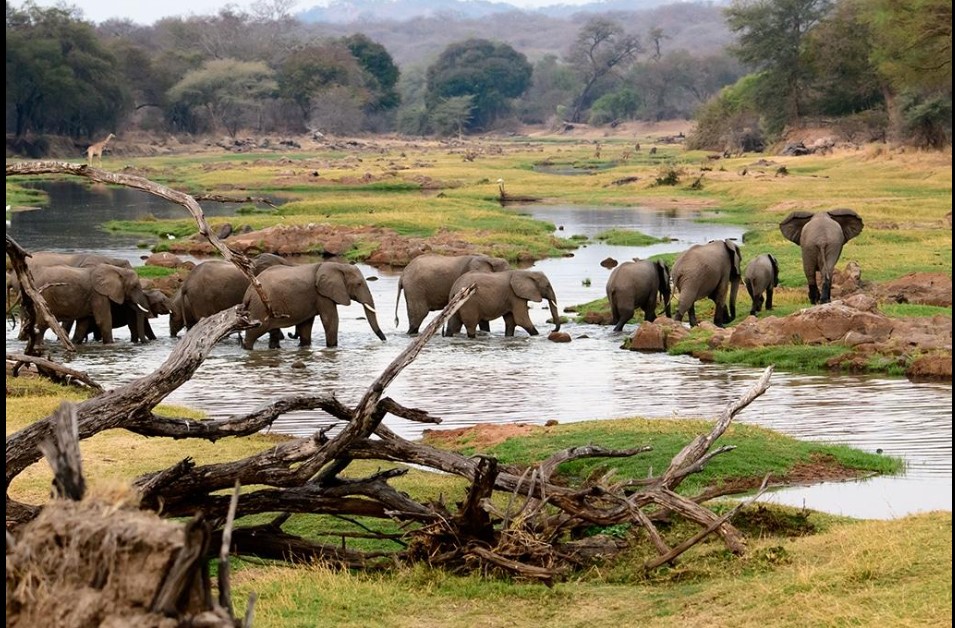
During the dry season, elephants frequently gather near rivers and remaining water sources. Watching a family of elephants drinking, bathing, and communicating beside the Great Ruaha River can become one of the most memorable moments of the safari.
Ruaha's woodland and rocky environments provide excellent leopard habitat.
Although leopards are naturally elusive, patient game drives—especially during mornings and late afternoons—can provide rewarding sightings.
Ruaha is an important habitat for the endangered African wild dog.
Seeing a wild dog pack is never guaranteed, but travelers fortunate enough to encounter one can witness fascinating social behavior and sometimes active hunting.
Ruaha also supports:
This mixture of eastern and southern African wildlife contributes to Ruaha's unusual biodiversity.
Ruaha can be visited throughout much of the year, although your experience changes considerably between seasons.
The dry season is generally considered one of the best periods for wildlife viewing.
Vegetation becomes thinner, and animals increasingly concentrate around permanent water sources.
This makes wildlife easier to locate and creates excellent opportunities to observe predator-prey interactions.
July through October can be particularly rewarding for travelers whose main priority is large mammals and predators.
Seasonal rains transform Ruaha into a greener landscape.
The scenery becomes lush and photogenic, migratory birds arrive, and many animals give birth.
Wildlife may be more dispersed because water is widely available, but the park remains beautiful and usually receives fewer visitors.
These months can experience heavier rainfall. Some roads may become difficult, and certain camps can close temporarily.
Travelers considering this period should confirm road and accommodation availability before booking.
For most travelers, three to five days provides a rewarding Ruaha experience.
A three-day safari can introduce you to the park, while four or five days allows more time to explore different habitats without rushing.
Wildlife sightings cannot be scheduled, so additional time increases your chances of seeing elusive species such as leopards and wild dogs.
Travelers particularly interested in photography may benefit from staying longer.
A Ruaha safari normally revolves around early morning and afternoon wildlife activity.
You may begin your morning game drive shortly after sunrise, when temperatures are cooler and predators can still be active.
After several hours exploring the park, you can return to camp or lodge for breakfast or lunch and relax during the hotter part of the day.
Later in the afternoon, another game drive takes advantage of cooling temperatures and softer photography light.
Depending on the accommodation and itinerary, activities may include:
Activities depend on park regulations, location, season, and the services offered by individual camps.
The Great Ruaha River is one of the defining geographical features of the park.
During the dry season, remaining water becomes extremely important to wildlife. Elephants, antelopes, buffaloes, giraffes, hippos, crocodiles, and predators may all be encountered around the river system.
For safari travelers, this concentration of animals can create exciting game-viewing opportunities.
The river also adds beautiful scenery to Ruaha's otherwise rugged landscapes.
Yes. Ruaha is an excellent destination for wildlife and landscape photography.
Its relative lack of traffic can allow photographers more time to observe an animal and wait for better behavior, positioning, or light.
Photographic subjects include predators, elephants, birds, baobabs, rivers, rocky hills, dramatic skies, and expansive wilderness landscapes.
A private safari vehicle can be especially useful for serious photographers because it provides greater control over how long you remain at each sighting.
Ruaha is particularly well suited to private safaris.
With a private vehicle and guide, your daily schedule can be adapted around your interests. Instead of following the preferences of a larger group, you can spend more time photographing elephants, searching for predators, birdwatching, or exploring quieter sections of the park.
Private safaris are especially useful for:
Walking safaris may be available through selected camps and authorized operators.
A walking safari provides a completely different perspective from traveling in a vehicle. Rather than focusing only on large animals, guides can introduce you to tracks, plants, insects, smaller wildlife, animal behavior, and the interconnected ecology of the bush.
Availability depends on the camp, qualified guides, park regulations, and current conditions.
Travelers generally reach Ruaha either by road or by scheduled/charter flight.
Flying is the quickest and most convenient option, particularly for travelers with limited time.
Domestic flights can connect Ruaha with other Tanzanian destinations, depending on current airline schedules and seasonal operations.
A fly-in safari reduces long road transfers and allows travelers to dedicate more of their holiday to wildlife viewing.
Traveling by road can be suitable for longer Southern Circuit itineraries.
It also provides an opportunity to experience more of Tanzania's countryside and combine Ruaha with other destinations.
However, travelers should expect considerably longer travel times than on the Northern Circuit.
Absolutely.
Ruaha forms part of Tanzania's Southern Circuit and works particularly well with Nyerere National Park.
A longer itinerary can combine destinations such as:
Dar es Salaam → Nyerere National Park → Ruaha National Park
Travelers may also connect their safari with Zanzibar, creating a classic bush-and-beach holiday.
For example:
Ruaha Safari → Zanzibar Beach Holiday
This combination works especially well for honeymooners and travelers wanting adventure followed by relaxation.
Ruaha offers accommodation ranging from comfortable safari camps to luxurious wilderness properties.
Depending on your budget, you may find:
Many properties are designed to blend naturally into the surrounding wilderness.
When comparing accommodation, consider location as carefully as luxury level. A strategically located camp can reduce unnecessary driving and provide faster access to productive wildlife areas.
Yes. Ruaha can be an outstanding honeymoon destination for couples seeking privacy and adventure.
Its remote atmosphere, beautiful wilderness, intimate camps, private game drives, sunsets, and quieter wildlife encounters create a romantic safari environment.
A honeymoon can also combine Ruaha with Zanzibar for several days of beach relaxation after the safari.
Ruaha can work well for families, especially on a private safari.
A private vehicle gives parents more control over departure times, rest stops, and the length of individual game drives.
However, parents traveling with young children should check the minimum-age policies of their chosen lodge or camp. Certain activities, particularly walking safaris, may have age restrictions.
Neither destination is universally better—the experience is different.
The Serengeti is world-famous for its vast plains, abundant wildlife, and the Great Migration ecosystem. Ruaha is better known for remoteness, fewer vehicles, impressive predators, elephants, baobab landscapes, and wilderness character.
Choose Serengeti if the Great Migration and classic open plains are your priorities.
Choose Ruaha if solitude, predators, wilderness, and a less crowded safari are more important.
Travelers with enough time can experience both.
Safari packing should focus on comfort and practicality.
Recommended items include:
Morning game drives can feel cool, while daytime temperatures may become considerably warmer, so layers are useful.
Ruaha is an excellent birding destination, with hundreds of recorded bird species.
The diversity of rivers, woodland, savannah, and seasonal wetlands supports an impressive variety of birds.
The wetter months can be particularly interesting because migratory species arrive and the landscape becomes greener.
Even travelers who do not initially consider themselves birdwatchers often become fascinated by Ruaha's colorful and unusual species.
The final price varies considerably according to:
A luxury fly-in safari will generally cost considerably more than a road-based mid-range itinerary.
For an accurate quotation, travelers should provide their travel dates, number of guests, preferred accommodation standard, and number of safari days.
Packages vary between operators, but a comprehensive safari may include:
Domestic flights, alcoholic drinks, gratuities, visas, travel insurance, and optional activities may be excluded unless clearly stated.
Always check the exact inclusions before confirming your booking.
Compared with Tanzania's most famous Northern Circuit parks, Ruaha generally receives fewer visitors.
That lower density is one of its strongest attractions.
You can sometimes drive through beautiful wilderness for extended periods without encountering many other safari vehicles.
For travelers who value peaceful wildlife viewing, this is a major advantage.
Ruaha safaris are generally conducted under established national park and camp safety procedures.
Wild animals are unpredictable, however, and visitors should always follow instructions from professional guides and accommodation staff.
Never approach wildlife independently, leave a safari vehicle without permission, or walk around unfenced camps at night unless accompanied when required.
The best Ruaha experience isn't simply about checking animals off a list.
It is waking early and driving into an enormous wilderness as the sun rises. It is watching elephants move between ancient baobabs, hearing lions in the distance, following fresh tracks with an experienced guide, and waiting beside the river to see what appears.
Ruaha rewards patience.
Because there are fewer vehicles and enormous areas to explore, every game drive carries an element of discovery. You don't always know what will be around the next corner—and that unpredictability is precisely what makes a Ruaha safari exciting.
A top Ruaha safari experience is ideal for travelers searching for wildlife, wilderness, privacy, and a deeper connection with Tanzania's natural landscapes.
Whether you choose a private photographic safari, romantic honeymoon, family adventure, luxury fly-in journey, or a longer Southern Circuit itinerary, Ruaha provides opportunities for memorable wildlife encounters far from the busiest safari routes.
For the best itinerary, plan according to your travel season, available days, preferred accommodation level, transportation method, and wildlife interests. A carefully designed Ruaha safari gives you enough time to explore slowly—because in a wilderness this large, the most extraordinary encounters often happen when you are not rushing to the next destination.
Explore Ruaha National Park’s baobab country on a guided safari built around your dates, group size and budget. Spend your game drives…
Read articleDiscover Tanzania’s untamed wilderness without exceeding your travel budget. A budget Ruaha safari adventure offers incredible wildlife encounters, spectacular landscapes, authentic African…
Read articleA Nyerere Tanzania wildlife safari offers an extraordinary opportunity to discover one of Africa's most spectacular wilderness destinations. From magnificent elephants and…
Read articleTarangire National Park sits on Tanzania’s Northern Circuit and is usually visited from Arusha. Ruaha, Nyerere and Mikumi are Southern Circuit destinations.…
Read article