

Budget Ngorongoro Crater Safari Holiday
Planning a budget Ngorongoro Crater safari holiday from Arusha? Compare a crater day trip, a two-day Tarangire and Ngorongoro safari, or a…
Read articleArusha City - Tanzania
Safari & Travel Tips
August 21, 2026 · 17 min read
Tanzania offers many outstanding wildlife destinations, but few combinations are as rewarding as Ruaha National Park and the Ngorongoro Conservation Area. Carefully designed Ruaha safari Ngorongoro packages allow travelers to experience two dramatically different wildlife environments during one unforgettable journey.
Ruaha National Park represents Tanzania’s wild and remote southern safari circuit. Its rugged landscapes, enormous baobab trees, seasonal rivers, and relatively low visitor numbers create an authentic wilderness experience. Ngorongoro, meanwhile, is one of the most celebrated attractions in Tanzania’s northern circuit. Its vast volcanic caldera supports an extraordinary concentration of wildlife.
Combining these destinations delivers exceptional variety. In Ruaha, travelers explore an expansive wilderness where sightings often feel private. In Ngorongoro, they descend into a natural amphitheater filled with animals, beautiful scenery, and fascinating geological history.
However, Ruaha and Ngorongoro are located in different safari circuits. Travelers must therefore consider transportation, safari duration, accommodation, season, and budget carefully. This complete guide explains how to plan the best Ruaha and Ngorongoro safari, including suggested itineraries, wildlife highlights, transportation options, and practical travel advice.
Ruaha and Ngorongoro complement each other exceptionally well. Instead of visiting parks with similar landscapes and wildlife experiences, travelers encounter two contrasting sides of Tanzania.
Ruaha is remote, extensive, and untamed. Its game drives pass through woodland, rocky hills, open plains, seasonal rivers, and impressive stands of baobab trees. Wildlife is widely dispersed across the park, making every game drive feel like a genuine exploration.
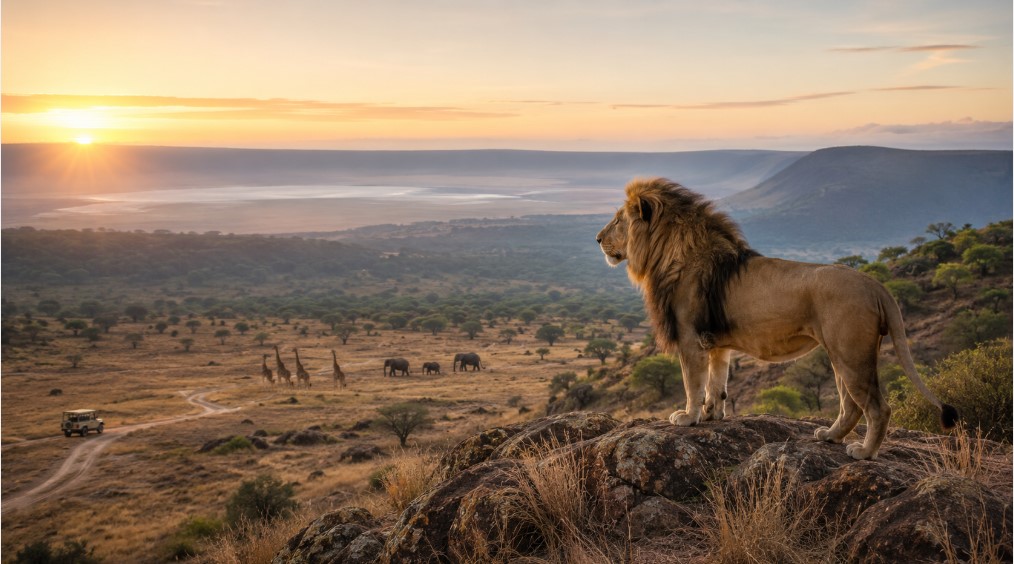
Ngorongoro is more compact and concentrated. Safari vehicles descend from the crater rim to the floor, where grasslands, forests, wetlands, and a seasonal soda lake support a remarkable range of wildlife.
The main advantages of combining the two destinations include:
Travelers who choose Ruaha safari Ngorongoro packages receive much more than a conventional game-viewing holiday. They experience the quiet southern wilderness before discovering one of Africa’s most remarkable natural landmarks.
Ruaha National Park is situated in central-southern Tanzania, west of Iringa. It forms an important part of Tanzania’s southern safari circuit.
Ngorongoro Conservation Area lies in northern Tanzania, west of Arusha and near the Serengeti ecosystem. Most northern-circuit safaris begin in Arusha.
Because the two destinations are separated by a considerable distance, driving directly from Ruaha to Ngorongoro is not the most comfortable choice for most travelers. The journey would be very long and would reduce the amount of time available for game viewing.
The most practical combination usually involves:
Domestic flight schedules can change according to season and demand. Your tour operator should therefore confirm the current route before finalizing the itinerary.
Ruaha National Park is famous for its sense of scale and isolation. It is one of the finest choices for travelers who want to move beyond the busiest safari routes.
The park’s landscapes are shaped by the Great Ruaha River and its surrounding tributaries. During the dry season, these water sources attract large concentrations of animals. Elephants, buffaloes, antelopes, giraffes, and predators gather around the remaining pools and riverbanks.
Ruaha’s baobab-dotted scenery is another major attraction. These ancient trees create distinctive photographic compositions, especially during sunrise and sunset.
Ruaha supports an impressive variety of wildlife. Possible sightings include:
Ruaha is particularly well known for predator encounters. Lion prides are frequently observed, and the park is an important landscape for African wild dogs.
Leopards are present but naturally more elusive. They may be found resting in trees, moving through rocky areas, or hunting near riverine vegetation.
Wildlife sightings can never be guaranteed because the animals move freely. Nevertheless, traveling with an experienced guide significantly improves the quality of the safari.
Ruaha is also an excellent destination for bird lovers. Its position creates an interesting mixture of southern and eastern African bird species.
Depending on the season and habitat, visitors may see:
The greener months are especially attractive for birdwatching because migratory species may be present and resident birds display colorful breeding plumage.
The Ngorongoro Conservation Area is internationally recognized for its combination of wildlife, landscapes, cultural heritage, and geological importance.
Its main attraction is Ngorongoro Crater, a vast volcanic caldera. The official Ngorongoro Conservation Area Authority describes it as an unbroken and unflooded caldera approximately 20 kilometers across and around 600 meters deep. The crater floor contains grasslands, swamps, woodland, springs, and Lake Magadi. Ngorongoro Conservation Area Authority
The descent from the crater rim is one of the most memorable moments of a northern Tanzania safari. From the viewpoint, travelers can appreciate the enormous scale of the caldera before entering the wildlife-rich ecosystem below.
Ngorongoro Crater supports a high concentration of resident animals. Commonly observed species include:
The crater is also one of Tanzania’s notable places for searching for the critically endangered black rhinoceros. However, rhino sightings are never guaranteed and often occur at a considerable distance.
Leopards and cheetahs inhabit the wider conservation area, although they can be more difficult to find during a standard crater-floor game drive.
The Ngorongoro Conservation Area includes more than the main crater. Travelers with additional time can explore:
The conservation area follows a multiple-land-use model in which wildlife conservation and human habitation coexist. Visitors may see Maasai communities and livestock in permitted areas outside the main crater floor.
All visitors entering the crater and Oldupai Gorge must follow conservation regulations and be accompanied as required by local authorities. Ngorongoro regulations
Both destinations can be visited throughout much of the year, but the experience changes with the seasons.
The dry season is widely considered one of the best periods for Ruaha.
Vegetation becomes thinner, and animals gather near rivers and remaining water sources. This can produce excellent sightings of elephants, buffaloes, antelopes, and predators.
Advantages include:
Ngorongoro also provides reliable wildlife viewing during this period because many crater animals remain within the ecosystem throughout the year.
June through October is a popular travel period in Tanzania. Accommodations and domestic flights may fill quickly, so early reservations are recommended.
Seasonal rains transform Ruaha into a greener and more colorful landscape. Migratory birds arrive, newborn animals may be observed, and the atmosphere becomes excellent for photography.
Ngorongoro and its surrounding highlands are also beautiful during the green season. The grasslands become vibrant, and the crater walls may appear especially lush.
Possible advantages include:
Rainfall patterns vary, and some roads in remote areas may become challenging. An experienced driver-guide and a proper four-wheel-drive safari vehicle are essential.
April and May generally receive heavier rainfall. These months can offer lower accommodation rates and quieter safari areas, but some seasonal camps may close.
Roads in Ruaha can become difficult, and flight schedules may be less frequent. Travelers considering this period should use a specialist tour operator who can confirm which camps, roads, and air services are operating.
A well-balanced itinerary should include at least two or three nights in Ruaha and one or two nights around Ngorongoro.
Because the parks are located far apart, a very short itinerary can feel rushed. For most travelers, seven to ten days provide a more comfortable experience.
A six-day package is possible when flight connections are convenient. It may include two full safari days in Ruaha and one crater game drive.
This option is most suitable for travelers with limited time, but it leaves little flexibility if flight schedules change.
An eight-to-ten-day itinerary allows travelers to enjoy slower game drives, comfortable transfers, and additional destinations such as Tarangire or Serengeti.
It is especially suitable for:
Arrive at Julius Nyerere International Airport, Kilimanjaro International Airport, or another agreed entry point.
A representative meets you and transfers you to your hotel. Depending on your flight schedule, you may stay in Dar es Salaam, Arusha, or Zanzibar before beginning the safari.
Your guide or representative provides a briefing covering flights, luggage allowance, weather, accommodations, and the following day’s program.
After breakfast, transfer to the airport and board a scheduled or charter flight toward Ruaha.
Upon landing at the airstrip, meet your Ruaha driver-guide and begin the first game drive. The wildlife experience starts almost immediately because many airstrips are located within or near productive safari areas.
Enjoy lunch at the camp or as a picnic, followed by an afternoon game drive.
Dinner and overnight at a lodge or tented camp in Ruaha.
Begin with an early breakfast and depart for an extensive game drive.
The morning is an excellent time to search for lions, leopards, elephants, wild dogs, and antelopes. Your guide may explore the Great Ruaha River, baobab woodland, open plains, or other wildlife areas depending on recent animal movements.
Stop for a picnic lunch or return to camp for a hot meal. Continue exploring during the afternoon before returning for dinner.
Spend another complete day discovering Ruaha.
Having an additional day is important because the park is extensive and wildlife is not confined to one small area. Your guide can explore different habitats rather than repeating the same route.
Photographers can request additional time at sightings whenever conditions allow. Guests may also arrange approved activities offered by their selected camp.
Return to the accommodation for dinner and overnight.
After breakfast, enjoy a short game drive if the flight schedule permits. Transfer to the airstrip and fly toward Arusha, potentially using a connecting service.
Upon arrival, meet your northern-circuit driver and transfer to an Arusha hotel.
This night creates a useful buffer between the southern and northern sections of the journey.
After breakfast, depart Arusha in a private 4x4 Land Cruiser.
Drive through the northern Tanzanian countryside toward Karatu and the Ngorongoro highlands. Depending on the itinerary, you may stop at a local market, cultural center, viewpoint, or community project.
Arrive at your lodge in time to relax before dinner.
After an early breakfast, travel to the crater entrance and descend to the crater floor.
Spend the day searching for lions, elephants, buffaloes, wildebeest, zebras, hyenas, hippos, and the elusive black rhinoceros.
Enjoy a picnic lunch at an authorized location before continuing the game drive. Later, ascend the crater wall and return to your lodge.
After breakfast, drive back to Arusha. Depending on the departure time, you may visit a souvenir center or have lunch in town.
Transfer to Arusha Airport or Kilimanjaro International Airport for your onward journey.
Travelers with more time can add Tarangire National Park or Serengeti National Park.
A possible ten-day route is:
This itinerary provides a broad overview of southern and northern Tanzania. However, it requires multiple transitions. Travelers who prefer a slower journey may omit Serengeti and spend more time in Ruaha or around Ngorongoro.
Transportation is one of the most important considerations when planning Ruaha safari Ngorongoro packages.
Flying is normally the most efficient option. It saves considerable travel time and allows guests to dedicate more days to wildlife viewing.
Depending on the season and airline schedule, the journey may involve:
Schedules should always be confirmed for the exact travel date.
Domestic safari aircraft often have strict baggage limitations. Soft-sided bags are strongly recommended because they fit more easily into aircraft luggage compartments. Large hard-shell suitcases may need to be stored at a hotel or tour operator’s office.
Road travel may be included within each safari circuit, but driving the entire distance between Ruaha and Ngorongoro is generally not recommended for a short holiday.
A fully overland route can be arranged for adventurous travelers with sufficient time. However, it requires additional overnight stops and is better treated as an extended road expedition.
Private charter flights offer maximum flexibility, particularly for families, photographers, honeymooners, and small private groups.
The price is higher, but the service can reduce waiting times and support a customized itinerary.
Budget packages may use simple lodges, public camping, guesthouses, or affordable tented camps.
Because flights between safari circuits significantly affect the total price, even a budget Ruaha–Ngorongoro itinerary may cost more than a standard northern-circuit road safari.
Budget inclusions can feature:
Travelers should compare inclusions carefully instead of choosing a package based only on the advertised price.
Mid-range packages balance comfort and value. They usually provide en-suite accommodations, comfortable beds, prepared meals, and well-located lodges or tented camps.
This category is ideal for couples, families, and first-time safari travelers who want comfort without luxury-level prices.
Luxury packages may include:
Luxury is not only about the room. Location, guiding quality, privacy, food, and the overall level of service all influence the experience.
A properly quoted Ruaha and Ngorongoro package should clearly explain what is included and excluded.
Common inclusions are:
Possible exclusions include:
Ask whether prices are calculated per person or per vehicle and whether they are based on double occupancy.
Ruaha offers properties ranging from simple camps to exclusive luxury lodges.
Important considerations include:
Remote camps may use solar power, and electricity can be limited during certain hours. This is part of the wilderness experience, but travelers should charge cameras and power banks whenever electricity is available.
Travelers can stay directly on the crater rim or in nearby areas such as Karatu.
Crater-rim lodges provide convenient access and spectacular views, but they are generally more expensive.
Karatu offers a broader range of accommodations and is surrounded by beautiful highland scenery. The trade-off is additional driving time to the crater entrance.
Ruaha and Ngorongoro offer very different photographic opportunities.
In Ruaha, wildlife may be more widely dispersed, but sightings can be quiet and intimate. The park’s baobabs, rocky ridges, dusty roads, and riverbeds create dramatic compositions.
Inside Ngorongoro Crater, animals may be easier to find, but there can be more safari vehicles near major sightings.
For better photographs:
A private safari vehicle allows greater control over departure times and the duration of each sighting.
Pack light and use a soft-sided travel bag, especially when domestic flights are included.
Recommended items include:
Ngorongoro’s crater rim can be cold during early mornings and evenings. Ruaha can become hot during the day, particularly in the dry season. Layered clothing is therefore the best choice.
Travelers should consult a qualified medical professional before visiting Tanzania. Advice may depend on personal health, vaccination history, itinerary, season, and country of origin.
Comprehensive travel insurance is strongly recommended. It should cover:
During game drives, always follow your guide’s instructions. Never leave the vehicle without permission, approach wildlife, feed animals, or stand in unsafe positions.
Regulations protect visitors, wildlife, and sensitive habitats. Responsible operators and licensed guides will follow park and conservation-area rules.
Responsible tourism helps protect Tanzania’s natural heritage.
Travelers can contribute by:
Never ask a guide to drive off-road where it is prohibited. A photograph is not worth damaging vegetation or disturbing an animal.
The final price depends on several factors:
Solo travelers often pay more because accommodation, vehicles, and transfers are not divided among several guests.
Couples and small groups may receive better per-person value. Families should provide children’s ages when requesting a quotation because accommodation and fee policies can vary.
Instead of requesting only the cheapest price, ask for a detailed quotation showing every inclusion. This helps prevent unexpected expenses.
Yes, Ruaha and Ngorongoro can be excellent for families, particularly when using a private vehicle.
A private safari allows parents to:
Parents should consider the ages and attention spans of their children. Long game drives and multiple flights can be tiring for very young travelers.
Some remote camps have minimum-age restrictions, especially for walking safaris and other activities. Confirm these policies before booking.
This combination is particularly appealing to honeymoon couples.
Ruaha provides privacy, quiet surroundings, romantic sunsets, and intimate tented camps. Ngorongoro adds spectacular scenery and an iconic safari experience.
Honeymoon packages may include:
Couples should tell the safari operator that they are celebrating their honeymoon before accommodations are confirmed.
Ruaha and Ngorongoro are not neighboring parks. Attempting to connect them entirely by road within a short itinerary creates exhausting travel days.
One night is rarely enough to appreciate such a large wilderness. At least three nights are preferable when time and budget permit.
Safari aircraft commonly require soft bags and limited luggage. Confirm the allowance before packing.
A cheap camp located far from productive wildlife areas may increase daily driving time and fuel costs.
The dry and green seasons offer different experiences. The best period depends on whether the priority is concentrated wildlife, scenery, birdwatching, photography, or value.
Domestic flights, transfers, park entries, and accommodation check-in times must work together. A coordinated package reduces the risk of missed connections.
A reliable Tanzania safari operator should provide:
Before paying, verify the operator’s business identity and carefully review the invoice. Payment should be made only through the company’s approved payment channel.
Ruaha safari Ngorongoro packages are ideal for travelers seeking both remote wilderness and an iconic Tanzanian wildlife experience.
Ruaha presents a quieter, rugged side of Africa, characterized by baobabs, seasonal rivers, elephants, predators, and an immense sense of space. Ngorongoro delivers dramatic crater scenery and an extraordinary concentration of wildlife within a compact ecosystem.
Because these destinations belong to different safari circuits, good planning is essential. Domestic flights, road transfers, accommodations, baggage restrictions, and seasonal conditions must be coordinated carefully.
With a knowledgeable local operator, an experienced guide, and sufficient travel time, a Ruaha and Ngorongoro safari can become one of the most diverse and memorable adventures available in Tanzania.
Planning a budget Ngorongoro Crater safari holiday from Arusha? Compare a crater day trip, a two-day Tarangire and Ngorongoro safari, or a…
Read articleA Lake Manyara safari can cost USD 150–220 per person for a shared day trip from Arusha. A published example of a…
Read articleA Tanzania safari from Zanzibar can mean a short mainland trip during your beach holiday or a complete package with flights, game…
Read articleLooking for a group Tanzania safari price from Kilipath African Safaris? A published example for our four-day shared camping safari through Tarangire,…
Read article

