

Budget Ngorongoro Crater Safari Holiday
Planning a budget Ngorongoro Crater safari holiday from Arusha? Compare a crater day trip, a two-day Tarangire and Ngorongoro safari, or a…
Read articleArusha City - Tanzania
Safari & Travel Tips
August 21, 2026 · 9 min read
Planning a safari that combines the remote wilderness of Ruaha National Park with the spectacular Ngorongoro Crater creates one of Tanzania’s most diverse wildlife adventures. However, understanding the Ruaha safari Ngorongoro cost is important because these destinations are located in different safari regions and require careful planning for transportation, accommodation, park fees, and the number of travel days.
Ruaha lies in southern Tanzania and is famous for its enormous wilderness, elephants, lions, baobab landscapes, and relatively low visitor numbers. Ngorongoro Crater is part of Tanzania’s famous Northern Safari Circuit and offers extraordinary wildlife viewing within a compact volcanic caldera.
Combining them usually costs more than visiting parks located within the same safari circuit, but travelers are rewarded with two completely different safari experiences.
The total Ruaha safari Ngorongoro cost depends mainly on the length of the safari, accommodation standard, season, transportation method, and whether the safari is private or shared.
As a general planning estimate, travelers can expect approximately:
| Safari Style | Estimated Cost Per Person |
|---|---|
| Budget / Camping | $1,800 – $2,600 |
| Mid-Range | $2,500 – $4,000 |
| Luxury | $4,000 – $7,000+ |
| Fly-In Luxury Safari | $5,000 – $9,000+ |
These figures are general estimates rather than fixed package prices. Domestic flights, premium lodges, private vehicles, additional destinations, and seasonal rates can significantly change the final cost.
For most travelers, a 7–10 day itinerary provides a more comfortable way to combine Ruaha and Ngorongoro.
The main reason is geography.
Ruaha National Park belongs to Tanzania’s Southern Safari Circuit, while Ngorongoro Conservation Area is in northern Tanzania. They are separated by a considerable distance.
A typical route may involve:
Arusha → Ngorongoro → Arusha → domestic flight → Ruaha
or:
Dar es Salaam → Ruaha → domestic flight/road connection → Arusha → Ngorongoro
Domestic flights can reduce travel time considerably and allow travelers to spend more of their holiday actually watching wildlife rather than driving between distant regions.
Safari length has one of the biggest effects on the final price.
Every additional day may involve accommodation, meals, park fees, vehicle costs, guide services, and other operational expenses.
A short combination might take approximately 6–7 days, while travelers wanting a relaxed itinerary should consider 8–10 days.
Accommodation can dramatically influence the Ruaha safari Ngorongoro cost.
Budget travelers may choose camps or simple lodges, while mid-range travelers can stay in comfortable tented camps and safari lodges.
Luxury travelers can select exclusive properties featuring spacious suites, excellent locations, personalized service, fine dining, and premium safari experiences.
In Ruaha, staying inside or close to the national park can maximize wildlife-viewing time.
Around Ngorongoro, accommodation near the crater rim or within convenient driving distance can make the early-morning descent into the crater easier.
Flying is often the most practical option when combining Ruaha with Tanzania's Northern Circuit.
Although flights increase the upfront safari price, they can save substantial travel time.
A fly-in safari is particularly attractive for:
Flight prices vary according to route, airline, season, availability, and baggage conditions.
Ruaha offers a very different experience from Tanzania's busier northern parks.
The park is characterized by rugged landscapes, ancient baobab trees, seasonal rivers, rocky hills, and extensive wilderness.
Ruaha is especially famous for its elephants and predators. Lions are a major attraction, while visitors may also encounter leopards, cheetahs, buffaloes, giraffes, zebras, greater kudu, antelopes, and numerous bird species.
The relatively remote setting is another attraction.
Instead of seeing many safari vehicles around every wildlife sighting, travelers can sometimes enjoy long periods in the wilderness with very little traffic.
This sense of exclusivity is one reason Ruaha is particularly attractive to experienced safari travelers and photographers.
Ngorongoro offers an almost completely different environment.
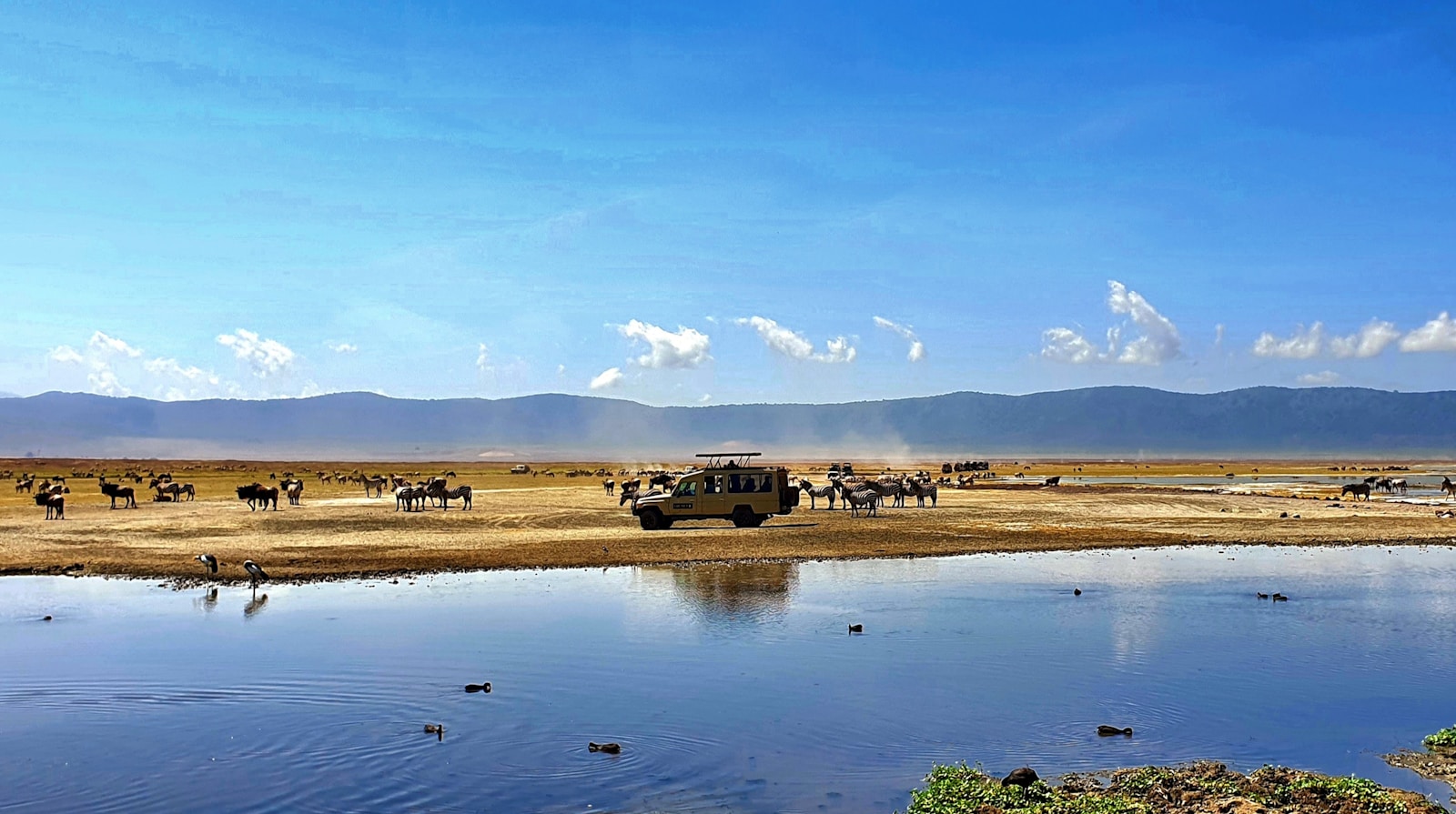
The enormous volcanic caldera contains grasslands, wetlands, woodland, springs, and other habitats supporting an impressive concentration of wildlife.
During a crater game drive, visitors may encounter lions, elephants, buffaloes, zebras, wildebeest, hippos, hyenas, gazelles, and many other animals.
The endangered black rhino is also present in the Ngorongoro ecosystem, although sightings can never be guaranteed.
Because wildlife is concentrated within a relatively compact area, Ngorongoro can provide excellent viewing during a single game-drive day.
A practical itinerary could look like this:
Arrive in Tanzania and transfer to your accommodation in Arusha.
Meet your safari representative for a briefing and prepare for the adventure.
Depart Arusha and travel toward the Ngorongoro Conservation Area.
Enjoy the changing landscapes along the route before arriving at your lodge or camp.
Start early and descend into Ngorongoro Crater.
Spend several hours exploring the crater floor while searching for lions, elephants, buffaloes, hippos, hyenas, zebras, wildebeest, and other wildlife.
Later, ascend from the crater and continue to your accommodation.
Travel back toward Arusha and prepare for the southern part of your adventure.
Depending on flight schedules, an overnight stay may be necessary.
Take a scheduled domestic flight toward Ruaha.
After arrival, meet your safari guide and begin exploring the park.
Spend the day exploring Ruaha's remote wilderness.
Look for elephants, lions, giraffes, buffaloes, antelopes, and other wildlife while enjoying the dramatic scenery.
Enjoy another full safari day.
Having multiple days in Ruaha is particularly valuable because the park is enormous. More time increases your opportunity to explore different habitats and wildlife areas.
Enjoy a final activity depending on your flight schedule before flying onward to your next destination.
This itinerary can easily be extended with Serengeti, Tarangire, Zanzibar, Nyerere National Park, or additional days in Ruaha.
Understanding the individual components makes the overall Ruaha safari Ngorongoro cost easier to understand.
National park and conservation fees form an important part of Tanzania safari pricing.
Ngorongoro also has costs associated with entering the conservation area and taking a safari vehicle into the crater.
Because official fees can change, travelers should request a current quotation rather than relying on old prices found online.
Road safari packages normally use a 4x4 safari vehicle with a professional guide.
The cost may cover:
When several travelers share the same private vehicle, the per-person cost generally becomes lower.
Accommodation prices vary significantly.
A simple camp can cost substantially less than a luxury property overlooking a prime wildlife area.
Safari accommodation commonly includes meals, although exact meal plans should always be confirmed before booking.
Because Ruaha and Ngorongoro are far apart, transportation is an important part of the budget.
Depending on the itinerary, this may include scheduled domestic flights, airport transfers and road transportation.
Travelers should also check baggage allowances before flying because small safari aircraft may have stricter baggage limitations than international airlines.
Travelers wanting to reduce costs should focus on itinerary efficiency rather than simply choosing the cheapest accommodation.
Using affordable camps, traveling outside peak season, avoiding unnecessary additional nights, and sharing some transportation expenses can help.
A well-designed budget safari can still provide outstanding wildlife viewing.
The key difference is usually the accommodation standard and transportation arrangements rather than the quality of the wildlife.
Mid-range safaris provide an excellent balance between comfort and price.
Travelers can expect comfortable lodges or tented camps, private bathrooms at many properties, good meals, professional guiding, and strategically selected locations.
For couples, families, and first-time Tanzania visitors, this category is often an attractive choice.
A carefully planned mid-range itinerary can provide many elements of a premium safari without the price of ultra-luxury accommodation.
Luxury itineraries emphasize exclusivity, location, service, and comfort.
They may include premium camps, scenic flights, private transfers, personalized game drives, spacious rooms, excellent dining, and carefully coordinated logistics.
Ruaha is particularly suitable for luxury travelers because its remoteness creates a strong feeling of wilderness and privacy.
Combining this with Ngorongoro produces an itinerary that balances remote wilderness with one of Africa's most famous natural attractions.
The best travel period depends on what you want to experience.
The dry season is particularly popular for Ruaha.
As water becomes more limited, wildlife often concentrates around rivers and other permanent water sources, making animals easier to locate.
This period is also popular across northern Tanzania, so accommodation and flights should be reserved early.
The greener months bring beautiful landscapes and excellent opportunities for birdwatching.
Travelers may also find different accommodation offers depending on the property and travel dates.
Rainfall patterns vary, so travelers should consider both wildlife priorities and road conditions when planning.
Travelers working with a limited budget can consider several strategies:
The cheapest itinerary is not always the best value. Spending slightly more on efficient transportation can sometimes save an entire travel day.
Serengeti and Ngorongoro are geographically easier to combine because both belong to Tanzania's Northern Safari Circuit.
Therefore, a Serengeti–Ngorongoro itinerary will usually require simpler logistics.
Ruaha and Ngorongoro appeal to travelers looking for something different.
Ruaha adds remoteness, fewer vehicles and expansive wilderness, while Ngorongoro delivers concentrated wildlife viewing in an extraordinary geological setting.
For repeat visitors to Africa, this combination can be particularly rewarding.
Yes, especially for travelers who value variety.
You are essentially combining two distinct Tanzania safari experiences in one journey.
Ruaha provides:
Remote wilderness, predators, elephants, baobabs, dramatic landscapes and fewer safari vehicles.
Ngorongoro provides:
Dense wildlife concentrations, spectacular crater scenery and the possibility of seeing many iconic African species during one game drive.
The higher transportation cost can therefore be worthwhile for travelers wanting a safari beyond the traditional Northern Circuit itinerary.
A Ruaha and Ngorongoro combination is particularly suitable for:
Travelers with only three or four days should generally concentrate on one safari region rather than trying to combine both destinations.
Before confirming a booking, check whether your quotation includes:
Also check exclusions such as international flights, visas, travel insurance, gratuities, alcoholic beverages, optional activities, and personal expenses.
The Ruaha safari Ngorongoro cost should be considered in relation to the extraordinary variety offered by the itinerary rather than price alone.
Ruaha delivers remote wilderness, impressive predator populations, elephants and dramatic southern Tanzanian landscapes. Ngorongoro provides one of Africa's most remarkable wildlife environments within its spectacular volcanic crater.
With thoughtful routing, appropriate accommodation and efficient transportation, combining these destinations can create an unforgettable Tanzania safari.
For the most accurate price, travelers should request a customized quotation based on their travel dates, number of travelers, preferred accommodation level and total number of safari days.
Planning a budget Ngorongoro Crater safari holiday from Arusha? Compare a crater day trip, a two-day Tarangire and Ngorongoro safari, or a…
Read articleA Lake Manyara safari can cost USD 150–220 per person for a shared day trip from Arusha. A published example of a…
Read articleA Tanzania safari from Zanzibar can mean a short mainland trip during your beach holiday or a complete package with flights, game…
Read articleLooking for a group Tanzania safari price from Kilipath African Safaris? A published example for our four-day shared camping safari through Tarangire,…
Read article

