

Budget Ngorongoro Crater Safari Holiday
Planning a budget Ngorongoro Crater safari holiday from Arusha? Compare a crater day trip, a two-day Tarangire and Ngorongoro safari, or a…
Read articleArusha City - Tanzania
Safari & Travel Tips
August 26, 2026 · 7 min read
Planning a Serengeti photography safari is different from planning an ordinary wildlife safari. Photographers normally need more time at sightings, better positioning of the safari vehicle, suitable lighting, enough space for camera equipment, and an experienced safari guide who understands both animal behavior and photography.
The Serengeti is one of Africa's most rewarding wildlife photography destinations. Its vast open plains, dramatic skies, predators, large herds, birdlife, and seasonal Great Migration provide extraordinary opportunities for both amateur and professional photographers.
The Serengeti offers an incredible combination of wildlife diversity and open landscapes. Because many areas consist of grassland and scattered acacia trees, photographers often enjoy unobstructed views of animals.
Possible subjects include:
The landscape itself is also highly photogenic, especially during sunrise and sunset.
There is excellent photography throughout the year, but the experience changes according to the season.
Southern Serengeti and the wider Ndutu ecosystem become particularly interesting during the wildebeest calving season.
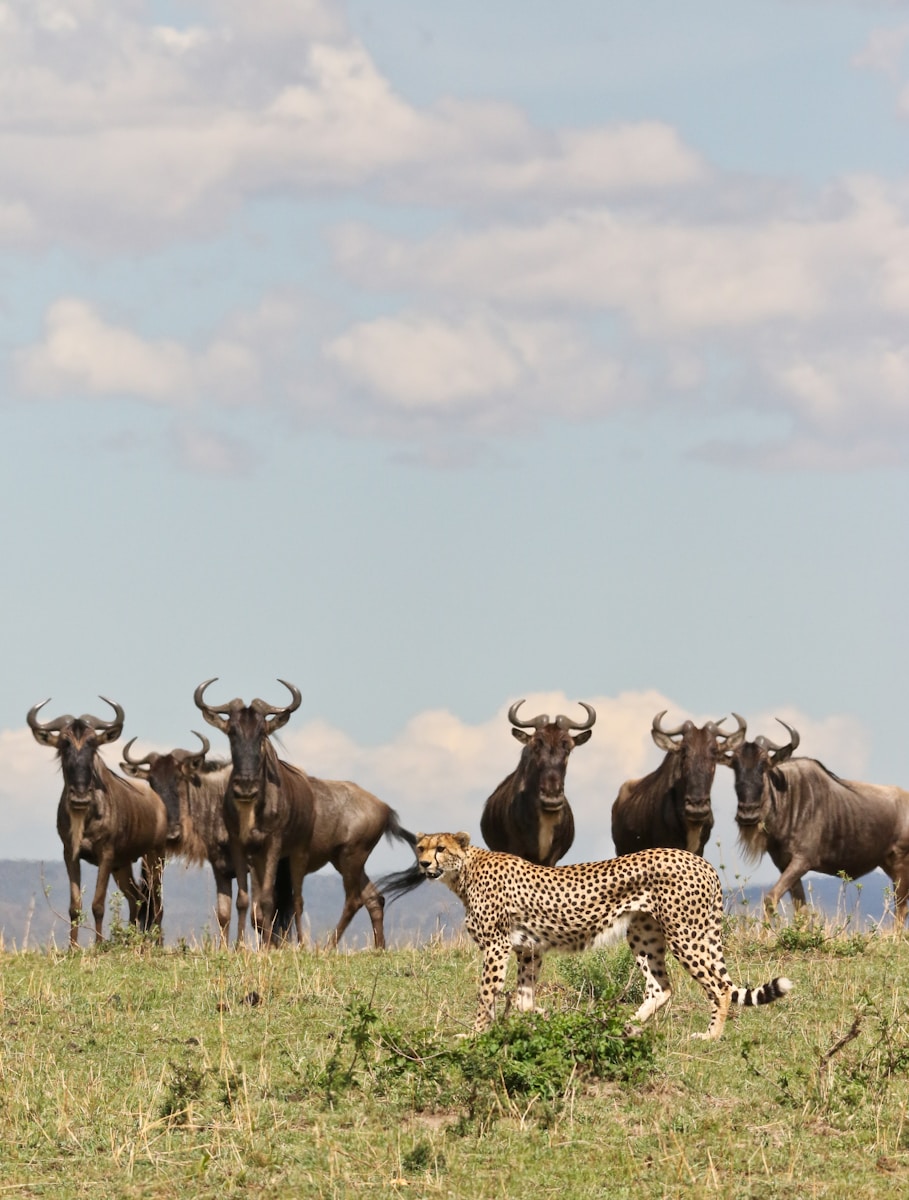
Thousands of young animals attract predators, creating opportunities to photograph lions, cheetahs, hyenas, wildebeest calves, large herds and dramatic predator-prey interactions.
The landscape becomes beautifully green and dramatic.
This period can be excellent for photographers interested in:
Short rain showers can also create beautiful light and unusual photographic conditions.
Large wildebeest and zebra herds begin moving through different sections of the Serengeti.
Photographers can capture huge concentrations of wildlife, dusty migration scenes and predator activity.
Northern Serengeti becomes especially popular because of the Great Migration and potential Mara River crossings.
River crossings cannot be guaranteed because wildlife movements are natural, but this season offers some of Tanzania's most dramatic wildlife photography opportunities.
Good wildlife photography depends heavily on positioning.
An experienced guide should consider:
Instead of simply driving close to an animal, a photography-focused guide may position the vehicle where the animal is likely to move.
This can produce more natural images and better compositions.
Early morning is one of the most productive periods for photography.
The light is softer, temperatures are cooler and many predators remain active from the night.
Photographers may encounter lions walking across the plains, hyenas returning from nighttime activity, cheetahs scanning the grasslands and herbivores beginning to feed.
The warm morning light can also create beautiful golden tones.
Late afternoon provides another excellent photography window.
As the sun becomes lower, harsh shadows decrease and the landscape develops warmer colors.
Sunset photographs featuring giraffes, elephants, acacia trees or animals silhouetted against the African sky can become some of the most memorable images from a Serengeti safari.
Wildlife photographers commonly travel with two camera bodies when possible.
Using two cameras reduces the need to constantly change lenses in dusty environments.
Useful lenses may include:
A longer lens is particularly valuable when photographing predators, birds and animals that cannot be approached closely.
Dust is normal in the Serengeti, especially during the dry season.
Photographers should carry:
Avoid changing lenses unnecessarily while the safari vehicle is moving on dusty roads.
Yes.
Photography safaris often involve thousands of photographs, especially during exceptional wildlife encounters.
Bring several fully charged batteries and sufficient memory cards.
Safari vehicles may provide charging facilities, while many lodges and camps also offer electricity. However, electricity availability can vary between properties, so photographers should always have spare batteries.
A short Serengeti safari can produce excellent photographs, but serious wildlife photographers usually benefit from spending more time inside the ecosystem.
A 4- to 7-day Serengeti photography safari allows more opportunities to wait for animal behavior, experience different lighting conditions and explore several wildlife areas.
Photographers targeting the Great Migration may benefit from even longer itineraries.
Staying inside or close to the national park can significantly improve a photography itinerary.
It reduces unnecessary driving between accommodation and wildlife areas and makes it easier to begin game drives early.
Tented camps are particularly popular because they allow travelers to remain close to wildlife while still enjoying comfortable accommodation.
Absolutely.
You do not need to be a professional photographer.
A photography-focused Serengeti safari can be designed for beginners, enthusiasts or professionals.
Beginners can practice wildlife composition, shutter speed, aperture, autofocus and exposure while photographing real wildlife in changing environments.
A good photography safari guide should understand more than simply where animals are located.
The guide should also understand:
Communication between photographer and guide is extremely important.
If you are waiting for a particular behavior or require a specific angle, explain it to your guide.
Yes.
The Serengeti is one of the world's most famous destinations for photographing the Great Migration.
However, the migration is a natural wildlife movement rather than a fixed event.
Herd locations change according to rainfall, grass availability and water.
Choosing the correct part of the Serengeti for your travel month is therefore one of the most important parts of Serengeti photography safari planning.
Yes.
Photographers should have clear access to the side of the safari vehicle.
Vehicles with pop-up roofs provide additional opportunities for photographing wildlife from different angles.
For dedicated photographers, fewer passengers inside the vehicle usually means additional space for camera bodies, lenses and photographic equipment.
A bean bag can be extremely practical for safari photography because it can support heavy telephoto lenses against vehicle windows or roof openings.
Traditional tripods can be difficult to use inside a safari vehicle because space is limited.
Some professional photography vehicles may offer specialized supports or mounts.
The Serengeti is particularly famous for predator photography.
Lions are commonly photographed throughout many sections of the park.
Cheetahs are often associated with open plains where they can scan large areas for prey.
Leopards are more elusive but can sometimes be found resting in trees.
The park is equally rewarding for photographing elephants, giraffes, buffalo, zebras, wildebeest, hippos and numerous bird species.
Start by deciding what you most want to photograph.
For example:
Big cats: Allow several days in wildlife-rich areas.
Great Migration: Match the itinerary with the approximate seasonal movement of the herds.
Calving: Consider Southern Serengeti and Ndutu during the calving period.
River crossings: Concentrate on Northern Serengeti during the appropriate migration season.
Bird photography: Consider both green-season and year-round opportunities.
Landscape photography: Include sufficient sunrise and sunset game-drive time.
Successful Serengeti photography safari planning is about much more than choosing a camera.
The best photography safari combines the right season, the right location, sufficient time, an experienced guide and a flexible safari vehicle.
Wildlife never follows a timetable, so patience is one of the photographer's greatest advantages.
Whether your goal is photographing a lion at sunrise, a cheetah hunting across the plains, thousands of wildebeest moving through the Serengeti or a giraffe silhouetted against an African sunset, careful planning can dramatically improve your chances of returning home with extraordinary images.
Planning a budget Ngorongoro Crater safari holiday from Arusha? Compare a crater day trip, a two-day Tarangire and Ngorongoro safari, or a…
Read articleA Tanzania safari from Zanzibar can mean a short mainland trip during your beach holiday or a complete package with flights, game…
Read articleLooking for a group Tanzania safari price from Kilipath African Safaris? A published example for our four-day shared camping safari through Tarangire,…
Read articlePair game drives on Tanzania’s mainland with a few days on Zanzibar’s coast. With Kilipath African Safaris, you can start in Arusha…
Read article

