

Budget Ngorongoro Crater Safari Holiday
Planning a budget Ngorongoro Crater safari holiday from Arusha? Compare a crater day trip, a two-day Tarangire and Ngorongoro safari, or a…
Read articleArusha City - Tanzania
Safari & Travel Tips
August 26, 2026 · 11 min read
A group Tanzania safari package is one of the most affordable and enjoyable ways to discover the spectacular wildlife, landscapes and national parks of Tanzania. Rather than paying for an entire safari vehicle, travelers share transportation and other operating expenses with a small group while still enjoying professional guiding, comfortable accommodation and unforgettable wildlife experiences.
Tanzania group safari packages commonly visit famous destinations such as Serengeti National Park, Ngorongoro Crater, Tarangire National Park and Lake Manyara National Park. Depending on the chosen itinerary, a group safari can last from two days to more than a week.
Whether you are traveling alone, as a couple or with friends, joining a Tanzania group safari allows you to meet other travelers, reduce your safari cost and experience the country’s wildlife without sacrificing the most important services.
A group Tanzania safari package, also called a shared safari or joining safari, is an organized wildlife tour in which travelers share a safari vehicle with other guests following the same itinerary.
Most Tanzania group safaris use a customized 4x4 Land Cruiser with a pop-up roof. The vehicle normally accommodates no more than seven travelers, allowing every passenger to have a window seat.
The pop-up roof provides excellent visibility during game drives and allows travelers to stand safely when observing or photographing wildlife. Vehicles may also include charging sockets, a refrigerator or cooler, binoculars and a radio communication system.
A typical Tanzania group safari package includes:
Because several travelers share the cost of the safari vehicle and guide, a joining safari is usually less expensive than a private safari covering the same destinations.
The greatest advantage of a Tanzania group safari package is affordability. The safari vehicle, fuel and guide are among the most expensive components of a safari. When these expenses are divided among several travelers, the cost per person becomes considerably lower.
This makes a shared safari particularly attractive to solo travelers and couples who want to experience Serengeti and Ngorongoro without paying for a private Land Cruiser.
A properly organized small-group safari should limit the number of guests inside the vehicle. With a maximum of seven travelers in a seven-window Land Cruiser, everyone can enjoy a window seat.
A window seat provides unobstructed views of animals and landscapes while offering better opportunities for wildlife photography.
A group safari brings together travelers from different countries and backgrounds. Guests spend several days sharing game drives, meals and memorable wildlife encounters.
The excitement of seeing a lion, leopard, elephant or cheetah becomes even more enjoyable when shared with other enthusiastic travelers.
Many Tanzania joining safaris have regular departures from Arusha. Travelers can select an itinerary and join a group operating on their preferred date, subject to availability.
This makes planning easier for solo travelers who may otherwise struggle to organize an affordable safari.
A complete Tanzania group safari package takes care of the major travel arrangements. Accommodation, park fees, meals, transportation and guiding are organized before departure.
Travelers can therefore concentrate on enjoying the wildlife instead of managing several different reservations.
Serengeti National Park is the highlight of many Tanzania group safari itineraries. Its vast plains support an extraordinary concentration of wildlife, including lions, leopards, cheetahs, elephants, giraffes, buffaloes, hippos and numerous antelope species.
The Serengeti is also famous for the Great Wildebeest Migration. More than a million wildebeest, accompanied by hundreds of thousands of zebras and gazelles, move through the wider Serengeti ecosystem in search of fresh grass and water.
Central Serengeti, particularly the Seronera area, offers reliable wildlife viewing throughout the year. It is commonly included in shared safari itineraries because it has a wide range of accommodation and productive game-drive routes.
Travelers should understand that the migration changes location throughout the year. Seeing a river crossing cannot be guaranteed because the movement of animals depends on rainfall, water and grazing conditions.
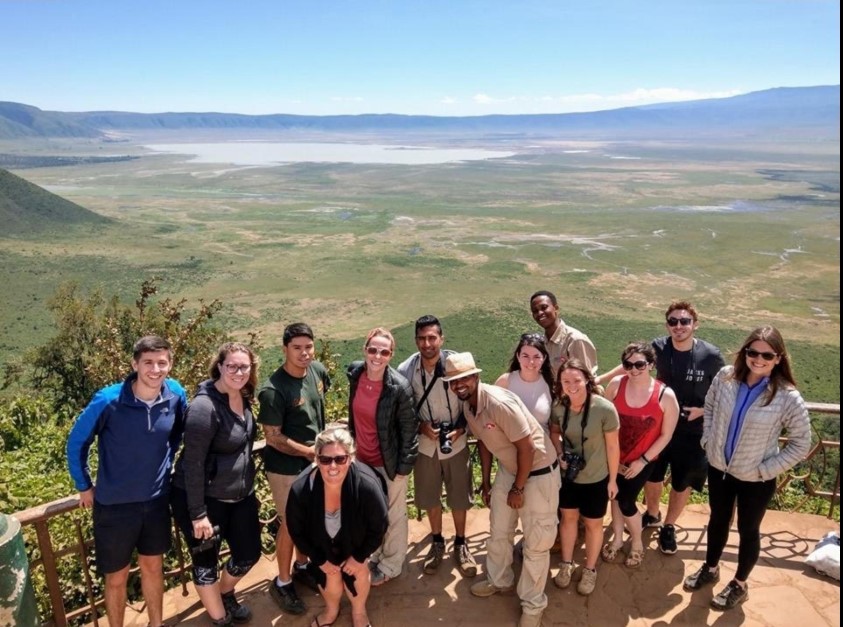
Ngorongoro Crater is one of Africa’s most remarkable wildlife destinations. This enormous volcanic caldera contains grasslands, woodland, wetlands and a seasonal lake within its walls.
During a crater game drive, travelers may encounter lions, elephants, buffaloes, hippos, zebras, wildebeest, hyenas and various antelope species. The crater is also one of Tanzania’s best areas for a possible sighting of the endangered black rhinoceros, although every wildlife encounter remains unpredictable.
Safari vehicles descend from the crater rim to explore the crater floor for several hours. Because of its high wildlife density and dramatic scenery, Ngorongoro is included in nearly every Serengeti group safari package.
The crater rim can be cold during early mornings and evenings. Travelers should carry a warm jacket, especially when camping or staying near the conservation area.
Tarangire National Park is known for its large elephant populations, ancient baobab trees and picturesque landscapes. During the dry season, the Tarangire River attracts animals from surrounding areas, creating excellent wildlife-viewing opportunities.
Visitors may see elephants, lions, giraffes, zebras, wildebeest, buffaloes, warthogs and several antelope species. Tarangire is also an outstanding destination for birdwatching.
The park is approximately two hours from Arusha and is frequently visited on the first or final day of a Northern Circuit group safari.
Lake Manyara National Park lies beneath the dramatic Great Rift Valley escarpment. It contains groundwater forest, open grassland, acacia woodland and wetland habitats.
The park is home to elephants, giraffes, zebras, buffaloes, hippos, monkeys and abundant birdlife. Although it is sometimes associated with tree-climbing lions, sightings of these animals cannot be guaranteed.
Lake Manyara works especially well in shorter itineraries because of its convenient location between Arusha and the Ngorongoro region.
This short itinerary is ideal for travelers with limited time.
Day 1: Travel from Arusha to Tarangire National Park for a game drive before continuing to accommodation near Karatu or the Ngorongoro Conservation Area.
Day 2: Descend into Ngorongoro Crater for wildlife viewing before returning to Arusha during the late afternoon or early evening.
The two-day package does not include Serengeti because the driving distance would make the itinerary too rushed.
This is one of the most popular Tanzania group safari packages.
Day 1: Depart from Arusha and travel through the Ngorongoro highlands to Serengeti National Park. Enjoy an afternoon game drive in Central Serengeti.
Day 2: Continue with wildlife viewing in Serengeti before traveling toward the Ngorongoro Conservation Area.
Day 3: Descend into Ngorongoro Crater for a game drive and return to Arusha.
This itinerary provides access to Tanzania’s two most famous wildlife destinations, but it involves long driving distances.
A four-day group safari offers a more complete Northern Circuit experience.
Day 1: Arusha to Tarangire National Park.
Day 2: Travel to Serengeti National Park with wildlife viewing along the way.
Day 3: Morning game drive in Serengeti followed by a journey toward Ngorongoro.
Day 4: Ngorongoro Crater game drive and return to Arusha.
This is an excellent choice for first-time visitors who want to combine elephants, Serengeti predators and the unique Ngorongoro ecosystem.
A five-day itinerary provides additional wildlife-viewing time and may include Lake Manyara, Tarangire, Serengeti and Ngorongoro.
The slower schedule provides more opportunities to observe animal behavior, take photographs and appreciate the changing landscapes.
A camping group safari is normally the most affordable option. Travelers stay at public campsites inside or near the parks.
A camping package commonly provides:
Camping creates an adventurous atmosphere and allows travelers to experience the sounds of nature during the night. However, public campsites have basic facilities and are not appropriate for guests expecting hotel-style comfort.
A lodge safari uses permanent lodges or tented camps. Rooms generally offer proper beds, electricity and private bathrooms, although the exact facilities depend on the selected accommodation.
Lodge group safaris cost more than camping packages but offer additional privacy and comfort. They are suitable for couples, families and travelers who prefer comfortable accommodation after a long game drive.
Tented camps combine the atmosphere of camping with many lodge comforts. A typical safari tent may include a bed, private bathroom, shower, furniture and a veranda.
These properties are often situated close to wildlife areas, allowing guests to remain connected to the natural environment.
Tanzania offers rewarding wildlife viewing throughout the year, but every season presents a different experience.
The dry season is popular because animals frequently gather near permanent water sources. Vegetation becomes thinner, making wildlife easier to locate in many areas.
July through October may also provide opportunities to follow the Great Migration toward Northern Serengeti. However, standard group safaris generally visit Central Serengeti. Travelers specifically interested in the northern river-crossing region may need a specialized or private safari.
The short rains refresh the landscapes and reduce dust. Wildlife remains active, and the parks can feel less crowded than during peak season.
Rainfall often occurs as short showers rather than continuous rain, although weather conditions cannot be predicted precisely.
The Southern Serengeti and Ndutu region become important during the wildebeest calving season. Thousands of calves are born, attracting predators such as lions, cheetahs and hyenas.
Travelers wanting to explore Ndutu should confirm that their selected group itinerary specifically includes the region.
The longer rains usually occur during April and May. Landscapes are green, birdlife is abundant and visitor numbers are often lower.
Some roads can become muddy, but the green season is an excellent option for photographers and travelers who appreciate dramatic skies and lush scenery.
The cost of a group safari depends on:
Camping packages are generally the least expensive. Lodge and mid-range safaris cost more because accommodation rates are added to the park, vehicle and guide expenses.
Travelers should compare complete inclusions instead of selecting a safari based only on the lowest advertised price. A very cheap quotation may exclude transfers, accommodation, crater fees, meals or important government charges.
Request a written itinerary and confirm what is included before making a payment.
A group safari is suitable for travelers who:
A private safari is better for travelers who:
Neither option is automatically better. The right choice depends on budget, comfort expectations and desired flexibility.
Safari travelers should pack lightly, particularly when sharing a vehicle.
Recommended items include:
Avoid bringing oversized hard-shell suitcases into a shared vehicle. Large luggage can normally be stored safely in Arusha while travelers take a smaller bag on safari.
Before confirming a Tanzania group safari package, ask:
A professional Tanzania safari operator should answer these questions clearly and provide a written itinerary.
Travelers can help protect Tanzania’s wildlife and natural environment by following park regulations.
Remain inside the vehicle unless the guide confirms that leaving is permitted. Never feed wild animals or ask the guide to drive off designated tracks. Keep noise low near wildlife and avoid placing pressure on the guide to approach animals too closely.
Travelers should also reduce plastic waste, respect local communities and choose operators that employ licensed guides and comply with conservation regulations.
A Tanzania group safari package combines affordability, professional organization and remarkable wildlife viewing. It is an excellent choice for solo travelers, couples and friends who are comfortable sharing their adventure with a small group.
From Tarangire’s elephants and baobab trees to the endless Serengeti plains and wildlife-filled Ngorongoro Crater, Tanzania offers experiences that remain memorable long after the safari ends.
Contact Kilipath African Safaris to receive a personalized group safari recommendation based on your travel dates, budget, preferred accommodation and available time. Our team can help you compare camping and lodge packages, arrange transfers and select the most suitable itinerary for your Tanzania adventure.
Planning a budget Ngorongoro Crater safari holiday from Arusha? Compare a crater day trip, a two-day Tarangire and Ngorongoro safari, or a…
Read articleA Lake Manyara safari can cost USD 150–220 per person for a shared day trip from Arusha. A published example of a…
Read articleExplore Ruaha National Park’s baobab country on a guided safari built around your dates, group size and budget. Spend your game drives…
Read articleA Nyerere Tanzania wildlife safari can take you from a woodland game drive in the morning to a boat on the Rufiji…
Read article

