

Budget Ngorongoro Crater Safari Holiday
Planning a budget Ngorongoro Crater safari holiday from Arusha? Compare a crater day trip, a two-day Tarangire and Ngorongoro safari, or a…
Read articleArusha City - Tanzania
Safari & Travel Tips
August 26, 2026 · 15 min read
Tarangire National Park is one of the most rewarding safari destinations in northern Tanzania. Famous for its enormous elephant herds, ancient baobab trees, seasonal wildlife migrations, and peaceful landscapes, the park offers an authentic safari experience without the constant crowds found in some better-known destinations.
Successful best Tarangire safari planning involves more than choosing a travel date. You must consider the season, number of days, accommodation location, transportation, wildlife expectations, park activities, and how Tarangire will fit into your wider Tanzania itinerary.
Whether you are arranging a one-day excursion from Arusha or including Tarangire in a longer Northern Circuit safari, this guide will help you make the right decisions.
Tarangire offers a distinctive combination of dramatic scenery, abundant wildlife, and a relaxed safari atmosphere. Although it sometimes receives less attention than Serengeti National Park and the Ngorongoro Crater, many experienced travelers consider it one of Tanzania’s most beautiful parks.
The Tarangire River forms the heart of the ecosystem. During the dry season, this permanent water source attracts animals from the surrounding areas. Elephants, zebras, wildebeest, buffaloes, giraffes, antelopes, and predators gather close to the river, creating excellent opportunities for wildlife viewing.
Several features make Tarangire special:
Tarangire is especially suitable for travelers who enjoy elephants, birdwatching, landscape photography, and quieter game drives.
Tarangire National Park is located in northern Tanzania, southwest of Arusha. It forms part of the popular Northern Safari Circuit, which also includes Lake Manyara, Ngorongoro Crater, and Serengeti National Park.
The drive from Arusha usually takes approximately two to three hours, depending on traffic, road conditions, and the location of your accommodation. This makes Tarangire possible as a day trip, although spending at least one night nearby provides a more relaxed experience.
The park is also conveniently positioned for travelers continuing toward Karatu, Lake Manyara, Ngorongoro, or the Serengeti.
The ideal time depends on your interests. Tarangire remains open throughout the year, but wildlife distribution, scenery, weather, and visitor numbers change from season to season.
The dry season is generally considered the best period for wildlife viewing in Tarangire. Water becomes scarce in the surrounding ecosystem, encouraging animals to gather around the Tarangire River and remaining water sources.
During this period, visitors may see:
July through October can deliver particularly concentrated wildlife sightings. Roads are usually easier to navigate, vegetation becomes thinner, and animals may be easier to photograph.
However, this is also a popular travel season. Accommodation prices may be higher, and well-known areas around the river can become busy. Early reservations are recommended.
Short rains usually transform the dry landscape into fresh green scenery. These showers are often intermittent rather than continuous, although weather patterns cannot be guaranteed.
This period can offer:
Wildlife can become more dispersed because water is available across a wider region, but rewarding sightings are still possible.
January and February are normally warm months with beautiful vegetation. They can be excellent for travelers interested in birdlife, landscape photography, and a less crowded safari.
Many migratory birds may be present, while resident animals remain inside the park. The wildlife may not be as concentrated as it is late in the dry season, but the experience can feel peaceful and exclusive.
March, April, and May are associated with the longer rains. April is often one of the wettest months, although exact weather varies every year.
Advantages of visiting during the green season may include:
Some roads can become muddy, and animals may be spread across the wider ecosystem. A reliable four-wheel-drive safari vehicle and an experienced guide are particularly important during this period.
Your ideal duration depends on the overall itinerary, budget, and depth of experience you want.
A one-day safari is suitable for visitors with limited time. You can leave Arusha in the morning, enjoy several hours of game driving, have lunch inside the park, and return to Arusha in the evening.
A typical day may include:
This option gives you a valuable introduction to the park. However, a significant part of the day is spent traveling, and you will mainly explore the northern section.
Two days provide a better balance between travel time and wildlife viewing. Staying near or inside the park allows you to begin the second day early, when animals are active and temperatures are cooler.
A two-day itinerary also provides more time to explore different habitats rather than rushing between sightings.
Three days are recommended for wildlife enthusiasts, photographers, birdwatchers, and travelers who prefer a slower pace. You can explore quieter areas, wait patiently at sightings, and enjoy the park during different times of day.
A longer stay may provide opportunities to explore areas away from the busy northern entrance, depending on road conditions and lodge location.
Morning: Depart from Arusha after breakfast and drive to Tarangire National Park.
Late morning: Enter the park and begin a game drive through woodland, grassland, and areas surrounding the river.
Lunch: Enjoy a picnic or arranged meal at a designated location.
Afternoon: Continue searching for elephants, giraffes, zebras, lions, buffaloes, and antelopes.
Evening: Leave the park and return to Arusha.
Day 1: Arusha to Tarangire
Drive from Arusha to Tarangire for a full game drive. Explore the river valley and baobab-dotted plains before continuing to accommodation near Tarangire, Lake Manyara, or Karatu.
Day 2: Ngorongoro Crater and Arusha
Travel to the Ngorongoro Conservation Area, descend into the crater, and enjoy a game drive before returning to Arusha.
This is a compact itinerary for travelers who want two very different ecosystems within a short period.
Day 1: Tarangire National Park
Enjoy an afternoon or full-day game drive focusing on elephants, baobabs, and river wildlife.
Day 2: Ngorongoro Crater
Descend into the crater for wildlife viewing in one of Tanzania’s most concentrated safari environments.
Day 3: Lake Manyara or Cultural Experience
Visit Lake Manyara National Park, explore Mto wa Mbu, or participate in a cultural activity before returning to Arusha.
Day 1: Arusha to Tarangire National Park
Day 2: Tarangire or Karatu to Serengeti
Day 3: Full-day Serengeti safari
Day 4: Serengeti to Ngorongoro area
Day 5: Ngorongoro Crater and return to Arusha
This is one of the most complete short Northern Circuit itineraries because it combines Tarangire’s elephants, Serengeti’s open plains, and the wildlife-rich Ngorongoro Crater.
Tarangire supports a remarkable variety of wildlife. Its habitats include riverine vegetation, open grasslands, acacia woodland, seasonal swamps, and baobab-covered plains.
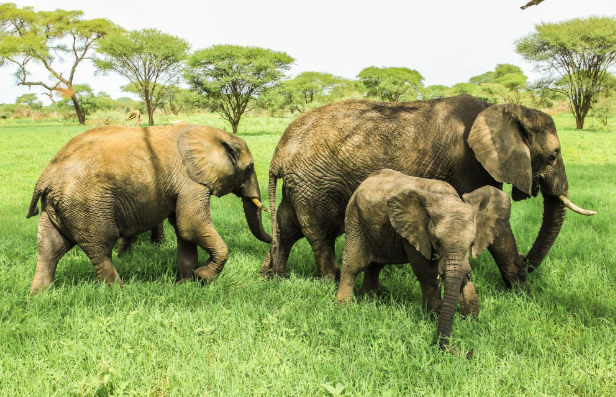
Elephants are Tarangire’s signature attraction. Visitors regularly encounter family groups moving toward the river, feeding beneath baobab trees, playing in mud, or guiding their calves across the road.
Sightings can be especially impressive during the dry season, when several elephant families gather near water.
Always remain inside the vehicle unless your guide confirms that you are in a designated area. Elephants are powerful wild animals and must be treated with patience and respect.
Lions are resident in Tarangire and can be encountered in grassland, woodland, or close to water. They may rest under trees during the heat of the day and become more active during the cooler morning and evening hours.
Patience is important. A skilled guide looks for tracks, alarm calls, vultures, and unusual animal behavior to locate predators.
Leopards are present but naturally elusive. Woodland and riverine areas may offer suitable habitat, while cheetahs are more likely to favor open terrain.
Neither species can be guaranteed. Finding one should be considered a special safari moment rather than an expected daily sighting.
Giraffes are commonly observed feeding among acacia trees. Zebras and wildebeest may appear in large numbers, especially when seasonal conditions bring them closer to permanent water.
Their movement forms part of Tarangire’s seasonal wildlife migration, a separate ecological event from the famous Serengeti Great Migration.
Buffaloes, impalas, waterbucks, dik-diks, warthogs, and other herbivores are frequently observed. Less commonly seen species may include elands, oryx, and greater kudu.
Tarangire is one of Tanzania’s leading birdwatching destinations. Its varied habitats support hundreds of resident and migratory species.
Bird enthusiasts may look for:
Traveling with binoculars and an experienced birding guide can significantly improve the experience.
The baobab trees are among Tarangire’s most recognizable natural features. Their massive trunks, unusual shapes, and ability to survive in dry environments create an unforgettable landscape.
Some baobabs are believed to be hundreds of years old. They provide food, shelter, and nesting spaces for wildlife. Elephants sometimes strip their bark or dig into the trunks in search of moisture.
For photographers, the combination of elephants, baobabs, golden grass, and dramatic evening light creates classic African safari compositions.
Accommodation is an important part of best Tarangire safari planning. Your choice affects comfort, driving time, access to wildlife areas, and the overall cost.
Staying inside Tarangire can provide convenient access to game-drive areas. You may begin exploring earlier and continue until the required park-closing time without a long journey back to accommodation outside.
Potential benefits include:
Park fees and accommodation rates may make this option more expensive.
Camps and lodges outside Tarangire can offer excellent value and comfortable facilities. Some are located near the entrance, while others are farther away.
Before booking, confirm the actual driving time to the park gate. A property advertised as being in the “Tarangire area” may not necessarily be immediately beside the entrance.
Karatu is often used when combining Tarangire with Ngorongoro and Serengeti. It offers a wide selection of hotels and lodges, but it is not directly beside Tarangire.
Staying in Karatu may make sense for the wider route, although it adds driving time if you plan to return to Tarangire the next morning.
Public or private campsites provide a more adventurous and affordable experience. Camping safaris normally include tents, mattresses, sleeping bags, meals, and support from a safari cook or camp team.
Public campsites usually have shared bathroom facilities. Travelers should confirm exactly what equipment and services are included.
Mid-range accommodation provides a comfortable balance between price and experience. Rooms or permanent tents commonly include beds and private bathrooms, although facilities vary.
This category is popular with couples, families, and first-time safari travelers.
Luxury properties may offer spacious suites, fine dining, pools, personalized service, and scenic locations. Some small camps also create an intimate atmosphere with fewer guests.
Luxury should not be judged only by room design. Location, guiding quality, food, privacy, and access to wildlife areas are equally important.
A four-wheel-drive Land Cruiser with a pop-up roof is the standard choice for Tarangire. The raised roof allows travelers to stand safely during sightings and provides unobstructed photography opportunities.
A suitable safari vehicle should include:
Air-conditioning performance can vary because game drives are normally conducted with the roof open. Dust is also a natural part of dry-season safari travel.
Safari prices vary considerably. Instead of choosing an operator based only on the lowest quotation, compare what is actually included.
Major cost factors include:
A clear quotation should explain whether it includes park entrance fees, vehicle fees, accommodation, meals, drinking water, guide services, government taxes, and transfers.
International flights, travel insurance, visas, tips, personal purchases, and optional activities are commonly excluded unless specified.
Pack light, practical clothing in neutral colors such as beige, brown, khaki, olive, and grey.
Dark blue and black clothing may attract tsetse flies in some wooded areas. Bright colors can also be distracting during wildlife viewing.
Recommended items include:
Even during warmer months, mornings can feel cool in an open safari vehicle. Layered clothing is the easiest solution.
Tarangire is excellent for wildlife and landscape photography. To improve your results:
A telephoto lens is useful for animals and birds, while a wider lens captures baobabs, skies, and environmental portraits.
Tarangire can be an excellent choice for families because it is relatively close to Arusha and offers frequent elephant sightings.
Families should consider:
Parents should explain that wildlife viewing requires patience. Bringing binoculars, animal checklists, or simple field guides can keep children engaged.
Couples can combine Tarangire’s beautiful scenery with intimate tented accommodation and private game drives.
A honeymoon itinerary might include:
Inform the tour operator in advance if the safari is part of a honeymoon. Some accommodations may provide small complimentary touches, while premium arrangements may require additional payment.
Responsible tourism helps protect the wildlife and communities that make Tarangire special.
Travelers should:
Wild animals should always control the encounter. A responsible guide maintains a safe distance and avoids blocking an animal’s movement.
A day trip is possible, but it should not be treated as an opportunity to cover the entire park. Focus on enjoying quality sightings rather than racing between distant locations.
Always verify the driving time between the lodge and park entrance. Regional descriptions can be misleading.
A cheaper safari may exclude essential fees, use unsuitable accommodation, or place too many passengers in one vehicle. Compare inclusions carefully.
Large hard-shell suitcases can be difficult to carry in safari vehicles, particularly on shared tours. A soft-sided bag is often more practical.
Tarangire is a natural ecosystem, not a zoo. Experienced guides improve your chances, but no responsible company can guarantee sightings of specific animals.
Northern Tanzania’s map can make destinations appear close together. Actual travel times depend on road conditions, park procedures, and wildlife stops.
Visiting too many parks in too few days can turn the safari into a driving tour. Allow enough time to experience each destination.
A trustworthy operator should provide clear communication, transparent pricing, suitable vehicles, and realistic expectations.
Ask potential operators:
Request a written itinerary and payment receipt. Read recent reviews, but also evaluate how clearly and professionally the company answers your questions.
This is an excellent combination for a short safari. Tarangire provides elephants, baobabs, and open wilderness, while Ngorongoro offers concentrated wildlife inside a dramatic volcanic caldera.
Combining the two parks creates a diverse wildlife journey. Tarangire is known for elephants and baobabs, while Serengeti provides vast plains, predators, and seasonal migration experiences.
Allow enough time for the long driving distances. A minimum four- or five-day itinerary is more comfortable than trying to rush both parks.
These parks are relatively close and can fit into a short Northern Circuit itinerary. Lake Manyara adds groundwater forest, escarpment scenery, and aquatic habitats.
A safari-and-beach holiday is one of Tanzania’s most popular combinations. Travelers can explore Tarangire and other northern parks before flying to Zanzibar for relaxation, culture, and coastal activities.
Domestic flight schedules should be checked before finalizing the safari itinerary.
The key to the best Tarangire safari planning is creating an itinerary that matches your available time, budget, preferred comfort level, and wildlife interests.
Choose the dry season if concentrated animal sightings are your highest priority. Consider the green season if you prefer lush landscapes, birdlife, and fewer visitors. Spend at least one night near or inside the park when possible, and avoid making the itinerary unnecessarily rushed.
Most importantly, select a reliable local operator with an experienced guide, a suitable safari vehicle, transparent inclusions, and strong knowledge of the Tarangire ecosystem. With thoughtful planning, Tarangire can become one of the most memorable destinations of your Tanzania safari.
Planning a budget Ngorongoro Crater safari holiday from Arusha? Compare a crater day trip, a two-day Tarangire and Ngorongoro safari, or a…
Read articleA Lake Manyara safari can cost USD 150–220 per person for a shared day trip from Arusha. A published example of a…
Read articleA Tanzania safari from Zanzibar can mean a short mainland trip during your beach holiday or a complete package with flights, game…
Read articleLooking for a group Tanzania safari price from Kilipath African Safaris? A published example for our four-day shared camping safari through Tarangire,…
Read article

