

Lake Manyara vs. Nyerere Safari Prices | Tanzania Guide
A Lake Manyara safari can cost USD 150–220 per person for a shared day trip from Arusha. A published example of a…
Read articleArusha City - Tanzania
Safari & Travel Tips
August 27, 2026 · 14 min read
Planning a Tanzania safari in Nyerere National Park is an excellent choice for travelers who want a quieter, more adventurous alternative to Tanzania’s famous Northern Circuit. Located in southern Tanzania, Nyerere combines traditional game drives with boat safaris on the Rufiji River, walking safaris, birdwatching, and outstanding opportunities to encounter elephants, lions, hippos, crocodiles, buffalo and African wild dogs.
Nyerere National Park covers more than 30,000 square kilometers and protects extensive miombo woodland, floodplains, lakes and the Rufiji River system. It was created in 2019 from part of the historic Selous Game Reserve and is today one of Tanzania's great wilderness destinations.
For travelers researching Tanzania safari Nyerere planning, this guide explains the best time to visit, how many days to spend, how to reach the park, what wildlife you can see, where to stay, what activities to include and how Nyerere can be combined with Zanzibar, Mikumi, Ruaha and other destinations.
Nyerere offers a noticeably different safari experience from Serengeti, Ngorongoro and Tarangire.
The landscape is dominated by the Rufiji River, oxbow lakes, floodplains, palm-fringed channels and miombo woodland. Wildlife tends to concentrate around the river and lakes, especially as the dry season progresses.
Nyerere is particularly attractive for travelers looking for:
TANAPA highlights elephants, lions, buffalo, hippos, crocodiles, leopards, hyenas and African wild dogs among Nyerere's important wildlife attractions. The park also records more than 430 bird species.
Nyerere National Park lies in southern Tanzania, within the wider Selous ecosystem.
The northern tourism areas are shaped by the Rufiji River and a network of lakes, channels, woodland and floodplains. These water systems make the park dramatically different from many traditional East African savannah destinations.
Nyerere was established as a national park in 2019 after approximately 30,000 square kilometers of the former Selous Game Reserve were designated as a national park.
For most safari travelers, the easiest access point is Dar es Salaam, either by scheduled bush flight or by road.
There are two main ways to reach Nyerere:
Flying is the fastest and most comfortable option.
Scheduled and charter flights can operate between Dar es Salaam and airstrips serving the main safari areas of Nyerere, including airstrips such as Mtemere, Siwandu and Beho Beho.
Fly-in safaris work particularly well for travelers who:
A typical itinerary can therefore involve flying from Zanzibar or Dar es Salaam toward Nyerere, enjoying several days in the park and then flying onward.
Flight schedules vary according to season and airline operations, so they should always be confirmed for the exact travel dates.
Nyerere can also be reached by road from Dar es Salaam.
Road travel usually takes considerably longer than flying and conditions vary according to rainfall, route and road maintenance. TANAPA describes road access as possible but notes that it can involve a long drive, particularly compared with flying.
A road safari is useful when travelers want:
During suitable conditions, Nyerere and Mikumi can be linked by road, creating an interesting Southern Circuit safari combination.
The most popular period for wildlife viewing in Nyerere is generally the dry season from June through October, extending into parts of November depending on the year.
TANAPA identifies June to October as Tanzania's principal dry-season wildlife-viewing period because animals become easier to locate around permanent water sources.
This is usually the strongest period for a classic Nyerere wildlife safari.
As vegetation becomes drier and water becomes more concentrated, animals increasingly gather around the Rufiji River, lakes and other permanent water sources.
Travelers can look for:
It is also an excellent season for combining game drives and boat safaris.
The short rains can transform the landscape.
Vegetation becomes greener, birdlife is excellent and the park can feel even less crowded.
Rain does not necessarily fall continuously, but safari schedules should remain flexible.
Parts of Nyerere can still provide rewarding safari experiences during January and February.
An older TANAPA park guide specifically notes that December through February can produce beautiful green landscapes and that many sections remain accessible.
This can be an attractive period for photographers interested in dramatic skies, fresh vegetation and birdlife.
March through May normally brings Tanzania's major rainy season.
TANAPA advises travelers to check road conditions and accommodation availability during the long rains because some safari areas may become difficult to access.
Some lodges or camps may also operate seasonally.
For travelers prioritizing maximum wildlife viewing and easy movement throughout the park, June through October remains the most straightforward choice.
Nyerere has extraordinary wildlife diversity.
The combination of river, lakes, floodplains, open grassland and miombo woodland supports both common safari animals and less frequently encountered species.
African wild dogs are one of Nyerere's signature species.
TANAPA describes Nyerere as one of East Africa's important strongholds for African wild dogs.
They move widely and sightings can never be guaranteed, but travelers interested in predators often place Nyerere high on their Tanzania safari list specifically because of the opportunity to search for them.
Lions are widespread across the ecosystem.
Early morning game drives can be particularly rewarding, when temperatures are cooler and predators may still be active.
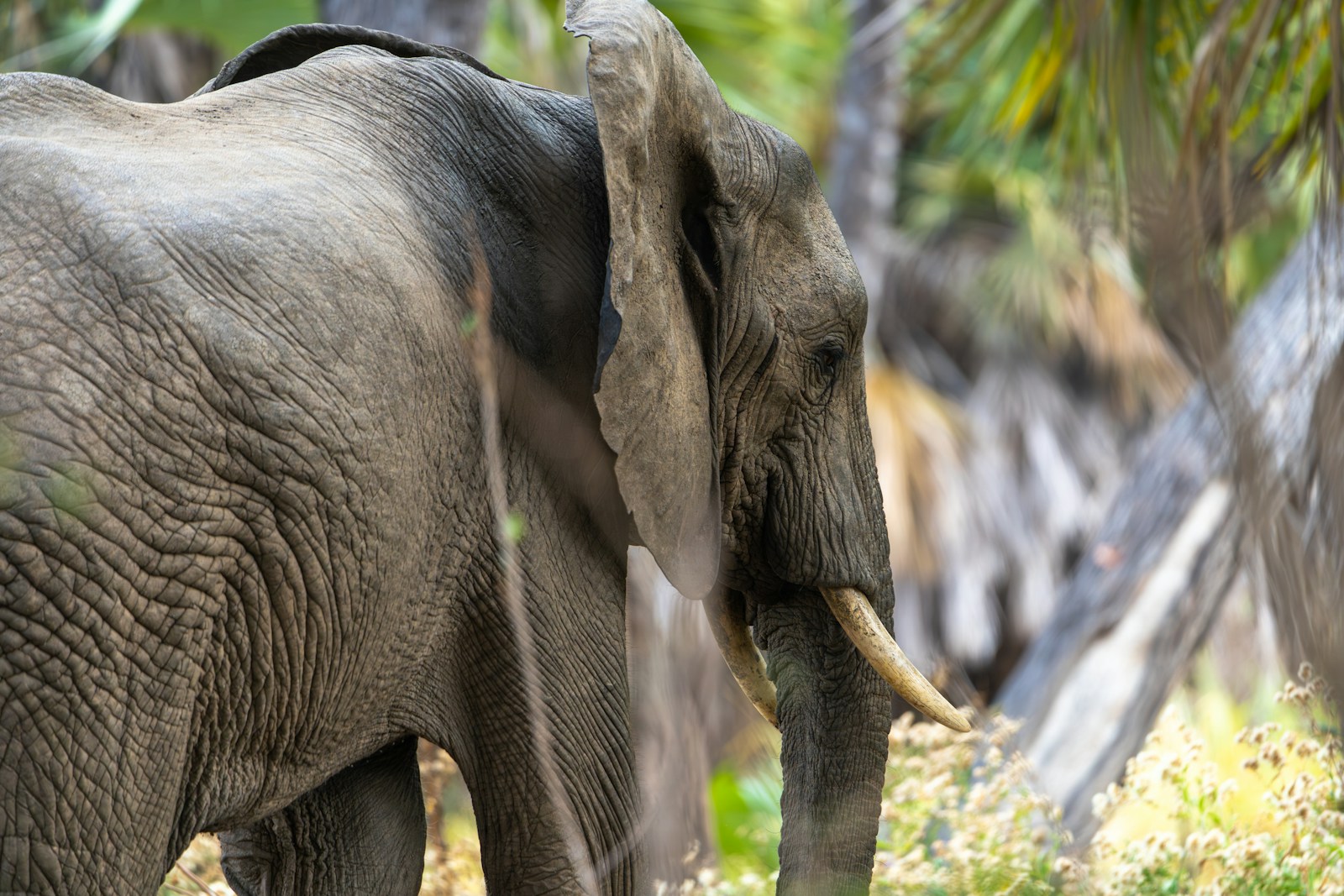
Elephants are one of the dominant sights of Nyerere.
They frequently move through woodland and toward lakes and river channels.
One of the memorable advantages of Nyerere is the possibility of seeing elephants from both a safari vehicle and a boat.
The Rufiji River supports excellent populations of hippos and Nile crocodiles.
Boat safaris provide a completely different perspective from vehicle-based wildlife viewing.
Instead of approaching a waterhole from land, travelers move quietly through the river system and observe wildlife directly from water level.
Large buffalo herds can occur throughout the park, particularly near water during dry months.
Other commonly encountered herbivores include giraffes, zebras, impala and waterbuck.
Nyerere also supports species such as sable antelope and Lichtenstein's hartebeest.
Leopards are present but are generally less predictable than lions.
Spotted hyenas also occur across the park.
Wildlife sightings can never be guaranteed because Nyerere is an enormous natural ecosystem rather than a zoo or enclosed wildlife attraction.
A Nyerere boat safari is one of the biggest reasons to choose the park.
Traditional safari destinations are experienced almost entirely from vehicles. Nyerere allows travelers to combine driving with wildlife viewing from the water.
Boat excursions explore the Rufiji River, channels and associated lakes.
Possible sightings include:
TANAPA specifically lists boat safaris on the Rufiji among Nyerere's signature activities.
Late afternoon boat trips are particularly beautiful because the temperature begins to drop and softer light spreads across the river.
For photographers, the combination of reflections, birds, hippos, crocodiles and animals drinking along the riverbank creates images that are very different from those captured during a game drive.
Game drives remain the foundation of a Nyerere safari.
Safari vehicles explore the network of roads and tracks around river channels, lakes, plains and woodlands.
The best game drives often begin early in the morning when:
Late afternoon is another productive period.
TANAPA recommends dawn and late-afternoon periods for favorable wildlife viewing and photographic light.
Because Nyerere is so large, staying multiple nights allows travelers to explore different ecosystems instead of repeatedly driving the same routes.
Travelers wanting something more adventurous can include a guided walking safari.
Walking changes the focus of the experience.
Instead of concentrating only on large mammals, guides may introduce travelers to:
Walking safaris must be conducted under authorized guiding arrangements, and TANAPA states that permits and ranger requirements apply.
A walking safari should therefore be organized in advance through the safari operator or accommodation.
Nyerere is also an outstanding destination for birders.
More than 430 bird species have been recorded, according to TANAPA.
The riverine environment creates excellent habitat for species such as:
Birding is productive throughout the year, while wetter months can be especially attractive due to greener habitats and migratory species.
For most visitors, three to five days works well.
A two-day safari is possible but relatively short.
It works best as a fly-in option when schedules minimize transfer time.
You may include:
Day 1: Arrival, afternoon game drive or boat safari
Day 2: Morning game drive and departure
This option suits travelers with very limited time.
Three days provides a much better introduction.
A typical arrangement might be:
Day 1: Fly or drive to Nyerere and enjoy an afternoon boat safari.
Day 2: Full-day or morning and afternoon game drives.
Day 3: Early game drive or walking safari followed by departure.
This is one of the strongest short safari options for travelers coming from Zanzibar.
Four days gives considerably greater flexibility.
You can combine:
A longer stay also increases opportunities to search for wild dogs and other predators.
Five days is ideal for travelers who enjoy slower safari travel.
You can explore different parts of the park and avoid feeling that every day is dominated by transfers.
Fly or drive toward Nyerere National Park.
After arrival, check into your lodge or tented camp and enjoy lunch.
In the afternoon, take a boat safari on the Rufiji River.
Look for hippos, crocodiles, elephants and birds along the riverbanks.
Return to camp for dinner and overnight.
Depart after an early breakfast.
Explore woodland, floodplains and lakes in search of:
Enjoy lunch before continuing your wildlife drive in the afternoon.
Return to your accommodation for dinner.
Begin with another morning wildlife drive.
Because wildlife moves constantly, returning to an area does not mean repeating the same safari experience.
After lunch and relaxation, take a guided walking safari where permitted and properly arranged.
Return for dinner and overnight.
Enjoy an early breakfast.
Depending on flight or road-transfer schedules, you may have time for a final wildlife activity.
Transfer to the airstrip or begin the road journey toward your next destination.
Combining Zanzibar and Nyerere National Park is one of the most attractive Tanzania itineraries.
Travelers can enjoy:
Safari first + beach second
or:
Zanzibar beach first + safari afterward
The combination is convenient because southern Tanzania is geographically better suited to Zanzibar connections than many extended Northern Circuit road itineraries.
A short fly-in safari can therefore provide several days of wildlife before returning to Zanzibar.
A popular structure is:
Or:
Travelers seeking additional safari variety can combine Nyerere with another Southern Circuit park before continuing to Zanzibar.
Mikumi and Nyerere make a practical Southern Circuit combination.
Mikumi is easier to reach by road from Dar es Salaam and provides classic savannah game viewing.
Nyerere then adds:
A typical itinerary can run for approximately five to seven days depending on travel style.
For travelers wanting a deeper Southern Circuit experience, combining Nyerere and Ruaha National Park can be exceptional.
Nyerere offers river ecosystems and boating, while Ruaha brings dramatic baobab country, rugged landscapes and outstanding predator viewing.
Flying between destinations usually makes this combination more efficient.
A Southern Tanzania itinerary may therefore include:
Nyerere → Ruaha → Zanzibar
This is particularly attractive for repeat African safari visitors who want something less busy than the classic Serengeti route.
Neither park is universally better. They offer different experiences.
Travelers with enough time can even visit both, although flights are normally needed to keep the itinerary efficient.
Nyerere offers accommodations ranging from safari camps to luxury tented properties.
TANAPA notes that the park has lodges, permanent tented camps, private campsites and seasonal campsites.
When choosing accommodation, consider its location rather than looking only at the room category.
A lodge close to productive lakes or the Rufiji River may reduce transfer times and make boat activities more convenient.
Budget arrangements may use simpler camps or accommodation outside the most expensive safari zones.
Facilities are generally more basic, but the wildlife experience can still be excellent.
Mid-range tented camps are popular because they provide:
Luxury camps can offer:
During peak safari months, popular camps can fill well in advance, so booking early is recommended.
Packing should be lightweight and practical.
Recommended safari items include:
TANAPA recommends binoculars, sun protection, lightweight neutral clothing and a light jacket for boat safaris.
Soft-sided luggage is generally easier for bush flights because small safari aircraft can have stricter baggage limitations than international airlines.
Always confirm the exact allowance with your safari operator or airline.
Yes.
Nyerere can be a rewarding family safari, particularly for older children who enjoy wildlife and nature.
Boat safaris can add variety when children become tired of spending every safari activity inside a vehicle.
However, some walking safaris and specialist activities may have age restrictions.
Families should confirm:
A private safari is often the easiest choice for families because game-drive times can be adjusted around the children's energy levels.
Nyerere is excellent for honeymooners wanting a more secluded safari atmosphere.
A honeymoon itinerary might combine:
The combination of wilderness and tropical beach time makes southern Tanzania particularly attractive for couples.
Yes.
Nyerere provides very diverse photography opportunities.
Photographers can capture:
Boat safaris can be particularly valuable because they create lower photographic angles that are impossible from a traditional safari jeep.
Photographers should consider booking a private vehicle when possible because this gives greater control over positioning and the amount of time spent at sightings.
The total price depends on several factors:
As a general rule, fly-in and luxury safaris cost more than road-based mid-range packages.
Official park charges can also change. TANAPA publishes current tariffs and notes that conservation fees are generally linked to a 24-hour entry period.
For this reason, travelers should request a detailed quotation based on their exact dates rather than relying on old online prices.
A properly prepared safari quotation should clearly state whether it includes:
It should also clearly identify exclusions such as:
Always read the inclusions carefully before comparing two safari prices.
A lower price does not necessarily represent better value if domestic flights, park fees or important activities are missing.
A successful Tanzania safari Nyerere planning process starts by deciding what kind of experience you want.
If you have only a few days and are traveling from Zanzibar or Dar es Salaam, a three-day fly-in safari can be excellent.
If you want a more complete experience, four or five days provides time for game drives, a Rufiji River boat safari and a walking safari without rushing.
For an extended Tanzania holiday, consider combining Nyerere with Ruaha, Mikumi or Zanzibar.
The dry months from June through October are generally the easiest period for wildlife viewing, but the green season rewards travelers with lush landscapes, birdlife and fewer visitors.
Most importantly, do not treat Nyerere simply as another park to check off a list.
Its appeal is the diversity of the experience: driving through miombo woodland in search of wild dogs, watching elephants beside a lake, photographing crocodiles from a boat, listening to hippos along the Rufiji River and experiencing a section of Tanzania that still feels genuinely wild.
For travelers who value wilderness, wildlife diversity and a safari that goes beyond traditional game drives, Nyerere National Park deserves a prominent place in a Tanzania safari itinerary.
A Lake Manyara safari can cost USD 150–220 per person for a shared day trip from Arusha. A published example of a…
Read articleA Nyerere Tanzania wildlife safari can take you from a woodland game drive in the morning to a boat on the Rufiji…
Read articlePlanning a Tanzania safari that combines Lake Manyara National Park and Nyerere National Park is an excellent way to experience the country's…
Read articleDiscover Tanzania’s untamed wilderness without exceeding your travel budget. A budget Ruaha safari adventure offers incredible wildlife encounters, spectacular landscapes, authentic African…
Read article

