

Budget Ngorongoro Crater Safari Holiday
Planning a budget Ngorongoro Crater safari holiday from Arusha? Compare a crater day trip, a two-day Tarangire and Ngorongoro safari, or a…
Read articleArusha City - Tanzania
Safari & Travel Tips
August 27, 2026 · 13 min read
A photography Ngorongoro Crater safari itinerary is designed for travelers who want more than a standard game drive. It provides additional time at wildlife sightings, flexible departure times, carefully selected photography locations, and the support of an experienced safari guide who understands light, animal behavior, and vehicle positioning.
Ngorongoro Crater is one of Tanzania’s most rewarding wildlife photography destinations. Its enclosed ecosystem supports a remarkable concentration of animals, including lions, elephants, buffaloes, zebras, wildebeests, hippos, hyenas, flamingos, and the rare black rhinoceros.
The changing landscape makes photography especially interesting. Within a relatively compact area, photographers can capture open grasslands, forested crater slopes, freshwater pools, wetlands, acacia woodland, and the dramatic crater walls.
This private photography safari can be customized for:
A private safari vehicle is strongly recommended because it allows you to control your schedule and remain longer at important sightings.
Ngorongoro Crater offers an unusual combination of abundant wildlife, beautiful scenery, and relatively short distances between different habitats. This gives photographers opportunities to create a diverse portfolio during a single game drive.
The crater floor supports large numbers of grazing animals and the predators that follow them. Zebras and wildebeests are frequently found across the grasslands, while lions and spotted hyenas may be observed resting, hunting, feeding, or interacting.
Buffaloes are common around marshes and grassland areas. Elephants are often seen near the woodland and Lerai Forest. Black rhinoceroses may appear in the open plains, although sightings are never guaranteed.
Wildlife photographs become more powerful when the surroundings contribute to the composition. Ngorongoro provides spectacular backgrounds, including:
These backgrounds make it possible to capture environmental portraits instead of only close-up animal images.
Ngorongoro is one of Tanzania’s most reliable locations for photographing several members of the Big Five. Lions, buffaloes, elephants, and black rhinoceroses can be found within the conservation area. Leopards are present but are much more difficult to see on the crater floor.
Guests can combine Ngorongoro with Serengeti National Park or Tarangire National Park to increase their chances of photographing all five species.
You do not need professional equipment to enjoy this itinerary. Guests can use:
The guide can assist with positioning and anticipating animal movement, while guests remain responsible for operating their equipment.
You will be welcomed at Kilimanjaro International Airport or Arusha Airport by our professional representative. After meeting your driver, you will transfer to your accommodation in Arusha.
Depending on your arrival time, you may relax at the lodge or participate in a short safari briefing. During the briefing, the guide will discuss:
This is also an opportunity to organize batteries, memory cards, lenses, bean bags, and other accessories.
Accommodation: Comfortable lodge in Arusha
Meals: Dinner or meals according to your selected package
After breakfast, you will leave Arusha and travel toward the Ngorongoro Conservation Area. The journey passes through changing landscapes, local towns, farms, and the highlands surrounding Karatu.
Depending on your package and arrival time, you may enjoy one of the following activities:
The crater viewpoint provides an impressive introduction to the destination. From the rim, you can photograph the enormous caldera and the changing light across the crater floor.
Your guide will explain the next morning’s schedule and help you prepare for an early departure.
Accommodation: Lodge or tented camp near the crater rim or in Karatu
Meals: Breakfast, lunch and dinner
After an early breakfast, you will travel to the crater entrance and descend approximately 600 meters into the caldera. Starting early gives you a chance to experience softer light and increased animal activity.
The morning may provide opportunities to photograph:
Your private guide will position the vehicle carefully while respecting park regulations, wildlife space, and other visitors. When conditions allow, you can remain at promising sightings instead of immediately moving to the next animal.
Around midday, you will stop at a designated picnic area for lunch. The location often provides photography opportunities involving hippos, waterbirds, and the surrounding landscape. Food must be handled carefully because some birds may attempt to take unattended meals.
After lunch, you will continue exploring the crater floor. Afternoon photography may include animal portraits, interactions between species, and wider compositions featuring the crater walls.
Later, you will ascend from the crater and drive back to Arusha or continue to your next Tanzania destination.
Meals: Breakfast and lunch
Safari type: Private photography game drive
Travelers who want more photographic variety can choose an extended itinerary combining Tarangire, Ngorongoro, and Lake Manyara.
Airport pickup, transfer to your lodge, safari briefing, and equipment preparation.
Travel to Tarangire for a private photography game drive. The park is known for elephants, baobab trees, seasonal wildlife concentrations, and impressive landscapes.
Photography opportunities can include:
Overnight near Tarangire or Karatu.
Visit Lake Manyara National Park or spend the day photographing the Ngorongoro highlands. Lake Manyara may provide opportunities to photograph baboons, monkeys, elephants, giraffes, waterbirds, and forest scenery.
The exact activity can be selected according to seasonal conditions and your photography priorities.
Descend into the crater early for an extended photography game drive. Concentrate on predators, large mammals, birds, landscapes, and animal behavior.
Overnight in Karatu or return toward Arusha.
After breakfast, return to Arusha. Depending on your flight schedule, you may stop for shopping, local photography, or lunch before transferring to the airport.
Ngorongoro Crater can be visited throughout the year. Each period offers different photographic conditions.
The dry season generally brings cooler mornings, reduced vegetation, and good wildlife visibility. Animals may be easier to locate in open areas, while the drier landscape creates warm and earthy colors.
Advantages include:
This is also a popular travel season, so there may be more safari vehicles around major sightings.
The short rains often bring greener scenery and dramatic skies. Rainfall may be brief and followed by beautiful light.
Potential benefits include:
This period can offer lush scenery, colorful birds, young animals, and highly photogenic landscapes. Nearby areas of the southern Serengeti and Ndutu are also important during the calving season.
Combining Ngorongoro with Ndutu can create an excellent predator, newborn-animal, and landscape photography itinerary.
The long-rain period can produce striking scenery, misty crater walls, saturated colors, and fewer visitors. Photographers should carry waterproof protection for cameras and personal equipment.
Rain can make some conditions challenging, but it can also create unique images that are difficult to capture during the dry season.
Wildlife sightings cannot be guaranteed, but Ngorongoro supports an impressive variety of species.
Lions are among the crater’s most photographed predators. They may be seen resting on the grass, walking near the road, feeding, or interacting with pride members.
A longer lens is useful for portraits, while a medium zoom allows you to include the crater environment.
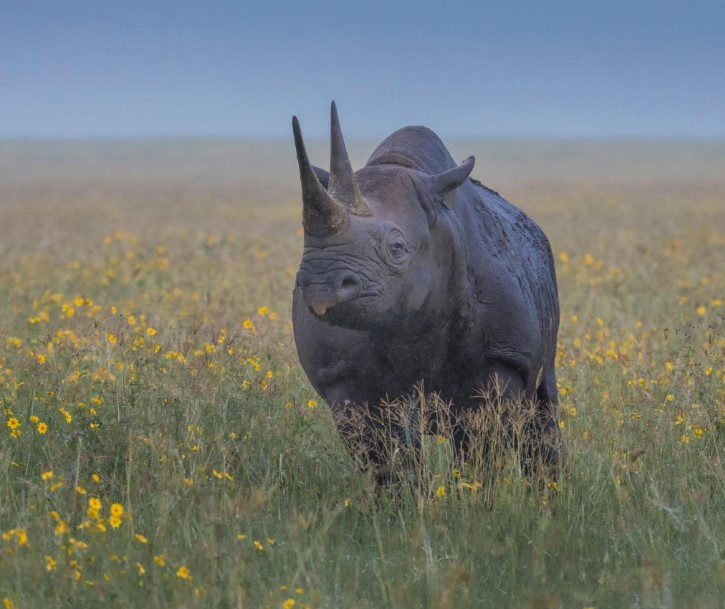
Ngorongoro is one of Tanzania’s important black rhinoceros habitats. They are frequently viewed at a distance, so a telephoto lens is recommended.
Photographers must remain patient. Rhinoceroses may be partially hidden by grass, affected by heat haze, or positioned far from permitted roads.
Large bull elephants are often encountered near woodland areas. Lerai Forest can provide attractive combinations of elephants, acacia trees, filtered light, and shadow.
Hyenas are active and social predators that provide fascinating behavioral photography. You may observe them walking, resting, feeding, communicating, or interacting with lions.
Large grazing animals are widely distributed across the crater floor. They are excellent subjects for:
Hippo pools offer opportunities to photograph hippos in water, territorial behavior, waterbirds, reflections, and wider wetland scenes.
Ngorongoro is also a rewarding destination for bird photography. Depending on the season and habitat, photographers may encounter:
A long telephoto lens is particularly useful for smaller species.
A successful photography safari does not require the most expensive equipment. The most useful camera setup is one that you understand and can operate quickly.
Carrying two camera bodies is helpful because it reduces the need to change lenses in dusty conditions. One camera can hold a telephoto lens while the second carries a wider zoom.
A single camera body is also sufficient when paired with a versatile zoom lens.
Useful lens ranges include:
Consider packing:
Tripods may be inconvenient inside a safari vehicle. Bean bags are usually more practical because they can support the camera on the vehicle window or roof opening.
The quality of the vehicle and its configuration can strongly influence a photography safari.
Our private safari vehicles are designed to support wildlife viewing and photography. Depending on availability and vehicle configuration, features may include:
A private vehicle gives your party more space and eliminates the need to balance your photography priorities with unrelated travelers.
You can begin early to take advantage of morning light and wildlife activity. The final departure time remains subject to lodge schedules, gate hours, and conservation-area regulations.
Standard safaris often focus on seeing as many species as possible. A photography safari can spend more time waiting for the right expression, movement, interaction, or background.
Your guide can consider:
Positioning cannot always be perfect, but patience and careful observation can significantly improve your opportunities.
Camera bags and long lenses require additional room. A private vehicle gives photographers more freedom to move safely between viewing positions.
Some guests want to concentrate on lions and other predators. Others prefer birds, landscapes, elephants, or animal behavior. Your route can be planned around these interests whenever conditions permit.
The itinerary can be arranged using budget, mid-range, luxury, or premium accommodation.
Staying in Karatu can provide excellent value and a comfortable lodge environment. Many properties offer gardens, spacious rooms, restaurants, and private bathrooms.
Karatu is outside the crater rim, so the morning transfer to the crater entrance is longer than it is from a rim lodge.
Accommodation near or on the crater rim provides convenient access and impressive scenery. Some lodges offer views over the caldera, allowing guests to photograph mist, sunrise, clouds, and changing light.
Rim accommodation is generally more expensive but can reduce morning travel time.
Tented camps combine a close-to-nature atmosphere with essential comfort. Mid-range and luxury tents may include:
Accommodation is selected according to availability, budget, travel dates, and preferred comfort level.
A typical private photography Ngorongoro Crater safari package may include:
The final inclusion list will be confirmed in your personalized quotation.
The package normally excludes:
Wildlife welfare must always come before the photograph. Guests and guides must follow conservation-area regulations.
Responsible practices include:
Responsible behavior protects the environment and produces more natural wildlife images.
Animals can move without warning. A sufficiently fast shutter speed helps prevent motion blur, especially when photographing birds, running animals, or interactions.
A clean background can transform an ordinary wildlife picture. Before taking the photograph, check for vehicles, bright objects, branches, or distracting horizon lines.
The height of a safari vehicle can limit the angle, but your guide may be able to position the vehicle where the road, slope, or animal location creates a more natural perspective.
Portraits are valuable, but behavior often tells a stronger story. Watch for:
Do not use the longest focal length for every image. Wider compositions showing the animal within the crater landscape create a sense of location.
Keep your camera switched on and use practical starting settings. Wildlife encounters can develop quickly, leaving little time to search through menus.
Keep unused equipment inside closed bags, avoid unnecessary lens changes, and clean lenses carefully at the end of the day.
This photography Ngorongoro Crater safari itinerary is suitable for travelers who:
It is also suitable for non-photographer companions because the flexible schedule provides an immersive wildlife experience.
Add two or more nights in the Serengeti for predator photography, open landscapes, large herds, and possible Great Migration experiences.
From approximately December through March, Ndutu is an excellent extension for calving-season photography, predators, and newborn animals.
Tarangire adds elephants, baobabs, birds, and a different landscape to the portfolio.
Lake Manyara provides forest, groundwater habitats, primates, elephants, and seasonal birdlife.
After the safari, fly to Zanzibar for beaches, Stone Town, cultural photography, snorkeling, and relaxation.
Planning a budget Ngorongoro Crater safari holiday from Arusha? Compare a crater day trip, a two-day Tarangire and Ngorongoro safari, or a…
Read articleA Lake Manyara safari can cost USD 150–220 per person for a shared day trip from Arusha. A published example of a…
Read articleA Tanzania safari from Zanzibar can mean a short mainland trip during your beach holiday or a complete package with flights, game…
Read articleLooking for a group Tanzania safari price from Kilipath African Safaris? A published example for our four-day shared camping safari through Tarangire,…
Read article

