Nyerere Tanzania Wildlife Safari Guide
A Nyerere Tanzania wildlife safari can take you from a woodland game drive in the morning to a boat on the Rufiji…
Read articleArusha City - Tanzania
Safari & Travel Tips
August 28, 2026 · 8 min read
A photography safari in Tanzania is designed for travelers who want more than ordinary wildlife sightseeing. It provides additional time at wildlife sightings, better positioning for photographs, flexible game-drive schedules, and a safari vehicle adapted for camera equipment. Depending on the duration, accommodation level, destinations, and group size, a photography Tanzania safari tour price generally ranges from approximately USD 350 to more than USD 1,500 per person per day.
| Safari category | Estimated price per person per day |
|---|---|
| Shared budget photography safari | USD 350–500 |
| Private budget photography safari | USD 450–650 |
| Private mid-range photography safari | USD 600–900 |
| Luxury photography safari | USD 900–1,500+ |
| Fly-in luxury photography safari | USD 1,200–2,000+ |
These figures are general estimates. The final price depends on the season, number of travelers, accommodation, park fees, vehicle arrangements, domestic flights, and special photography requirements.
A Tanzania photography safari is a wildlife tour organized around the needs of photographers. Unlike a standard safari, where the vehicle may move frequently to cover several attractions, a photography safari allows guests to spend longer periods observing and photographing animal behavior.
A typical photography safari can include:
These arrangements improve the experience but can also increase the overall Tanzania photography safari cost.
A shared safari is normally cheaper because vehicle expenses are divided among several travelers. However, it offers limited flexibility. Other passengers may have different interests, and there may not be enough space for large lenses and photography equipment.
A private safari costs more but is usually the best option for serious photographers. You can choose when to leave camp, how long to remain at a sighting and which animals to prioritize.
For a professional photography group, limiting the vehicle to two or three photographers provides more space and better shooting angles.
Longer safaris have a higher total price, although the average daily cost may become slightly lower because some fixed expenses are spread across more days.
Typical estimates include:
| Duration | Budget estimate | Mid-range estimate | Luxury estimate |
|---|---|---|---|
| 3 days | USD 1,200–1,900 | USD 1,800–2,700 | USD 2,700–4,500+ |
| 5 days | USD 2,000–3,200 | USD 3,000–4,500 | USD 4,500–7,500+ |
| 7 days | USD 2,800–4,500 | USD 4,200–6,500 | USD 6,500–10,500+ |
| 10 days | USD 4,000–6,500 | USD 6,000–9,000 | USD 9,000–15,000+ |
The number of people sharing the private vehicle will significantly affect these estimates.
Accommodation is one of the largest components of a photography safari price.
Budget safaris may use public campsites or basic lodges outside the parks. Mid-range tours normally include permanent lodges or comfortable tented camps with private bathrooms. Luxury packages feature premium camps, spacious suites, superior locations and personalized services.
Staying inside Serengeti National Park usually costs more than staying outside a protected area, but it can reduce travel time and allow photographers to reach wildlife locations earlier.
Tanzania safari prices change according to the season.
Peak season: June to October and late December to February
This period offers excellent wildlife viewing, but accommodation rates and demand are higher.
Shoulder season: January, March, November and early December
Travelers may find better prices while still enjoying rewarding wildlife photography.
Low season: April and May
Some camps close because of the long rains, but the landscape is green, visitor numbers are lower and discounts may be available.
Photographers should select the season according to the subject they want to capture, rather than considering price alone.
Each national park has different entrance, concession and activity fees. Covering several distant destinations also increases fuel and vehicle costs.
Popular photography destinations include:
An itinerary combining Tarangire, Serengeti and Ngorongoro is one of the most popular choices for first-time photographers.
The Serengeti is Tanzania’s most famous photography destination. Its open plains make it easier to observe and photograph lions, cheetahs, elephants, giraffes, leopards and large herbivore herds.
Central Serengeti offers productive wildlife viewing throughout the year. Northern Serengeti is famous for river crossings between approximately July and October, while the Ndutu region is known for the wildebeest calving season from December to March.
The Ngorongoro Crater contains a high concentration of wildlife within a relatively small area. Photographers may encounter lions, elephants, buffaloes, hyenas, hippos and, with some luck, black rhinos.
The crater also provides attractive landscape photography opportunities, especially during the early morning when clouds and mist surround the crater walls.
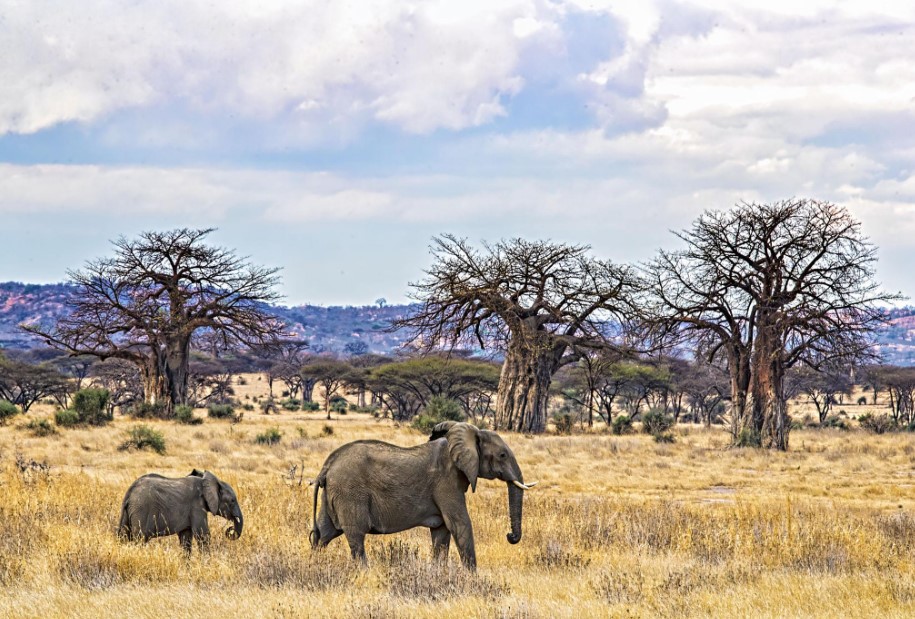
Tarangire is known for its elephant herds, ancient baobab trees and dramatic dry-season landscapes. The combination of wildlife and distinctive vegetation makes it excellent for environmental portraits and wide-angle compositions.
From June to October, animals gather around the Tarangire River, creating frequent photography opportunities.
Nyerere provides a quieter photography experience in Southern Tanzania. Visitors can enjoy game drives and boat safaris, making it possible to photograph hippos, crocodiles, elephants, birds and animals along the Rufiji River.
The park is suitable for photographers looking for fewer vehicles and more natural wildlife encounters.
Ruaha is one of Tanzania’s best destinations for experienced photographers seeking remote landscapes and predator sightings. It is especially known for elephants, lions, leopards, wild dogs and large buffalo herds.
Because visitor numbers are lower than in the Northern Circuit, photographers can sometimes enjoy sightings without many other safari vehicles.
Arrive at Kilimanjaro International Airport and transfer to your Arusha accommodation. Meet your guide for an equipment and itinerary briefing.
Drive to Tarangire National Park for a full-day game drive. Concentrate on elephants, baobab landscapes and wildlife along the river.
Travel toward Serengeti National Park while photographing the changing landscapes. Enjoy an afternoon game drive after entering the park.
Depart early to use the soft morning light. Follow predators or other priority species and spend longer at productive sightings.
Explore a different section of the park. Your guide can adjust the route according to recent wildlife movements and your photographic interests.
Enjoy a final Serengeti game drive before continuing toward the Ngorongoro Conservation Area. Photograph the crater landscape during the evening.
Descend into the crater early in the morning. After the game drive and lunch, return to Arusha or transfer to the airport.
A private seven-day mid-range version of this itinerary may cost approximately USD 4,200–6,500 per person, depending on the group size and season.
Most photography Tanzania safari packages include:
Common exclusions include:
Always request a complete inclusion and exclusion list before confirming your booking.
A small group of two or three photographers can divide the vehicle and guide costs while maintaining enough room for equipment.
Shoulder-season travel may provide better accommodation rates and fewer vehicles at popular sightings. It can also produce dramatic skies and attractive green landscapes.
Mid-range camps offer private bathrooms, comfortable beds and good locations without the premium cost of ultra-luxury properties.
Trying to visit too many parks increases driving time and fuel expenses. Spending several nights in one productive wildlife area can provide better photographic results.
Migration-season camps and well-positioned properties fill quickly. Early booking provides a wider selection and can help you avoid expensive last-minute alternatives.
Domestic flights save time but increase the package price. A road safari may be more affordable, while a fly-in arrangement is valuable when time is limited.
For serious photographers, a private safari is normally worth the additional cost. Wildlife photography requires patience, space and control over timing. A private vehicle allows you to wait for an animal to move into the right light or remain with a predator until interesting behavior develops.
It also prevents conflicts with travelers who may prefer to move quickly after taking a few pictures. The result is a more focused and productive experience.
A practical Tanzania safari photography kit may include:
Avoid carrying unnecessary equipment. Safari vehicles can become crowded, and changing lenses frequently increases the risk of dust entering the camera.
Depart before sunrise whenever park regulations allow. Morning light is softer, temperatures are cooler and predators may still be active.
Ask your guide to position the vehicle according to the light rather than simply approaching the animal as closely as possible. A slightly greater distance with the correct background and direction of light can produce a stronger photograph.
Photograph behavior, not only portraits. Feeding, hunting, playing, grooming and social interactions create more memorable images.
Respect the animals and never pressure the guide to drive off-road where it is prohibited. Ethical photography protects wildlife and preserves Tanzania’s national parks.
Book approximately six to twelve months in advance if you plan to visit during:
Last-minute bookings may still be possible during quieter months, but your preferred camps or photography guide might not be available.
The photography Tanzania safari tour price depends on the trip duration, travel season, accommodation standard, destinations and number of photographers sharing the vehicle. A budget tour can provide excellent wildlife encounters, while a private or luxury safari delivers more flexibility, space and comfort.
For photographers, the cheapest itinerary is not always the best value. Vehicle space, guide experience, camp location and time at sightings can have a greater effect on photographic results than luxury accommodation. Choose a package that balances your budget with the wildlife subjects and photography experience you want.
A Nyerere Tanzania wildlife safari can take you from a woodland game drive in the morning to a boat on the Rufiji…
Read articlePlanning a Tanzania safari that combines Lake Manyara National Park and Nyerere National Park is an excellent way to experience the country's…
Read articleDiscover Tanzania’s untamed wilderness without exceeding your travel budget. A budget Ruaha safari adventure offers incredible wildlife encounters, spectacular landscapes, authentic African…
Read articleA Nyerere Tanzania wildlife safari offers an extraordinary opportunity to discover one of Africa's most spectacular wilderness destinations. From magnificent elephants and…
Read article