

Budget Ngorongoro Crater Safari Holiday
Planning a budget Ngorongoro Crater safari holiday from Arusha? Compare a crater day trip, a two-day Tarangire and Ngorongoro safari, or a…
Read articleArusha City - Tanzania
Safari & Travel Tips
August 31, 2026 · 17 min read
A group Ngorongoro Crater safari is one of the most affordable and enjoyable ways to experience Tanzania’s extraordinary wildlife. By sharing a safari vehicle with other travelers, you can reduce transportation and guide costs while still enjoying a professional game drive inside the world-famous Ngorongoro Crater.
Located in northern Tanzania, the Ngorongoro Crater is celebrated for its spectacular scenery, abundant wildlife and excellent chances of seeing members of the African Big Five. Lions, elephants, buffaloes and occasionally black rhinos may all be encountered during a single crater game drive. The destination is also conveniently connected to Arusha, Tarangire National Park, Lake Manyara and the Serengeti.
Whether you have only one day or want to combine the crater with a longer northern Tanzania itinerary, a group safari offers an accessible way to discover this remarkable destination.
A group Ngorongoro Crater safari is a shared tour in which several travelers join the same safari vehicle, guide and itinerary. Instead of paying the full cost of a private Land Cruiser, participants divide some of the operational expenses.
A typical group safari includes:
Shared safaris generally follow a fixed schedule. Participants must therefore be ready at the agreed pickup time and follow the group’s planned route. Although this offers less flexibility than a private safari, it makes Tanzania’s premium destinations much more affordable.
Most group safari vehicles carry no more than seven travelers. A well-organized operator should provide each guest with a proper seat and a window view.
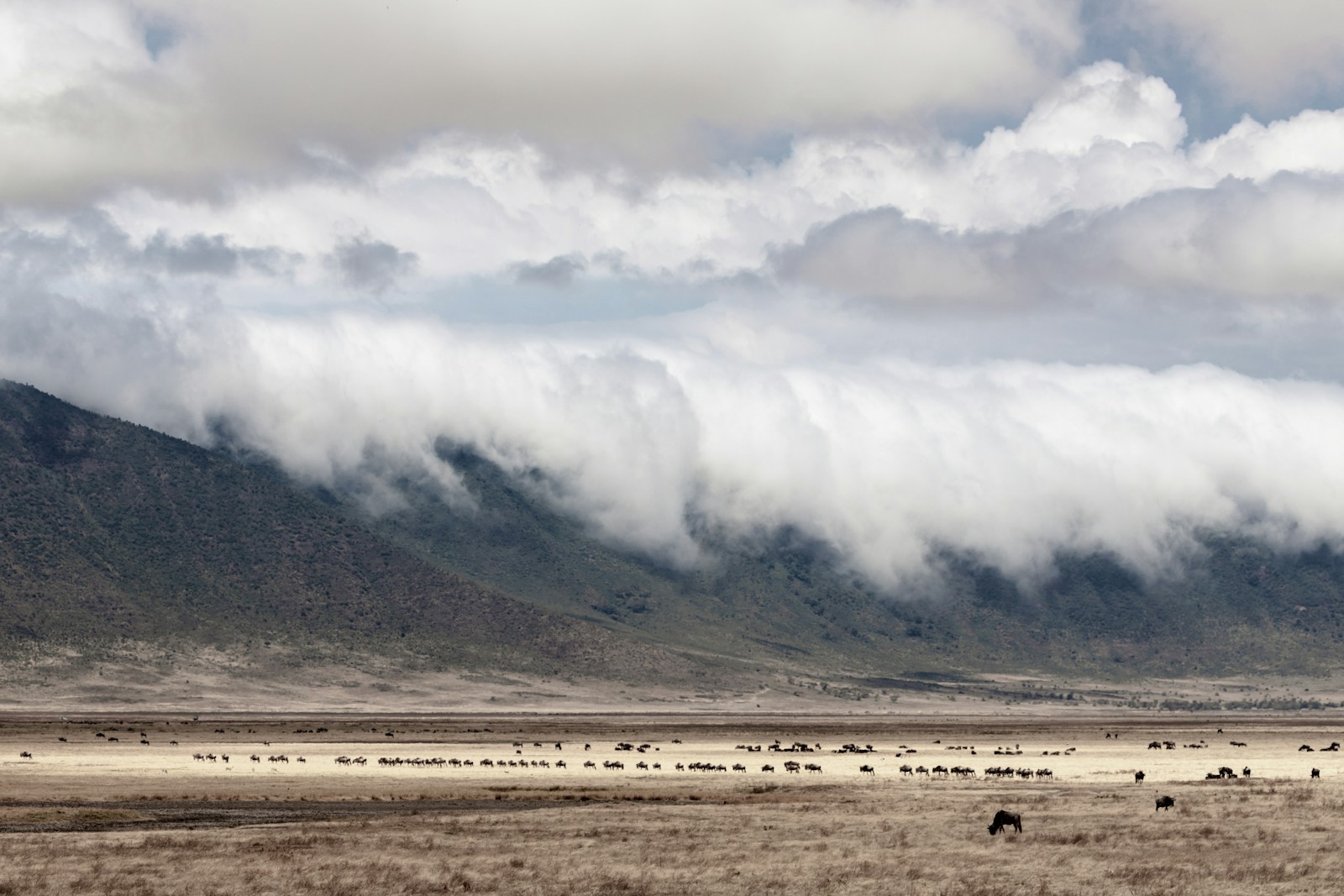
The Ngorongoro Crater is the largest intact, unfilled volcanic caldera in the world. It measures approximately 20 kilometres across, with steep walls rising hundreds of metres above the crater floor.
The crater was formed after a massive volcano collapsed millions of years ago. Over time, its floor developed into a rich natural environment containing grasslands, forests, wetlands, freshwater springs and a soda lake.
These habitats support a remarkable concentration of animals throughout the year. Unlike the Serengeti, where wildlife may travel long distances with the seasonal migration, many animals remain inside or around the crater because food and water are usually available.
The Ngorongoro Crater offers travelers:
The combination of dramatic landscapes and concentrated wildlife makes the crater one of Tanzania’s most rewarding safari destinations.
The Ngorongoro Crater supports an impressive variety of mammals and birds. Wildlife is never guaranteed, but the compact nature of the crater gives visitors excellent opportunities to observe several species during one game drive.
Lions are among the crater’s most frequently encountered predators. They may be seen resting in the grass, walking near safari vehicles or watching herds of zebras and wildebeest.
The relatively open terrain makes lion sightings easier than in heavily forested environments. Travelers may encounter individual males, females with cubs or an entire pride resting after a hunt.
The endangered black rhino is one of the crater’s most celebrated residents. Ngorongoro is among Tanzania’s most important protected areas for this rare animal.
Rhinos are often seen at a distance in open grassland, so binoculars are helpful. Sightings cannot be promised, but visiting early in the morning may improve your opportunity before the animals move farther away.
Elephants are present in the Ngorongoro Conservation Area, although the crater floor is particularly known for sightings of large, mature bulls. Female elephants and family groups are more commonly encountered in the forested highlands and surrounding areas.
The Lerai Forest is one of the best places to look for elephants during a crater safari.
Large herds of African buffaloes can frequently be observed grazing across the crater floor. Buffaloes are powerful animals and one of the traditional Big Five species.
Visitors may also see older males resting separately from the main herds, sometimes close to water or muddy areas.
Wildebeest and zebras are abundant inside the crater. They often graze together because each species uses the grasslands differently and benefits from the other’s awareness of predators.
These animals do not usually join the full Serengeti migration. Many remain within the wider Ngorongoro ecosystem throughout the year.
Hippos can be observed in the crater’s pools and wetlands. A popular picnic area overlooks a hippo pool, allowing visitors to watch the animals while enjoying lunch from a safe distance.
Although hippos may appear relaxed in the water, they are highly territorial. Guests must always follow their guide’s instructions around picnic areas.
Leopards and cheetahs are present in the wider Ngorongoro Conservation Area, but they are less frequently seen on the crater floor than lions and hyenas.
Leopards prefer areas with woodland and cover, while cheetahs generally favour open plains. A sighting of either predator is a special addition to the safari.
Spotted hyenas are common inside the crater and play an important role in its ecosystem. They are skilled hunters as well as scavengers.
Visitors may see them patrolling the plains, resting near water, following predators or interacting around a carcass.
The crater is also rewarding for bird enthusiasts. Depending on the season and habitat, travelers may observe:
Flamingo numbers at Lake Magadi vary according to water conditions and food availability.
The Ngorongoro Crater is considered one of Tanzania’s best places to search for the Big Five: lion, leopard, elephant, buffalo and rhino.
Lions, buffaloes and elephants are regularly observed. The crater is also known for its protected black rhino population. Leopards are the most difficult member of the Big Five to find because they are secretive and often remain in forested areas.
It is important to approach a safari with realistic expectations. Wild animals move freely, and no ethical safari operator can guarantee sightings. The quality of the experience should not be measured only by completing a wildlife checklist.
Your guide will use knowledge of the terrain, animal behaviour and recent sightings to improve the chances of meaningful encounters.
Travelers booking a shared safari are matched with other participants traveling on the same date and route. The group usually meets in Arusha or is collected from selected hotels early in the morning.
The experience may be offered as:
The daily timetable is coordinated by the safari guide. Travelers share the vehicle during game drives, transfers and designated stops.
A pop-up roof allows guests to stand safely when the vehicle is stationary. It also provides a raised view for observing and photographing wildlife.
Because everyone shares the same vehicle, guests should be considerate about seating, photography time and punctuality. Good group members communicate respectfully and allow each traveler an opportunity to enjoy wildlife sightings.
A one-day crater tour is suitable for travelers with limited time. However, it involves a long day of driving when beginning and ending in Arusha.
Pickup generally takes place early in the morning. The drive from Arusha to the Ngorongoro Conservation Area usually takes approximately three to four hours, depending on traffic, road conditions and entry procedures.
The journey passes through towns, farmland and the highlands surrounding Karatu.
After registration at the conservation area entrance, the vehicle continues through the highlands toward the crater rim.
Travelers may stop briefly at a viewpoint to admire the immense caldera. From the rim, the crater floor appears like a vast natural amphitheatre.
The safari vehicle descends along a designated road into the crater. The change in elevation is significant, and the temperature usually becomes warmer as the vehicle reaches the floor.
The game drive may explore:
The guide chooses the route according to wildlife movement, time and road conditions.
Lunch is generally served at a designated picnic area. Travelers should never feed wild animals and must keep food properly secured.
Kites and other birds sometimes attempt to take food, so visitors should listen carefully to their guide’s advice.
After the afternoon game drive, the vehicle ascends the crater wall and begins the return journey. Arrival in Arusha is normally in the evening.
A one-day tour is possible but demanding. Travelers who prefer a more relaxed schedule should consider staying in Karatu before or after the crater visit.
A two-day safari is an excellent option for travelers who want to experience two contrasting ecosystems.
The group leaves Arusha and travels to Tarangire National Park. Tarangire is famous for its ancient baobab trees, elephant herds and seasonal wildlife concentration around the Tarangire River.
The day includes a game drive and picnic lunch. Wildlife may include elephants, giraffes, zebras, wildebeest, buffaloes, lions, impalas and numerous bird species.
In the evening, the group travels to accommodation near Mto wa Mbu or Karatu.
After an early breakfast, the group drives to the Ngorongoro Conservation Area and descends into the crater.
Following the game drive and picnic lunch, the vehicle returns to Arusha in the late afternoon or evening.
This itinerary offers a strong introduction to northern Tanzania without the longer driving time required to reach the Serengeti.
Travelers who want to see both the Serengeti plains and the Ngorongoro Crater can consider a three-day shared safari.
The journey begins early and passes through the Ngorongoro highlands toward Serengeti National Park. After entering the Serengeti, the group enjoys an afternoon game drive.
The night may be spent at a public campsite or selected lodge, depending on the package category.
The group explores the central Serengeti, an area known for resident wildlife and predators. The Seronera Valley contains permanent water sources that attract animals throughout the year.
Depending on the itinerary, the group may leave the Serengeti during the afternoon and stay near the Ngorongoro area.
After breakfast, the vehicle descends into the crater for a game drive. Following lunch, the group returns to Arusha.
This route includes substantial driving, but it allows budget-conscious travelers to experience two of Tanzania’s most iconic wildlife destinations.
The Ngorongoro Crater can be visited throughout the year. Wildlife remains present during every season, but weather conditions, vegetation and visitor numbers change.
The dry season generally offers comfortable game-viewing conditions. Vegetation is less dense, and animals may be easier to observe.
July, August and September are popular travel months. The crater can become busy, particularly during the middle of the day. Accommodation also fills quickly, so early reservations are recommended.
Morning temperatures on the crater rim may be very cold. Travelers should bring warm clothing even when daytime conditions are sunny.
The short rains can refresh the landscape and create beautiful green scenery. Rain showers are often brief, although weather patterns are never completely predictable.
This period may offer good photography conditions, migrant birds and slightly lower visitor numbers outside the festive season.
January and February are generally warm months and coincide with the calving season in the Ndutu region of the wider Ngorongoro–Serengeti ecosystem.
The crater itself continues to provide reliable wildlife viewing. Visitors combining Ngorongoro with Ndutu should book early because this is a sought-after period.
The long-rain season produces lush landscapes, dramatic skies and fewer visitors. Accommodation may be more affordable, and photographers often appreciate the clear air and rich colours.
Roads can be wet or muddy, and rainfall may occasionally affect travel time. A properly equipped 4x4 and experienced guide are important.
Accommodation depends on the tour style and budget.
Public camping is normally the least expensive option. A camping package may include:
Public campsites provide an adventurous experience but are simple. Hot water and charging facilities may be limited, and bathrooms are shared.
Temperatures near the crater rim can become cold at night. Warm sleepwear, socks and a jacket are essential.
Budget lodges provide permanent rooms and basic facilities. Most offer private bathrooms, beds and a restaurant.
They are commonly located near Mto wa Mbu or Karatu, where accommodation is more affordable than directly on the crater rim.
Mid-range properties offer greater comfort, private bathrooms, attractive surroundings and improved dining. Some include swimming pools, gardens or views of the highlands.
A tented camp does not necessarily mean basic camping. Many permanent safari tents have proper beds, private toilets, hot showers and electricity.
Luxury lodges near the crater rim provide premium service and exceptional views, but they are not commonly included in standard group departures. Travelers who want high-end accommodation may need a customized or private safari.
Both safari styles can deliver a memorable experience, but they suit different travelers.
| Feature | Group safari | Private safari |
|---|---|---|
| Vehicle | Shared with other guests | Reserved for your party |
| Price | More affordable | More expensive |
| Schedule | Mostly fixed | Flexible |
| Departure | Based on confirmed group date | Chosen by the traveler |
| Game-drive pace | Shared decision | Personalized |
| Guide language | Usually English | Other languages may be arranged |
| Accommodation | Predetermined options | Wider choice |
| Best for | Solo travelers and budget-conscious guests | Families, couples and photographers |
A group safari is ideal if your main priority is value and you enjoy meeting other travelers. A private safari is better if you want more control over timing, accommodation and the amount of time spent at each sighting.
Inclusions vary between operators, so travelers should read the quotation carefully. A standard group Ngorongoro safari may include:
Possible exclusions include:
Never assume that an item is included simply because it appears in a general safari advertisement. Request a written inclusion and exclusion list before paying.
The total cost of a group safari is determined by several factors.
Ngorongoro is a protected conservation area with entrance and crater service fees. These government charges represent a substantial part of the safari price.
A confirmed group allows transportation and guide expenses to be distributed among several participants. A nearly full vehicle is generally more economical per person than a departure with only two or three guests.
Public camping costs significantly less than a mid-range lodge. Room type, meal plan and lodge location also affect the price.
A one-day crater tour costs less in total than a four-day Serengeti and Ngorongoro itinerary. However, longer tours may offer better value per day because transport is shared across more experiences.
High-season accommodation can be expensive and difficult to secure. Prices may be lower during parts of the rainy season, although park charges generally remain important.
Most northern Tanzania group safaris begin in Arusha. A pickup from Moshi, Kilimanjaro International Airport or another distant location may require an additional transfer.
Pack light and prioritize practical safari clothing.
Recommended items include:
Morning conditions on the crater rim can be surprisingly cold. Wearing several light layers is better than relying on one heavy garment because temperatures change as the vehicle descends.
Soft-sided luggage is preferable, especially when several travelers share one vehicle. Large suitcases may need to be stored in Arusha.
The Ngorongoro Crater offers outstanding photographic opportunities.
Bring a camera with a telephoto lens if wildlife photography is important to you. A wider lens is also useful for crater landscapes, safari vehicles and environmental portraits.
For better results:
Phone cameras can produce excellent landscape and close-range wildlife photographs. However, digital zoom may reduce image quality when animals are far away.
Ngorongoro is a fragile ecosystem and an important conservation area. Every traveler has a responsibility to minimize their impact.
Responsible practices include:
Responsible tourism protects wildlife while also supporting guides, cooks, lodge employees and surrounding communities.
The Ngorongoro Conservation Area is not only a wildlife destination. Maasai communities live in parts of the conservation landscape alongside livestock and wild animals.
Some safari itineraries offer an optional visit to a Maasai village. A respectful cultural visit may introduce travelers to local homes, clothing, dance, livestock traditions and daily life.
Before participating, ask whether the visit is community-led and how the fee benefits residents. Always request permission before photographing people, particularly children.
A cultural visit should be approached as an opportunity for respectful interaction rather than as a staged photo stop.
The Ngorongoro Crater is generally a safe destination when visited with a licensed operator, but travelers should prepare carefully.
Comprehensive insurance should cover:
Consult a qualified travel-health professional before departure. Health recommendations depend on your nationality, previous vaccinations, itinerary and the countries visited before entering Tanzania.
Carry necessary medication in its original packaging and bring enough for the entire trip.
The crater rim is more than 2,000 metres above sea level. Some travelers may notice cooler temperatures or mild shortness of breath, although serious altitude problems are uncommon during short stays.
Wild animals are unpredictable. Never leave the vehicle without permission, approach animals on foot or attempt to attract their attention.
Your guide’s safety instructions must always take priority.
Choosing the right company affects the quality and safety of your experience.
Ask the operator:
A trustworthy operator should provide a clear itinerary, written price, payment terms and contact details.
Extremely low prices should be examined carefully. They may exclude important park fees, use overcrowded vehicles or depend on last-minute group availability.
A shared safari is particularly suitable for:
It may be less suitable for:
A private safari may be more comfortable for travelers with highly specific expectations.
A group Ngorongoro Crater safari combines excellent wildlife viewing, spectacular scenery and affordable shared travel. It is particularly valuable for solo visitors and budget-conscious travelers who want to experience one of Tanzania’s most famous protected areas without paying for an entire private vehicle.
The crater provides opportunities to see lions, buffaloes, elephants, hippos, hyenas and the rare black rhino within a relatively compact landscape. It can be visited as a one-day trip or combined with Tarangire, Lake Manyara and the Serengeti on a longer northern circuit safari.
The best group safari is not simply the cheapest option. Look for a licensed operator, a well-maintained vehicle, a knowledgeable guide, clear inclusions and a reasonable number of passengers. With thoughtful planning and realistic expectations, a shared Ngorongoro adventure can become one of the most memorable experiences of your Tanzania journey.
Planning a budget Ngorongoro Crater safari holiday from Arusha? Compare a crater day trip, a two-day Tarangire and Ngorongoro safari, or a…
Read articleA Lake Manyara safari can cost USD 150–220 per person for a shared day trip from Arusha. A published example of a…
Read articleA Tanzania safari from Zanzibar can mean a short mainland trip during your beach holiday or a complete package with flights, game…
Read articleLooking for a group Tanzania safari price from Kilipath African Safaris? A published example for our four-day shared camping safari through Tarangire,…
Read article

