

Budget Ngorongoro Crater Safari Holiday
Planning a budget Ngorongoro Crater safari holiday from Arusha? Compare a crater day trip, a two-day Tarangire and Ngorongoro safari, or a…
Read articleArusha City - Tanzania
Safari & Travel Tips
August 31, 2026 · 17 min read
A Tarangire safari Serengeti adventure brings together two of Tanzania’s most remarkable wildlife destinations. Tarangire National Park introduces travelers to enormous elephant herds, ancient baobab trees, seasonal wetlands, and wildlife gathering around the Tarangire River. The Serengeti then expands the experience with seemingly endless plains, thriving predator populations, and the world-famous Great Wildebeest Migration.
These parks are different enough to make every day of the journey feel fresh. Tarangire is intimate, wooded, and famous for elephants, while the Serengeti is vast, open, and filled with dramatic wildlife encounters. When Ngorongoro Crater is added to the itinerary, the route becomes one of the most complete safari experiences in northern Tanzania.
This guide explains the best itineraries, wildlife highlights, accommodation options, travel seasons, expected costs, and practical planning advice for an unforgettable Tarangire and Serengeti safari.
Combining Tarangire and Serengeti allows travelers to experience contrasting ecosystems within one itinerary. Rather than spending the entire journey in similar scenery, visitors move from baobab-covered landscapes to the immense grasslands of the Serengeti.
The main reasons to combine these destinations include:
A combined journey is especially suitable for first-time safari travelers. Tarangire offers peaceful landscapes and close encounters with elephants, while the Serengeti provides the scale and wildlife drama many visitors imagine when thinking about an African safari.
Tarangire National Park is approximately two to three hours by road from Arusha, making it an excellent first destination on a northern Tanzania safari. Although it is sometimes overshadowed by the Serengeti and Ngorongoro Crater, Tarangire has its own strong identity and can produce exceptional wildlife experiences.
The park takes its name from the Tarangire River, which crosses its landscape. During the dry season, this river becomes an essential source of water. Animals travel from surrounding areas to drink, feed, and remain close to the river, creating large wildlife concentrations.
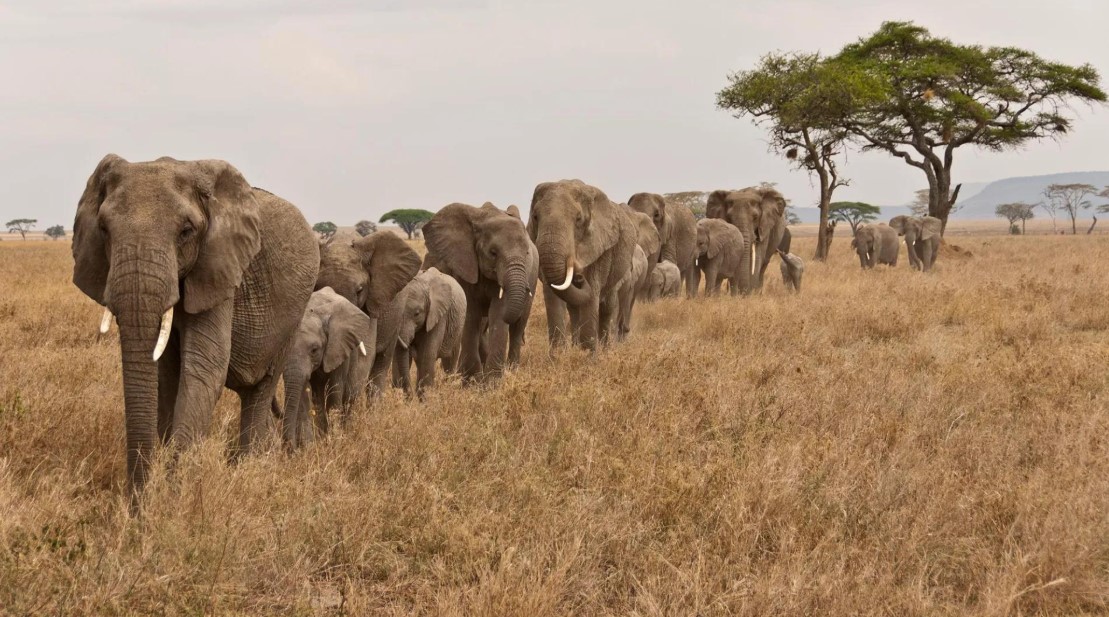
Tarangire is widely recognized as one of Tanzania’s best destinations for observing elephants. Visitors may encounter individual bulls, family groups with young calves, or herds containing dozens of animals.
Elephants are frequently seen feeding near the road, crossing riverbeds, bathing in muddy areas, or resting beneath acacia trees. Because the park has a healthy elephant population, travelers often enjoy long and relaxed sightings.
Watching elephants interact is one of the park’s most memorable experiences. Older females guide their families, calves remain close to their mothers, and adults communicate using sounds and body language. A knowledgeable safari guide can explain these behaviors and help visitors understand the social structure of an elephant herd.
Tarangire’s enormous baobab trees create one of the most recognizable landscapes in Tanzania. Some of these trees are hundreds of years old. Their thick trunks store water, while their branches provide food and shelter for birds, insects, and mammals.
The combination of elephants and baobab trees creates excellent photography opportunities, especially during the early morning and late afternoon. At these times, the softer light gives the landscape a warm golden color.
In addition to elephants, Tarangire supports a wide variety of wildlife. Common sightings may include:
Tarangire is also known for species that are less commonly seen in some other northern parks, including the fringe-eared oryx and the long-necked gerenuk.
Wildlife sightings are never guaranteed because the animals move freely, but experienced guides understand the park’s habitats and know where particular species are frequently found.
With hundreds of recorded bird species, Tarangire is an outstanding destination for birdwatchers. The Silale Swamp, riverine woodland, grasslands, and acacia areas attract different types of birds.
Travelers may see ostriches, hornbills, lilac-breasted rollers, secretary birds, vultures, eagles, storks, herons, weavers, and colorful lovebirds. Migratory birds add even more variety during the wetter months.
The Serengeti is one of Africa’s most celebrated wildlife destinations. Its name is commonly associated with the Maasai expression describing endless plains, and the landscape certainly appears to stretch beyond the horizon.
Serengeti National Park covers a vast area, and its different regions provide varied habitats and seasonal wildlife experiences. These regions include the Central Serengeti, Western Corridor, Northern Serengeti, and Southern Serengeti plains.
The Serengeti supports an extraordinary variety of animals. Depending on the area, season, and natural movement of wildlife, visitors may encounter:
The Serengeti is particularly famous for its predators. Lions are commonly observed in prides resting near rocky kopjes, hunting across the plains, or protecting their territory. Leopards often rest in trees along river valleys, while cheetahs favor open grasslands where they can use their speed to hunt.
Central Serengeti, commonly called the Seronera area, offers dependable wildlife viewing throughout the year. Its combination of open plains, rivers, woodland, and rocky kopjes provides suitable habitats for many species.
This is often the best region for travelers with limited time because it supports resident wildlife even when the main migration herds are elsewhere. Lions, leopards, cheetahs, elephants, giraffes, buffaloes, and many antelope species may be found around Seronera.
Central Serengeti also has a broad selection of public campsites, tented camps, and lodges, making it practical for budget, mid-range, and luxury itineraries.
The Great Wildebeest Migration is an ongoing movement involving enormous herds of wildebeest, zebras, and gazelles. The animals travel through the Serengeti ecosystem in search of fresh grass and water.
The migration does not happen in one permanent location. Rainfall, grazing conditions, and water availability influence the movement of the herds. Approximate seasonal patterns include:
These periods are guidelines rather than guarantees. Nature does not follow a fixed calendar, so travelers should select the right Serengeti region instead of assuming the migration remains in Central Serengeti throughout the year.
Although both parks offer excellent game drives, their landscapes and signature experiences are different.
| Feature | Tarangire National Park | Serengeti National Park |
|---|---|---|
| Signature landscape | Baobabs, river valleys and woodland | Open plains, kopjes and river systems |
| Most famous wildlife | Large elephant herds | Predators and wildebeest migration |
| Recommended time | One or two days | At least two or three days |
| Overall atmosphere | Intimate and less expansive | Vast and dramatic |
| Best dry-season feature | Wildlife around Tarangire River | Resident wildlife and migration regions |
| Accessibility | Approximately 2–3 hours from Arusha | Long drive or domestic flight |
| Ideal for | Elephants, baobabs and birdwatching | Big cats, migration and open landscapes |
The parks complement each other beautifully. Tarangire provides a slower and more intimate beginning, while the Serengeti delivers a feeling of scale and wilderness.
The amount of time available determines how deeply travelers can explore these destinations. Although a short trip is possible, allowing at least four days produces a more comfortable experience.
A three-day itinerary is possible, but it involves considerable driving.
Day 1: Arusha to Tarangire National Park
Depart from Arusha in the morning and drive to Tarangire. Spend the day searching for elephants, lions, giraffes, and other wildlife. Continue toward the Karatu or Mto wa Mbu area for dinner and overnight accommodation.
Day 2: Drive to Serengeti National Park
Travel through the Ngorongoro Conservation Area toward Central Serengeti. Enjoy wildlife viewing along the route and an afternoon game drive around Seronera. Stay overnight inside or near the Serengeti.
Day 3: Serengeti to Arusha
Begin with an early game drive before traveling back toward Arusha. This will be a long travel day.
This itinerary is best for visitors with very limited time. However, it offers only a short stay in the Serengeti and does not provide the most relaxed experience.
A four-day itinerary is one of the most popular options.
Day 1: Arusha to Tarangire National Park
After breakfast, meet your professional safari guide and drive to Tarangire National Park. Enjoy a full or extended game drive with a picnic or hot lunch. Explore areas around the Tarangire River and search for elephant herds beneath the baobab trees.
In the late afternoon, travel to your lodge or campsite for dinner and overnight.
Day 2: Tarangire Area to Serengeti National Park
Drive through the beautiful Ngorongoro highlands and enter the Serengeti. Wildlife may be seen while traveling toward Central Serengeti. Enjoy an afternoon game drive before reaching your accommodation.
Day 3: Serengeti Game Drive and Ngorongoro Area
Begin the day early when predators and other wildlife are active. Explore the Seronera Valley, kopjes, and surrounding plains. After lunch, continue with a game drive while traveling toward Ngorongoro.
Spend the night at a campsite, tented camp, or lodge near the crater area.
Day 4: Ngorongoro Crater and Return to Arusha
Descend into Ngorongoro Crater for a morning and early-afternoon game drive. The crater floor supports lions, buffaloes, zebras, wildebeest, hippos, hyenas, and many other animals. The endangered black rhinoceros may also be seen, although sightings are not guaranteed.
After lunch, ascend from the crater and return to Arusha.
A five-day itinerary offers a more balanced pace and additional time in Serengeti.
Day 1: Arusha to Tarangire National Park
Day 2: Tarangire area to Central Serengeti
Day 3: Full-day Serengeti game drive
Day 4: Morning Serengeti game drive and transfer to Ngorongoro
Day 5: Ngorongoro Crater game drive and return to Arusha
The full day in Serengeti allows travelers to explore farther from the main routes and wait patiently at promising wildlife sightings. It is particularly useful for photographers and travelers interested in big cats.
With six days, the journey can include two days in Tarangire or three nights in the Serengeti. It may also include Lake Manyara or an additional Ngorongoro highlands experience.
A possible route is:
Travelers interested in the migration may replace the arrival day with another day in the relevant Serengeti region.
Tarangire and Serengeti can be visited throughout the year. The ideal time depends on personal interests, desired scenery, budget, and preferred migration region.
The dry season is one of the most popular periods for a northern Tanzania safari. Vegetation becomes thinner, and animals often gather near permanent water sources.
Tarangire is especially rewarding during these months because elephants, zebras, wildebeest, buffaloes, and antelopes concentrate around the Tarangire River.
July through October is also an important period for migration experiences in Northern Serengeti. Travelers specifically hoping to explore the north should allow enough time because it is far from Central Serengeti.
Advantages of the dry season include:
Potential disadvantages include higher demand, busier wildlife areas, more dust, and premium accommodation prices.
The short rains often return during November. The landscape becomes greener, birdlife becomes more active, and wildlife begins responding to new grazing conditions.
Rain commonly falls in temporary showers rather than continuously throughout the day. However, seasonal conditions vary from year to year.
This can be a beautiful period for photography because the air is clearer, the grass is greener, and the parks may feel quieter than during the busiest dry-season months.
From January through March, many migration herds are commonly found in the Southern Serengeti and Ndutu area. The calving season attracts predators because thousands of vulnerable young animals enter the ecosystem.
This is an excellent period for travelers interested in:
To experience the calving season, the itinerary should specifically include Ndutu or Southern Serengeti. A standard Central Serengeti safari does not automatically place travelers near the largest herds.
April and May are traditionally wetter months. Landscapes are lush, flowers may appear, and visitor numbers are generally lower. Some camps close seasonally, while others offer attractive rates.
Travel remains possible, but road conditions may be challenging in certain areas. A suitable safari vehicle and an experienced guide are important.
This period is worth considering for travelers who appreciate green scenery, quiet parks, birdlife, and potentially lower accommodation costs.
A Tarangire safari Serengeti adventure can be arranged at several comfort levels.
Budget camping usually involves public campsites inside or near the parks. The safari team provides tents, mattresses, sleeping bags, meals, and necessary camping equipment.
Bathrooms and showers are shared. Facilities are simple, and hot water may not always be available. However, camping offers a close connection to nature and keeps the safari affordable.
At night, travelers may hear lions roaring, hyenas calling, or zebras moving beyond the campsite. Park regulations and guide instructions must always be followed because camps are often unfenced.
Mid-range accommodation usually provides private rooms or safari tents with en-suite bathrooms. Meals are served in a dining area, and the property may offer a lounge, charging facilities, Wi-Fi, and views of the surrounding landscape.
This category is popular because it balances comfort and cost. Tented camps still provide an authentic safari atmosphere while offering proper beds, private showers, and greater privacy.
Luxury lodges and camps may feature spacious suites, premium dining, private decks, swimming pools, personalized service, and carefully selected wilderness locations.
Some luxury properties are situated far from busy routes, allowing guests to enjoy a more exclusive environment. Luxury itineraries may also include domestic flights, private dining, balloon safaris, or private vehicles.
Accommodation category has a significant effect on the total safari price. Travelers should compare not only room appearance but also location. Staying inside Serengeti National Park reduces daily transfer time and allows game viewing to begin earlier.
Inclusions depend on the operator and accommodation category. A well-structured package commonly includes:
Items that may be excluded include:
Always request a written itinerary and a detailed list of inclusions and exclusions before making payment.
The total cost depends on several factors:
A private safari becomes more economical per person when transportation expenses are shared among several travelers. Solo travelers generally pay more because they cover the vehicle and guide costs alone.
Public camping is usually the lowest-cost option. Mid-range tented camps provide greater comfort at a moderate price, while luxury lodges substantially increase the total package cost.
High-season accommodation rates normally apply during popular migration and dry-season periods. Green-season packages may be more affordable, although some properties close during the rainy season.
Longer itineraries include additional park fees, meals, guiding days, accommodation, and vehicle expenses. However, adding a day can greatly improve the experience by reducing driving pressure.
Central Serengeti is the most practical area for short itineraries. Northern, western, and southern migration regions require additional travel time, fuel, and sometimes higher-priced seasonal camps.
Driving provides opportunities to see Tanzania’s changing landscapes and is generally more economical. Domestic flights reduce travel time and can be useful when visiting remote Serengeti regions or connecting directly with Zanzibar.
Because park fees, accommodation prices, and seasonal supplements can change, travelers should request a personalized quotation based on exact travel dates and group size.
Most northern Tanzania safaris use specially modified 4×4 Land Cruisers. A suitable safari vehicle should have:
The pop-up roof allows guests to stand safely while observing and photographing wildlife. During transfers, travelers sit normally with the roof closed or partially adjusted depending on road and weather conditions.
A good guide contributes enormously to the experience. Professional guides identify animals, interpret behavior, explain ecosystems, communicate with other guides, and position the vehicle responsibly without disturbing wildlife.
The contrasting landscapes of Tarangire and Serengeti provide outstanding photographic possibilities.
Useful recommendations include:
A smartphone can capture excellent landscapes and nearby animals, but a camera with a moderate or long telephoto lens offers more flexibility.
Travelers focused heavily on photography should consider a private vehicle. This provides more space and allows the guide to spend additional time at selected sightings.
Travelers should pack lightly and choose neutral-colored clothing.
Recommended items include:
Early mornings in the Serengeti and Ngorongoro highlands can be cold. Temperatures generally become warmer during the day, so dressing in layers is practical.
Bright white clothing quickly shows dust, while dark blue and black clothing can attract tsetse flies in certain areas. Neutral shades such as khaki, brown, olive, and beige are useful.
Responsible tourism helps protect wildlife and support local communities.
Travelers should:
Vehicles should remain on authorized routes unless park regulations permit otherwise. Crowding or blocking animals can create stress and interfere with natural behavior.
Although the main journey focuses on Tarangire and Serengeti, Ngorongoro Crater is a natural addition because it lies along the route.
The crater is a vast volcanic caldera containing grasslands, wetlands, woodland, and a soda lake. Its enclosed environment supports a high concentration of animals.
During a crater game drive, travelers may see:
A crater game drive usually lasts several hours before the vehicle ascends and continues toward Arusha. The highlands can be cold and misty, particularly in the morning, so warm clothing is recommended.
Many visitors combine their safari with a beach holiday in Zanzibar. After several days of early game drives and road travel, Zanzibar offers an opportunity to relax beside the Indian Ocean.
Domestic flights operate between the Serengeti, Arusha, Kilimanjaro, and Zanzibar. The most convenient connection depends on the final safari destination and flight schedule.
A typical combined holiday may include:
Travelers should leave sufficient time between the end of the safari and any international departure.
A Tarangire safari Serengeti adventure captures the diversity that makes northern Tanzania one of the world’s greatest wildlife destinations. Tarangire offers ancient baobabs, peaceful river valleys, impressive elephant herds, and exceptional birdlife. Serengeti delivers vast plains, thriving predator populations, and the seasonal movement of the Great Wildebeest Migration.
For the most balanced experience, consider a five-day itinerary including Tarangire, two or three days in Serengeti, and a game drive inside Ngorongoro Crater. Choose the Serengeti region according to your travel month, select accommodation that matches your preferred comfort level, and work with an experienced local safari operator.
Whether you choose budget camping, a comfortable tented camp, or a luxury lodge, the journey offers much more than a list of animals. It provides golden sunrises, distant lion calls, elephants beneath enormous baobab trees, and the unforgettable sight of wildlife moving across the endless Serengeti plains.
Planning a budget Ngorongoro Crater safari holiday from Arusha? Compare a crater day trip, a two-day Tarangire and Ngorongoro safari, or a…
Read articleA Tanzania safari from Zanzibar can mean a short mainland trip during your beach holiday or a complete package with flights, game…
Read articleLooking for a group Tanzania safari price from Kilipath African Safaris? A published example for our four-day shared camping safari through Tarangire,…
Read articlePair game drives on Tanzania’s mainland with a few days on Zanzibar’s coast. With Kilipath African Safaris, you can start in Arusha…
Read article

