Lake Manyara vs. Nyerere Safari Prices | Tanzania Guide
A Lake Manyara safari can cost USD 150–220 per person for a shared day trip from Arusha. A published example of a…
Read articleArusha City - Tanzania
Safari & Travel Tips
August 31, 2026 · 17 min read
A Tanzania safari package Lake Manyara trip is an excellent choice for travelers who want to experience wildlife, spectacular Rift Valley scenery, birdlife, forests, wetlands, and classic African safari landscapes within a relatively compact national park. Located on Tanzania’s famous Northern Safari Circuit, Lake Manyara National Park can easily be combined with Tarangire National Park, Ngorongoro Crater, and Serengeti National Park, making it a valuable addition to both short and longer Tanzania safari itineraries.
Lake Manyara is particularly famous for its dramatic location beneath the Great Rift Valley escarpment, lush groundwater forest, elephants, large troops of baboons, hippos, giraffes, buffalo, zebras, abundant birdlife, and its legendary tree-climbing lions. Tanzania National Parks also highlights its alkaline lake, flamingos, groundwater forests, wetlands and Rift Valley scenery as key attractions.
For travelers searching for a safari that combines accessibility with varied scenery and wildlife, Lake Manyara can work beautifully as a one-day safari from Arusha, the first destination on a multi-day northern circuit safari, or the final wildlife stop before returning to Arusha or Kilimanjaro.
One of the greatest advantages of choosing a Tanzania safari package Lake Manyara trip is variety.
Lake Manyara National Park is not dominated by one single landscape. During one game drive, travelers can move through dense forest, acacia woodland, wetlands, open floodplains and the shores of the alkaline lake.
This habitat diversity creates opportunities to see many different species within a relatively small area.
TANAPA describes Lake Manyara as a park of extraordinary contrasts situated beneath the Rift Valley escarpment, with groundwater forests, open areas, lake habitats and diverse wildlife.
A Lake Manyara safari is particularly suitable for travelers who:
Lake Manyara National Park is located in northern Tanzania below the spectacular Great Rift Valley escarpment.
The main entrance is close to Mto wa Mbu, a colorful town located on Tanzania's Northern Safari Circuit.
According to TANAPA, Lake Manyara is approximately 125 kilometers from Arusha, with the journey normally taking approximately 2–2.5 hours by road, depending on traffic and road conditions.
Its position makes Lake Manyara especially convenient because travelers can continue onward toward:
Lake Manyara → Ngorongoro Conservation Area → Serengeti National Park
or combine it with:
Arusha → Tarangire → Lake Manyara → Ngorongoro → Serengeti
This convenient location is one reason Lake Manyara features in so many Tanzania safari itineraries.
Lake Manyara offers a dramatically different safari environment from Serengeti or Tarangire.
Lake Manyara has long been associated with lions resting in trees.
Although lions should never be considered guaranteed sightings, spotting one stretched across an acacia branch can become one of the highlights of a Lake Manyara safari.
TANAPA prominently identifies the national park with its famous tree-climbing lions.
Your guide may carefully scan tree branches while driving through suitable lion habitat.
Because wildlife moves naturally and is never staged, sightings depend on luck, season, animal behavior and conditions on the particular day.
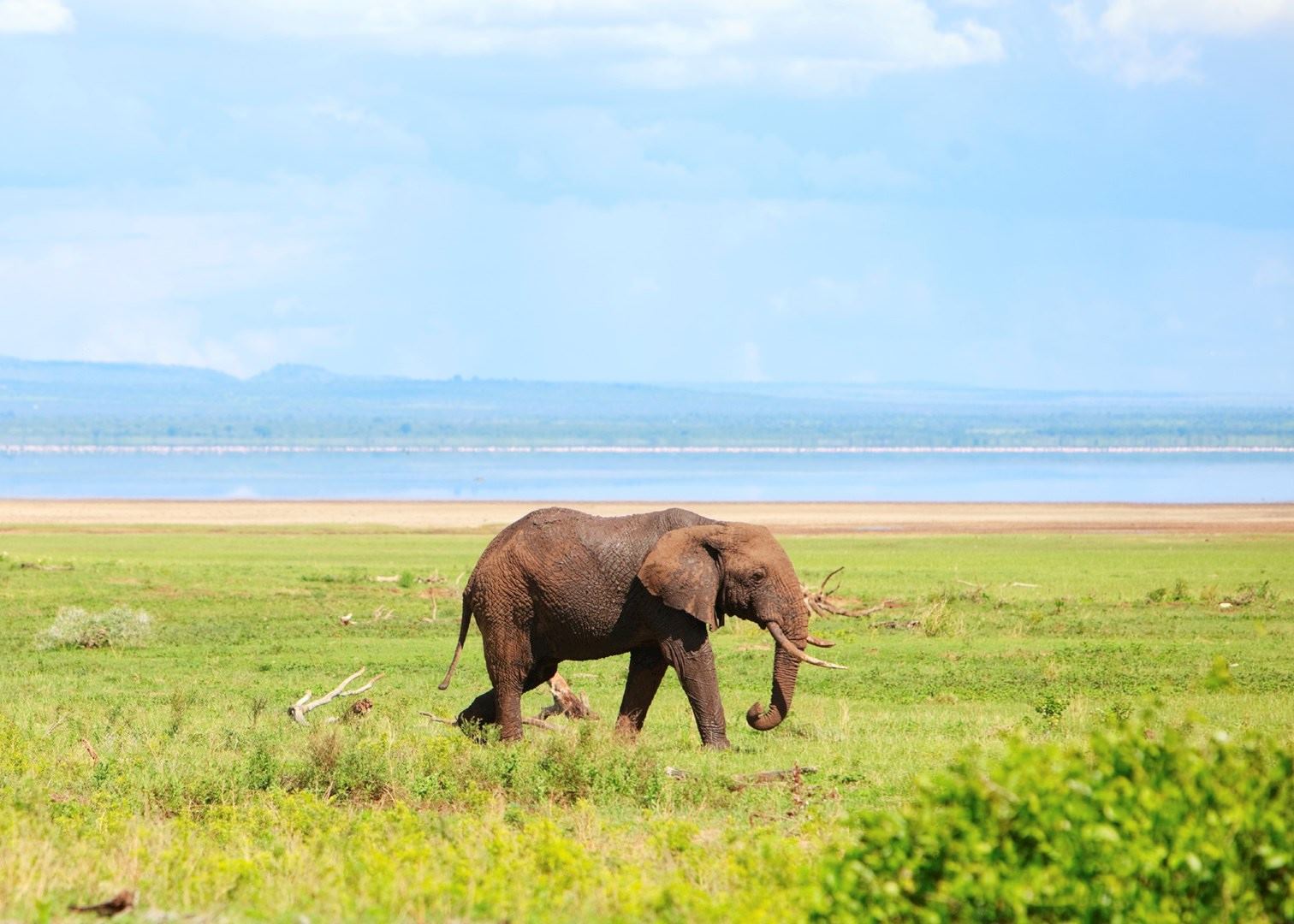
Elephants are another major attraction.
Lake Manyara has a long history of elephant research, and visitors frequently look for elephants moving through woodland or feeding among dense vegetation.
The lush environment often provides beautiful photographic settings very different from the open Serengeti plains.
Seeing elephants quietly emerge from the forest is one of the park's memorable safari experiences.
TANAPA identifies elephants as an important component of Lake Manyara's wildlife alongside lions, buffalo, zebra, wildebeest and giraffe.
Lake Manyara is an alkaline or soda lake capable of supporting significant birdlife.
Flamingos may gather along suitable sections of the lake depending on ecological and water conditions.
Visitors should understand that flamingo numbers fluctuate naturally.
They should therefore be regarded as a potential wildlife highlight rather than something that can be guaranteed on every trip.
Other water-associated birds may include pelicans, storks, herons, spoonbills and other species.
TANAPA describes both greater and lesser flamingos as seasonal visitors and emphasizes the park's importance for birdlife.
For bird lovers, a Lake Manyara safari package can be one of the most rewarding additions to a Northern Tanzania itinerary.
Different habitats support dramatically different bird species.
You may watch waterbirds near wetlands, raptors overhead and forest species among the trees.
TANAPA reports hundreds of recorded species in the wider park ecosystem and highlights fish eagles, spoonbills, storks, herons, bee-eaters and migratory birds.
Even travelers who do not consider themselves dedicated birdwatchers often become interested because Lake Manyara's birdlife is so visible.
Lake Manyara's wetland areas can provide opportunities to observe hippos.
You may see them resting in water during the heat of the day while birds gather around the edges of pools and wetlands.
The viewing experience is peaceful and can provide excellent photography opportunities.
Visitors should always follow ranger and guide instructions around hippo areas because hippos can be extremely dangerous at close range.
Baboons are particularly memorable at Lake Manyara.
Visitors can encounter large troops moving through forests, roadsides or surrounding vegetation.
Blue monkeys can also inhabit the lush groundwater forest.
TANAPA specifically identifies baboons and blue monkeys among the animals inhabiting the park's forested environments.
Watching their interactions can be surprisingly fascinating because visitors may see grooming, feeding, mothers carrying babies and younger animals playing.
Wildlife is only one component of the Lake Manyara experience.
The Great Rift Valley escarpment creates a dramatic natural background throughout much of the park.
Steep cliffs rise behind forest, floodplain and lake habitats, creating excellent photographic landscapes.
TANAPA highlights this escarpment as one of Lake Manyara's defining natural attractions.
A typical Tanzania safari package including Lake Manyara may offer opportunities to look for:
Wildlife sightings always remain unpredictable.
That uncertainty is part of the attraction of an authentic African safari.
Package inclusions vary depending on whether you choose a budget, mid-range, luxury, shared or private safari.
A well-organized Tanzania safari package Lake Manyara trip will commonly include:
Game drives are normally conducted using a specially equipped 4x4 safari vehicle.
A pop-up roof gives travelers improved visibility when photographing or observing wildlife.
Your driver-guide is one of the most important components of your experience.
A knowledgeable guide understands animal behavior, tracks, landscapes and the best wildlife-viewing areas.
Applicable park entrance and conservation-related fees are normally included when specified in your package quotation.
Official tariffs can change, so travelers should rely on the current TANAPA tariff and their final safari quotation rather than an old online price.
Multi-day packages normally include meals according to the accommodation plan.
During game-drive days, lunch may be served as a picnic or prepared hot lunch depending on the operator and itinerary.
Safari vehicles commonly carry drinking water throughout the journey.
Depending on your package, accommodation may include:
Many packages can include transfers between Arusha, Kilimanjaro International Airport, accommodation and safari departure points.
Always check exactly what your quotation includes.
Travelers with limited time can visit Lake Manyara on a day trip.
A typical schedule might look like this:
Your safari guide collects you from your hotel.
You drive toward Lake Manyara through northern Tanzania's countryside.
After formalities at the entrance, begin your game drive.
The groundwater forest around the entrance immediately gives Lake Manyara a distinctive atmosphere.
Look for monkeys, baboons, birds and occasionally elephants as your guide begins exploring.
Continue toward woodland, floodplains and lake-associated habitats.
Possible sightings include elephants, giraffes, buffalo, zebra, warthogs and various birds.
Enjoy lunch at an authorized picnic location.
Always protect food from monkeys and baboons and follow park guidelines.
Explore additional sections of the national park before gradually making your way toward the exit.
Drive back toward Arusha after your Lake Manyara safari.
This type of trip is ideal for travelers who have only one free day but still want a genuine Tanzania wildlife experience.
For travelers with slightly more time, combining Lake Manyara with Ngorongoro creates a significantly stronger safari experience.
Leave Arusha in the morning and drive to Lake Manyara.
Spend the day exploring:
After the safari, continue to accommodation around Karatu or Mto wa Mbu.
Enjoy dinner and overnight.
After an early breakfast, drive toward Ngorongoro.
Descend into the crater for an extensive game drive.
Ngorongoro offers possibilities for seeing lions, elephants, buffalo, zebra, wildebeest, hippos, hyenas and—if fortunate—black rhinoceros.
After the game drive, return toward Arusha.
This combination gives travelers two extremely different ecosystems in just two days.
This itinerary is ideal when travelers want maximum diversity without traveling all the way to Serengeti.
Drive from Arusha to Tarangire.
Tarangire is famous for baobab landscapes and elephant populations.
Enjoy a full game drive before continuing to your accommodation.
After breakfast, travel to Lake Manyara.
Explore its forest, wetlands, floodplain and lake environments.
Search for elephants, primates, giraffes, buffalo, hippos, lions and birds.
After the safari, continue to your lodge.
Early morning departure to Ngorongoro.
Descend into the crater and spend several hours watching wildlife.
Later return to Arusha.
This route is excellent for first-time safari travelers because it offers three very different national park environments.
Travelers wanting a deeper safari experience can include Serengeti.
Game drive in Lake Manyara and overnight near Karatu or Mto wa Mbu.
Travel through the Ngorongoro highlands toward Serengeti National Park.
Enjoy game viewing as you enter the Serengeti ecosystem.
Enjoy an extensive Serengeti game drive.
Search for lions, elephants, cheetahs, leopards, buffalo, giraffes and numerous plains animals.
Travel toward Ngorongoro and descend into the crater for another major wildlife experience before returning to Arusha.
For travelers with only four days, the schedule can be busy, but it delivers extraordinary variety.
A five-day itinerary offers a more comfortable pace.
Start from Arusha and explore Tarangire.
Enjoy a dedicated Lake Manyara game drive.
Travel to Serengeti and begin exploring its famous plains.
Enjoy more Serengeti wildlife viewing before continuing toward Ngorongoro.
Descend into the crater, enjoy your final safari and return to Arusha.
For many first-time Tanzania travelers, this is one of the most balanced short safari itineraries.
Yes—dramatically.
Lake Manyara is compact, green and ecologically varied.
Its appeal comes from:
Serengeti is enormous and famous for expansive grasslands, major predator populations and the Great Migration ecosystem.
Its appeal includes:
Combining both gives travelers greater ecological variety.
Many travelers wonder which park to choose if they have limited time.
If your schedule allows, visiting both creates a much more complete northern Tanzania safari.
The two destinations provide completely different experiences.
Lake Manyara emphasizes ecosystem variety, birds, forests and lake scenery.
Ngorongoro is famous for high concentrations of large mammals within a spectacular volcanic caldera.
They are excellent complements rather than substitutes.
Lake Manyara is generally accessible throughout the year, although wildlife distribution, vegetation, water conditions and road accessibility can change seasonally.
TANAPA lists the park as open year-round.
These months correspond broadly with Tanzania's drier period.
Advantages may include:
July through October is especially popular across northern Tanzania, so accommodation should be booked early.
Short rains can transform the landscape.
Visitors may experience greener scenery and excellent photography.
Rain usually does not mean continuous rainfall every day.
These months can provide:
They also combine especially well with trips toward Ndutu during the southern Serengeti calving season.
This is the principal rainy period.
Advantages can include:
However, heavy rain can temporarily affect roads or access to particular areas.
TANAPA advises visitors to respect closures and ranger guidance during rainy conditions when certain routes may become temporarily inaccessible.
For most visitors:
Half day: Possible but relatively short.
Full day: Excellent for first-time visitors.
One night nearby: Comfortable and useful when combining with other parks.
Two nights: Best if you want a slower pace, birdwatching, cultural experiences and optional activities.
Because Lake Manyara is compact compared with Serengeti, many itineraries dedicate approximately one game-drive day to it.
Travelers can stay near:
Ideal for travelers who want to remain close to Lake Manyara's entrance.
This town also provides access to cultural experiences, markets and community activities.
Karatu is particularly convenient when continuing to Ngorongoro.
It has a wide variety of accommodations ranging from simple lodges to upscale properties.
Some properties provide a more immersive wilderness experience, although availability and pricing vary.
TANAPA notes that visitors can stay at limited accommodation inside or near the park or choose broader options in Mto wa Mbu and Karatu.
A budget package focuses on keeping the safari affordable while maintaining the core wildlife experience.
Budget options may use:
The wildlife experience inside the national park remains the same.
Choosing a lower-cost lodge does not mean seeing fewer animals.
Mid-range safaris are extremely popular because they offer a balance of comfort and price.
Expect accommodations that may provide:
Mid-range packages are especially suitable for couples, families and first-time visitors.
Luxury travelers can combine premium accommodations with a private safari vehicle and highly personalized itinerary.
A luxury package may include:
Luxury is especially valuable when combining Lake Manyara with Serengeti and Ngorongoro on a private itinerary.
A private safari gives your party exclusive use of the vehicle and guide.
Advantages include:
Private safaris are particularly useful for photographers, couples and families.
A Lake Manyara safari can cost USD 150–220 per person for a shared day trip from Arusha. A published example of a…
Read articlePlanning a Tanzania safari that combines Lake Manyara National Park and Nyerere National Park is an excellent way to experience the country's…
Read articlePlanning an unforgettable African wildlife adventure from Zanzibar? Understanding the Tanzania safari package Zanzibar price is an important first step toward choosing…
Read articlePlanning an African wildlife adventure? Understanding the group Tanzania safari price is an important step toward choosing an affordable and unforgettable safari…
Read article