

Budget Ngorongoro Crater Safari Holiday
Planning a budget Ngorongoro Crater safari holiday from Arusha? Compare a crater day trip, a two-day Tarangire and Ngorongoro safari, or a…
Read articleArusha City - Tanzania
Safari & Travel Tips
August 31, 2026 · 16 min read
A Nyerere National Park safari from Zanzibar is one of the easiest ways to combine a relaxing beach holiday with an authentic African wildlife adventure. Instead of travelling north to the Serengeti or Ngorongoro Crater, visitors can take a short domestic flight directly from Zanzibar to the wild landscapes of southern Tanzania.
But how much does a Nyerere National Park safari from Zanzibar cost?
As a general planning estimate, a fly-in safari from Zanzibar can cost from approximately USD 450 to USD 750 per person for a one-day trip, while a two- or three-day safari may cost between USD 750 and USD 1,800 per person. Luxury packages can exceed USD 2,000 per person, depending on the lodge, season, number of travelers and included activities.
These prices normally combine return domestic flights, park fees, safari transportation, meals and professional guiding. However, every package is different, so travelers should always check exactly what is included before booking.
This guide explains the expected prices, package options, additional expenses, accommodations, activities and best time to visit Nyerere National Park from Zanzibar.
The table below provides realistic planning ranges rather than fixed quotations. Flight fares, park tariffs, accommodation availability and seasonal supplements can change.
| Safari option | Estimated cost per person | Typical inclusions |
|---|---|---|
| One-day fly-in safari | USD 450–750 | Return flights, game drive, park fees and lunch |
| Two-day budget safari | USD 700–1,000 | Flights, one night, meals, game drive and boat safari |
| Two-day mid-range safari | USD 850–1,300 | Flights, quality lodge, private or shared game drives and meals |
| Three-day mid-range safari | USD 1,050–1,600 | Flights, two nights, game drives, boat safari and meals |
| Three-day luxury safari | USD 1,500–2,500+ | Premium camp, flights, private services and selected activities |
| Four-day private safari | USD 1,700–3,000+ | Flights, three nights, private vehicle and a complete activity program |
Current marketplace listings illustrate the broad variation: fly-in packages may begin around USD 635 per person, while three-day private or luxury packages commonly exceed USD 1,000 per person. Prices depend heavily on travel dates, accommodation and group size. Compare current Zanzibar–Nyerere safari listings.
The most important price factors are:
A personalized quotation is therefore more accurate than relying on a general online price.
Nyerere National Park is an excellent choice for travelers who want to add a short safari to a Zanzibar beach holiday. The flight is convenient, the landscape feels genuinely wild, and visitors can enjoy activities that are unavailable or restricted in some of Tanzania’s northern parks.
Auric Air advertises scheduled connections to Nyerere from Zanzibar and Dar es Salaam, allowing travelers to reach the park in a short scenic flight rather than spending many hours on the road. See Auric Air’s Nyerere destination information.
The main reasons to choose Nyerere include:
Nyerere is not a Great Migration destination. Its special appeal comes from its river environment, varied safari activities and quieter wilderness experience.
A one-day fly-in safari is usually the least expensive and most convenient choice for visitors who have limited time.
Expect to pay approximately:
USD 450–750 per adult
Some private or premium departures may cost more. The exact rate is determined by the available flight, park fees, group size and transfer arrangements.
Your day normally begins very early, with pickup from your Zanzibar hotel. You are transferred to the airport and take a domestic flight to an airstrip serving the Nyerere safari area.
Some published day-trip schedules show departure from Zanzibar at approximately 7:30 a.m. and arrival around 8:20 a.m., although schedules are subject to change. View an example Mtemere flight itinerary.
On arrival, you meet your safari guide and begin a game drive in a 4x4 vehicle. You explore the park’s woodlands, floodplains and water sources while searching for:
A picnic or bush lunch is normally provided. In the afternoon, you return to the airstrip for your flight back to Zanzibar, followed by a transfer to your hotel if this service is included.
A one-day package commonly includes:
Possible exclusions include:
A one-day safari is possible and can be rewarding, but it is fast-paced. Your wildlife-viewing time depends on the flight schedule and weather conditions.
Choose one day if:
Choose two or three days if:
A two-day safari offers a much better balance between cost, comfort and wildlife viewing.
A two-day package generally costs:
Solo travelers generally pay more because they do not share the room, vehicle and some transfer costs with another guest.
After an early hotel transfer, fly from Zanzibar to the Nyerere area. Meet your guide and begin a game drive or transfer to the lodge.
After lunch and some rest, enjoy a boat safari on the Rufiji River or a nearby waterway, depending on the location of your accommodation and current operating arrangements.
A boat safari offers a different perspective from a game drive. You may encounter:
Return to your lodge or camp for dinner and overnight.
Start with breakfast and an early game drive. Morning is often a productive time for wildlife because temperatures are cooler and animals may be more active.
Continue exploring until lunch or until it is time to reach the airstrip. Fly back to Zanzibar and transfer to your beach hotel.
With an overnight stay, you can experience Nyerere without spending most of the day thinking about your return flight. You also have the possibility of combining two different activities.
For many Zanzibar visitors, two days and one night is the best short-safari option.
A three-day safari is recommended for travelers who want a more complete experience without taking too much time away from Zanzibar.
Expect approximately:
One currently advertised three-day package begins at approximately USD 791 per person, while other packages are priced above USD 1,000, confirming how widely rates can vary according to service level. View an example three-day package.
Fly from Zanzibar to Nyerere and meet your guide at the airstrip. Depending on your arrival time, continue with a short game drive or transfer to your accommodation.
After lunch, take a boat safari and watch wildlife along the Rufiji ecosystem. Return to camp for dinner.
Spend the day exploring the park in a 4x4 safari vehicle. The guide selects routes based on seasonal water levels, wildlife reports and recent sightings.
The day may include visits to:
Enjoy a picnic lunch in a safe designated place before continuing the afternoon game drive.
Where available and permitted, begin with a guided walking safari accompanied by an authorized guide or ranger.
A walking safari is not designed to approach large animals closely. Instead, it introduces travelers to tracks, plants, insects, bird calls and smaller details that are easily missed from a vehicle.
Return for breakfast, check out and travel to the airstrip. Fly back to Zanzibar and continue to your hotel.
A game drive is the central activity in most Nyerere safari packages. Vehicles normally have open or pop-up viewing arrangements, depending on the operator and the area.
During a game drive, the guide interprets tracks, animal behavior, habitats and birdlife. No reputable operator can guarantee a specific wildlife sighting because the animals move freely.
Boat safaris are among the biggest reasons to choose Nyerere. They provide opportunities to observe hippos, crocodiles, waterbirds and animals visiting the riverbank.
Park-related boating charges may apply in addition to conservation fees. One published fee guide lists adult conservation fees at USD 82.60 and a separate adult boating charge of USD 23.60, but official tariffs should always be reconfirmed when the trip is booked. Review the published Nyerere fee breakdown.
Guided walks allow visitors to experience the landscape at a slower pace. Availability depends on the lodge, location, park rules, guide qualifications and current wildlife conditions.
Travelers should wear closed shoes, neutral-colored clothing and follow every guide instruction.
The river, wetlands and woodland make Nyerere an excellent destination for bird enthusiasts. Travelers may see fish eagles, bee-eaters, kingfishers, herons, storks and various woodland species.
Some accommodations and tour programs offer village visits outside the park. These experiences should be organized responsibly and respectfully, with genuine benefits for local communities.
The return flight between Zanzibar and Nyerere is usually one of the largest expenses. Prices depend on:
Scheduled flights normally offer better value than private charters. Travelers should use soft-sided luggage because light aircraft have strict space and weight limitations.
Entrance and activity fees form an important part of the total package price. Park fees are generally charged per person and may be calculated according to a 24-hour entry period.
Published sources do not always display identical totals because some quote base fees while others include taxes, conservation charges or additional services. Therefore, the final quotation should use the applicable official tariff at the time of booking.
The Tanzania National Parks tariff document is the appropriate reference point for confirmed government fees. View TANAPA’s published tariff document.
The accommodation category has a major effect on the price.
Budget properties provide essential facilities and simpler rooms or tents. They are suitable for adventurous travelers who prioritize wildlife viewing over luxury.
Mid-range camps normally provide:
This is the most popular category for couples and first-time safari travelers.
Luxury camps may include:
Luxury rates may also include concession fees for staying inside the protected area.
A shared safari divides vehicle and guide costs between several travelers, making it more affordable. A private safari gives your group exclusive use of the vehicle and offers more flexibility.
Private safaris are ideal for:
Two travelers generally pay more per person than four or six travelers because fewer people are sharing the vehicle.
Solo travelers may need to pay:
Rates are usually highest during the popular dry-season months. Air seats and well-located camps may sell out, especially when travelers book late.
Low-season promotions can reduce accommodation costs, but rainfall may affect roads, wildlife distribution and the operation of some camps.
The dry season is generally the most popular time to visit.
Advantages include:
Because demand is higher, flights and lodges should be reserved early.
The short rains can transform the landscape into a greener environment. Birdlife is excellent, and there may be fewer vehicles.
Rain is often intermittent rather than continuous, but weather patterns cannot be guaranteed.
These months can offer attractive landscapes, warm weather and rewarding birdwatching. Some accommodations offer favorable rates, although humidity may be higher.
Heavy rain can make some roads difficult. Certain seasonal camps may close, and flight or activity schedules may be reduced.
Travelers considering this period should confirm that the selected lodge, airstrip and activities will be operating. Conditions vary from year to year, so a blanket guarantee about park or camp accessibility should be avoided.
Nyerere supports a wide range of wildlife, but sightings depend on season, water availability, guide knowledge and luck.
Elephants are among the park’s best-known residents. They may be encountered feeding in woodland, walking across tracks or drinking near the river.
Lions live throughout the ecosystem. Early morning and late afternoon are often good times to search for them, although sightings cannot be guaranteed.
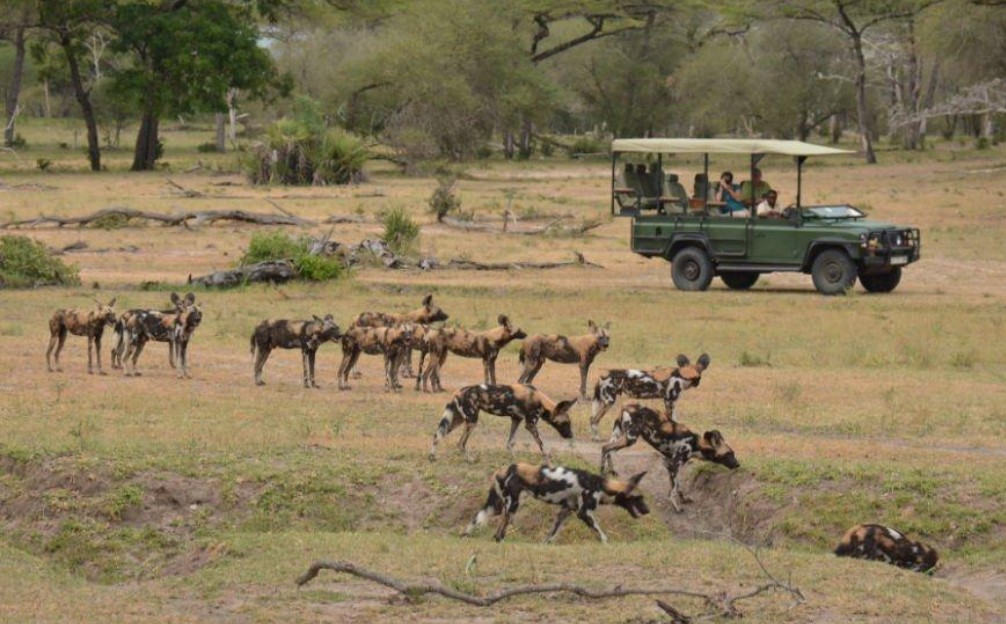
Nyerere is particularly respected for its African wild dog habitat. These endangered predators range over large territories, meaning that seeing them is special rather than automatic.
The Rufiji River and connected waterways provide excellent habitat for hippos and Nile crocodiles. A boat safari can offer particularly memorable observations.
Giraffes are frequently associated with the woodland and open areas. Buffaloes, zebras, wildebeest and various antelope species may also be seen.
Leopards are present but elusive. A longer safari improves your opportunities, though even a three-day trip cannot guarantee a sighting.
Travelers should not select Nyerere based on the expectation of easily seeing a rhinoceros. Although the wider ecosystem has historical importance for rhino conservation, sightings are exceptionally rare.
A well-designed package may include:
Always request written confirmation of the inclusions.
The following are often excluded unless specifically mentioned:
For illustration, imagine two adults booking a three-day fly-in safari.
| Component | Estimated per-person amount |
|---|---|
| Return scheduled flight | USD 300–500 |
| Two nights’ accommodation and meals | USD 300–650 |
| Park and related fees | USD 150–300 |
| Vehicle, fuel and guide | USD 150–350 |
| Boat or walking activity | USD 30–100 |
| Transfers and administration | USD 50–150 |
| Estimated package total | USD 980–2,050 |
This example is not a quotation. A package price can be lower when services are shared or higher when premium accommodation, private activities and peak-season flights are selected.
| Duration | Best for | Main limitation |
|---|---|---|
| One day | Travelers with very limited time | Fast schedule and less wildlife-viewing time |
| Two days | Short bush-and-beach combination | Only one night in the safari area |
| Three days | Complete first-time Nyerere experience | Higher overall price |
| Four days or more | Photographers and relaxed travelers | Requires more time away from Zanzibar |
For most travelers, three days and two nights provides the best overall experience. It allows time for a full-day game drive, a boat safari and possibly a walking safari without rushing every activity.
Both destinations are worthwhile, but they offer different experiences.
| Nyerere National Park | Serengeti National Park |
|---|---|
| Excellent for short Zanzibar combinations | Better known for the Great Migration |
| Famous for Rufiji River boat safaris | Primarily focused on game drives |
| Generally quieter | Some popular areas can be busy |
| Strong wild dog opportunities | Exceptional big-cat reputation |
| Southern Tanzania atmosphere | Classic northern safari circuit |
| Convenient for two- or three-day trips | Often benefits from a longer itinerary |
Choose Nyerere if you want a quieter safari, boat activities and an easy addition to a Zanzibar holiday.
Choose Serengeti if the Great Migration, open plains and classic big-cat viewing are your highest priorities.
Mikumi can also be reached from Zanzibar by flight or through Dar es Salaam. It may suit travelers looking for a straightforward game-drive experience.
Nyerere generally offers greater activity variety because travelers can combine game drives with boat safaris and, in suitable locations, guided walks. Its river environment also creates a distinctive wilderness atmosphere.
Your final decision should consider:
Pack lightly because domestic safari aircraft usually enforce strict luggage limitations.
Recommended items include:
Avoid very bright clothing during wildlife activities. Neutral shades such as khaki, beige, olive and brown are practical.
Do not pack valuable space with excessive formal clothing. Safari camps are generally relaxed.
Nyerere can be suitable for families, but the itinerary should match the children’s ages and attention spans.
Families should confirm:
A private safari is often more comfortable for families because game-drive length and rest stops can be adjusted.
A professionally organized safari is generally safe when travelers follow instructions.
Important precautions include:
Wild animals are unpredictable. Guides and camp teams understand local conditions, so their instructions must always be followed.
Do not choose a safari solely because it is the cheapest.
Before paying, ask the operator to confirm:
A very low price may exclude important expenses or use accommodation far from the main wildlife-viewing area.
Sharing the vehicle, room and transfers can substantially lower the cost per person.
Early booking gives you more access to scheduled flights and accommodation choices. Last-minute bookings may require more expensive alternatives.
A clean, well-located mid-range camp often provides the best value. You can still enjoy private bathrooms, comfortable beds and excellent guiding without paying premium luxury rates.
A cheaper headline price may become expensive after adding:
Compare the final price rather than the initial advertisement.
Although a two-night safari costs more overall, it can provide better value per safari hour. A one-day trip includes the expense of two flights but gives you only part of a day in the park.
If dates and schedules match, a shared safari can lower the cost. However, confirm the group size and whether every traveler receives a comfortable viewing position.
Planning a budget Ngorongoro Crater safari holiday from Arusha? Compare a crater day trip, a two-day Tarangire and Ngorongoro safari, or a…
Read articleA Lake Manyara safari can cost USD 150–220 per person for a shared day trip from Arusha. A published example of a…
Read articleA Nyerere Tanzania wildlife safari can take you from a woodland game drive in the morning to a boat on the Rufiji…
Read articleA Tanzania safari from Zanzibar can mean a short mainland trip during your beach holiday or a complete package with flights, game…
Read article

