Lake Manyara vs. Nyerere Safari Prices | Tanzania Guide
A Lake Manyara safari can cost USD 150–220 per person for a shared day trip from Arusha. A published example of a…
Read articleArusha City - Tanzania
Safari & Travel Tips
August 31, 2026 · 14 min read
Choosing the right Ruaha safari Lake Manyara operator can make a major difference to your Tanzania safari experience. Ruaha National Park and Lake Manyara National Park offer two very different sides of Tanzania: Ruaha provides immense wilderness, dramatic landscapes, large elephant populations and an authentic Southern Circuit atmosphere, while Lake Manyara offers lush forests, Rift Valley scenery, birdlife, elephants and the possibility of seeing its famous tree-climbing lions.
Travelers who combine these destinations can experience considerably more variety than on a safari focused on a single region.
However, Ruaha and Lake Manyara are not neighboring parks. Ruaha lies in Tanzania's Southern Circuit, whereas Lake Manyara is part of the famous Northern Safari Circuit near Arusha, Tarangire and Ngorongoro. Because of this, combining them requires thoughtful planning.
A knowledgeable safari operator can organize domestic flights, road transfers, accommodation, park fees, professional guides and game drives so that you spend more time enjoying Tanzania and less time dealing with logistics.
This guide explains everything you should consider when selecting a Ruaha safari Lake Manyara operator, including wildlife, itinerary planning, accommodation, transportation, the best travel season, safari costs and practical planning advice.
Combining Ruaha National Park with Lake Manyara creates an unusually diverse Tanzania safari.
Ruaha is about space, wilderness and big-game encounters.
Lake Manyara is about scenery, forests, birdlife and ecosystem diversity.
Together they provide travelers with two contrasting safari environments.
Ruaha National Park covers a vast wilderness of more than 20,000 square kilometers according to Tanzania National Parks. Wildlife includes elephants, buffalo, lions, leopards, hippos, crocodiles and numerous bird species.
Lake Manyara, meanwhile, sits below the dramatic Great Rift Valley escarpment. Its habitats include groundwater forest, acacia woodland, wetlands, floodplains and an alkaline lake.
This difference is precisely what makes the combination appealing.
A well-planned itinerary might allow you to experience:
Rather than repeating similar landscapes every day, your safari continually changes.
For travelers looking for a less crowded African safari, Ruaha National Park is one of Tanzania's most attractive destinations.
The park forms an important component of Tanzania's southern safari circuit and is particularly popular among travelers who prefer wilderness over heavily traveled safari routes.
Its landscapes can include dry savannah, rocky hills, baobab country, river systems and woodland.
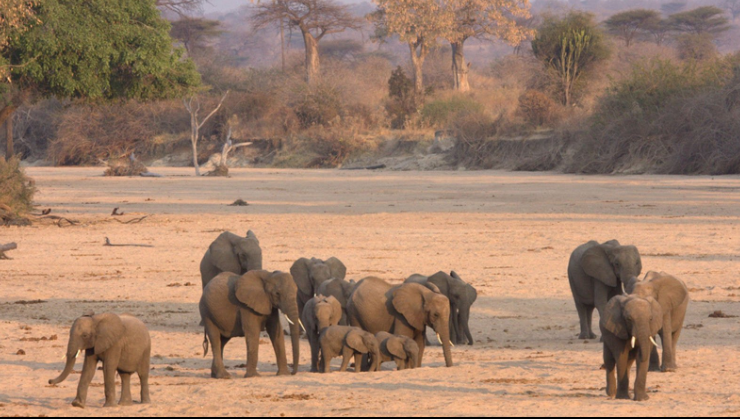
One of its defining geographical features is the Great Ruaha River, which provides an important wildlife concentration area, especially as surrounding landscapes become progressively drier.
Ruaha offers excellent opportunities for observing large African mammals.
Animals frequently associated with the park include:
Elephants
Ruaha is famous for elephant encounters. Herds may be observed moving between woodland and water sources, particularly during dry conditions.
Lions
Ruaha supports important lion populations, making predator sightings one of the major attractions of safaris here.
Leopards
Although naturally more elusive, leopards occur throughout the ecosystem.
African buffalo
Large buffalo herds can sometimes be encountered across Ruaha's plains. TANAPA specifically highlights the park's substantial buffalo populations.
Hippos and crocodiles
The Great Ruaha River and associated water systems provide habitat for both.
Other wildlife may include giraffes, zebras, greater kudu, impalas, jackals and numerous smaller mammals.
Ruaha is also an outstanding destination for bird enthusiasts.
Tanzania National Parks reports more than 570 recorded bird species in the park.
The wet season can be especially rewarding for birdwatching because vegetation becomes greener and seasonal bird activity increases.
Visitors may encounter raptors, hornbills, kingfishers, storks, bee-eaters and numerous woodland species.
A professional Ruaha safari Lake Manyara operator can arrange slower game drives specifically designed for photographers and birdwatchers rather than following only the traditional big-game safari schedule.
Ruaha's biggest advantage is not simply the wildlife.
It is the atmosphere.
In parts of Northern Tanzania, several safari vehicles may gather around an exceptional lion or cheetah sighting.
Ruaha often feels considerably more remote.
Game drives may involve long periods exploring wilderness landscapes where wildlife encounters feel private and natural.
For honeymooners, photographers, safari enthusiasts and returning African travelers, this sense of isolation can be extremely attractive.
After Ruaha's dry wilderness, arriving at Lake Manyara National Park can feel like entering a completely different Tanzania.
The park is located approximately 125 km from Arusha, with road journeys typically taking around 2–2.5 hours depending on traffic and conditions.
Its position at the base of the Great Rift Valley escarpment gives the park a dramatic geographical setting.
Lake Manyara contains several different ecosystems within a relatively compact area.
These include:
This ecosystem diversity supports an impressive variety of wildlife and birdlife.
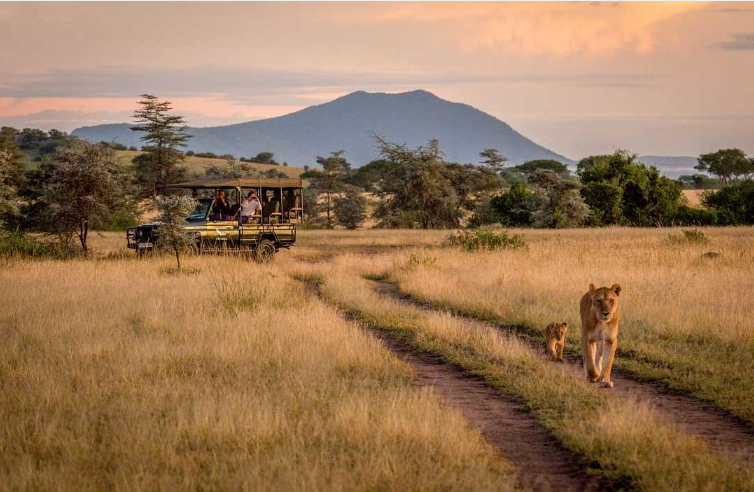
One of Lake Manyara's best-known attractions is its reputation for tree-climbing lions.
Visitors may occasionally find lions resting on broad branches.
However, travelers should understand that wildlife is never guaranteed.
A responsible safari operator will never promise that you will definitely see a tree-climbing lion.
Safari should always be approached as an exploration of a natural ecosystem rather than a controlled wildlife exhibition.
Seeing these lions is therefore an exciting possibility rather than a certainty.
Manyara is also well known for elephants.
The combination of forests, woodland and water sources creates excellent elephant habitat.
Visitors may encounter individuals or family groups moving through vegetation, feeding alongside safari roads or appearing near woodland clearings.
These encounters can be particularly impressive because Manyara's green forest backgrounds produce very different photographs from the dry landscapes commonly associated with East African safaris.
Birdwatching is one of Manyara's greatest strengths.
TANAPA records hundreds of species across its wetlands, woodland and forest environments.
Depending on water levels and season, visitors may see:
Flamingo concentrations can vary because water conditions and food availability change.
For photographers and birdwatchers, a full or carefully paced game drive can therefore be more satisfying than rushing through Manyara simply as a transfer stop.
Combining these parks is more complicated than combining Serengeti, Ngorongoro and Tarangire.
The main reason is geography.
Ruaha belongs to Tanzania's Southern Safari Circuit, while Lake Manyara belongs to the Northern Circuit.
That means your safari operator may need to coordinate:
A poorly designed itinerary can waste entire days traveling.
A carefully designed itinerary minimizes those transfers.
This makes choosing the right operator particularly important.
When searching for the best Ruaha safari Lake Manyara operator, consider several factors.
Choose a company that understands Tanzania rather than simply reselling safari packages internationally.
Local operators are usually better positioned to manage:
Local knowledge becomes especially important when combining two safari circuits.
A safari vehicle is important, but your guide can influence your experience even more.
A knowledgeable guide should understand:
Excellent guides also understand when to wait.
Sometimes the best safari moment comes from spending 30 minutes watching a lion pride instead of immediately driving to search for another animal.
Safari vehicles should be properly prepared for national park roads.
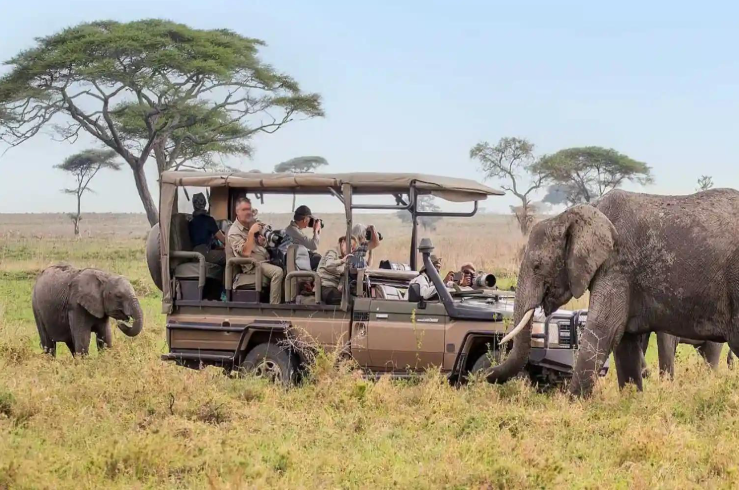
Look for a safari operator offering well-maintained 4x4 Land Cruisers, ideally with pop-up roofs for wildlife viewing.
Useful features can include:
Long game drives become significantly more enjoyable with a comfortable and reliable vehicle.
For an itinerary combining Ruaha and Lake Manyara, a private safari is normally the most practical option.
You control:
Private safaris are particularly useful for:
Group safaris may cost less, but combining different circuits makes scheduled group departures much harder to coordinate.
This is one of the most important planning questions.
Because the parks are far apart, travelers generally should not treat the trip as a simple road transfer between two nearby attractions.
There are several possibilities depending on budget and available time.
This is usually the most comfortable option.
Visitors can fly between southern Tanzania and an airport that allows connections toward Arusha/Northern Tanzania, depending on available schedules.
The operator then arranges the appropriate safari vehicle and onward road transportation.
This method saves valuable safari time.
Some flight schedules may require routing via Dar es Salaam.
Your safari planner should examine available flight times before confirming accommodation.
Traveling extensively by road can work for travelers who have considerably more time and enjoy seeing rural Tanzania.
However, for most international visitors on a 7–10 day safari, flying selected sectors will usually create a much better itinerary.
Here is an example structure.
Arrive and meet your safari representative.
Depending on flight schedule, overnight in:
Your operator will determine the most efficient starting city based on international flight connections.
Fly or transfer toward Ruaha.
After arrival, meet your safari guide and begin exploring the park.
Enjoy an afternoon game drive before continuing to your lodge or tented camp.
Wildlife may include elephants, giraffes, buffalo and predators.
Spend the whole day exploring Ruaha.
An early start often provides excellent wildlife conditions because temperatures are cooler and predators may still be active.
Explore river areas, plains and woodland.
Return to your accommodation in the evening.
Two full days make an enormous difference in a destination this large.
Rather than constantly driving long distances, you can spend time observing wildlife behavior.
Photography travelers particularly benefit from slower itineraries.
Enjoy your final morning in Ruaha before taking the appropriate flight connection toward northern Tanzania.
Transfer to Arusha, Karatu or the Lake Manyara area depending on your route.
Overnight at your selected lodge.
After breakfast, enter Lake Manyara National Park.
Explore the groundwater forest, woodland, floodplain and lakeshore areas.
Look for:
Enjoy lunch before continuing your game drive.
Overnight around Manyara or Karatu.
Once you are already in Northern Tanzania, adding other famous destinations becomes relatively easy.
Ngorongoro is a natural next destination.
A crater safari can provide opportunities for lions, elephants, buffalo, hippos and—if fortunate—black rhino sightings.
Tarangire is another excellent choice, particularly for travelers interested in elephants and baobab landscapes.
If your schedule allows, continue onward toward Serengeti National Park.
This turns the itinerary into an exceptionally comprehensive Tanzania safari combining both southern and northern wilderness.
There is no single perfect month.
Your ideal season depends on what you want to see.
This period generally offers very strong wildlife viewing in Ruaha as dry conditions concentrate animals around reliable water sources.
It is also one of Tanzania's busiest safari seasons.
Advantages include:
It is particularly suitable for first-time safari travelers.
These months can also offer good safari conditions.
Landscapes may be greener in some areas, and birding can be excellent.
Northern Tanzania can be especially attractive at this time.
The greener months should not automatically be dismissed.
Ruaha's wet season can provide lush landscapes, wildflowers and excellent birding. Tanzania's official tourism information specifically identifies January through April as rewarding for birdwatching and green scenery in Ruaha.
Potential advantages include:
The trade-off is that road and weather conditions can be more unpredictable.
A professional Ruaha safari Lake Manyara operator should provide accommodation options according to your budget rather than forcing every traveler into the same category.
Budget safaris may use:
This is suitable for adventurous travelers who prioritize wildlife over luxury.
Mid-range safari lodges and tented camps usually offer a strong balance between comfort and cost.
Typical facilities may include:
This category works well for most couples and families.
Luxury accommodations may offer:
Ruaha is particularly attractive for luxury travelers because remote camps can create a genuine wilderness atmosphere.
There is no single fixed price because many variables influence safari cost.
Your total depends on:
In many cases, adding Ruaha increases transportation costs because domestic flights may be necessary.
However, travelers should compare what is included rather than focusing exclusively on the cheapest headline price.
Before paying a deposit, request a detailed inclusion list.
A comprehensive safari package commonly covers:
Depending on the package, domestic flights may also be included.
Common exclusions include:
Never assume something is included simply because another company includes it.
Ask for everything in writing.
The same national parks can be experienced at very different price levels.
Best for travelers focused primarily on wildlife.
Expect simpler accommodation but similar access to national park wildlife.
The most popular compromise.
It combines comfortable accommodation with high-quality wildlife experiences.
Designed around both wildlife and accommodation experience.
For many travelers, luxury is less about marble bathrooms and more about location, privacy, guiding and atmosphere.
Ruaha and Lake Manyara are superb photography destinations.
A few simple preparations can improve your results considerably.
Bring:
Ask your guide to position the vehicle with light direction in mind.
Professional guides understand that photographers sometimes need several minutes to wait for an animal to turn, move or interact.
Ruaha's open landscapes, baobabs and relative lack of vehicle congestion can be particularly valuable for photography.
Instead of competing with numerous vehicles for positioning, photographers may have more freedom to observe scenes naturally.
Elephants moving through dusty landscapes near sunset can create especially dramatic images.
Manyara provides completely different backgrounds.
Instead of only dry savannah, photographers can work with:
Combining the two parks therefore expands the visual variety of your Tanzania safari significantly.
Both destinations can work for families when the itinerary is planned correctly.
Children often enjoy:
However, long transfer days should be avoided where possible.
For families, domestic flights can be worth the extra cost because they reduce hours spent driving between regions.
A private vehicle is also useful because children can take breaks when necessary.
Ruaha is an exceptional honeymoon destination because of its remote atmosphere.
Couples can combine secluded wilderness camps with a scenic stay around Lake Manyara or Ngorongoro.
An operator may also arrange special experiences such as:
You can then add Zanzibar for a safari-and-beach honeymoon.
One of the strongest Tanzania itineraries combines:
Ruaha + Lake Manyara + Zanzibar
This delivers three completely different experiences.
Ruaha: Remote wilderness.
Lake Manyara: Rift Valley scenery and northern wildlife.
Zanzibar: Beaches and Indian Ocean relaxation.
A typical trip may involve around 7–10 days of safari followed by 4–7 days on Zanzibar.
Before booking, ask:
A reliable operator should answer these questions clearly.
Be cautious if an operator:
Price matters, but transparency matters more.
Choosing the right Ruaha safari Lake Manyara operator gives you the opportunity to experience two very different versions of Tanzania.
Ruaha delivers expansive wilderness, elephants, buffalo, predators, baobab landscapes and an authentic Southern Circuit atmosphere.
Lake Manyara introduces lush groundwater forests, the Great Rift Valley escarpment, elephants, hippos, prolific birdlife and the possibility of encountering tree-climbing lions.
The challenge is distance.
Because these parks belong to different safari circuits, itinerary design is critical. Domestic flights, accommodation timing and transfers should all work together efficiently.
For travelers with enough time, however, the reward is an exceptionally varied Tanzania safari.
Rather than seeing only one ecosystem, you move from the remote wilderness of southern Tanzania to the fertile landscapes of the Great Rift Valley.
And if you have additional days, Serengeti, Ngorongoro, Tarangire and Zanzibar can transform the journey into a complete Tanzania adventure.
A Lake Manyara safari can cost USD 150–220 per person for a shared day trip from Arusha. A published example of a…
Read articlePlanning a Tanzania safari that combines Lake Manyara National Park and Nyerere National Park is an excellent way to experience the country's…
Read articlePlanning an unforgettable African wildlife adventure from Zanzibar? Understanding the Tanzania safari package Zanzibar price is an important first step toward choosing…
Read articlePlanning an African wildlife adventure? Understanding the group Tanzania safari price is an important step toward choosing an affordable and unforgettable safari…
Read article