

Budget Ngorongoro Crater Safari Holiday
Planning a budget Ngorongoro Crater safari holiday from Arusha? Compare a crater day trip, a two-day Tarangire and Ngorongoro safari, or a…
Read articleArusha City - Tanzania
Safari & Travel Tips
September 1, 2026 · 14 min read
A Ngorongoro Crater safari Northern Circuit adventure offers one of the most rewarding wildlife experiences in Tanzania. The Ngorongoro Crater is famous for its spectacular scenery, high concentration of animals and excellent opportunities to see the African Big Five.
The crater is part of the wider Ngorongoro Conservation Area in northern Tanzania. Unlike a traditional national park, this protected region allows wildlife and Maasai communities to coexist. Travelers may therefore see Maasai pastoralists tending livestock around the highlands before descending into a volcanic caldera filled with wild animals.
Ngorongoro is normally included in Tanzania’s Northern Safari Circuit alongside Serengeti National Park, Tarangire National Park, Lake Manyara National Park and Arusha. This makes it easy to combine the crater with several different landscapes and wildlife experiences.
Whether you are organizing a private honeymoon, family safari, photography expedition or affordable group tour, Ngorongoro deserves a place in your Tanzania itinerary.
The Ngorongoro Crater is a vast volcanic caldera formed after a large volcano erupted and collapsed millions of years ago. Today, the crater floor covers approximately 260 square kilometres and is surrounded by steep walls that rise hundreds of metres above it.
Inside the crater, travelers encounter several habitats within a relatively compact area, including:
These habitats support an extraordinary concentration of resident wildlife. Because many animals remain inside the caldera throughout the year, Ngorongoro provides reliable game viewing in both the dry and green seasons.
The crater is often called the “Garden of Eden” because of its natural beauty and abundant wildlife. Although that description is popular, Ngorongoro is still a wild ecosystem. Animal sightings and behavior can never be guaranteed.
Ngorongoro Crater is located in northern Tanzania, within the Ngorongoro Conservation Area. It lies west of Lake Manyara, southeast of Serengeti National Park and approximately 180 kilometres from Arusha.
The town of Karatu is the most common base outside the conservation area. It offers a wide selection of budget hotels, comfortable lodges and luxury properties.
Approximate driving times are:
Driving times are estimates. Weather, road conditions, park traffic and game viewing stops can affect the journey.
Ngorongoro offers a different experience from Tanzania’s larger national parks. The wildlife is concentrated within a relatively small area, making the crater particularly suitable for travelers with limited time.
Ngorongoro is one of Tanzania’s strongest destinations for seeing the Big Five:
Black rhinoceroses are among the crater’s most sought-after animals. They may be seen on the open grasslands, although they frequently remain at a distance. Leopards are present in the wider conservation area but are less commonly seen on the open crater floor.
The drive from the crater rim to the floor reveals one of Tanzania’s most memorable safari landscapes. From the viewpoint, the grasslands, forests and lakes appear enclosed by the enormous caldera walls.
Many animals remain in the crater throughout the year. Consequently, visitors can enjoy productive wildlife viewing outside the traditional dry-season months.
Ngorongoro connects naturally with Tarangire, Lake Manyara and Serengeti. It can therefore form part of anything from a two-day safari to an extensive Northern Circuit expedition.
The Ngorongoro Conservation Area protects natural, archaeological and cultural heritage. Maasai communities live within parts of the conservation area, giving the destination a distinctive character.
The crater supports thousands of large mammals and an impressive variety of birds. Sightings change according to season, weather, food availability and natural animal movement.
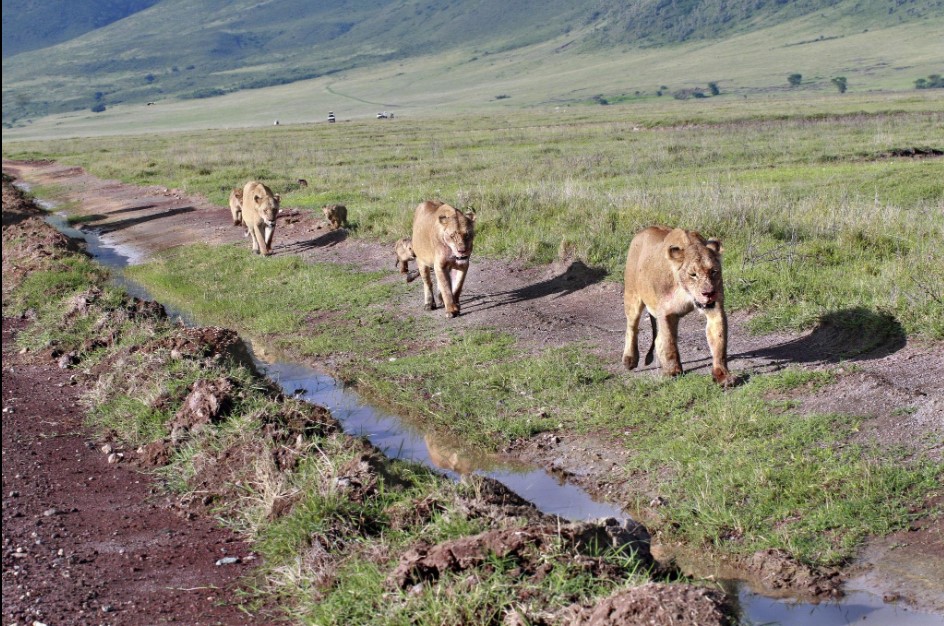
Lions are among the most commonly observed predators in the crater. Visitors may find prides resting beside safari tracks, hunting on the plains or feeding on a recent kill. The crater’s open terrain often provides clear photographic opportunities.
The endangered black rhinoceros is one of Ngorongoro’s signature animals. Rhinoceroses sometimes appear on the open plains during the morning, but sightings are never certain. Binoculars and a patient guide are valuable because the animals may be far from the road.
Large buffalo herds can be found around marshes, grasslands and forested areas. Older males may appear alone or in small groups. Buffaloes are powerful wild animals and should always be observed from the safety of the safari vehicle.
Most elephants seen on the crater floor are mature bulls. Family herds are more frequently encountered in the surrounding highlands and nearby parks. Lerai Forest is one of the places where elephants may be observed.
Wildebeest and zebras are widespread across the grasslands. Although the crater does not host the huge Mara River crossings associated with the Serengeti migration, its resident herbivore populations provide excellent sightings throughout the year.
Ngorongoro has a healthy spotted hyena population. Hyenas are skilled hunters as well as scavengers. They can often be seen walking across the plains, resting near water or competing with lions around a carcass.
Hippos inhabit pools and wetlands on the crater floor. The designated picnic area near a hippo pool is a popular place for visitors to eat lunch while watching wildlife from a safe distance.
Other possible sightings include:
Giraffes are generally absent from the crater floor, partly because the steep descent makes access difficult. They can, however, be seen elsewhere in the conservation area and across the Northern Circuit.
Ngorongoro is a rewarding destination for bird enthusiasts. Its combination of forests, lakes, wetlands and grasslands attracts resident and migratory species.
Birds visitors may encounter include:
Flamingo numbers around Lake Magadi change according to water conditions and food availability. Travelers should therefore avoid assuming that large flamingo gatherings will always be present.
A typical crater safari begins early in the morning. Travelers staying near the rim or around Karatu leave their lodge after breakfast, enter the conservation area and drive toward one of the crater descent roads.
The safari vehicle descends from the cool highlands to the crater floor. During the game drive, the guide searches for wildlife across grasslands, wetlands and forest areas.
A typical day includes:
Visitor time on the crater floor is regulated, and itineraries normally allow approximately six hours for the game drive. Your operator should plan entry times, permits and the onward journey carefully.
Private safaris provide more flexibility at sightings than shared group tours. On a private tour, the guide can adjust the pace around your interests, such as photography, birds, predators or family travel.
Ngorongoro is a year-round destination. The best season depends on whether you prioritize dry weather, green landscapes, birding, quieter conditions or price.
The dry season generally brings cooler mornings, limited rainfall and easier wildlife observation. Animals may gather around permanent water sources, while vegetation is often shorter.
Advantages include:
Possible disadvantages include:
The short rains can transform dry landscapes into fresh green plains. Rain usually occurs in showers rather than continuously, although weather patterns vary.
This period can offer:
The green season provides lush landscapes, dramatic skies and excellent photographic colors. It also combines well with the Ndutu region, where the Great Migration’s calving season normally occurs between approximately December and March, with timing determined by rainfall.
Benefits include:
These are generally the wettest months. Some roads can become muddy, but the crater remains accessible under normal conditions.
Benefits may include:
Travelers should bring waterproof clothing and allow some flexibility for road and weather conditions.
The famous Great Migration does not remain inside Ngorongoro Crater. However, the wider Ngorongoro Conservation Area includes the Ndutu and southern plains used by migrating wildebeest during part of the year.
The migration’s approximate annual pattern is:
These dates are broad guidelines—not a timetable. Wildebeest follow rainfall and fresh grass, so their exact location changes every year.
A January or February Northern Circuit itinerary can combine Ngorongoro Crater with Ndutu. An August or September itinerary can combine the crater with Central and Northern Serengeti for the possibility of seeing Mara River crossings.
Crossings are unpredictable and cannot be guaranteed, even during the appropriate season.
Day 1: Arusha to Tarangire
Travel to Tarangire National Park for a game drive. Look for elephants, giraffes, zebras, lions and baobab landscapes. Overnight near Karatu or Mto wa Mbu.
Day 2: Ngorongoro Crater
Descend into the crater for an extended game drive and picnic lunch. Overnight near Karatu.
Day 3: Lake Manyara and return to Arusha
Explore Lake Manyara National Park before returning to Arusha.
This itinerary is suitable for travelers with limited time, although it does not include Serengeti.
Day 1: Arusha to Serengeti
Day 2: Full-day Central Serengeti game drive
Day 3: Serengeti to Ngorongoro/Karatu
Day 4: Ngorongoro Crater and return to Arusha
This is a compact itinerary. Driving distances are significant, so travelers seeking a more relaxed pace should consider five or six days.
Day 1: Arusha to Tarangire
Day 2: Tarangire to Central Serengeti
Day 3: Full-day Serengeti game drive
Day 4: Serengeti to Ngorongoro highlands
Day 5: Crater game drive and return to Arusha
This classic route balances major destinations without adding too many stops.
Day 1: Arrival and overnight in Arusha
Day 2: Tarangire National Park
Day 3: Drive to Central Serengeti
Day 4: Full-day Central Serengeti
Day 5: Additional Serengeti game drive and transfer toward Ngorongoro
Day 6: Ngorongoro Crater
Day 7: Lake Manyara or cultural experience, followed by Arusha
For July to October:
For January to March, the Northern Serengeti nights can be replaced by Ndutu accommodation.
Serengeti offers a much larger wilderness, extensive predator viewing and seasonal Great Migration experiences. Ngorongoro provides concentrated wildlife within a dramatic caldera, while Serengeti offers scale, openness and longer game drives.
Including both destinations produces a more complete safari.
Tarangire is known for elephants, baobab trees and the Tarangire River. During the dry season, the river attracts animals from surrounding areas. Tarangire adds a distinctive woodland and river ecosystem to the itinerary.
Lake Manyara contains groundwater forest, woodland, lake environments and escarpment scenery. Wildlife distribution changes with lake levels and seasonal conditions. It can be included on longer itineraries, though travelers with limited time may prioritize additional time in Serengeti.
Arusha National Park is convenient for an arrival-day excursion. Activities can include game drives, walking safaris and canoeing when available. It is not a substitute for Serengeti or Ngorongoro, but it can complement a longer trip.
Lake Eyasi is commonly included for cultural visits involving Hadzabe and Datoga communities. Such visits should be arranged responsibly, with respect for the communities rather than treating them as entertainment.
Budget travelers can use public campsites or simple lodges outside the conservation area.
Camping packages generally include:
Public campsites provide an adventurous experience, but facilities are basic. Hot water and charging access may be limited.
Mid-range lodges and tented camps generally provide:
Staying around Karatu is normally more affordable than staying directly on the crater rim.
Luxury properties may offer crater views, larger rooms, fireplaces, premium dining, private decks, spa treatments and personalized services. Rim accommodation can also allow earlier access to the descent road.
However, luxury does not automatically mean better wildlife sightings. The quality of your guide, itinerary and time in the field remains extremely important.
The standard vehicle for a Northern Circuit adventure is a customized 4×4 Land Cruiser with a pop-up roof.
A well-equipped vehicle may offer:
Your guide plays an essential role in the experience. A professional guide should understand animal behavior, park rules, road conditions, wildlife identification and responsible viewing practices.
Photographers should request a private vehicle or a reduced number of passengers. This provides more space for equipment and greater control over positioning.
Inclusions differ between operators, but a standard package may include:
Common exclusions include:
Always request an itemized quotation. Confirm whether the price is per person or per vehicle and whether it is based on single, double, twin or family-room occupancy.
The price of a safari depends on:
Ngorongoro can be comparatively expensive because safari packages must include conservation-area and crater-related fees in addition to vehicle, guide and accommodation costs.
A longer safari does not always have a proportionally higher daily price. Vehicle expenses can be divided across more travelers and days. Couples and solo travelers usually pay more per person than a group using the same private vehicle.
Ask whether the quotation includes all taxes and compulsory fees so that there are no unexpected charges.
Ngorongoro is excellent for both landscape and wildlife photography.
Recommended preparation includes:
Morning light can be beautiful, but mist sometimes covers the rim. On the crater floor, light can become bright during the middle of the day.
Never ask your guide to leave authorized tracks or disturb animals for a photograph. Responsible positioning protects wildlife and the environment.
Pack lightly and use a soft-sided bag where possible, especially when domestic flights are included.
Essential items include:
The crater rim can be surprisingly cold, especially early in the morning. Layered clothing is much more practical than one heavy garment.
Avoid bright colors and military-style camouflage. Camouflage clothing may be restricted or culturally inappropriate in some destinations.
Visitors can help protect Ngorongoro by following a few principles:
Responsible tourism helps preserve Ngorongoro for its wildlife, communities and future visitors.
Planning a budget Ngorongoro Crater safari holiday from Arusha? Compare a crater day trip, a two-day Tarangire and Ngorongoro safari, or a…
Read articleA Lake Manyara safari can cost USD 150–220 per person for a shared day trip from Arusha. A published example of a…
Read articleA Tanzania safari from Zanzibar can mean a short mainland trip during your beach holiday or a complete package with flights, game…
Read articleLooking for a group Tanzania safari price from Kilipath African Safaris? A published example for our four-day shared camping safari through Tarangire,…
Read article

