Lake Manyara vs. Nyerere Safari Prices | Tanzania Guide
A Lake Manyara safari can cost USD 150–220 per person for a shared day trip from Arusha. A published example of a…
Read articleArusha City - Tanzania
Safari & Travel Tips
September 1, 2026 · 13 min read
An all inclusive Lake Manyara safari is one of the easiest and most rewarding ways to explore Tanzania’s famous Northern Safari Circuit. Situated beneath the dramatic Great Rift Valley escarpment, Lake Manyara National Park combines groundwater forests, open floodplains, acacia woodland, wetlands and an alkaline lake within a relatively compact safari destination.
The park is particularly famous for its tree-climbing lions, large elephants, baboons, hippos and abundant birdlife, while seasonal gatherings of flamingos can create spectacular scenes along the lakeshore. Tanzania National Parks reports that Lake Manyara supports hundreds of bird species and a diverse mix of wildlife habitats.
Choosing an all-inclusive safari means that most of the important arrangements—transportation, park fees, guide services, meals, accommodation and game drives—can be organized together in one safari package. This makes Lake Manyara especially convenient for first-time visitors, couples, families and travelers combining the park with Tarangire, Ngorongoro Crater and Serengeti National Park.
An all-inclusive safari removes much of the logistical work involved in organizing a Tanzania wildlife holiday.
Instead of arranging a vehicle, guide, park entry, accommodation and meals separately, travelers can have these components organized as one complete itinerary.
A typical all inclusive Lake Manyara safari package may include:
Exact inclusions vary according to the package, so travelers should always confirm what is included before booking.
International airfare, Tanzania visas, travel insurance, gratuities and personal purchases are normally handled separately unless specifically included.
Lake Manyara National Park is located in northern Tanzania at the base of the Great Rift Valley escarpment, close to Mto wa Mbu.
It is an excellent stop between Arusha and the Ngorongoro Conservation Area.
TANAPA describes the drive from Arusha as approximately 125 km and around 2–2.5 hours, depending on traffic and road conditions.
Because of its location, Lake Manyara works extremely well as:
This convenient position is one reason the park remains popular with travelers who have limited time in Tanzania.
Lake Manyara is not Tanzania's largest national park, but its diversity makes it particularly interesting.
Within a relatively short game drive, visitors can move through dense groundwater forest, woodland, open grassland, marshes and lakeshore habitats.
TANAPA describes Lake Manyara National Park as covering approximately 648.7 square kilometers and highlights its unusually diverse landscapes beneath the Rift Valley escarpment.
Lake Manyara is especially associated with its famous tree-climbing lions.
Lions may occasionally be observed resting along branches of acacia trees or other vegetation.
However, they are wild animals, and sightings can never be guaranteed.
Seeing one is therefore a memorable bonus rather than something travelers should expect on every safari.
Elephants are among Lake Manyara's most impressive residents.
The park's forest and woodland areas provide excellent habitat for them, and visitors may encounter solitary bulls or family groups.
TANAPA specifically lists elephants among the major wildlife attractions of Lake Manyara.
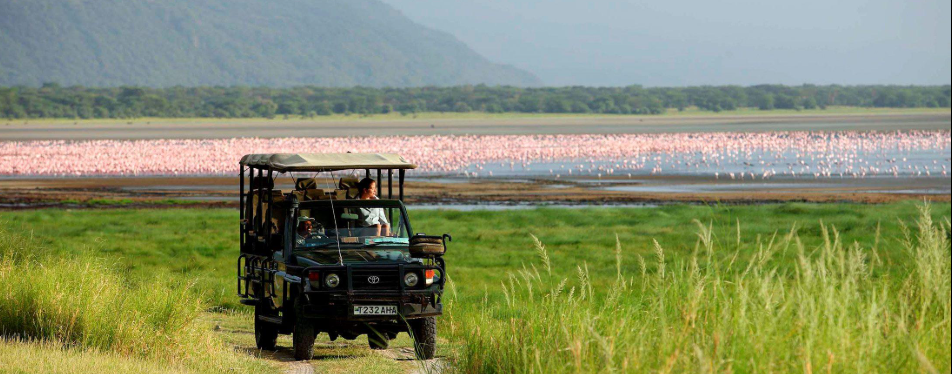
Lake Manyara's alkaline waters can attract lesser and greater flamingos, pelicans, storks, herons and other waterbirds.
Flamingo numbers are seasonal and change with water levels and feeding conditions, so no ethical safari company should guarantee enormous flamingo flocks on a particular date.
Nevertheless, birdwatching remains one of Lake Manyara's strongest attractions.
TANAPA reports hundreds of recorded bird species across the park's wetlands, forests and woodland environments.
The Rift Valley escarpment rises dramatically behind the park.
Its steep cliffs provide a beautiful backdrop for photography, especially around the open plains and lakeshore.
One of the first environments many visitors encounter is Lake Manyara's lush groundwater forest.
Freshwater springs support tall vegetation that creates a striking contrast with Tanzania's more open savannah parks.
Blue monkeys, baboons and forest birds are frequently associated with this environment.
Wildlife sightings vary from day to day, but Lake Manyara supports a surprisingly diverse animal population.
Possible sightings include:
Elephants – Large herds and individual bulls may be encountered through woodland and floodplain habitats.
Giraffes – Often seen browsing acacia trees and moving across open areas.
Buffaloes – Commonly encountered near grasslands, wetlands and water sources.
Zebras – Frequently seen grazing in open sections of the park.
Wildebeest – Often share feeding areas with zebras and other herbivores.
Hippos – Usually associated with pools and wetland areas.
Baboons – Lake Manyara is particularly well known for its large troops of baboons.
Blue monkeys – Most likely encountered within forested habitats.
Impala – Common antelope found in woodland and open areas.
Bushbuck – More secretive and often associated with forested vegetation.
Lions – Present throughout the ecosystem, with Lake Manyara particularly famous for tree-climbing behavior.
Other predators may occasionally be encountered, although sightings are less predictable.
TANAPA lists elephants, lions, buffalo, zebra, wildebeest, giraffe, hippos and numerous primate and bird species among the park's wildlife.
For bird enthusiasts, Lake Manyara can be one of the highlights of northern Tanzania.
More than simply a place to photograph flamingos, the park supports a wide variety of forest, woodland, wetland and migratory birds.
Possible sightings include:
TANAPA reports over 400 recorded bird species on its current wildlife information page, making Manyara an excellent location for birding-focused itineraries.
The definition of "all inclusive" can vary between safari companies.
A comprehensive package should clearly state each service included.
Most Lake Manyara safaris use a 4x4 Land Cruiser with a pop-up roof.
The raised roof provides better visibility for observing and photographing wildlife.
Private safaris give you the entire vehicle, while shared safaris combine several travelers.
Your driver-guide is responsible for much more than driving.
A good guide helps identify wildlife, interpret animal behavior, explain ecosystems and locate promising wildlife areas.
They also coordinate park timing and safari logistics.
National park entrance fees should be included when the package specifically advertises an all-inclusive rate.
Because official tariffs can change, travelers should rely on the current TANAPA tariff rather than old prices found on blogs. TANAPA maintains the official park tariff information online.
Depending on your itinerary, meals may include:
On a day safari, the most common arrangement is a packed picnic lunch enjoyed at a designated location inside or near the park.
For multi-day itineraries, accommodation may be provided near:
Accommodation can range from budget guesthouses to comfortable tented camps and luxury lodges.
TANAPA notes that accommodation is available both around the park and in nearby Mto wa Mbu and Karatu.
Budget accommodation is suitable for travelers prioritizing wildlife experiences over luxury.
It generally offers:
Mid-range lodges are among the most popular options.
Travelers can generally expect:
This category works especially well for couples and families.
A luxury Lake Manyara safari can include beautiful lodges overlooking the Rift Valley or exclusive properties near the park.
Facilities may include:
Your safari guide collects you from your Arusha hotel.
After a safari briefing, drive toward Lake Manyara National Park.
The journey passes through northern Tanzania's countryside before reaching the Great Rift Valley area.
After registration at the park gate, begin your game drive through the groundwater forest.
This section is excellent for spotting baboons, blue monkeys, elephants and forest birds.
Continue toward more open habitats.
Possible sightings include:
Your guide searches for signs of predators, including Lake Manyara's famous lions.
Stop at a designated picnic location for lunch.
Enjoy the surroundings while following park rules regarding wildlife and food.
Continue exploring the lakeshore and wetland areas.
Depending on conditions, you may see hippos, waterbirds and flamingos.
Leave Lake Manyara and drive back toward Arusha.
A one-day safari is particularly suitable for travelers with only one free day before or after Kilimanjaro climbing, Zanzibar or a longer Tanzania journey.
This is one of the strongest short safari combinations.
Drive from Arusha to Lake Manyara.
Spend several hours game driving through forests, woodland and lakeshore areas.
After the game drive, travel to your lodge around Karatu or Mto wa Mbu.
Dinner and overnight at your selected lodge.
After breakfast, drive toward Ngorongoro.
Descend into the crater for a game drive.
Ngorongoro offers excellent opportunities to see large mammals including lions, elephants, buffaloes, zebras and wildebeest.
After lunch and further wildlife viewing, return to Arusha.
This combination gives travelers two dramatically different ecosystems in only two days.
A popular itinerary is:
Explore Tarangire, famous for elephants and baobab landscapes.
Overnight near Karatu or Mto wa Mbu.
Descend into Ngorongoro Crater for wildlife viewing.
Return to your lodge in the evening.
Explore Lake Manyara's forests, floodplains and lakeshore before returning to Arusha.
This itinerary is excellent for travelers seeking a short Northern Circuit experience.
Travelers with additional time should consider a longer safari incorporating Serengeti National Park.
A typical itinerary could be:
Day 1: Arusha → Tarangire
Day 2: Tarangire → Serengeti
Day 3: Serengeti full-day game drive
Day 4: Serengeti → Ngorongoro area
Day 5: Ngorongoro Crater → Lake Manyara/Karatu
Day 6: Lake Manyara → Arusha
This route combines four of northern Tanzania's most famous safari destinations.
Lake Manyara is open year-round, according to TANAPA.
However, the experience changes with the seasons.
This generally corresponds with Tanzania's drier period.
Advantages can include:
Short rains can make the landscape greener.
Birdlife becomes particularly interesting as migratory species begin arriving.
This can be another attractive time to visit northern Tanzania.
Travelers may combine Lake Manyara with Serengeti or the Ndutu region.
The main rainy season creates lush vegetation and dramatic landscapes.
There are generally fewer tourists than during peak safari months.
Some tracks can become wet or temporarily difficult after heavy rainfall, so conditions should be checked locally.
Yes, but their presence and concentration are seasonal.
Flamingos feed according to water chemistry, algae availability and water levels.
They can move between different Rift Valley lakes.
Therefore, avoid safari advertisements promising huge flamingo numbers on specific dates.
TANAPA describes flamingos as a seasonal attraction of the alkaline lake.
Yes, Lake Manyara is famous for them.
However, lions are wild animals and their location changes constantly.
Tree-climbing behavior may occur, but it cannot be guaranteed.
Visitors should treat any tree-climbing lion sighting as a special wildlife encounter rather than the only reason to visit.
Lake Manyara offers more than conventional game drives.
Official TANAPA information lists several possible activities.
The classic Lake Manyara experience.
Game drives allow visitors to explore the groundwater forest, acacia woodland, plains and lakeshore.
Excellent for both casual visitors and specialist birders.
Lake Manyara offers a canopy walkway experience providing an elevated perspective of the forest.
TANAPA describes the walkway as having viewing platforms among the trees, offering opportunities to observe birds, butterflies and monkeys.
Night drives may be possible where authorized.
These offer opportunities to experience the park after sunset and search for nocturnal wildlife.
Such activities should be arranged in advance.
Guided walking opportunities can also be organized subject to park regulations and availability.
Canoeing may be available depending on water level and operational conditions.
Mto wa Mbu is located close to Lake Manyara National Park and can be incorporated into an itinerary.
Travelers interested in local culture may add:
TANAPA itself lists cultural visits around Mto wa Mbu among the experiences associated with Lake Manyara.
This can make an excellent addition when your itinerary allows extra time.
A private safari gives your party an exclusive vehicle and guide.
Advantages include:
Private safaris are especially suitable for honeymooners, families and photographers.
A Lake Manyara safari can cost USD 150–220 per person for a shared day trip from Arusha. A published example of a…
Read articlePlanning a Tanzania safari that combines Lake Manyara National Park and Nyerere National Park is an excellent way to experience the country's…
Read articlePlanning an unforgettable African wildlife adventure from Zanzibar? Understanding the Tanzania safari package Zanzibar price is an important first step toward choosing…
Read articlePlanning an African wildlife adventure? Understanding the group Tanzania safari price is an important step toward choosing an affordable and unforgettable safari…
Read article