Nyerere Tanzania Wildlife Safari Guide
A Nyerere Tanzania wildlife safari can take you from a woodland game drive in the morning to a boat on the Rufiji…
Read articleArusha City - Tanzania
Safari & Travel Tips
September 1, 2026 · 12 min read
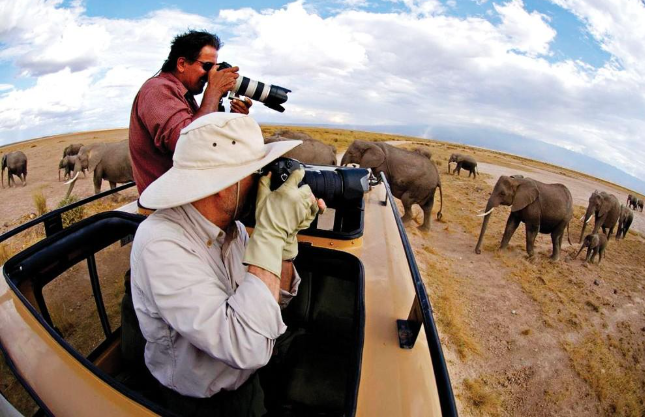
A photography Tanzania safari is designed for travelers who want more than a standard wildlife tour. Instead of rushing from one sighting to another, a photography-focused safari allows extra time with animals, better positioning for light, flexible game-drive schedules, and plenty of space for cameras, long lenses, bean bags, batteries, and other equipment.
The photography Tanzania safari cost price varies greatly depending on the number of days, accommodation level, season, number of photographers sharing the vehicle, parks visited, and whether the itinerary includes specialist photography arrangements.
For most travelers, a dedicated private photography safari typically costs around USD 350–1,500+ per person per day, depending on the level of comfort and exclusivity. Luxury photographic expeditions can cost considerably more.
This guide explains what influences the price, the best destinations for photography, suggested itineraries, equipment considerations, seasons, and ways to obtain better photographic results.
A useful planning range is:
| Safari Style | Approximate Cost Per Person/Day |
|---|---|
| Budget private photography safari | USD 350–500 |
| Mid-range photography safari | USD 450–750 |
| Luxury photography safari | USD 700–1,200 |
| Premium/exclusive photography safari | USD 1,200–1,500+ |
These should be treated as planning estimates rather than fixed prices. Tanzania park charges, accommodation rates and seasonal supplements can change, while private vehicle costs are divided among the travelers sharing the safari.
Government conservation fees are an important part of the overall safari price. TANAPA notes that national-park fees are generally charged according to visitor category and are normally valid for a 24-hour entry period.
A normal safari focuses on seeing as many highlights as possible. A photographic safari focuses on getting the right photograph.
That difference affects the itinerary and the cost.
Professional and enthusiastic photographers normally benefit greatly from a private 4x4.
Instead of having six or seven travelers trying to photograph through the same openings, a smaller photography group can move around the vehicle and choose the best angle.
A private vehicle also allows the guide to remain at a sighting for much longer.
You might spend:
That freedom is one of the biggest advantages of a photography safari.
The following ranges help travelers understand realistic budgets.
Route: Tarangire – Serengeti – Ngorongoro
Estimated price:
USD 1,500–3,000+ per person
A four-day itinerary works for travelers with limited time but still provides excellent opportunities for elephants, predators and landscape photography.
Route: Tarangire – Central Serengeti – Ngorongoro
Estimated price:
USD 1,800–3,800+ per person
Five days gives photographers considerably more flexibility.
Two days in Serengeti are especially valuable because wildlife photography depends heavily on animal behavior and luck.
Route: Tarangire – Serengeti – Serengeti – Ngorongoro
Estimated price:
USD 2,200–4,500+ per person
This is one of the strongest options for first-time wildlife photographers.
You have enough time to revisit promising areas instead of constantly moving between destinations.
Estimated price:
USD 2,500–5,500+ per person
A possible itinerary:
Day 1: Arusha – Tarangire
Day 2: Tarangire – Serengeti
Day 3: Central Serengeti photography
Day 4: Full-day Serengeti photography
Day 5: Serengeti – Ngorongoro Highlands
Day 6: Ngorongoro Crater photography
Day 7: Lake Manyara or Tarangire – Arusha
For serious photographers, spending additional nights in Serengeti is generally more valuable than visiting a different park every day.
A well-organized private Tanzania photography safari can include:
Exact inclusions should always be confirmed in your safari quotation.
Depending on the itinerary, travelers may need to budget separately for:
Drone photography requires particular attention because operating drones in Tanzania involves regulatory approvals rather than simply treating them like normal camera equipment. Current photography guidance also distinguishes ordinary tourist still photography from drone operations.
The Serengeti is arguably Tanzania's most complete wildlife photography destination.
Its enormous open landscapes make it easier to photograph animals against uncluttered backgrounds.
Possible subjects include:
The granite kopjes scattered through the plains can also create excellent compositions, particularly when lions use them as lookout points.
Predators, migration scenes, dramatic landscapes and action photography.
Ngorongoro offers one of Tanzania's highest concentrations of large animals within a relatively small area.
Potential subjects include:
The crater walls also create an impressive backdrop for environmental wildlife portraits.
Tarangire is particularly attractive to photographers who love elephants.
TANAPA highlights Tarangire for its elephant populations and distinctive baobab landscape.
A classic Tarangire composition might include:
Elephants + giant baobab tree + golden evening light.
During the dry season, wildlife concentrations around the Tarangire River can create exceptional photographic opportunities.
For photographers visiting between roughly July and October, Northern Serengeti can be extremely rewarding.
It is particularly famous for possible Mara River migration scenes.
Photographers may encounter:
However, river crossings are natural events and cannot be guaranteed.
A good photography safari may spend several hours waiting patiently near areas where guides believe animals could eventually cross.
From approximately December through March, the southern Serengeti/Ndutu ecosystem becomes particularly important for migration photography.
Around the calving period, photographers may see:
The interaction between predators and migrating herbivores creates outstanding behavioral photography opportunities.
There isn't one single perfect month.
Different seasons offer different photographic advantages.
Excellent for:
Excellent for photographers interested in:
Rain can make some roads challenging, but the scenery can be spectacular.
An excellent transition month.
Vegetation begins drying, wildlife becomes easier to locate and tourist numbers can still be moderate.
Excellent for:
This is also one of Tanzania's busiest tourism periods, so accommodation prices can be higher.
The short rains transform many landscapes.
Photographers may enjoy:
Wildlife photographers often talk about the golden hour.
This usually refers to the period shortly after sunrise and shortly before sunset.
During these times, sunlight is softer and warmer.
Instead of harsh midday shadows, photographers can capture:
For this reason, serious photography safaris frequently start game drives very early.
Wake up and prepare cameras.
Depart as early as park rules and location allow.
Morning light is excellent, and predators may still be active.
Continue following sightings or stop for breakfast.
Photography continues.
Some photographers return to camp during harsh midday light, while others remain in the park.
Lunch.
Afternoon photography session.
Golden-hour photography.
Return to lodge, charge batteries, clean lenses and back up photographs.
For serious photography, private safari arrangements are generally preferable.
Why?
Because photography requires patience.
A shared safari traveler might be satisfied after seeing a lion for five minutes.
A photographer might want to remain there for an hour waiting for the lion to:
With a private safari, those decisions belong primarily to your group.
For serious photographers:
Excellent.
Each photographer has tremendous space.
Still very good.
Good if the vehicle is properly arranged.
Possible, but less ideal for serious professional photography.
Long telephoto lenses require room.
For dedicated photography trips, 2–4 photographers per vehicle is often the most comfortable arrangement.
You don't need professional equipment to enjoy a Tanzania safari.
However, wildlife subjects can often be far from the vehicle.
A useful setup might include:
Mirrorless or DSLR.
Two bodies are helpful because they reduce the need to change lenses in dusty environments.
Popular ranges include:
100–400mm
or
200–600mm
Something around:
70–200mm
is excellent for nearby wildlife.
A lens around:
16–35mm
or
24–70mm
is useful for landscapes, camps and animals close to the vehicle.
Wildlife photographers can take thousands of photographs per day.
Bring more storage than you think you will need.
Consider carrying:
Ideally, create at least two copies of important photographs every evening.
Bring several batteries.
Safari vehicles and many lodges provide charging possibilities, but electricity can occasionally be limited in remote camps.
Useful items include:
Bean bags are extremely useful in safari vehicles.
Instead of attempting to handhold a heavy 500mm or 600mm lens, photographers can place the lens on a padded bean bag attached to the window frame or vehicle railing.
Benefits include:
Lions are among Tanzania's most photographed animals.
However, patience produces stronger images.
Instead of photographing only a sleeping lion, wait for:
Early morning light can be particularly beautiful for lion portraits.
Tarangire and Ngorongoro are both outstanding destinations.
Try compositions that show more than the animal.
For example:
Elephant + baobab tree
or
Elephant + dust + sunset
Environmental portraits often tell a stronger story than extremely tight photographs.
Cheetahs can provide some of safari's most exciting action photography.
Fast shutter speeds are particularly valuable when photographing:
Central Serengeti and Ndutu can be excellent places to search for them.
Leopards are more difficult.
They may hide in trees or dense vegetation.
A knowledgeable guide becomes particularly important because experienced guides recognize:
Patience is essential.
Tanzania isn't only about the Big Five.
Bird photographers can encounter hundreds of fascinating species.
Popular subjects may include:
A 400–600mm lens can be particularly useful for birds.
Often the lowest-cost option.
Accommodation may involve tents, shared facilities and simple campsites.
It allows more of the budget to be devoted to vehicle time and park days.
For many photographers, this provides the best balance.
You receive:
Luxury options may include:
These properties can considerably increase the overall safari price.
For photographers, the most expensive lodge is not always the best lodge.
A simpler camp located inside or very close to a productive wildlife area may be more valuable.
Suppose Camp A costs USD 300 per night but requires a 90-minute drive to productive wildlife.
Camp B costs USD 400 but sits close to prime game-drive territory.
Camp B may give photographers an extra three hours of shooting time each day.
That can be far more valuable than the difference in accommodation price.
Depart Arusha and drive toward Tarangire.
Spend the afternoon photographing elephants, giraffes, zebras and baobab landscapes.
Overnight near Tarangire.
Morning photography before traveling through the Ngorongoro highlands toward Serengeti.
Enter Serengeti and enjoy an afternoon game drive.
Depart early.
Search for:
Remain flexible and follow promising sightings.
A second full day is particularly useful.
If you found a leopard or lion pride on Day 3, you can revisit the location instead of immediately moving to another park.
Another early morning drive.
Continue toward Ngorongoro later in the day.
Descend into the crater early.
Search for elephants, lions, hyenas, buffalo, flamingos and, with luck, black rhino.
Spend several hours photographing the crater ecosystem.
Depending on itinerary design, include another morning drive before returning to Arusha.
You don't necessarily need to sacrifice photographic quality.
Two to four photographers sharing a private vehicle can divide:
This can reduce the per-person rate significantly.
Photography depends more on location and time in the field than expensive rooms.
Accommodation can sometimes be significantly more affordable.
Constantly driving between destinations costs fuel and reduces photography time.
For example, serious photographers may get more value from:
3 nights Serengeti + 1 night Ngorongoro
than visiting five different parks in five days.
It can be, but much of the cost supports access to extraordinary protected ecosystems.
TANAPA confirms that park tariffs include conservation charges and visitor fees that vary by destination and visitor category.
For photographers, Tanzania offers an unusual concentration of opportunities:
For many wildlife photographers, these opportunities justify spending more time in the field rather than choosing the cheapest possible itinerary.
| Feature | Ordinary Safari | Photography Safari |
|---|---|---|
| Vehicle | Often shared | Usually private |
| Time at sightings | Limited | Flexible |
| Departure times | Scheduled | Photography focused |
| Positioning | General viewing | Light/background focused |
| Camera equipment space | Limited | More space |
| Photographer priorities | Secondary | Primary |
| Guide approach | Wildlife viewing | Wildlife + photography |
| Best group size | 4–7 | 1–4 |
The photography Tanzania safari cost price depends less on a single fixed daily rate and more on how the trip is designed.
A traveler wanting a comfortable wildlife holiday may prioritize beautiful accommodation.
A serious photographer should prioritize:
time + vehicle space + location + patient guiding + good light.
For many photographers, a 6–8 day private safari with two to four people per vehicle provides an excellent balance between cost and photographic opportunity.
Serengeti delivers predators and vast landscapes, Ngorongoro provides concentrated wildlife, while Tarangire offers some of Tanzania's finest elephant photography against spectacular baobab scenery.
When comparing photography safari quotations, therefore, don't look only at the final price. Ask how many hours you will actually have behind the camera, how many people will share the vehicle and how close your accommodation is to the wildlife areas you want to photograph.
A Nyerere Tanzania wildlife safari can take you from a woodland game drive in the morning to a boat on the Rufiji…
Read articlePlanning a Tanzania safari that combines Lake Manyara National Park and Nyerere National Park is an excellent way to experience the country's…
Read articleDiscover Tanzania’s untamed wilderness without exceeding your travel budget. A budget Ruaha safari adventure offers incredible wildlife encounters, spectacular landscapes, authentic African…
Read articleA Nyerere Tanzania wildlife safari offers an extraordinary opportunity to discover one of Africa's most spectacular wilderness destinations. From magnificent elephants and…
Read article