

Budget Ngorongoro Crater Safari Holiday
Planning a budget Ngorongoro Crater safari holiday from Arusha? Compare a crater day trip, a two-day Tarangire and Ngorongoro safari, or a…
Read articleArusha City - Tanzania
Safari & Travel Tips
September 1, 2026 · 13 min read
Planning a safari with children, parents, or several generations traveling together requires more than simply choosing a destination. Families need comfort, safety, flexibility, knowledgeable guides, reliable transportation, suitable accommodation, and an itinerary that keeps everyone interested without making the journey exhausting.
Choosing an experienced family Ngorongoro Crater safari operator is therefore one of the most important decisions when organizing a Tanzania family safari.
Ngorongoro Crater is one of Tanzania's most impressive wildlife destinations. Its dramatic volcanic landscape, high concentration of animals, relatively compact game-viewing area, and accessibility from Arusha make it particularly attractive for families.
Within a single crater game drive, travelers may encounter elephants, lions, buffaloes, zebras, wildebeest, hippos, hyenas, gazelles, warthogs, and many different bird species. With some luck, visitors may also see the endangered black rhinoceros.
A professional safari operator helps families experience these attractions comfortably while managing the complicated logistics behind the scenes.
Ngorongoro Crater is often considered one of the best safari destinations in Tanzania for families.
Unlike some wildlife areas where travelers may need several days to cover enormous distances, the crater contains an extraordinary concentration of wildlife within a relatively small area.
This means children can experience exciting wildlife sightings without spending endless hours driving between locations.
The crater itself is approximately 20 kilometers across and forms part of the larger Ngorongoro Conservation Area.
Safari vehicles descend from the crater rim onto the floor, where grasslands, wetlands, forests, springs, and lakes create habitats for thousands of animals.
A typical crater safari allows families to enjoy several hours of game viewing before returning to accommodation around Karatu, Ngorongoro Highlands, or the crater rim.
A professional safari operator manages almost every practical part of the trip.
Depending on the package, services may include:
Instead of arranging each component separately, families can travel with one organized safari company responsible for the entire experience.
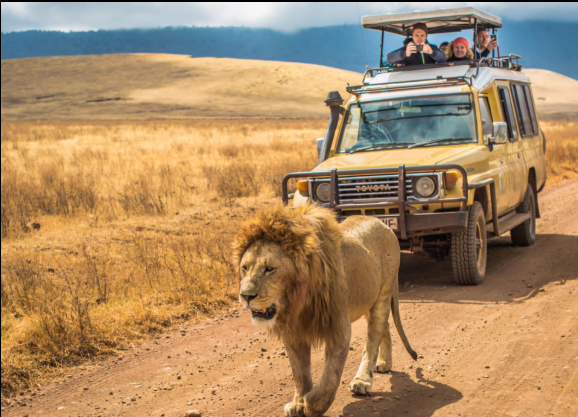
A good family Ngorongoro Crater safari operator normally uses specially prepared 4x4 safari vehicles.
Toyota Land Cruisers are commonly used because they are suitable for Tanzania's safari roads.
Important vehicle features may include:
The pop-up roof allows travelers to stand safely during wildlife viewing while maintaining excellent visibility.
Families should confirm vehicle capacity before booking, particularly if traveling with five or more people.
A safari guide plays a major role in the quality of a family safari.
The best guides do much more than drive.
They explain animal behavior, identify birds, discuss ecosystems, answer questions, locate wildlife, and help children understand what they are seeing.
A family-friendly guide should also be patient.
Children may ask many questions, become tired, require bathroom stops, or become interested in animals adults might overlook.
A good guide adapts the experience accordingly.
For young travelers, safari guides can turn game drives into educational adventures by teaching them how to identify animal tracks, recognize different species, understand predator behavior, and appreciate conservation.
Ngorongoro Crater supports an impressive variety of wildlife.
The crater has a healthy lion population.
Families sometimes encounter prides resting in grasslands or moving near herds of wildebeest and zebra.
Large bull elephants are commonly seen, particularly near forested areas.
Ngorongoro is one of Tanzania's important refuges for black rhinos.
Sightings cannot be guaranteed, but the crater offers one of the better opportunities to see them during a northern Tanzania safari.
Large numbers of wildebeest and zebras live within the crater throughout the year.
Their constant movement creates excellent wildlife viewing opportunities.
African buffaloes can often be found grazing in grasslands or resting near water.
Hippo pools provide a popular stop during crater game drives.
Children often enjoy watching hippos resting in the water.
Spotted hyenas are frequently observed throughout the crater.
Visitors may see them resting, hunting, or competing with other predators.
Ngorongoro also contains abundant birdlife.
Depending on season and location, families may see flamingos, crowned cranes, ostriches, eagles, vultures, secretary birds, and many waterbirds.
A crater safari normally begins early in the morning.
Families staying in Karatu or near the conservation area travel toward the Ngorongoro entrance before continuing toward the crater rim.
From the viewpoint, visitors can enjoy spectacular scenery overlooking the massive caldera.
The safari vehicle then begins the descent into the crater.
Morning hours are particularly rewarding because wildlife is active and temperatures are comfortable.
Your guide searches for animals across different habitats.
The itinerary may include grassland areas, Lerai Forest, hippo pools, wetlands, and Lake Magadi.
Lunch is normally enjoyed at an approved picnic area.
After additional afternoon game viewing, the vehicle climbs back to the crater rim and continues toward the family's accommodation.
Ngorongoro Crater can be visited throughout the year.
Wildlife remains inside the crater during all seasons, making it different from destinations that depend heavily on migration movements.
The dry season provides excellent wildlife viewing.
Animals often gather around water sources, vegetation becomes thinner, and weather is generally comfortable.
This period also overlaps with Tanzania's busiest tourism season.
Short rains can create greener landscapes while visitor numbers may be lower than during peak dry-season months.
These months are generally warm and popular for northern Tanzania safaris.
They are especially attractive when combining Ngorongoro with the Ndutu region during the wildebeest calving season.
The long rainy season creates dramatic green scenery.
Some families prefer this period because safari destinations can feel quieter.
Accommodation selection depends on budget and comfort expectations.
Budget options may include simple lodges, guesthouses, or public camping arrangements.
These are suitable for adventurous families who prioritize wildlife experiences over luxury.
Mid-range lodges are popular with families because they provide comfortable rooms, private bathrooms, restaurants, gardens, and relaxing environments.
Karatu has many excellent mid-range properties.
Luxury accommodation may offer spacious rooms, premium dining, exceptional crater views, swimming pools, fireplaces, personalized service, and high-end amenities.
Some luxury properties are located directly along the crater rim.
Families often choose between staying in Karatu and staying near the crater rim.
Karatu generally provides a wider selection of accommodation and can be more affordable.
The town is surrounded by farms, highlands, and coffee plantations.
Crater-rim accommodation offers spectacular views and quicker access to the crater descent roads.
However, these lodges are generally more expensive.
Your safari operator can recommend the best option based on budget, children's ages, and the rest of the itinerary.
Ngorongoro can be visited as a short trip or included in a longer Tanzania safari.
Day 1: Arusha to Tarangire National Park
Enjoy elephants, baobab trees, giraffes, zebras, antelopes, and predators before overnighting near Karatu.
Day 2: Ngorongoro Crater
Descend into the crater for wildlife viewing before returning to Arusha.
This itinerary is ideal for families with limited time.
Day 1: Arusha to Serengeti
Travel through the Ngorongoro Highlands toward Serengeti National Park.
Day 2: Serengeti National Park
Spend a full day exploring the Serengeti.
Day 3: Ngorongoro Crater
Enjoy a crater game drive before returning toward Arusha.
A comfortable family itinerary may include:
Day 1: Tarangire National Park
Day 2: Serengeti National Park
Day 3: Serengeti to Ngorongoro
Day 4: Ngorongoro Crater and return to Arusha
Families wanting a more relaxed pace can combine:
Additional nights allow children to rest between long travel days.
Ngorongoro and Serengeti are commonly combined because the destinations connect geographically.
Serengeti provides vast open landscapes and extensive wildlife viewing, while Ngorongoro offers concentrated wildlife inside a spectacular volcanic crater.
Together, they create one of Tanzania's most complete safari experiences.
Families with at least four or five safari days can usually enjoy both destinations comfortably.
Tarangire is another excellent family destination.
The park is known for large elephant populations, ancient baobab trees, seasonal wildlife concentrations, and beautiful landscapes.
It is also relatively close to Arusha.
A Tarangire and Ngorongoro itinerary is ideal for families who want a short safari without the longer drive to Serengeti.
Children can have an unforgettable experience in Ngorongoro.
However, parents should consider several practical factors.
Young children may struggle with very long game drives.
A flexible itinerary with regular breaks is therefore recommended.
Families should also pack:
Temperatures around the crater rim can be surprisingly cold, especially early in the morning.
Layered clothing is strongly recommended.
Professional safari operators prioritize guest safety.
Families should always follow instructions from their guide.
Wild animals should never be approached outside designated areas.
Travelers must remain inside the vehicle unless the guide confirms that exiting is permitted.
Children should be supervised at picnic areas, camps, and lodges because wildlife may occasionally move through safari properties.
Safari packages commonly include meals.
Depending on accommodation and itinerary, families may receive breakfast, packed lunch, and dinner.
Dietary requests can often be arranged in advance.
Families requiring vegetarian, vegan, halal, gluten-free, or allergy-sensitive meals should provide this information during the booking process.
Bringing a few familiar snacks for children can also be helpful.
Safari prices vary considerably.
Major factors include:
Private safaris can become more economical per person when several family members share one safari vehicle.
For example, a family of four may divide vehicle and guide costs across more travelers than a couple.
Families should request a detailed quotation that clearly explains what is included and excluded.
A well-designed Ngorongoro family safari package commonly includes:
Optional extras may include:
Always review inclusions carefully before making payment.
Before selecting an operator, consider several important factors.
A Tanzania-based safari company often has strong knowledge of road conditions, park regulations, accommodation, wildlife seasons, and local logistics.
The operator should answer questions clearly and provide accurate information.
Families have different needs.
A good safari company should be able to adjust pacing, accommodation, activities, and travel times.
Ask whether guides are professionally trained and experienced with family travelers.
Your quotation should clearly explain inclusions and exclusions.
Well-maintained vehicles are extremely important because safari routes include rough and unpaved roads.
Operators should provide support throughout the safari in case plans need adjustment.
Before booking, families may want to ask:
Is the safari private or shared?
How many people will travel in the vehicle?
Are all park fees included?
Is the Ngorongoro crater descent fee included?
What accommodation will we use?
Are rooms suitable for families?
Are meals included?
Can you accommodate dietary requirements?
Are airport transfers included?
What type of safari vehicle will we use?
Will every traveler have a window seat?
Can the itinerary be adjusted for children?
These questions help prevent misunderstandings and ensure expectations match the safari package.
Families should discuss sleeping arrangements before confirming accommodation.
Available arrangements may include:
Availability differs between lodges.
Families traveling during high season should book early because suitable family rooms are limited at many properties.
Private safaris provide valuable freedom.
Families can spend more time at sightings that interest them and move on quickly from those that do not.
Children may want to watch elephants for thirty minutes while adults might prefer photographing lions.
A private guide can balance these interests.
Private vehicles also make bathroom breaks, snack stops, photography, and seating arrangements easier.
Ngorongoro provides excellent photography opportunities.
A camera with a telephoto lens is useful, but modern smartphones can also capture impressive landscapes and nearby wildlife.
Binoculars allow children to observe distant rhinos, birds, and predators.
Families interested in photography should tell their guide because vehicle positioning can sometimes be adjusted to improve visibility while respecting park rules.
The Ngorongoro Conservation Area is also home to Maasai communities.
Some itineraries include optional cultural visits where travelers can learn about traditional lifestyles, livestock, homes, clothing, and customs.
Families should choose responsible cultural experiences that respect local communities and provide genuine benefits to residents.
Recommended items include:
Neutral-colored clothing is generally comfortable for safari travel.
Because crater mornings can be cold, warm layers are important even when daytime temperatures are pleasant.
A single day can be enough to experience Ngorongoro Crater itself.
However, most families combine the crater with other northern Tanzania attractions.
For a comfortable first safari, four to six days is an excellent range.
This allows travelers to explore several wildlife ecosystems without rushing excessively.
Families with younger children may benefit from adding extra nights and reducing daily driving time.
Yes.
Ngorongoro is particularly suitable for first-time visitors because wildlife density is high and sightings can happen relatively quickly.
The landscape is also dramatic and easy to appreciate even for travelers who have never experienced Africa before.
Combining Ngorongoro with Tarangire and Serengeti gives first-time visitors an excellent introduction to Tanzania's wildlife.
Most Ngorongoro safaris begin in Arusha.
Arusha is Tanzania's main gateway for northern circuit safaris.
Families often arrive through Kilimanjaro International Airport or Arusha Airport.
After an overnight stay, the safari normally begins the following morning.
The drive from Arusha toward the Ngorongoro area passes through towns, farmland, Rift Valley scenery, and the highlands.
Your safari operator normally coordinates accommodation pickup and transportation.
Yes.
Many travelers combine a Zanzibar beach holiday with a northern Tanzania safari.
Domestic flights connect Zanzibar with Arusha and Kilimanjaro.
A common family holiday might include several safari days followed by relaxation on Zanzibar's beaches.
Your safari operator may be able to coordinate domestic flights, airport transfers, safari arrangements, and Zanzibar extensions as part of one itinerary.
A safari can teach children valuable lessons about wildlife conservation.
Families should avoid littering, feeding animals, making excessive noise near wildlife, or encouraging guides to break park regulations for photographs.
Responsible safari tourism contributes to protected areas, conservation programs, and local employment.
Parents can use the experience to teach children why protecting wildlife and natural habitats matters.
A family safari should be exciting for children, relaxing for parents, and memorable for everyone.
Working with an experienced family Ngorongoro Crater safari operator makes planning much easier.
From comfortable safari vehicles and knowledgeable guides to family-friendly accommodation and carefully planned game drives, the right operator manages the logistics while your family focuses on experiencing Tanzania's incredible wildlife.
Whether you want a short two-day safari, a private Ngorongoro and Tarangire adventure, or a longer journey combining Serengeti, Ngorongoro, and Zanzibar, your itinerary can be customized according to your family's travel dates, budget, accommodation preferences, and children's ages.
Ngorongoro Crater offers something extraordinary for every generation: dramatic landscapes, unforgettable wildlife encounters, fascinating conservation stories, and the shared experience of discovering one of Africa's greatest natural environments together.
Planning a budget Ngorongoro Crater safari holiday from Arusha? Compare a crater day trip, a two-day Tarangire and Ngorongoro safari, or a…
Read articleA Lake Manyara safari can cost USD 150–220 per person for a shared day trip from Arusha. A published example of a…
Read articleA Tanzania safari from Zanzibar can mean a short mainland trip during your beach holiday or a complete package with flights, game…
Read articleLooking for a group Tanzania safari price from Kilipath African Safaris? A published example for our four-day shared camping safari through Tarangire,…
Read article

