

Budget Ngorongoro Crater Safari Holiday
Planning a budget Ngorongoro Crater safari holiday from Arusha? Compare a crater day trip, a two-day Tarangire and Ngorongoro safari, or a…
Read articleArusha City - Tanzania
Safari & Travel Tips
September 1, 2026 · 13 min read
A Lake Manyara safari Serengeti trip combines two remarkably different wildlife destinations in northern Tanzania. Lake Manyara National Park is famous for its beautiful groundwater forest, abundant birdlife, elephants, monkeys, and dramatic Rift Valley scenery. Serengeti National Park offers immense savannah plains, large predator populations, and the world-famous Great Wildebeest Migration.
Visiting both parks gives travelers a varied safari experience. You can explore forests, wetlands, lakeshores, acacia woodland, volcanic highlands, and open grasslands during one carefully planned journey. The route can also be combined with Tarangire National Park and the Ngorongoro Crater to create a complete Northern Circuit safari.
This guide explains the best routes, recommended duration, wildlife, accommodations, transportation, seasonal conditions, packing requirements, and frequently asked questions about planning a Lake Manyara and Serengeti safari.
Lake Manyara and Serengeti offer contrasting landscapes and wildlife experiences. Combining them makes your safari more diverse than visiting only one national park.
Lake Manyara is relatively compact. Its habitats change quickly as you drive through the park. After entering through the northern gate, you pass beneath a dense groundwater forest before reaching open floodplains, acacia woodland, marshes, and the lakeshore. This variety supports elephants, giraffes, zebras, buffaloes, hippos, baboons, monkeys, antelopes, and hundreds of bird species.
Serengeti is much larger. Its name comes from a Maasai word commonly interpreted as “endless plains.” The national park covers approximately 14,750 square kilometers and forms part of the wider Serengeti-Mara ecosystem. It supports lions, leopards, cheetahs, elephants, buffaloes, giraffes, hyenas, crocodiles, and enormous seasonal herds of wildebeest and zebra.
A combined trip gives travelers opportunities to experience:
The trip is particularly suitable for first-time safari travelers who want to experience several types of Tanzanian wilderness in one itinerary.
Lake Manyara National Park is located in northern Tanzania, approximately 120 kilometers from Arusha. Driving from Arusha generally takes around two to three hours, depending on traffic, road conditions, and the location of your accommodation.
The park sits beneath the Great Rift Valley escarpment, close to the town of Mto wa Mbu. This location makes Lake Manyara a convenient first or final destination on a Northern Circuit safari.
Serengeti National Park lies northwest of Lake Manyara. Most road itineraries travel through the Ngorongoro Conservation Area before descending onto the Serengeti plains. The drive from the Lake Manyara or Karatu area to central Serengeti can take approximately five to six hours, including stops, entrance procedures, and wildlife viewing along the way.
Although this is a relatively long transfer, the journey is scenic. Travelers pass through the Ngorongoro highlands, Maasai grazing areas, and wide plains before reaching Serengeti.
A minimum of four days is recommended for a Lake Manyara safari Serengeti trip. However, five or six days provide a more comfortable experience and allow additional time for wildlife viewing.
A four-day itinerary is suitable for travelers with limited time.
Day 1: Arusha to Lake Manyara National Park
Depart from Arusha in the morning and drive to Lake Manyara. Spend the afternoon exploring the forest, floodplains, hippo area, and lakeshore. Stay overnight near Mto wa Mbu or Karatu.
Day 2: Lake Manyara area to Serengeti
Travel through the Ngorongoro Conservation Area toward Serengeti. Enjoy wildlife viewing after entering the park and continue to your lodge or camp.
Day 3: Full-day Serengeti safari
Spend the entire day exploring Serengeti. Your guide will select the most productive areas according to wildlife movements and recent sightings.
Day 4: Serengeti to Arusha
Enjoy an early game drive before beginning the journey back to Arusha. This can be a long driving day. A flight from Serengeti to Arusha may be arranged for travelers who prefer to reduce road travel.
A five-day itinerary offers a better balance between driving and game viewing.
Day 1: Arusha to Lake Manyara
Day 2: Lake Manyara or Karatu to Serengeti
Day 3: Full-day Serengeti game drive
Day 4: Additional Serengeti game drive
Day 5: Return to Arusha by road or scheduled flight
The additional day in Serengeti allows you to explore different habitats without rushing. It can be particularly valuable when searching for leopards, cheetahs, lions, or seasonal migration herds.
A six-day itinerary can include Lake Manyara, Serengeti, and Ngorongoro Crater.
Day 1: Arusha to Lake Manyara
Day 2: Lake Manyara area to Serengeti
Day 3: Full-day Serengeti safari
Day 4: Serengeti game drive and transfer toward Ngorongoro
Day 5: Ngorongoro Crater safari and overnight in Karatu
Day 6: Return to Arusha
This is one of the most rewarding itineraries for first-time visitors because it combines three very different ecosystems.
Lake Manyara may be smaller than Serengeti, but its varied habitats make every game drive interesting.
The park is known for its elephants, which are sometimes seen feeding in the forest or walking through open woodland. Because of the vegetation, sightings can feel close and intimate.
Large troops of olive baboons are frequently seen near the park entrance and inside the groundwater forest. Blue monkeys also inhabit the forest canopy. Travelers should keep vehicle windows and doors secure and avoid feeding any wildlife.
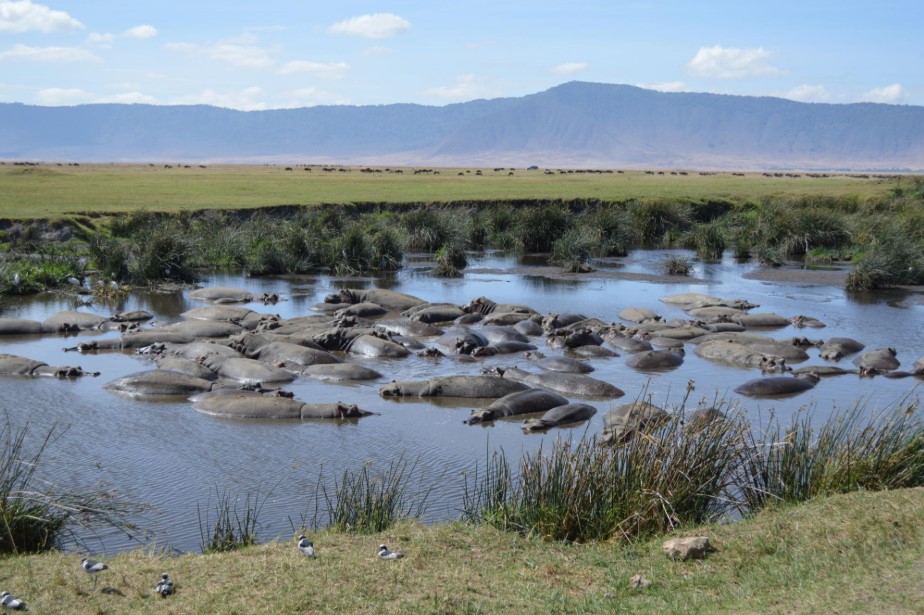
Hippos can usually be observed around suitable wetland areas. Their visibility depends on water levels and seasonal conditions.
Giraffes are often seen in woodland and open areas, while zebras and buffaloes may gather on the floodplains. Impalas, warthogs, wildebeest and other herbivores are also present.
Lake Manyara is widely associated with tree-climbing lions. However, these animals are not guaranteed. Lions may rest in trees to escape insects, avoid wet ground, enjoy a breeze, or gain a better view of their surroundings.
Finding one should be considered a special sighting rather than an expectation.
Lake Manyara is an excellent birdwatching destination. Depending on the season and water conditions, visitors may see:
Flamingo numbers change according to water depth, food availability, alkalinity, and regional movement. Large concentrations should never be guaranteed.
Serengeti is one of Africa’s most celebrated wildlife destinations. While the Great Migration attracts international attention, the park also has exceptional resident wildlife throughout the year.
Serengeti supports a substantial lion population. Prides may be observed resting on rocks, hunting on the plains, protecting cubs, or feeding after a successful hunt.
Leopards are more elusive. They are frequently associated with riverine forest, kopjes, and large trees. An experienced guide will search for tracks, alarm calls, and vehicles gathering near a possible sighting.
The open plains provide excellent cheetah habitat. Cheetahs depend on speed and clear visibility, so they are often found in grassland areas where gazelles are abundant.
Elephants occur in many areas of Serengeti, especially where woodland and permanent water are available. Giraffes are common and can often be photographed against the open horizon.
Spotted hyenas are widespread. Travelers may also encounter jackals, servals, mongooses and, with considerable luck, caracals.
The Great Migration is a continuous movement of wildebeest, zebras, and gazelles through the Serengeti-Mara ecosystem. The animals move in response to rainfall, grazing conditions, and available water.
General seasonal patterns include:
These periods are approximate. Wildlife does not follow a fixed calendar, and rainfall can change migration timing.
Lake Manyara and Serengeti can be visited throughout the year, but the best period depends on your interests.
The long dry season usually provides comfortable safari conditions and easier wildlife viewing around water sources. Vegetation becomes thinner, and many roads are relatively dry.
This is also a popular travel season, so accommodations can fill quickly and prices may be higher. Northern Serengeti becomes especially attractive when migration herds move into the region.
This period is excellent for visiting southern Serengeti and Ndutu. The plains become greener, migratory birds arrive, and the wildebeest calving season attracts predators.
Lake Manyara is also greener during this period, although occasional rain is possible.
These months usually receive heavier rainfall. The parks become green and beautiful, visitor numbers decrease, and some accommodations offer seasonal rates.
However, certain roads may become muddy, wildlife can be more dispersed, and a few seasonal camps may close. Travelers who do not mind rain may enjoy quieter game drives.
November often brings short rains. Conditions vary from year to year, but the landscape begins turning green. This can be a rewarding period for photography and birdwatching.
Travelers frequently compare Lake Manyara with Tarangire because both parks are located relatively close to Arusha.
Lake Manyara is ideal for:
Tarangire is ideal for:
Neither park is universally better. The right choice depends on the season, itinerary, wildlife priorities, and recent conditions. A longer safari can include both.
Both options can work, but they offer different levels of flexibility.
A private safari includes a dedicated vehicle and guide for your party. It is particularly suitable for couples, families, photographers, honeymooners, and travelers with specific interests.
Advantages include:
A private itinerary is normally the best choice when visiting seasonal migration areas such as Ndutu or northern Serengeti.
A shared safari allows travelers to join other guests and divide certain transportation costs. It can be ideal for solo travelers and budget-conscious visitors.
Group departures generally follow a fixed route and schedule. Participants should be prepared to cooperate with the group regarding departure times, stops, and game-viewing decisions.
Before booking, ask about:
Most safaris use a specially modified 4x4 Land Cruiser with a pop-up roof. The raised roof allows guests to stand safely during wildlife viewing and photography.
Depending on the operator and vehicle, facilities may include:
Northern Tanzania’s safari roads can be rough, dusty, muddy, or corrugated. Travelers should expect some long and bumpy drives, especially when traveling between Lake Manyara, Ngorongoro, and Serengeti.
A flying safari can reduce driving time. Scheduled flights operate between airstrips in Serengeti and airports near Arusha or Kilimanjaro, subject to timetable and availability.
Accommodation is available in several categories.
Public camping is one of the most affordable ways to experience the parks. Safari packages may provide tents, mattresses, sleeping bags, meals, and a safari chef.
Bathroom facilities are shared, and hot water or electricity may be limited. Camping offers an adventurous experience with the sounds of nature nearby.
Mid-range properties normally provide private rooms or permanent safari tents with beds, private bathrooms, and restaurant service. They offer a good balance between comfort and price.
Luxury camps may provide spacious tented suites, premium dining, attentive service, elegant lounges, and excellent wilderness locations. Some properties include swimming pools, private decks, or special honeymoon arrangements.
Near Lake Manyara, travelers often stay around Mto wa Mbu, Karatu, or the Rift Valley escarpment.
In Serengeti, the best location depends on the season:
Accommodation inside or close to the park reduces daily transfer time but may cost more than properties outside protected areas.
A properly described package commonly includes:
Potential exclusions include:
Travelers should request a written inclusion and exclusion list before paying a deposit.
The price of a Lake Manyara and Serengeti safari depends on several factors:
Private safaris usually become more economical per person when vehicle costs are shared by several travelers. Solo travelers generally pay more for a private vehicle and single accommodation.
When comparing quotations, do not judge by price alone. Confirm whether park fees, accommodation, meals, Ngorongoro transit fees, taxes, and transfers are included. An inexpensive quotation may exclude significant services.
Most organized safaris include breakfast, lunch, and dinner. Lunch may be served as a picnic inside the park or as a hot meal, depending on the itinerary and operator.
Vegetarian, vegan, halal, gluten-free, and other dietary requirements can normally be accommodated when communicated in advance.
Travelers should provide clear information about allergies. Serious allergies should be discussed directly with the operator and each accommodation before arrival.
Pack light, practical clothing in neutral colors such as khaki, beige, brown, olive, or grey.
Recommended items include:
Serengeti mornings and evenings can be cold, while the Ngorongoro highlands are considerably cooler than the plains. Layered clothing is the most practical choice.
Avoid bringing excessive luggage, especially when using a shared vehicle or domestic flight. Small aircraft often apply strict baggage limitations and may require soft-sided bags.
Yes. Lake Manyara and Serengeti can provide an excellent family safari.
Lake Manyara’s varied landscape and shorter driving circuits can be enjoyable for children. Serengeti offers memorable sightings of lions, elephants, giraffes, zebras, and other familiar animals.
Families should consider:
Parents should supervise children at all times. Safari camps are often unfenced, and wild animals may pass through accommodation areas.
Yes. Ngorongoro Crater is naturally positioned between the Lake Manyara area and Serengeti, making it an excellent addition.
The crater contains grassland, forest, marshes, and a seasonal lake within a vast volcanic caldera. Wildlife can include lions, elephants, buffaloes, zebras, wildebeest, hippos, hyenas, and, with luck, black rhinoceroses.
Adding Ngorongoro normally requires at least one additional day. A five- or six-day itinerary covering Lake Manyara, Serengeti, and Ngorongoro is recommended.
Yes. Many travelers combine a northern Tanzania safari with a Zanzibar beach holiday.
After the safari, you can fly from Arusha, Kilimanjaro, or a Serengeti airstrip to Zanzibar. A typical combination includes four to seven safari days followed by four to seven nights in Zanzibar.
Possible Zanzibar experiences include:
Domestic flights should be booked early during popular travel months.
A Lake Manyara safari Serengeti trip is an outstanding way to experience the diversity of northern Tanzania. Lake Manyara offers lush forest, bird-rich wetlands, primates, elephants, and magnificent Rift Valley scenery. Serengeti delivers expansive plains, exceptional predators, resident wildlife, and the seasonal spectacle of the Great Migration.
For a rewarding and unhurried journey, allow at least five days. Add Ngorongoro Crater if time and budget permit, and choose accommodations according to your preferred balance of adventure, comfort, and cost.
Whether you travel as a couple, family, group, or solo visitor, careful planning will help you enjoy smoother transfers, better wildlife-viewing time, and a memorable Tanzania safari.
Planning a budget Ngorongoro Crater safari holiday from Arusha? Compare a crater day trip, a two-day Tarangire and Ngorongoro safari, or a…
Read articleA Tanzania safari from Zanzibar can mean a short mainland trip during your beach holiday or a complete package with flights, game…
Read articleLooking for a group Tanzania safari price from Kilipath African Safaris? A published example for our four-day shared camping safari through Tarangire,…
Read articlePair game drives on Tanzania’s mainland with a few days on Zanzibar’s coast. With Kilipath African Safaris, you can start in Arusha…
Read article

