

Budget Ngorongoro Crater Safari Holiday
Planning a budget Ngorongoro Crater safari holiday from Arusha? Compare a crater day trip, a two-day Tarangire and Ngorongoro safari, or a…
Read articleArusha City - Tanzania
Safari & Travel Tips
September 1, 2026 · 14 min read
A Serengeti safari Ngorongoro adventure is one of the most rewarding wildlife experiences you can enjoy in Tanzania. Combining the vast plains of Serengeti National Park with the spectacular Ngorongoro Crater gives travelers the opportunity to experience two of Africa's most famous safari destinations in one unforgettable journey.
From watching lions resting beneath acacia trees to seeing thousands of wildebeest crossing the Serengeti plains, every day of this safari brings something different. The adventure becomes even more impressive when you descend into the Ngorongoro Crater, where an extraordinary concentration of wildlife lives within one of the world's largest intact volcanic calderas.
Whether you are planning your first African safari, a honeymoon, a family holiday, a photography tour, or a private wildlife adventure, combining Serengeti and Ngorongoro offers an excellent introduction to Tanzania's Northern Safari Circuit.
This complete guide explains what to expect, the best time to travel, recommended itineraries, wildlife highlights, accommodation options, safari costs, transportation, packing tips, and practical advice for planning your journey.
Serengeti National Park and the Ngorongoro Conservation Area are located relatively close to each other, making them perfect destinations to combine during one safari.
The Serengeti is famous for its enormous open plains, large predator population, and the Great Wildebeest Migration. Ngorongoro Crater, meanwhile, provides a completely different safari environment where animals live within a spectacular volcanic landscape.
Combining the two destinations gives travelers greater wildlife diversity and more varied scenery.
During a typical safari, you may experience open grasslands, acacia woodland, volcanic highlands, crater forests, seasonal rivers, wetlands, and dramatic escarpments.
This variety makes a Serengeti and Ngorongoro safari particularly attractive to travelers who want to experience several different African landscapes within a relatively short trip.
Serengeti National Park is one of Africa's most famous protected wildlife areas.
The name Serengeti comes from the Maasai word often translated as "endless plains," which perfectly describes the landscape visitors see when entering the park.
Covering approximately 14,750 square kilometers, the Serengeti contains several ecosystems supporting an extraordinary variety of animals.
Visitors can explore different regions including Central Serengeti, Western Serengeti, Northern Serengeti, and the southern plains surrounding Ndutu during the migration season.
The Serengeti is one of the best places in Africa for predator sightings.
Animals commonly seen include:
Bird enthusiasts can also find hundreds of bird species throughout the ecosystem.
Depending on the season and location, visitors may encounter enormous herds of wildebeest and zebra as they move through the Serengeti ecosystem.
One of the biggest reasons travelers plan a Serengeti safari is the Great Wildebeest Migration.
Approximately two million wildebeest, zebras, and gazelles move through the Serengeti-Mara ecosystem throughout the year in search of fresh grazing and water.
The migration does not happen in one single location.
The animals continuously move according to rainfall patterns and food availability.
During this period, enormous herds gather around Ndutu and the southern Serengeti plains.
January and February are particularly famous for the calving season.
Thousands of wildebeest calves may be born during a relatively short period.
The abundance of young animals attracts predators including lions, cheetahs, hyenas, and leopards.
This makes the Ndutu season especially popular with wildlife photographers.
As the southern plains become drier, herds begin moving northwest.
Large groups may pass through Central Serengeti toward the Western Corridor.
Travelers visiting during this period can sometimes experience enormous concentrations of animals.
The migration gradually moves through the Western Corridor.
River crossings may occur depending on seasonal conditions.
During these months, many herds reach Northern Serengeti.
This is the famous Mara River crossing season.
Watching thousands of wildebeest attempt to cross a crocodile-filled river is one of Africa's most dramatic wildlife spectacles.
However, wildlife migration is natural and cannot be guaranteed on a particular day.
When seasonal rains return, the migration gradually moves south toward Central Serengeti, Ndutu, and the southern plains.
The cycle then begins again.
After experiencing the endless plains of the Serengeti, traveling to Ngorongoro provides an entirely different safari environment.
Ngorongoro Crater was formed millions of years ago after a massive volcano collapsed.
Today it is one of the world's largest intact volcanic calderas.
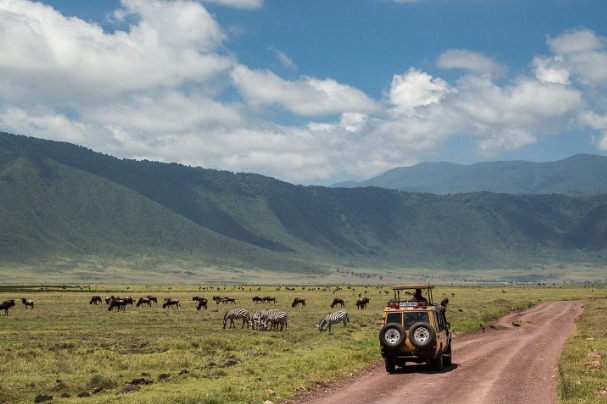
The crater measures roughly 20 kilometers across and contains grasslands, forests, wetlands, springs, and Lake Magadi.
Because water and grazing are available throughout much of the year, large numbers of animals live inside the crater.
Ngorongoro Crater is famous for its high wildlife density.
During a crater safari you may see:
The black rhino is especially important because Ngorongoro is one of the better locations in Tanzania to potentially see this endangered species.
Sightings are never guaranteed, but having the opportunity to encounter a rhino makes the crater particularly exciting for travelers hoping to see the African Big Five.
A Serengeti and Ngorongoro safari provides one of Tanzania's strongest opportunities to search for the Big Five.
The traditional Big Five are:
Lions, elephants, and buffaloes are regularly encountered in both areas.
Leopards can sometimes be seen resting in trees or moving through woodland areas, especially around Central Serengeti.
Black rhinos are rarer, but Ngorongoro Crater offers travelers an important opportunity to see them.
Safari sightings remain dependent on wildlife movements, weather, and luck.
A minimum of three days can provide an introduction to Serengeti and Ngorongoro.
However, four or five days usually offers a more comfortable and rewarding experience.
Longer trips allow more time for wildlife viewing and reduce the amount of driving each day.
A short itinerary may include:
Day 1: Arusha to Serengeti
Day 2: Serengeti National Park
Day 3: Ngorongoro Crater and return to Arusha
This option works well for travelers with limited time.
However, driving distances can be long.
A four-day safari offers additional time inside Serengeti.
A possible itinerary is:
Day 1: Arusha to Serengeti
Day 2: Full-day Serengeti safari
Day 3: Serengeti to Ngorongoro
Day 4: Ngorongoro Crater and return to Arusha
This is one of the most popular options.
Travelers who want a slower experience may choose:
Day 1: Arusha to Serengeti
Day 2: Full-day Serengeti
Day 3: Full-day Serengeti
Day 4: Serengeti to Ngorongoro
Day 5: Ngorongoro Crater and return to Arusha
Extra safari time increases the opportunity for wildlife sightings and photography.
Your safari begins in Arusha, the main gateway to Tanzania's Northern Safari Circuit.
After breakfast, you meet your professional safari guide and begin driving toward Serengeti National Park.
The journey typically passes through the Ngorongoro highlands.
You may stop at viewpoints along the route before continuing toward the Serengeti.
As the road descends toward the plains, the landscape gradually changes.
The forests and agricultural highlands disappear and enormous grasslands appear ahead.
After entering Serengeti National Park, your first game drive begins.
Possible sightings include zebras, giraffes, elephants, antelopes, lions, and other animals.
You continue exploring before reaching your camp or lodge for dinner and overnight.
After breakfast, begin a full-day safari across the Serengeti.
Early morning is often an excellent time for wildlife activity.
Predators may still be hunting while many herbivores begin moving toward feeding areas.
Your safari guide uses experience, wildlife tracks, radio communication, and knowledge of animal behavior to search for interesting sightings.
Possible encounters include lions, cheetahs, elephants, giraffes, buffaloes, hippos, and perhaps leopards.
During migration season, your guide may travel toward areas where wildebeest herds are concentrated.
Lunch is normally enjoyed at a picnic area or arranged as a packed safari lunch.
The afternoon continues with more game viewing before returning to your accommodation.
Enjoy another morning game drive in Serengeti.
Morning light is excellent for photography, while cooler temperatures often encourage greater animal activity.
After exploring the park, begin driving toward the Ngorongoro Conservation Area.
You may continue seeing wildlife along the journey.
Eventually you reach the Ngorongoro highlands.
Depending on your accommodation, you may stay near the crater rim or around Karatu.
Dinner and overnight follow.
Wake early and drive toward Ngorongoro Crater.
After completing park formalities, descend approximately 600 meters onto the crater floor.
The scenery is spectacular.
Large numbers of animals may be visible almost immediately.
You might encounter zebra and wildebeest herds while hyenas patrol the grasslands.
Lions frequently rest near roads or around areas where prey animals gather.
Elephants are often found near woodland sections of the crater.
The crater is also famous for its population of black rhino, although sightings depend on their location.
After several hours exploring Ngorongoro, enjoy lunch at a designated picnic area.
Later, ascend the crater wall and begin your journey back toward Arusha.
Both Serengeti and Ngorongoro can be visited throughout the year.
The best travel period depends on your wildlife interests, budget, and preferred experience.
These months are excellent for visiting southern Serengeti and Ndutu.
The wildebeest calving season usually attracts significant predator activity.
The landscape can be green and beautiful.
Wildlife remains strong around the southern plains, although rainfall may begin increasing.
These months generally receive more rainfall.
The advantage is fewer visitors and beautifully green landscapes.
Some safari lodges may offer lower seasonal prices.
The dry season begins.
Wildlife becomes easier to locate as animals gather near permanent water sources.
These months are considered peak safari season.
Weather is generally dry and wildlife viewing is excellent.
Northern Serengeti becomes particularly popular because of the Mara River migration crossings.
Short rains may begin.
The plains become greener and the migration starts moving south again.
This is another excellent month for safari travel.
Migration herds often begin gathering around southern Serengeti and Ndutu.
Each safari season offers different advantages.
The dry season typically runs between June and October.
Advantages include:
The disadvantage is that prices may be higher and popular safari locations can become busy.
The green season generally occurs from November through May, although weather patterns vary.
Benefits include:
Travelers can choose between several types of accommodation.
Budget camping is ideal for travelers looking for an authentic safari experience at a lower price.
Public campsites typically provide basic facilities including shared toilets and showers.
Safari tents, mattresses, sleeping bags, meals, and camping equipment can normally be organized by your safari operator.
Sleeping inside a tent while hearing wildlife sounds around camp can be one of the most memorable parts of the journey.
Mid-range tented camps provide greater comfort while maintaining a strong connection with nature.
Rooms normally include:
Tented camps are especially popular in Serengeti because they provide comfortable accommodation inside or near wildlife areas.
Safari lodges provide permanent rooms and more extensive facilities.
Depending on the lodge, travelers may enjoy restaurants, swimming pools, bars, gardens, Wi-Fi, and scenic viewpoints.
Luxury accommodations provide a more exclusive safari experience.
Possible features include:
Luxury camps are especially popular for honeymoons and special celebrations.
Travelers can choose between private and shared safari options.
A private safari gives you your own safari vehicle and professional guide.
Advantages include:
Private safaris are excellent for couples, honeymooners, photographers, families, and travelers wanting maximum flexibility.
A shared safari can significantly reduce the cost.
Travelers share the vehicle with other safari guests following a similar itinerary.
Group safaris are popular among:
Shared safari routes usually follow fixed schedules, while private trips offer greater flexibility.
Most Serengeti and Ngorongoro safaris use specially modified 4x4 Toyota Land Cruisers.
Typical safari vehicles include:
The pop-up roof allows travelers to stand safely while photographing wildlife.
Safari prices vary considerably.
The total cost depends on several factors including:
Budget camping safaris are normally the most affordable.
Mid-range lodge and tented camp safaris cost more because accommodation standards are higher.
Luxury safaris may include premium camps, private guides, domestic flights, and additional services.
Traveling with two or more people can reduce the per-person price of a private safari because vehicle costs are divided between travelers.
A Serengeti and Ngorongoro safari package commonly includes:
Exact inclusions vary between operators, so always review your safari quotation carefully.
Depending on your package, exclusions may include:
A hot-air balloon safari is one of the most popular optional activities in Serengeti.
The experience normally begins before sunrise.
Travelers are transferred from their accommodation to the balloon launch site.
After a safety briefing, the balloon rises over the Serengeti plains as the sun begins appearing over the horizon.
From above, you may see animals, rivers, woodland, and enormous grasslands.
After landing, many balloon experiences include a celebratory breakfast.
Although expensive, balloon safaris can be an unforgettable addition to a Serengeti adventure.
Serengeti and Ngorongoro offer extraordinary photography opportunities.
Bring:
A zoom lens around 100-400mm is very useful for wildlife.
A wider lens is helpful for landscapes and large animal herds.
Early morning and late afternoon generally offer softer photography light.
Pack lightweight and practical clothing.
Recommended safari items include:
Ngorongoro mornings can be cold because of the crater's altitude.
Bring a warm fleece or jacket even if your trip takes place during Tanzania's warmer months.
Neutral safari colors such as beige, brown, khaki, olive, and grey are generally recommended.
Avoid extremely bright colors when possible.
Comfort matters more than safari fashion.
Choose breathable clothing that dries quickly and protects you from sun and dust.
Most Northern Tanzania safaris begin in Arusha.
International travelers commonly arrive through Kilimanjaro International Airport.
Some flights also arrive at Arusha Airport from destinations including Zanzibar and other Tanzanian locations.
From Arusha, you can travel by road toward Serengeti through the Ngorongoro highlands.
Alternatively, domestic flights can take travelers directly to Serengeti airstrips.
Fly-in safaris reduce driving time and are particularly popular with luxury travelers or visitors combining Tanzania mainland safaris with Zanzibar.
A Serengeti safari Ngorongoro adventure combines perfectly with a Zanzibar beach holiday.
A common Tanzania itinerary might include:
Day 1-5: Safari
Day 6: Fly to Zanzibar
Day 7-10: Zanzibar beach holiday
After several adventurous wildlife days, Zanzibar offers a relaxing contrast.
Travelers can enjoy:
Domestic flights connect Arusha, Kilimanjaro, Serengeti, and Zanzibar.
Yes.
Serengeti and Ngorongoro can be excellent destinations for family safaris.
Children often enjoy searching for lions, elephants, giraffes, zebras, and other animals.
Private safaris are generally recommended for families because they provide more flexible schedules.
Parents can request earlier camp returns or shorter game drives when needed.
Families should also choose accommodation suitable for children.
Some camps have age restrictions or specific family policies.
Absolutely.
A Serengeti and Ngorongoro safari is one of Tanzania's most popular honeymoon experiences.
Couples can choose private safari vehicles, luxury tented camps, romantic dinners, sundowners, balloon safaris, and scenic accommodations.
Combining the safari with Zanzibar creates an especially popular honeymoon itinerary.
Responsible tourism helps protect Tanzania's wildlife and natural environment.
Travelers should:
Professional safari guides understand park regulations and responsible wildlife viewing practices.
Booking through a reputable local safari operator can provide several advantages.
Local companies understand road conditions, park regulations, seasonal wildlife movement, accommodation availability, and travel logistics.
They can also customize safari routes according to your available time and budget.
Before booking, ask for:
Clear communication before departure helps avoid misunderstandings.
A Serengeti safari Ngorongoro adventure combines two of Tanzania's greatest wildlife destinations into one extraordinary African journey.
The Serengeti delivers endless plains, powerful predators, enormous wildlife herds, spectacular sunsets, and the possibility of witnessing the Great Wildebeest Migration.
Ngorongoro Crater adds another dimension to the adventure with its dramatic volcanic scenery and exceptionally high concentration of wildlife.
Whether you choose a budget camping safari, a comfortable mid-range tented camp, or a private luxury journey, these destinations provide unforgettable opportunities to experience Tanzania's wildlife at close range.
For travelers visiting Tanzania for the first time, a Serengeti and Ngorongoro safari is one of the strongest itinerary combinations available.
With careful planning, an experienced guide, suitable accommodation, and enough safari days, your journey through Serengeti and Ngorongoro can become one of the most memorable travel experiences of your life.
Planning a budget Ngorongoro Crater safari holiday from Arusha? Compare a crater day trip, a two-day Tarangire and Ngorongoro safari, or a…
Read articleA Tanzania safari from Zanzibar can mean a short mainland trip during your beach holiday or a complete package with flights, game…
Read articleLooking for a group Tanzania safari price from Kilipath African Safaris? A published example for our four-day shared camping safari through Tarangire,…
Read articlePair game drives on Tanzania’s mainland with a few days on Zanzibar’s coast. With Kilipath African Safaris, you can start in Arusha…
Read article

