

Budget Ngorongoro Crater Safari Holiday
Planning a budget Ngorongoro Crater safari holiday from Arusha? Compare a crater day trip, a two-day Tarangire and Ngorongoro safari, or a…
Read articleArusha City - Tanzania
Safari & Travel Tips
September 1, 2026 · 13 min read
A photography Tarangire safari trip is one of the best safari experiences in Tanzania for travelers who want exceptional wildlife encounters, beautiful landscapes, and enough time to capture memorable photographs. Tarangire National Park is famous for its enormous elephant herds, ancient baobab trees, seasonal wildlife concentrations, predators, and dramatic African scenery.
Unlike a rushed sightseeing safari, a photography-focused Tarangire trip is designed around patience. Your guide can spend more time near interesting wildlife sightings, position the safari vehicle carefully for favorable angles, and help you make the most of the morning and afternoon light.
Whether you are a professional wildlife photographer, an enthusiastic hobby photographer, a content creator, or simply a traveler who wants outstanding safari pictures, Tarangire provides countless opportunities.
Tarangire National Park is particularly attractive to photographers because wildlife and landscapes often combine naturally in the same frame.
During a Tarangire photography safari, you may photograph:
One of the greatest advantages of Tarangire is that photographers can capture both intimate wildlife portraits and wider environmental photographs.
Instead of photographing an elephant against an empty background, for example, you may photograph a herd walking beneath towering baobabs—an image that immediately communicates the atmosphere of Tanzania.
Tarangire National Park is located on Tanzania's famous Northern Safari Circuit.
It is approximately a two-hour drive from Arusha, making it suitable for day trips as well as longer safari itineraries.
The park covers approximately 2,850 square kilometers and contains a fascinating mixture of habitats including:
This habitat diversity attracts many different animal species.
For photographers, changing vegetation creates opportunities to produce a more diverse portfolio during a single safari.
Elephants are one of Tarangire National Park's biggest attractions.
The park is famous for hosting large elephant populations, particularly during the dry season when animals gather around permanent water sources such as the Tarangire River.
Photographers can sometimes observe:
Because elephants are expressive animals, they provide excellent opportunities for storytelling photography.
A close-up image may capture wrinkles, eyes, tusks, or trunk movements, while a wide-angle composition can include elephants together with baobabs and open landscapes.
Although elephants receive much of the attention, Tarangire supports an impressive variety of wildlife.
Possible sightings include:
Lions are among the most sought-after photographic subjects.
They may be seen resting beneath trees, walking through grasslands, watching prey, or interacting with members of their pride.
Early morning is particularly attractive for lion photography because temperatures are cooler and predators may still be active.
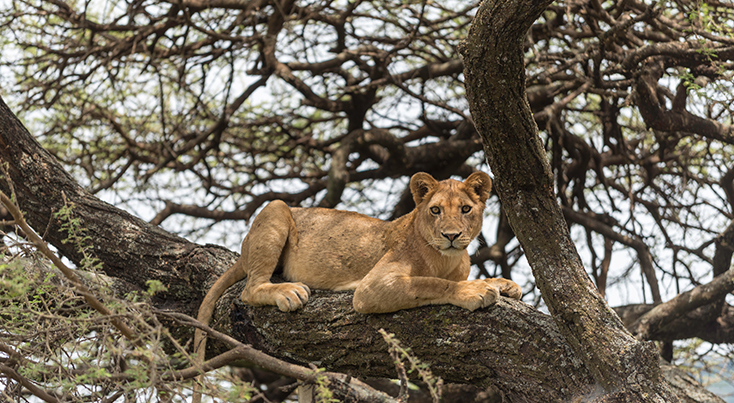
Leopard sightings require patience and luck.
When spotted, these cats may be resting on tree branches or moving through thick vegetation.
A good photography guide understands how to position the vehicle without disturbing the animal.
Cheetahs may occasionally be encountered in suitable open parts of Tarangire.
Photographing a cheetah scanning the plains can produce beautiful environmental wildlife images.
Giraffes work exceptionally well in vertical compositions.
Tarangire's acacia trees and baobabs provide attractive backgrounds, especially during sunrise or late afternoon.
Large herbivores create excellent opportunities for:
A photography safari should not focus only on the Big Five.
Smaller animals can produce equally memorable images.
You may encounter:
Your guide can help identify animal behavior and interesting photographic opportunities that casual visitors sometimes overlook.
Tarangire National Park is also an excellent destination for bird photography.
Hundreds of bird species have been recorded in and around the ecosystem.
Potential photographic subjects include:
Bird photographers benefit enormously from patience.
A private safari vehicle allows more time to wait for birds to:
Fast shutter speeds and longer lenses are particularly useful when photographing birds.
Few African safari landscapes are as recognizable as Tarangire's baobab scenery.
Some baobab trees are hundreds of years old and have enormous trunks.
Photographers can use these trees to create dramatic compositions.
Possible subjects include:
Baobabs also provide important scale.
A photograph of an elephant beside a huge baobab helps viewers appreciate the extraordinary size of these ancient trees.
Tarangire can be visited throughout the year, but photographic conditions change considerably between seasons.
The dry season is one of the most popular periods.
Advantages include:
This season is particularly good for photographers prioritizing wildlife density.
Morning and evening light can also be beautiful.
Dust created by animals and safari vehicles may produce dramatic backlit photographs during sunrise or sunset.
The green season offers a completely different photographic atmosphere.
Advantages can include:
Photographers interested in landscapes may prefer this season because the vegetation becomes vibrant.
Storm clouds over the savannah can also create extremely dramatic photographs.
These months normally receive heavier rainfall.
Some travelers avoid this period, but photographers may appreciate:
Safari conditions depend on rainfall, so itinerary planning should remain flexible.
Lighting has a major influence on wildlife photographs.
Morning game drives often provide some of the best conditions.
Advantages include:
Photographers should have cameras ready immediately after entering wildlife areas.
A memorable sighting can happen at any moment.
Midday light is usually stronger.
Although it may not always create the most flattering photography, midday remains useful for:
A knowledgeable guide may also seek shaded areas during harsh light.
Late afternoon provides beautiful warm light.
This is excellent for:
Sunset can transform ordinary scenes into extraordinary photographs.
For serious photographers, a private safari is usually the strongest option.
Benefits include:
If a lion remains in an interesting position, a private safari lets you spend more time waiting for behavior.
You are not required to leave simply because another traveler wants to move.
Your safari begins in Arusha.
After breakfast, your professional safari guide collects you from your hotel and provides a short briefing about the day's photography objectives.
Drive toward Tarangire National Park.
After entering the park, begin a slow photography-focused game drive.
Possible subjects include:
Instead of racing between sightings, your guide allows additional time where photographic opportunities are particularly strong.
Lunch can be enjoyed at a designated picnic location inside the park.
Continue photographing during the afternoon as light becomes warmer.
Later, drive toward your selected lodge or tented camp for dinner and overnight.
Begin early when the light is soft.
Search for predators while also photographing landscapes and herbivores.
Your guide may explore areas around:
Spend additional time with interesting animal behavior.
Enjoy lunch inside the park before continuing the afternoon game drive.
The final hours of daylight are particularly valuable for elephant and landscape photography.
Return to your lodge for dinner and overnight.
Enjoy another early game drive.
Use the morning to revisit areas where wildlife activity was strong during the previous day.
After several hours of photography, begin the journey back toward Arusha.
Arrive later in the afternoon depending on wildlife sightings and your itinerary.
A Tarangire photography trip combines extremely well with other Northern Tanzania parks.
Ngorongoro offers opportunities to photograph:
The crater landscape itself is spectacular.
Serengeti is one of the world's most famous wildlife photography destinations.
You may photograph:
Seasonal migration activity provides additional photographic opportunities.
Lake Manyara can add:
Combining several parks produces a more diverse photography portfolio.
A typical private photography Tarangire safari package can include:
Exact inclusions depend on the final package selected.
Common exclusions may include:
Always check the final safari quotation carefully before confirming.
Your photography safari can be customized using different accommodation categories.
Suitable for adventurous photographers who prioritize wildlife over luxury.
Typical features include:
A popular choice combining comfort and affordability.
Expect:
Perfect for travelers seeking a premium experience.
Luxury properties may offer:
Photographers particularly appreciate lodges located close to park gates because less time is spent driving between accommodation and wildlife areas.
Understanding behavior helps predict the photograph.
For example:
An elephant lifting its trunk may be testing scents.
A lion watching repeatedly in one direction may be preparing to move.
Birds becoming nervous may indicate a predator nearby.
Your safari guide can help interpret these signs.
Burst mode is useful for:
However, avoid producing thousands of unnecessary images.
Anticipating behavior often creates better results.
Eye-level photographs create greater connection with wildlife.
Safari vehicles naturally provide elevated viewing positions, but guides may adjust vehicle placement where appropriate.
Not every photograph needs to be a close-up.
Wide images showing animals within their landscape often communicate the safari experience better.
Tarangire is particularly suitable for environmental compositions because of its famous baobabs.
Dust is common during the dry season.
Keep cameras covered while driving fast between locations.
Clean lenses carefully every evening.
Wildlife photography should never negatively affect animals.
Responsible safari principles include:
An ethical safari guide prioritizes animal welfare over photographs.
Sometimes the best decision is simply to observe rather than move closer.
A photography Tarangire safari trip is suitable for:
The itinerary can be adjusted depending on photography experience and interests.
Beginners are welcome.
You do not need advanced technical knowledge.
Before departing, you may prepare a few basic camera settings.
For wildlife photography, understand:
During the safari, experiment with different compositions.
Your biggest advantage is not expensive equipment—it is patience.
Professional photographers may request a highly customized itinerary.
Possible requests include:
Professional photographers should communicate equipment requirements before arrival so vehicle space can be organized properly.
Consider bringing:
Avoid carrying unnecessary heavy equipment.
Safari photography often requires quick movement inside the vehicle.
Wear comfortable neutral-colored clothing such as:
Lightweight breathable clothing is ideal during warm daytime conditions.
Bring a jacket for cooler mornings.
Long sleeves can also help protect against sun and insects.
A one-day Tarangire safari is possible, especially for visitors with limited time.
However, photographers benefit significantly from spending at least two or three days.
Additional time provides:
Wildlife photography depends heavily on patience and luck.
More time generally improves your chances of capturing exceptional photographs.
Photography requires flexibility.
A private safari allows your trip to revolve around photographic priorities rather than a fixed sightseeing schedule.
You can tell your guide:
“We would like to stay with these elephants.”
“We want to wait for the lion to stand.”
“Can we reposition for better light?”
“We would like more bird photography today.”
This flexibility can significantly improve the safari experience.
Safari prices vary depending on:
Private safaris normally cost more than shared departures but provide significantly greater flexibility for photographers.
For an accurate quotation, provide:
A personalized itinerary can then be prepared according to your requirements.
A photography Tarangire safari trip offers much more than simply seeing wildlife.
It gives you time to observe behavior, understand the landscape, wait for the right light, and create photographs that preserve the feeling of Tanzania's wilderness.
From enormous elephant families moving between ancient baobabs to lions resting beneath acacia trees and colorful birds flying above the Tarangire River, every game drive offers another opportunity.
Your safari can be customized according to your travel dates, budget, photography interests, number of travelers, and preferred accommodation.
Whether you want a one-day photographic adventure, a multi-day Tarangire safari, or a complete Northern Tanzania photography expedition combining Tarangire, Serengeti, and Ngorongoro, the itinerary can be designed around your goals.
Contact Kilipath African Safaris to create your personalized Tarangire photography safari and begin planning an unforgettable wildlife photography adventure in Tanzania.
Planning a budget Ngorongoro Crater safari holiday from Arusha? Compare a crater day trip, a two-day Tarangire and Ngorongoro safari, or a…
Read articleA Lake Manyara safari can cost USD 150–220 per person for a shared day trip from Arusha. A published example of a…
Read articleA Tanzania safari from Zanzibar can mean a short mainland trip during your beach holiday or a complete package with flights, game…
Read articleLooking for a group Tanzania safari price from Kilipath African Safaris? A published example for our four-day shared camping safari through Tarangire,…
Read article

