

Budget Ngorongoro Crater Safari Holiday
Planning a budget Ngorongoro Crater safari holiday from Arusha? Compare a crater day trip, a two-day Tarangire and Ngorongoro safari, or a…
Read articleArusha City - Tanzania
Safari & Travel Tips
September 2, 2026 · 12 min read
Tanzania is one of Africa’s most rewarding wildlife destinations, combining enormous savannahs, volcanic landscapes, elephant-rich woodlands and some of the continent’s greatest concentrations of wild animals. For first-time visitors and experienced safari travelers alike, the top Tanzania wildlife safari experience usually centers on the legendary Northern Safari Circuit: Serengeti National Park, Ngorongoro Crater and Tarangire National Park. Tanzania’s official tourism resources highlight this same combination as one of the country’s signature wildlife routes.
A Tanzania safari offers far more than simply spotting animals from a vehicle. Travelers experience changing landscapes, predator-prey interactions, enormous herds, sunrise game drives, wilderness camps and opportunities to observe wildlife behaving naturally in protected ecosystems.
The country is particularly famous for the Great Migration in the Serengeti, where wildebeest and zebras move through the greater Serengeti ecosystem in search of fresh grazing. Serengeti also supports lions, leopards, cheetahs, elephants, giraffes, hyenas, buffalo and many other species.
A well-designed Tanzania safari can combine several dramatically different ecosystems within one journey.
For many travelers, Serengeti is the highlight of the entire Tanzania safari.
Its vast grasslands provide extraordinary opportunities to see:
The park is also internationally famous for the annual movement of wildebeest and zebras through the Serengeti ecosystem.
Unlike smaller parks where game drives may focus around several known wildlife areas, Serengeti gives visitors a tremendous sense of wilderness. Its open plains, kopjes, river valleys and woodland areas create excellent habitats for both predators and herbivores.
The Central Serengeti, particularly around Seronera, is especially valuable for year-round wildlife viewing.
Visitors searching specifically for migration activity may travel to different parts of the ecosystem depending on the season.
Ngorongoro offers a completely different safari environment.
After reaching the crater rim, safari vehicles descend into the enormous volcanic caldera for a game drive across grasslands, wetlands, woodland and lakeshore habitats.
Wildlife commonly associated with Ngorongoro includes:
The possibility of seeing black rhino makes Ngorongoro especially exciting for travelers hoping to complete their Big Five safari experience. Tanzania Tourism also promotes crater game drives as an opportunity to encounter the Big Five.
Ngorongoro provides an unusual concentration of wildlife within a relatively compact area.
This means that even travelers with limited time can enjoy a highly productive game drive.
Combining Serengeti and Ngorongoro creates one of Tanzania's strongest wildlife itineraries because travelers experience both the massive Serengeti ecosystem and the concentrated wildlife of the crater.
Tarangire is sometimes underestimated by first-time visitors, but it can become one of the most memorable stops on a Northern Tanzania safari.
TANAPA describes Tarangire as the “Paradise of Elephants” and highlights its large elephant population, seasonal concentrations of wildebeest, zebras and buffalo, and its famous baobab scenery.
Elephants are often the stars of the experience.
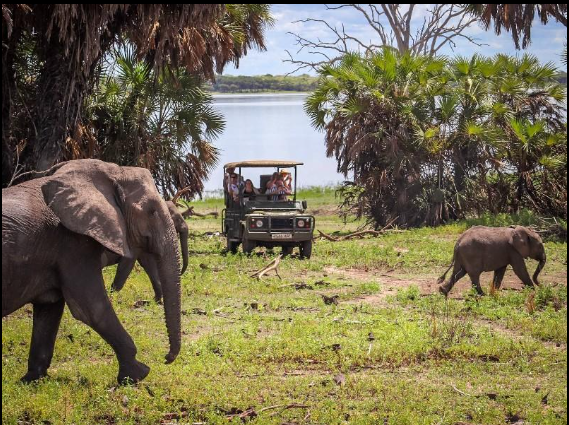
Visitors may watch family groups feeding, drinking, walking beside safari vehicles or gathering near the Tarangire River.
Depending on the season, travelers may encounter:
The park's giant baobabs also make Tarangire particularly attractive for wildlife photographers.
Yes.
Tanzania is an excellent destination for travelers hoping to see the Big Five:
Lion: Frequently seen in Serengeti and Ngorongoro.
Leopard: Often encountered in Serengeti, particularly around woodland and river systems.
Elephant: Excellent viewing in Tarangire and also possible in Serengeti and Ngorongoro.
Buffalo: Common across several major safari areas.
Black rhino: Much rarer, with Ngorongoro offering one of the notable possibilities for sightings.
Wildlife remains unpredictable, so sightings can never be guaranteed.
The Great Migration is the continuous movement of vast numbers of wildebeest, accompanied by zebras and other herbivores, through the Serengeti-Mara ecosystem.
The animals follow seasonal rainfall and fresh grazing.
Rather than being an event that occurs in only one month, the migration is a year-round cycle.
Large numbers of wildebeest gather around the southern Serengeti and Ndutu region.
This period is famous for the calving season.
Thousands of young wildebeest are born across the southern plains, creating intense predator activity.
Herds gradually begin moving north and west as seasonal conditions change.
Movement toward the western and central regions continues.
Large herds can reach northern Serengeti and the wider Mara ecosystem.
River-crossing activity may occur during this period, although exact timing changes every year because wildlife movements depend on rainfall and grazing conditions.
Short rains can encourage herds to begin moving south again.
Therefore, the best migration itinerary should always be designed around the travel month rather than assuming one Serengeti location works throughout the year.
Tanzania offers wildlife experiences throughout the year.
However, seasons affect vegetation, animal movement, road conditions and visitor numbers.
This is Tanzania's main dry season.
It is popular because vegetation becomes thinner and wildlife often concentrates around available water sources.
It can be particularly rewarding in Tarangire, where animals gather around the river system during drier periods. TANAPA specifically highlights seasonal wildlife movements toward the Tarangire River.
Excellent for southern Serengeti and Ndutu, particularly travelers interested in calving activity.
These months generally receive heavier rains.
Landscapes can become dramatically green, and visitor numbers may be lower.
Some remote roads can become challenging, but photographers often appreciate the atmosphere, clouds and lush scenery.
Short rains commonly begin during this period, refreshing the plains and influencing migration movements.
Your ideal safari length depends on budget, travel style and the parks you want to visit.
A short safari can combine:
Tarangire + Ngorongoro
This is useful for travelers with very limited time.
A popular option is:
Serengeti + Ngorongoro
It delivers excellent wildlife experiences but involves considerable driving.
Another possibility is:
Tarangire + Ngorongoro + Lake Manyara
One of the strongest short itineraries is:
Day 1 – Tarangire
Day 2 – Serengeti
Day 3 – Serengeti
Day 4 – Ngorongoro Crater
This gives visitors more meaningful Serengeti game-drive time.
A five-day itinerary provides a more relaxed experience:
Day 1 – Tarangire
Day 2 – Serengeti
Day 3 – Full Serengeti game drive
Day 4 – Serengeti to Ngorongoro
Day 5 – Ngorongoro Crater
Travelers who truly prioritize wildlife should consider six or seven days.
Extra time allows slower game drives, more photography and the possibility of including additional destinations such as Lake Manyara or migration-specific areas.
Leave Arusha in the morning and travel toward Tarangire.
Spend the day exploring elephant habitats, baobab landscapes and areas surrounding the Tarangire River.
Overnight around Karatu, Manyara or inside/near Tarangire depending on the itinerary.
Travel toward Serengeti through the Ngorongoro highlands.
Entering the Serengeti opens up completely different scenery dominated by grasslands, kopjes and endless horizons.
Enjoy an afternoon game drive.
This is one of the most important days of the trip.
An early start increases the opportunity to observe predators when they are more active.
A full day allows the guide to explore different wildlife areas instead of rushing from one destination to another.
Enjoy additional morning wildlife viewing before gradually traveling toward Ngorongoro.
Depending on the schedule, overnight close to the crater or around Karatu.
Descend into the crater early in the morning.
Search for lions, buffalo, elephants, hyenas, hippos and possibly black rhino.
After the game drive, begin the journey back toward Arusha.
Both options can provide excellent Tanzania wildlife experiences.
A group safari is ideal for travelers who want to reduce costs.
You share the safari vehicle with other travelers following a fixed itinerary.
Advantages include:
The main limitation is reduced flexibility.
A private safari provides your own vehicle and guide.
This is particularly useful for:
A private itinerary allows significantly more control over departure times and how long you spend at individual wildlife sightings.
The standard vehicle for major Tanzania safari routes is a 4×4 Land Cruiser, normally fitted with a pop-up roof.
The roof provides excellent visibility for photography and wildlife observation.
Safari vehicles commonly include:
The Tanzania Tourism Board also identifies private 4×4 vehicles with pop-up roofs as a standard inclusion in many safari packages.
Tanzania offers safari accommodation for almost every budget.
Travelers sleep at designated campsites.
This provides one of the most adventurous ways to experience Tanzania and is popular with budget-conscious visitors.
These camps often provide:
For many travelers, this provides the best balance between price and comfort.
Luxury properties may offer:
Some travelers prefer permanent lodge accommodations, particularly around Ngorongoro and Karatu.
Yes.
Private safaris are particularly convenient for families because the itinerary can be adjusted around children.
Families can schedule:
Parents should always consider the children's ages when selecting very long road journeys.
Tanzania is one of Africa's strongest honeymoon destinations because travelers can combine wildlife with luxury accommodation and a beach holiday.
A popular honeymoon combination is:
Serengeti → Ngorongoro → Tarangire → Zanzibar
Safari camps may also arrange:
Absolutely.
Tanzania is exceptional for photography because of its open landscapes, abundant wildlife and varied habitats.
Serengeti is particularly useful for predator photography.
Tarangire provides remarkable elephant and baobab compositions.
Ngorongoro offers dramatic crater landscapes with wildlife in the foreground.
For serious photographers, a private safari is normally preferable because photographers may want to remain at one sighting much longer than regular visitors.
Early morning and late afternoon are particularly rewarding.
Wildlife temperatures are cooler and predators may still be active.
Morning light is also excellent for photography.
Although activity can decrease during hotter hours, wildlife sightings remain possible.
Lions are frequently seen resting during this period.
Animals gradually become more active again as temperatures cool.
Late-afternoon light creates excellent photographic conditions.
Yes.
Balloon safaris are available in selected safari destinations, including Serengeti and Tarangire. TANAPA lists balloon safaris among Tarangire's experiences.
A typical experience begins before sunrise.
After inflation and a safety briefing, the balloon rises above the landscape as daylight spreads across the plains.
Balloon safaris are especially popular with honeymooners and photographers.
Useful safari items include:
Ngorongoro mornings can be surprisingly cold because of the crater's elevation, so bringing a fleece or warm jacket is important.
Yes.
This is one of Tanzania's most popular holiday combinations.
A traveler might spend:
5–7 days on safari
followed by
4–7 days in Zanzibar.
Domestic flights connect northern Tanzania with Zanzibar, allowing travelers to move from safari landscapes to the Indian Ocean relatively easily.
The combination works particularly well for:
Tanzania has several major safari regions.
Includes destinations such as:
This is generally the strongest option for a first Tanzania safari.
Major destinations include:
These areas can offer a quieter and more remote wilderness atmosphere.
Travelers seeking fewer vehicles and a deeper bush experience may particularly appreciate Southern Tanzania.
Yes, especially if wildlife is the main purpose of your trip.
Travelers taking only two or three days must balance game-drive time against driving time.
When possible, allocate at least two nights around Serengeti.
Three nights can be even better for travelers interested in photography or migration activity.
If wildlife is your main priority, generally allocate more nights to Serengeti.
Ngorongoro is spectacular but typically visited as a concentrated crater experience.
Serengeti covers an enormous ecosystem and rewards travelers who spend multiple days exploring different areas.
For example:
2 nights Serengeti + 1 Ngorongoro night
is usually stronger than trying to squeeze many additional parks into a short itinerary.
A professional safari guide does much more than drive.
An experienced guide helps identify:
Good guides also understand how to position the vehicle responsibly for photography without disturbing animals.
The quality of your guide can significantly influence the overall safari experience.
Established safari routes are generally designed for tourism, but visitors must follow professional guidance.
Important safari rules include:
Wild animals should always be treated as unpredictable.
Safari prices vary considerably.
Important factors include:
Budget camping provides the lowest-cost approach, while private luxury safaris can cost several times more.
Travelers should compare safari quotations based on what is actually included, rather than comparing only the headline price.
A properly structured safari package commonly includes:
Tanzania Tourism Board examples similarly list 4×4 transport, guides, park fees, game drives, meals, accommodation and transfers among common inclusions.
Always confirm whether the following are excluded:
The top Tanzania wildlife safari experience combines extraordinary animals with some of Africa's most dramatic landscapes. Serengeti delivers expansive wilderness and Great Migration possibilities, Ngorongoro provides exceptional wildlife concentration inside a volcanic caldera, while Tarangire adds enormous elephant herds and iconic baobab scenery. Tanzania's official tourism authorities likewise present these destinations as central components of the country's signature northern safari experience.
For travelers with enough time, a 5–7 day private or small-group safari covering Tarangire, Serengeti and Ngorongoro provides an excellent balance of wildlife viewing, photography and relaxed game-drive time. Those visiting during migration periods can customize the Serengeti portion around the expected seasonal location of the herds.
Planning a budget Ngorongoro Crater safari holiday from Arusha? Compare a crater day trip, a two-day Tarangire and Ngorongoro safari, or a…
Read articleA Lake Manyara safari can cost USD 150–220 per person for a shared day trip from Arusha. A published example of a…
Read articleExplore Ruaha National Park’s baobab country on a guided safari built around your dates, group size and budget. Spend your game drives…
Read articleA Nyerere Tanzania wildlife safari can take you from a woodland game drive in the morning to a boat on the Rufiji…
Read article

