

Budget Ngorongoro Crater Safari Holiday
Planning a budget Ngorongoro Crater safari holiday from Arusha? Compare a crater day trip, a two-day Tarangire and Ngorongoro safari, or a…
Read articleArusha City - Tanzania
Safari & Travel Tips
September 2, 2026 · 16 min read
A fly-in Serengeti safari trip is one of the fastest and most comfortable ways to experience Tanzania’s most celebrated national park. Instead of spending many hours driving from Arusha to the Serengeti, travelers fly directly to an airstrip inside or near the park and begin exploring shortly after landing.
This style of safari is especially suitable for honeymooners, families, photographers, luxury travelers, older visitors, and anyone with limited vacation time. It combines scenic flights over northern Tanzania with exciting game drives, comfortable accommodation, professional guiding, and convenient connections to destinations such as Zanzibar, Arusha, Ngorongoro, Tarangire, and Lake Manyara.
This complete guide explains how fly-in safaris work, where flights depart from, which Serengeti airstrip to use, the best travel seasons, possible itineraries, accommodation choices, luggage restrictions, expected wildlife, costs, and frequently asked questions.
| Safari detail | Information |
|---|---|
| Recommended duration | 3–6 days |
| Main destination | Serengeti National Park |
| Typical departure points | Arusha, Zanzibar, Kilimanjaro or Dar es Salaam |
| Transport | Scheduled light aircraft and safari vehicle |
| Accommodation | Tented camps, lodges or luxury safari camps |
| Best for | Couples, families, honeymooners and time-conscious travelers |
| Main activities | Game drives, wildlife photography and optional balloon safari |
| Major wildlife | Lions, elephants, leopards, cheetahs, buffaloes, wildebeest and zebras |
| Migration season | Varies by Serengeti region and rainfall |
| Safari type | Private or selected shared arrangements |
A fly-in Serengeti safari is a trip in which travelers reach the Serengeti aboard a scheduled or chartered light aircraft. Flights normally land at a small airstrip inside the national park or in an adjacent wildlife area.
After landing, guests meet their professional safari guide and continue in a specially equipped 4x4 vehicle. Depending on the itinerary, the guide may meet travelers directly at the airstrip and immediately begin a game drive while traveling toward the selected accommodation.
The aircraft typically seat a small number of passengers and fly at a relatively low altitude. Weather permitting, passengers may enjoy aerial views of farmland, the Rift Valley, volcanic highlands, Ngorongoro, and the vast Serengeti plains.
A fly-in safari does not mean that every part of the holiday takes place by air. The flight is primarily used to reach or leave the Serengeti efficiently. Wildlife viewing inside the park is normally conducted in a 4x4 safari vehicle.
The main benefit is the amount of time saved. Driving from Arusha to Central Serengeti can take approximately seven to eight hours, depending on road conditions, traffic, park formalities, and stops. A direct bush flight generally takes much less time, although it may make additional airstrip stops.
Flying allows travelers to arrive with more energy and dedicate a larger portion of their holiday to wildlife viewing.
Other important advantages include:
The experience of landing on a Serengeti bush airstrip is also memorable. Wildlife can sometimes be seen near the runway, although airstrip staff always follow safety procedures before aircraft land or depart.
Both options can provide an excellent experience, but they suit different travelers.
| Fly-in safari | Driving safari |
|---|---|
| Saves considerable travel time | Usually more budget-friendly |
| Ideal for shorter holidays | Suitable for longer itineraries |
| Reaches remote regions efficiently | Allows visits to parks along the route |
| Has strict luggage limits | Provides more luggage flexibility |
| Often associated with higher overall costs | Offers gradual changes in scenery |
| Convenient from Zanzibar | Commonly begins and ends in Arusha |
| Reduces long overland journeys | May include Tarangire and Lake Manyara |
Travelers who want to visit several northern parks may choose a combination. For example, they can drive from Arusha through Tarangire and Ngorongoro, continue to Serengeti, and fly back to Arusha or Zanzibar. This is commonly known as a drive-in, fly-out safari.
It is often an excellent compromise because visitors experience the full Northern Circuit without repeating the long return journey.
Arusha is Tanzania’s main northern safari gateway. Flights normally depart from Arusha Airport rather than Kilimanjaro International Airport.
Travelers arriving internationally through Kilimanjaro can spend a night in Arusha and fly to the Serengeti the following morning. A private transfer can be arranged between Kilimanjaro International Airport and the hotel.
Arusha departures are convenient for guests who want a safari-focused holiday or who have already visited Tarangire, Lake Manyara, or Ngorongoro.
Flying from Zanzibar to Serengeti is popular with travelers combining a beach holiday and a wildlife safari. It avoids returning to Arusha by road and makes it possible to transition directly from the Indian Ocean coastline to the African savannah.
Some services are direct, while others stop at additional airstrips or airports. Flight schedules vary according to the airline, season, route, and passenger demand.
A Zanzibar fly-in safari is particularly attractive for travelers who have only three or four days available for wildlife viewing.
Some itineraries may connect through Kilimanjaro International Airport, but domestic bush flights are more commonly associated with Arusha Airport. The precise connection depends on the selected airline and travel date.
Travelers should allow sufficient time between an international arrival and a domestic flight. Staying overnight before the safari is normally safer than relying on a tight same-day connection.
Flights from Dar es Salaam may be available through connecting services. However, schedules and routes must be checked for the exact date.
Travelers starting in Dar es Salaam may also consider southern Tanzania parks, but the Serengeti remains accessible when it is central to the holiday plan.
The correct airstrip depends on the season, camp location, and desired wildlife experience.
Seronera is located in Central Serengeti and is one of the park’s most frequently used airstrips. It provides access to an area known for dependable year-round wildlife viewing.
Central Serengeti contains permanent water sources and a varied landscape of open plains, river valleys, woodland, and rocky kopjes. Lions, leopards, cheetahs, elephants, buffaloes, giraffes, hyenas, zebras, wildebeest, and many antelope species may be encountered.
Seronera is generally the most practical choice for first-time visitors who want a broad Serengeti experience.
Kogatende serves Northern Serengeti and is commonly used during the period when migrating herds reach the Mara River region.
This area becomes especially popular from approximately July to October, although migration timing changes each year. River crossings are natural events and cannot be scheduled or guaranteed.
Northern Serengeti is remote, scenic, and particularly suitable for travelers who want to focus on the migration season.
Ndutu provides access to the southern Serengeti and Ngorongoro Conservation Area ecosystem. It is particularly important during the green season and calving period.
Large herds commonly gather across the southern plains from around December through March or April, depending on rainfall. The peak calving period is often associated with January and February.
The abundance of young wildebeest attracts predators, creating excellent opportunities to observe cheetahs, lions, hyenas, and other carnivores.
Grumeti serves the western Serengeti ecosystem. This region is often considered for trips during the migration’s westward movement, commonly around May and June.
It includes riverine areas, woodlands, and open grasslands. The specific airstrip and camp should be selected based on current seasonal conditions.
Additional airstrips include Lobo, Sasakwa, Kirawira, Fort Ikoma and several camp-access airstrips. Not every airstrip operates on every route or date, so flight arrangements should be coordinated with the safari itinerary.
The Serengeti is a year-round wildlife destination. The best time depends on the experience travelers want rather than on a single universally perfect month.
The southern Serengeti and Ndutu plains become the main focus. Thousands of wildebeest calves are born during the wider calving period, and predator activity can be intense.
The landscape is often green and photogenic. This is a rewarding period for wildlife photography, although brief rains are possible.
Travelers should fly to the airstrip serving the camp selected in the southern ecosystem.
April and May generally receive more rainfall, although patterns vary. Visitor numbers may be lower, landscapes remain green, and some accommodations offer seasonal value.
Road conditions can be challenging in certain areas. Flying can make remote camp access more convenient, but weather may occasionally affect aviation schedules.
This season is suitable for travelers who appreciate quieter parks and dramatic scenery.
The migrating herds frequently move toward the Western Corridor as the dry season develops. Wildlife activity around the Grumeti ecosystem can be excellent.
The exact movement depends on rainfall, grass, and water conditions, so travelers should seek current advice when selecting their camp.
The northern region and Mara River area are major attractions during these months. Large herds may gather on either side of the river and cross at unpredictable times.
Flights to Kogatende or another appropriate northern airstrip significantly reduce the overland journey.
This is a popular season, so flights and accommodation should be reserved well in advance.
Short rains encourage new grass, and the herds gradually travel southward. Their exact location varies each year.
Central Serengeti continues to offer strong resident wildlife viewing, even when the main migration herds are elsewhere.
The Great Wildebeest Migration is a continuous movement involving vast numbers of wildebeest, zebras, and gazelles. The animals move through the Serengeti–Mara ecosystem in search of water and nutritious grass.
It is important to understand that the migration does not follow a fixed timetable. Rainfall influences the speed, direction, and concentration of the herds.
No operator can ethically guarantee a river crossing or a particular wildlife event. An experienced local safari planner can, however, select the most suitable region using the month of travel, current herd reports, camp locations, and flight availability.
Travelers should stay at least three nights in the migration region when possible. More time increases the chance of observing interesting behavior and reduces pressure to rush between distant areas.
Serengeti is famous for both resident wildlife and seasonal migration herds. Possible sightings include:
The Serengeti is home to the Big Five, but sightings are never guaranteed. Rhinoceroses are particularly uncommon and are more reliably sought in the Ngorongoro Crater.
Wildlife viewing changes daily. The best safari experience comes from appreciating the complete ecosystem instead of focusing only on a checklist.
Transfer to the airport for the scheduled flight into Serengeti. Upon arrival, meet the safari guide at the airstrip.
Begin a game drive toward the camp, stopping whenever wildlife is encountered. After lunch, continue exploring the surrounding area until evening.
Dinner and overnight at a selected Serengeti lodge or tented camp.
Begin with an early breakfast or depart with a packed breakfast. Spend the day searching for predators, herbivore herds, elephants, giraffes, and other wildlife.
The day may include morning and afternoon game drives with a lodge lunch between them, or a full-day excursion with a picnic lunch.
Return to camp for dinner and overnight.
Enjoy an early game drive, depending on the flight schedule. Transfer to the airstrip and fly to Arusha, Zanzibar, or another destination.
This itinerary works well for travelers with limited time, but four or five days will provide a more relaxed experience.
Take a morning flight from Zanzibar to Seronera. Meet the guide and begin the first game drive immediately after arrival.
Explore Central Serengeti before continuing to the accommodation.
Enjoy a full day of wildlife viewing around river valleys, kopjes, woodland, and open plains. Search for resident big cats and large herbivores.
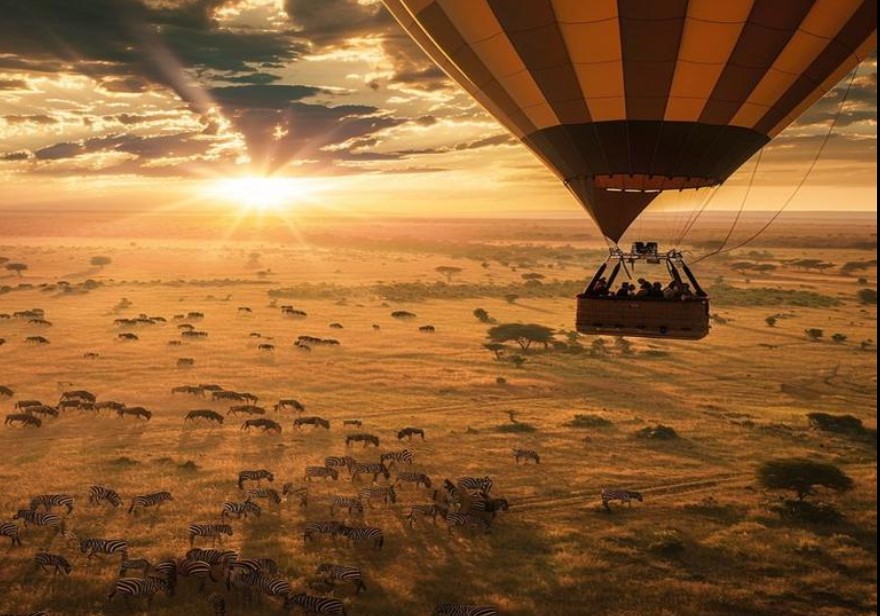
Explore another section of the park or focus on a seasonal wildlife area. Travelers can also book an optional sunrise balloon safari, subject to availability and weather.
Complete a final morning game drive before transferring to the airstrip. Fly back to Zanzibar and continue the beach holiday.
A longer combination can include several northern Tanzania highlights:
This itinerary reduces repeated driving while allowing travelers to experience the changing landscapes of the Northern Circuit.
Budget camping provides an adventurous and affordable experience. Travelers stay at public campsites with tents and shared facilities.
However, most direct fly-in itineraries use tented camps or lodges because domestic flights and remote logistics already place the safari in a higher price category.
Mid-range camps usually provide comfortable beds, private bathrooms, meals, and attentive service. Canvas walls allow guests to hear the sounds of the wilderness while remaining comfortable.
The camps may be permanent or seasonal, depending on their location.
Luxury accommodation may include large suites, elegant dining, private verandas, swimming pools, premium service, and highly personalized activities.
Some luxury camps move seasonally to remain near migration routes. These mobile or semi-mobile camps can provide excellent access to important wildlife areas.
A tented camp is not necessarily basic camping. Many safari tents include:
Facilities vary significantly, so travelers should check the exact room category rather than judging accommodation by the word “tent.”
A fly-in safari package may include:
Travelers should confirm whether the quoted flight includes airport taxes, baggage charges, and possible transfer services.
Common exclusions include:
The final quotation should clearly identify every inclusion and exclusion.
The cost varies considerably. There is no single standard price because each itinerary combines several changing components.
The main price factors are:
A short mid-range safari is normally less expensive than a remote luxury migration itinerary. Private safaris cost more per person for solo travelers but can become better value when vehicle expenses are shared by several people.
Request a date-specific quotation because flight and accommodation rates can change.
Small safari aircraft have stricter luggage limits than international airlines. The precise allowance depends on the airline and route, but travelers are commonly asked to use soft-sided bags.
Hard-shell suitcases may not fit into the aircraft’s small luggage compartments.
Recommended items include:
Excess luggage may require advance arrangements or additional fees. Large suitcases can sometimes be stored securely in Arusha while travelers take a smaller safari bag.
Always confirm the airline’s current baggage policy before packing.
Bush aircraft are designed for regional travel and remote airstrip operations. Cabins are smaller than those of commercial jets, and passengers may sit close to the pilots.
The flight may include several stops to collect or drop off passengers. These stops are normal and offer additional views of different parts of the ecosystem.
Travelers prone to motion sickness should discuss suitable medication with a qualified medical professional before departure. Eating a light meal and looking toward the horizon may also help some passengers.
Flights are subject to weather and operational conditions. Travelers should avoid scheduling a tight international connection immediately after a bush flight.
After landing, travelers usually continue in a 4x4 Land Cruiser with a pop-up roof. A suitable vehicle may include:
A private vehicle gives travelers more control over timing and wildlife interests. Photographers can spend longer at sightings, while families can adjust breaks according to the children’s needs.
Shared game drives are more affordable but require cooperation among all passengers.
A balloon safari offers a peaceful aerial perspective over the Serengeti. The experience typically begins before sunrise with a transfer from camp to the launch area.
After landing, guests often enjoy a bush breakfast before rejoining their guide.
Balloon flights depend on weather, location, minimum age rules, weight policies, and availability. They should be booked early during peak travel months.
A balloon trip is optional and is separate from the scheduled aircraft used to enter the Serengeti.
Yes, families can enjoy fly-in safaris, but several details should be considered:
A private safari is often ideal for families because the schedule can be adapted to the children’s energy and interests.
Travelers should consult a medical professional or travel clinic for personalized advice about vaccinations, malaria prevention, medication, and health conditions.
Comprehensive travel insurance should cover:
The Serengeti is remote. Travelers should inform the operator about serious allergies, mobility limitations, dietary restrictions, and medical conditions that may affect the itinerary.
Guests must follow guide instructions and should never leave the vehicle in an unauthorized area.
A good safari should protect wildlife and benefit surrounding communities.
Responsible travelers should:
Responsible conduct improves both wildlife welfare and the experience of other visitors.
Before confirming, check that the operator provides:
Do not choose solely based on the lowest price. A very low quotation may omit flights, park fees, crater fees, transfers, taxes, or suitable accommodation.
Book early if traveling during the calving season, northern migration season, Christmas, New Year, or other popular holiday periods.
Before paying a deposit, confirm:
Travelers should also send passport names exactly as they appear on their travel documents because domestic flight tickets may require accurate passenger information.
A fly-in Serengeti safari trip transforms a long overland journey into a scenic and efficient arrival in one of Africa’s greatest wildlife destinations. It is an excellent choice for travelers who want to maximize game-viewing time, connect directly from Zanzibar, reach seasonal migration regions, or enjoy a comfortable and well-organized safari.
The most important decision is choosing the correct Serengeti region for the month of travel. Central Serengeti provides dependable year-round wildlife, the southern plains are famous for the calving season, the Western Corridor attracts attention during the westward movement, and Northern Serengeti becomes especially important during the Mara River migration period.
With appropriate flights, a well-positioned camp, a professional guide, and enough time in the park, a fly-in safari can deliver an unforgettable combination of convenience, scenery, wildlife, and authentic African wilderness.
Planning a budget Ngorongoro Crater safari holiday from Arusha? Compare a crater day trip, a two-day Tarangire and Ngorongoro safari, or a…
Read articleA Tanzania safari from Zanzibar can mean a short mainland trip during your beach holiday or a complete package with flights, game…
Read articleLooking for a group Tanzania safari price from Kilipath African Safaris? A published example for our four-day shared camping safari through Tarangire,…
Read articlePair game drives on Tanzania’s mainland with a few days on Zanzibar’s coast. With Kilipath African Safaris, you can start in Arusha…
Read article

