

Budget Ngorongoro Crater Safari Holiday
Planning a budget Ngorongoro Crater safari holiday from Arusha? Compare a crater day trip, a two-day Tarangire and Ngorongoro safari, or a…
Read articleArusha City - Tanzania
Safari & Travel Tips
September 2, 2026 · 13 min read
A Ngorongoro Crater safari Arusha itinerary is one of the most rewarding short safari experiences in northern Tanzania. Starting from Arusha, travelers can reach the spectacular Ngorongoro Conservation Area in approximately three to four hours by road, making the crater suitable for both a dedicated day trip and a longer Northern Circuit safari.
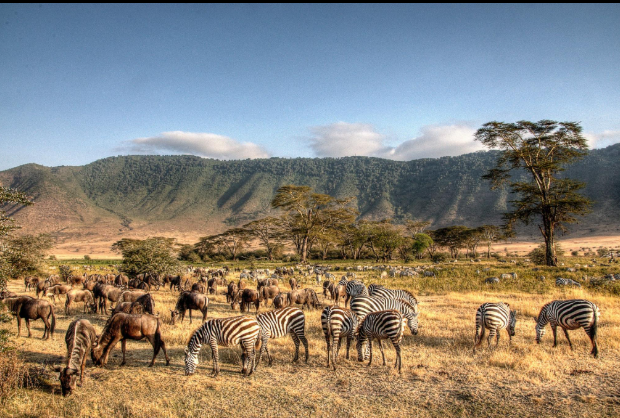
Ngorongoro Crater is famous for its extraordinary concentration of wildlife within a dramatic volcanic landscape. During one game drive, visitors may encounter lions, elephants, buffaloes, zebras, wildebeest, hippos, hyenas, antelopes, and, with some luck, the endangered black rhino.
The crater is also one of the best destinations to combine with Tarangire National Park, Lake Manyara, Serengeti National Park, or a longer Tanzania safari.
Whether you have only one day or several days available, this guide explains how to plan an unforgettable Ngorongoro safari from Arusha.
Arusha is Tanzania's primary gateway to the Northern Safari Circuit.
Most travelers arriving for a safari enter Tanzania through Kilimanjaro International Airport (JRO) or fly directly to Arusha Airport (ARK) before beginning their safari.
From Arusha, the road journey toward Ngorongoro follows the main safari route through northern Tanzania.
You normally travel through or near:
Arusha → Makuyuni → Mto wa Mbu → Karatu → Ngorongoro Conservation Area
The distance is roughly 180 km, and typical driving time is around 3–4 hours, depending on traffic, stops, weather and your exact accommodation location.
The road journey itself is interesting because the scenery gradually changes from the busy surroundings of Arusha to open countryside, Rift Valley landscapes, agricultural highlands and finally the forests surrounding Ngorongoro.
A day trip is ideal for travelers with limited time.
However, it is a long safari day, so an early departure is recommended.
Your safari guide collects you from your hotel in Arusha.
After a short briefing, you begin driving southwest toward Ngorongoro Conservation Area in a 4x4 safari Land Cruiser with a pop-up roof.
Leaving early helps you maximize wildlife-viewing time.
The journey normally passes Mto wa Mbu, a lively multicultural town located near Lake Manyara.
The surrounding landscape becomes increasingly dramatic as you approach the Great Rift Valley escarpment.
You may make a short comfort stop along the route before continuing toward Karatu.
Karatu is the main town immediately outside Ngorongoro Conservation Area.
It is surrounded by fertile farmland, coffee plantations and rolling green hills.
Many travelers completing multi-day Ngorongoro safaris stay around Karatu because there are numerous lodges and tented camps.
From Karatu, the journey continues toward Loduare Gate, the principal entrance to Ngorongoro Conservation Area. The NCAA identifies Loduare as its main entrance gate, approximately 14 km from Karatu.
Once permits are checked, your guide drives through montane forest toward the crater rim.
Suddenly the forest opens and reveals one of Africa's most spectacular views.
Below you lies the enormous Ngorongoro Crater.
You will normally stop at a viewpoint where you can photograph the caldera before continuing toward the descent road.
Ngorongoro Conservation Area gates operate from 06:00 to 18:00, while official crater entry hours run from 06:00 to 16:00.
Driving down the steep crater wall is one of the most memorable moments of the entire safari.
The landscape changes dramatically as you reach the crater floor.
Grasslands spread across the caldera, interrupted by marshes, forests, freshwater springs and Lake Magadi.
From this point, your wildlife safari begins.
Ngorongoro is particularly famous because many animals live within a relatively compact area.
This gives travelers excellent opportunities for wildlife viewing.
Lions are frequently seen inside Ngorongoro.
They may be resting beside safari roads, stalking zebras and wildebeest, or lying in the grass.
Because prey is abundant, several lion prides inhabit the crater ecosystem.
The endangered black rhino is one of Ngorongoro's biggest attractions.
Seeing one is never guaranteed, but the crater is one of Tanzania's better places to search for them.
Your guide will carefully scan the open plains for distant rhinos.
Binoculars can be extremely useful.
Large buffalo herds frequently graze across the crater floor.
Older solitary males can sometimes be found near woodland or water sources.
Most elephants encountered inside the crater are mature bulls.
Large tuskers are occasionally seen around Lerai Forest, one of the wooded sections of the crater floor.
Large numbers of wildebeest live within the Ngorongoro ecosystem throughout the year.
Unlike Serengeti's vast migrating herds, many crater animals remain within the caldera.
Zebras are among the easiest animals to photograph during a Ngorongoro safari.
They frequently graze alongside wildebeest.
Hippos can often be observed around permanent water sources.
One of the most popular lunch and wildlife viewing areas is near Ngoitoktok Springs, where travelers may watch hippos resting in the water.
Ngorongoro supports a substantial spotted hyena population.
You may see them patrolling the plains, resting near tracks or competing with lions over food.
You may also encounter:
Lerai Forest provides an interesting contrast to Ngorongoro's open grasslands.
The forest is dominated by fever trees and provides shelter for elephants, monkeys and various bird species.
Predators occasionally patrol its edges.
Your guide may explore this area while looking for elephants or elusive animals seeking shade.
Lake Magadi is a shallow alkaline lake located on the crater floor.
Depending on season and water conditions, flamingos and other waterbirds may gather around its margins.
It also creates beautiful landscape photography opportunities, particularly when wildlife crosses the surrounding plains.
Around midday, most safari itineraries include a picnic lunch.
You may stop at a designated picnic area where you can relax while overlooking the crater landscape.
A typical safari lunch may include sandwiches, chicken, fruit, snacks, juice and drinking water, although menus vary according to operator and dietary preference.
Vegetarian, vegan, halal and other dietary requirements can generally be arranged when communicated before the safari.
After lunch, your game drive continues across different parts of the crater floor.
The advantage of having a professional local safari guide is their ability to communicate with other guides and identify areas where interesting wildlife has recently been spotted.
You might encounter:
Wildlife sightings can never be guaranteed, but Ngorongoro's concentration of resident species makes each game drive potentially very productive.
After completing your wildlife viewing, you drive back up the crater wall.
The ascent provides another perspective of the spectacular caldera.
From the rim, you begin traveling back toward Karatu, Mto wa Mbu and eventually Arusha.
Depending on traffic, weather and the length of your game drive, you usually arrive back in Arusha during the evening.
Your guide can drop you at your hotel or another agreed location.
A one-day safari is therefore possible, although travelers who have more time often prefer staying overnight near Ngorongoro.
A two-day itinerary provides a more relaxed safari experience.
Instead of spending seven or more total hours driving from and back to Arusha during one day, you can combine Ngorongoro with another destination.
Depart Arusha in the morning and drive toward Tarangire National Park.
Spend the day exploring Tarangire.
The park is particularly famous for:
After your safari, continue to accommodation around Karatu.
Enjoy dinner and overnight.
After an early breakfast, drive toward Ngorongoro.
Descend into the crater for a game drive.
Explore the grasslands, woodland, lake and marsh ecosystems before having picnic lunch.
Later ascend the crater and drive back to Arusha.
This itinerary is especially good for travelers wanting to experience two completely different ecosystems in only two days.
A three-day safari gives travelers even more flexibility.
Morning departure from Arusha.
Full-day game drive in Tarangire.
Overnight around Karatu.
Early breakfast followed by a crater descent.
Spend several hours searching for lions, elephants, buffaloes, rhinos, hippos and other wildlife.
Return to accommodation around Karatu.
After breakfast, visit Lake Manyara National Park.
Explore woodland, groundwater forest and lakeshore habitats before driving back to Arusha.
This itinerary creates an excellent introduction to Tanzania's Northern Circuit.
Travelers who have four days should seriously consider adding Serengeti.
A typical itinerary might be:
Day 1: Arusha → Tarangire
Day 2: Karatu → Serengeti
Day 3: Serengeti → Ngorongoro
Day 4: Ngorongoro Crater → Arusha
This combination allows travelers to experience two of Tanzania's most famous wildlife destinations.
Serengeti provides enormous open landscapes and extensive game viewing, while Ngorongoro offers a concentrated wildlife experience within the crater.
Five days creates an even more comfortable itinerary.
Elephant viewing and baobab landscapes.
Travel through Ngorongoro Conservation Area toward Serengeti.
Spend a full day searching for predators and large herbivore herds.
Morning Serengeti game drive before continuing toward Ngorongoro.
Morning crater game drive followed by your return journey to Arusha.
For first-time visitors to Tanzania, this is one of the strongest short Northern Circuit safari combinations.
Travelers often ask:
The journey is approximately 180 kilometers, depending on the exact starting point and route. SafariBookings estimates about 180 km and around three hours of driving under normal conditions, while practical road estimates commonly allow three to four hours.
It is better to allow extra time because:
Ngorongoro is a year-round safari destination.
Because water and grazing are available inside the caldera, significant numbers of animals remain in the ecosystem throughout the year.
However, every season has a different character.
This is the main dry season.
Advantages include:
It is also a popular tourism period, so the crater can be busy.
Short rains may begin during this period.
Landscapes become greener and photography can be beautiful.
Safari vehicles may encounter occasional showers, but game viewing remains excellent.
January through March can provide lush scenery, good wildlife viewing and warm daytime temperatures.
This period also overlaps with the wider southern Serengeti–Ndutu calving season, making Ngorongoro easy to combine with a migration safari.
These months normally receive heavier rainfall.
Advantages can include:
Roads may become muddy, but Ngorongoro remains accessible.
The crater rim is considerably higher and cooler than the floor.
Early mornings can therefore feel surprisingly cold.
Bring:
Layered clothing works best because temperatures normally warm up after descending to the crater floor.
For a day safari, carry only the essentials.
Useful items include:
A good pair of binoculars is particularly useful for spotting rhinos and distant predators.
Most guided Ngorongoro safaris use specially modified 4x4 Land Cruisers.
Common features include:
The pop-up roof allows guests to stand safely while photographing wildlife.
A private safari gives your group exclusive use of the vehicle and guide.
You can:
Private safaris are particularly attractive for photographers, honeymooners and families.
The principal advantage is location.
You can reach the crater descent road relatively quickly in the morning.
Many rim properties also provide dramatic crater views.
However, accommodation around the rim is usually more expensive.
Karatu provides many mid-range and budget-friendly options.
Advantages include:
You simply need additional driving time in the morning before reaching the crater.
Prices vary considerably depending on:
Because official fees and supplier rates can change, travelers should request an updated quotation for their actual travel dates rather than relying on an old online price list.
The NCAA also encourages visitors to process payments before arrival and provides official electronic payment options for conservation services.
A properly organized Ngorongoro safari package commonly includes:
Always confirm the exact inclusions before paying your deposit.
Depending on your operator, exclusions may include:
Yes.
Many travelers combine Zanzibar and a Northern Circuit safari.
A common route is:
Zanzibar → Arusha Airport → Safari → Arusha → Zanzibar
Early flights from Zanzibar can sometimes allow travelers to begin a safari on the same day, depending on flight schedules and itinerary structure.
However, arriving in Arusha the evening before the safari generally provides a more relaxed start.
Travelers sometimes ask which park they should choose.
They offer very different experiences.
Best for:
Best for:
The best solution is to combine both.
Tarangire is famous for:
Ngorongoro provides:
A Tarangire + Ngorongoro two-day safari is therefore one of the strongest short safari combinations from Arusha.
Yes, especially if your time in Tanzania is limited.
A one-day safari gives you a realistic opportunity to see a remarkable concentration of wildlife while experiencing one of Tanzania's most dramatic landscapes.
However, the day involves considerable driving.
Travelers who have two days available will usually enjoy a more relaxed experience by overnighting around Karatu or Ngorongoro.
Depart as early as possible.
Morning conditions are cooler, and an early start allows more time inside the conservation area.
Bring warm clothes because the crater rim can be cold.
Carry binoculars because black rhinos may appear far from the road.
Use an experienced local guide who understands animal behavior and current wildlife movements.
Keep expectations realistic. Wildlife is wild, so no particular species can ever be guaranteed.
And finally, spend time enjoying the landscape rather than focusing only on completing a Big Five checklist.
Ngorongoro's scenery is part of what makes the destination extraordinary.
A Ngorongoro Crater safari Arusha itinerary is one of the easiest ways to experience Tanzania's world-famous wildlife when starting from Arusha.
You can visit the crater as an intensive one-day excursion, but travelers with additional time will gain more from combining it with Tarangire, Lake Manyara or Serengeti.
For a short trip, consider:
2 Days: Tarangire + Ngorongoro
3 Days: Tarangire + Ngorongoro + Lake Manyara
4 Days: Tarangire + Serengeti + Ngorongoro
5 Days: Tarangire + Serengeti + Ngorongoro with additional Serengeti time
Whichever itinerary you choose, Ngorongoro offers an exceptional combination of dramatic volcanic scenery, abundant wildlife and classic African safari experiences—all within convenient reach of Arusha.
Planning a budget Ngorongoro Crater safari holiday from Arusha? Compare a crater day trip, a two-day Tarangire and Ngorongoro safari, or a…
Read articleA Lake Manyara safari can cost USD 150–220 per person for a shared day trip from Arusha. A published example of a…
Read articleA Tanzania safari from Zanzibar can mean a short mainland trip during your beach holiday or a complete package with flights, game…
Read articleLooking for a group Tanzania safari price from Kilipath African Safaris? A published example for our four-day shared camping safari through Tarangire,…
Read article

