

Budget Ngorongoro Crater Safari Holiday
Planning a budget Ngorongoro Crater safari holiday from Arusha? Compare a crater day trip, a two-day Tarangire and Ngorongoro safari, or a…
Read articleArusha City - Tanzania
Safari & Travel Tips
September 2, 2026 · 15 min read
A Tanzania safari tour to Tarangire offers an unforgettable combination of abundant wildlife, beautiful landscapes and authentic African wilderness. Located in Tanzania’s famous Northern Safari Circuit, Tarangire National Park is particularly renowned for its large elephant herds, ancient baobab trees and the life-giving Tarangire River.
Many visitors travel quickly through Tarangire on their way to Serengeti National Park and the Ngorongoro Crater. However, the park deserves more than a brief stop. Its varied habitats support lions, leopards, cheetahs, giraffes, zebras, wildebeest, buffaloes and hundreds of bird species.
During the dry season, animals travel from surrounding areas to find water in the Tarangire River. This creates remarkable wildlife concentrations and exciting predator activity. In the green season, the park becomes lush and colorful, welcoming migratory birds and newborn animals.
This complete Tarangire travel guide explains when to visit, what animals you can see, where to stay and how to include the park in your Tanzania safari itinerary.
Tarangire National Park is situated in northern Tanzania, southwest of Arusha. It forms part of the Northern Safari Circuit alongside Lake Manyara National Park, the Ngorongoro Conservation Area and Serengeti National Park.
The park is approximately 120 kilometers from Arusha. The drive normally takes around two to three hours, depending on traffic, road conditions and the location of your accommodation.
Most visitors enter through the Main Gate in the northern section of the park. This area is easily accessible from Arusha, Lake Manyara and Karatu.
Tarangire can be visited as:
Its convenient location makes it one of the easiest wildlife destinations to include in a Tanzania safari package.
Tarangire is sometimes overshadowed by Serengeti and Ngorongoro, but it offers a distinctive safari experience. Wildlife sightings can be excellent, particularly between June and October.
Tarangire is one of Tanzania’s most famous elephant destinations. Visitors frequently encounter family groups walking between the woodland and the river.
During the dry season, several elephant families may gather around the same water source. Watching adults protect their calves, drink from the river and cover themselves with dust is one of the park’s most memorable experiences.
The park’s landscape is dominated by enormous baobab trees. Some of these trees are believed to be hundreds of years old.
Baobabs store water inside their thick trunks, helping them survive prolonged dry periods. Elephants sometimes remove sections of bark to reach the moisture inside.
These distinctive trees create beautiful backgrounds for wildlife photography, especially during sunrise and sunset.
The Tarangire River is the park’s main permanent water source. As seasonal water disappears, animals gather along the river and nearby wetlands.
Visitors may see elephants, zebras, wildebeest, giraffes, buffaloes, impalas and warthogs within a relatively small area. Predators follow these animals, creating opportunities to encounter lions, leopards and cheetahs.
Certain parts of Tarangire can feel quieter than the busiest areas of Serengeti and Ngorongoro. Travelers who explore the southern areas or stay inside the park may enjoy sightings with fewer vehicles.
A private safari allows your guide to choose less crowded routes and spend longer at interesting wildlife encounters.
Tarangire is an excellent destination for bird lovers, with more than 500 recorded species. Its woodlands, riverine forests, swamps and grasslands support an impressive variety of birds.
Common sightings include yellow-collared lovebirds, hornbills, lilac-breasted rollers, ostriches, kori bustards, secretary birds and various eagles.
A Tanzania safari tour in Tarangire introduces travelers to a wide range of animals. Although wildlife movements change with the season, the park offers rewarding game viewing throughout the year.
Elephants are Tarangire’s signature animals. They can be seen in woodlands, near waterholes and along the Tarangire River.
Some herds include dozens of individuals. Visitors may witness elephants using their trunks to drink, spray water, collect food and communicate with other members of their family.
Lions are regularly seen throughout the park. They often rest beneath acacia trees during the hottest part of the day before becoming more active in the morning and late afternoon.
Although Tarangire is sometimes associated with tree-climbing lions, seeing one resting in a tree is never guaranteed. Lions may climb to escape insects, find shade or gain a better view of the surrounding area.
Leopards live in the park but are more difficult to locate because of their secretive behavior. Your guide will search for tracks, alarm calls and animals watching a particular tree.
Leopards may rest on branches during the day or hide in dense vegetation close to the river.
Cheetahs prefer open areas where they can use their speed to hunt. They are occasionally seen in the park’s grasslands, particularly in areas with healthy populations of gazelles and young antelopes.
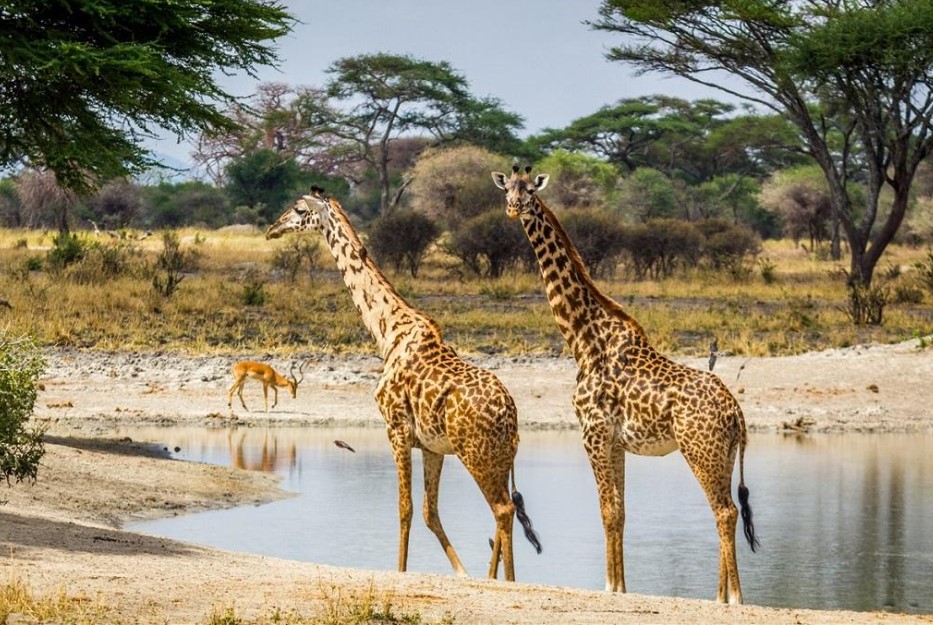
Giraffes are common in Tarangire’s acacia woodland. Tanzania’s national animal, the Maasai giraffe, is recognized by its irregular, leaf-shaped markings.
Visitors often see giraffes feeding from tall trees or walking elegantly across the plains.
Large numbers of zebras and wildebeest enter the greater Tarangire ecosystem during the dry season. They gather near reliable water sources, attracting lions and other predators.
Their migration is less famous than the Serengeti Great Migration, but it remains one of northern Tanzania’s important seasonal wildlife movements.
African buffaloes are commonly encountered near rivers, wetlands and grazing areas. Herds may contain many individuals, while older males are sometimes found alone or in small bachelor groups.
Buffaloes are powerful animals and should always be observed from a respectful distance.
Tarangire also protects several less commonly seen species. Depending on your route and luck, you may encounter:
Wild dogs are rare and highly mobile, so sightings cannot be predicted. Nevertheless, their presence contributes to the ecological importance of the wider Tarangire ecosystem.
Tarangire can be visited throughout the year, but each season offers a different experience.
The dry season is generally considered the best time for concentrated wildlife viewing.
As smaller water sources disappear, animals gather around the Tarangire River. Vegetation becomes thinner, making wildlife easier to spot.
Advantages of visiting during the dry season include:
July, August and September are popular months, so accommodation should be reserved early.
Morning temperatures can be cool, particularly in open safari vehicles. Travelers should bring a warm jacket that can be removed as the day becomes warmer.
The short rains usually transform the dry landscape into fresh green countryside. Rain often arrives in short showers rather than continuing throughout the day.
This season provides colorful scenery, fewer visitors and good photography conditions. Wildlife may spread into a wider area as more water becomes available.
The green season is ideal for travelers who appreciate beautiful landscapes, birdwatching and a quieter atmosphere.
Migratory birds increase the park’s diversity, while many resident animals give birth during periods of abundant food.
Some wildlife may be harder to locate because water is widely available and vegetation is thicker. However, experienced guides understand seasonal movements and know which areas to explore.
April and May generally receive the heaviest rainfall. Some roads may become muddy, particularly in remote parts of the park.
The advantages include fewer visitors, dramatic skies, green landscapes and potentially attractive accommodation offers. Rainfall patterns vary, and safaris can still operate during this period.
The Tarangire River is the center of the park’s ecosystem. During the dry season, it provides essential water for thousands of animals.
Game drives along the river may reveal elephants drinking, zebras gathering on the banks and lions resting nearby. Birdlife is also abundant in the surrounding vegetation.
Silale Swamp is one of Tarangire’s most productive wildlife areas. It remains green for much of the year and attracts elephants, buffaloes, antelopes and many bird species.
The open landscape also provides opportunities to spot predators. Travelers staying inside the park can spend more time exploring this area without rushing back to the main gate.
Tarangire’s baobab-covered areas are among its most recognizable landscapes. The trees provide food and shelter for animals while creating excellent photographic compositions.
Your guide may explain traditional stories and ecological facts connected to these remarkable trees.
Large termite mounds are visible throughout the park. When abandoned, they may be occupied by mongooses, snakes and other small animals.
Some trees grow directly from old termite mounds because the soil contains concentrated nutrients. Cheetahs and lions may also use the raised structures as observation points.
The southern section is more remote and often quieter than the area near the main entrance. Reaching it requires additional time, making an overnight stay inside the park particularly valuable.
This part of Tarangire can be excellent for travelers seeking wilderness, landscapes and fewer safari vehicles.
Game drives are the main safari activity. They are conducted in a specially equipped 4x4 safari vehicle with a professional guide.
A typical vehicle includes:
Private game drives provide greater flexibility. You can spend longer photographing animals, leave earlier in the morning and adjust the schedule according to your interests.
A full-day game drive normally begins in the morning and continues until late afternoon. Lunch may be served at a designated picnic site.
This option gives your guide enough time to explore different habitats and respond to information about recent wildlife sightings.
Night game drives may be available in designated areas under authorized arrangements. They offer the possibility of seeing nocturnal animals that are rarely active during the day.
Potential sightings include genets, civets, bush babies, porcupines and hunting predators. Availability depends on current park regulations and the lodge or camp organizing the activity.
Guided walking experiences may be offered in approved areas. Walks focus on tracks, plants, insects, animal behavior and smaller ecological details that are easily missed from a vehicle.
Walking safaris are conducted with trained guides and, where required, an armed ranger. Travelers must follow all safety instructions.
A specialized birding safari allows more time to identify and photograph different species. Tarangire is particularly rewarding because it contains riverine forest, woodland, grassland and wetland habitats.
Birdwatchers should bring binoculars, a field guide and a camera with a suitable zoom lens.
Tarangire is a superb photography destination because of its elephants, baobabs, open landscapes and dramatic seasonal light.
Private vehicles are recommended for serious photographers. They provide more space for equipment and greater control over how long you remain at each sighting.
A day trip is suitable for travelers with limited time.
Example schedule:
A day trip provides a useful introduction, but driving time reduces the number of hours available inside the park.
Day 1: Travel from Arusha to Tarangire for a game drive. Overnight near Lake Manyara, Mto wa Mbu or Karatu.
Day 2: Descend into the Ngorongoro Crater for a game drive before returning to Arusha.
This itinerary is ideal for travelers who want to experience elephants, baobab landscapes and the high-density wildlife of Ngorongoro.
Day 1: Arusha to Tarangire National Park.
Day 2: Ngorongoro Crater game drive.
Day 3: Lake Manyara National Park or another activity before returning to Arusha.
Travelers can also replace Lake Manyara with a second day in Tarangire.
Day 1: Arusha to Tarangire National Park
Day 2: Tarangire to Serengeti National Park
Day 3: Full-day Serengeti safari
Day 4: Serengeti to Ngorongoro Conservation Area
Day 5: Ngorongoro Crater and return to Arusha
This itinerary combines three of northern Tanzania’s most celebrated wildlife destinations.
A longer itinerary allows travelers to move at a more comfortable pace and spend additional time in Tarangire and Serengeti.
It may include:
Extra time improves the opportunity to explore quieter wildlife areas rather than visiting only the busiest routes.
Tarangire offers accommodation for different budgets and travel styles.
Public campsites provide a traditional outdoor safari experience. Camping packages normally include tents, sleeping equipment, meals and the services of a safari chef.
Bathroom and shower facilities are shared. Hot water and electricity may be limited, so visitors should arrive with realistic expectations.
Camping is suitable for adventurous travelers who prioritize wildlife and affordability over luxury.
Tented camps combine immersion in nature with greater comfort. Many tents include proper beds, private bathrooms and sitting areas.
Some camps are seasonal, while others operate throughout the year. Camps inside the park can provide faster access to early morning and late afternoon wildlife activity.
Mid-range accommodation generally offers private rooms, en-suite bathrooms, restaurants and comfortable communal spaces.
Properties outside the park may be more affordable, while accommodation inside the park reduces daily travel time.
Luxury properties offer spacious rooms or tents, attentive service, high-quality dining and excellent locations.
Some include swimming pools, private decks, guided walks or night game drives. They work well for honeymooners, families and travelers celebrating special occasions.
Both options have benefits.
Advantages include:
Accommodation inside the park may cost more because of location and applicable concession charges.
Advantages include:
The disadvantage is additional driving between your accommodation and the park gate.
Your best choice depends on your budget, itinerary and preferred level of comfort.
The price of a Tanzania safari tour to Tarangire depends on several factors:
Private safaris usually become more economical per person when vehicle costs are shared among several travelers. Solo travelers may prefer a scheduled group departure to reduce expenses.
A standard safari package commonly includes:
Items that may not be included are:
Always request a detailed list of inclusions and exclusions before making a deposit.
A private tour provides a dedicated vehicle and guide.
It is suitable for:
You can usually discuss departure times and sightseeing priorities with your guide.
A shared safari reduces the price by allowing travelers to divide transportation and guide costs.
It is suitable for:
Shared tours follow a fixed itinerary and schedule. Before booking, confirm the vehicle capacity, luggage allowance, accommodation type and exact route.
Tarangire is a good choice for families because it is relatively close to Arusha and offers frequent elephant sightings.
A private family safari allows parents to adjust the schedule around younger travelers. Shorter game drives, regular breaks and suitable accommodation can make the trip more enjoyable.
Parents should consider:
Children must remain supervised and follow the guide’s safety instructions.
The park’s baobab landscapes, sunsets and intimate tented camps make it a romantic honeymoon destination.
Couples can combine Tarangire with Serengeti, Ngorongoro and Zanzibar. A popular honeymoon itinerary begins with a private Northern Circuit safari and concludes with several days on Zanzibar’s beaches.
Special arrangements may include:
Inform your safari company in advance if you are celebrating your honeymoon.
Pack light, practical clothing in neutral colors such as khaki, beige, brown and green.
Recommended items include:
Avoid very bright clothing when possible. Dark blue and black clothing can attract tsetse flies in some woodland areas.
Soft-sided luggage is preferable, particularly when using domestic flights or joining a shared safari vehicle.
Travelers should consult a qualified medical professional regarding vaccinations and malaria prevention before visiting Tanzania.
General precautions include:
Travel insurance should cover medical treatment, trip interruption, lost luggage and emergency evacuation.
Wild animals are unpredictable. Never attempt to feed, touch or approach them, even when they appear calm.
Responsible tourism helps protect Tarangire’s wildlife and benefits surrounding communities.
Visitors can contribute by:
Drivers should not leave established tracks unless regulations specifically allow it. Crowding animals can interfere with hunting, feeding and movement.
Serengeti offers vast plains, large predator populations and seasonal migration experiences. Combining it with Tarangire creates a diverse safari featuring elephants, baobabs and open savannah.
Ngorongoro complements Tarangire with a compact wildlife-viewing environment. Travelers may see lions, buffaloes, hippos and, with luck, black rhinos.
Lake Manyara is known for groundwater forest, birds and Rift Valley scenery. Because the parks are relatively close, they can be included in a short itinerary.
Lake Eyasi offers cultural experiences with local communities. It is often added after visiting Ngorongoro or Karatu.
Cultural visits should be organized respectfully, with clear community participation and appropriate local guidance.
A safari-and-beach itinerary is one of Tanzania’s most popular combinations. After exploring the Northern Circuit, travelers can fly to Zanzibar for beaches, cultural tours and relaxation.
Planning a budget Ngorongoro Crater safari holiday from Arusha? Compare a crater day trip, a two-day Tarangire and Ngorongoro safari, or a…
Read articleA Lake Manyara safari can cost USD 150–220 per person for a shared day trip from Arusha. A published example of a…
Read articleA Tanzania safari from Zanzibar can mean a short mainland trip during your beach holiday or a complete package with flights, game…
Read articleLooking for a group Tanzania safari price from Kilipath African Safaris? A published example for our four-day shared camping safari through Tarangire,…
Read article

