

Budget Ngorongoro Crater Safari Holiday
Planning a budget Ngorongoro Crater safari holiday from Arusha? Compare a crater day trip, a two-day Tarangire and Ngorongoro safari, or a…
Read articleArusha City - Tanzania
Safari & Travel Tips
September 2, 2026 · 16 min read
A Serengeti safari does not have to cost thousands of dollars per person. With shared transportation, budget camping, sensible routing, and the right local operator, travelers can experience the Serengeti’s lions, elephants, cheetahs, leopards, and vast plains without paying luxury-safari prices.
This complete guide explains the cheap Serengeti safari cost, available tour packages, accommodation choices, sample itineraries, inclusions, seasonal price changes, and practical ways to reduce your expenses. Whether you are traveling alone, as a couple, with friends, or as a small family, Kilipath African Safaris can help you create an affordable Serengeti adventure without compromising safety or the quality of your wildlife experience.
The cost of an affordable Serengeti safari generally depends on the number of days, accommodation category, group size, season, and departure point.
| Safari option | Estimated price per person |
|---|---|
| 2-day Serengeti and Ngorongoro safari | USD 550–750 |
| 3-day Serengeti and Ngorongoro safari | USD 600–900 |
| 4-day Serengeti, Ngorongoro and Tarangire safari | USD 740–1,100 |
| 5-day Northern Circuit budget safari | USD 900–1,350 |
| Private budget safari | USD 1,200–2,500+ |
| Mid-range lodge safari | USD 1,500–3,500+ |
| Luxury Serengeti safari | USD 3,500–8,000+ |
These prices are approximate and may change depending on park fees, accommodation availability, travel dates, route, number of travelers, and optional activities.
For most budget-conscious travelers, a three- or four-day shared camping safari provides the best balance between price and wildlife viewing.
The cheapest practical way to visit the Serengeti is to join a shared group safari departing from Arusha. Instead of paying for a private safari vehicle and guide, you share the transportation expenses with other travelers.
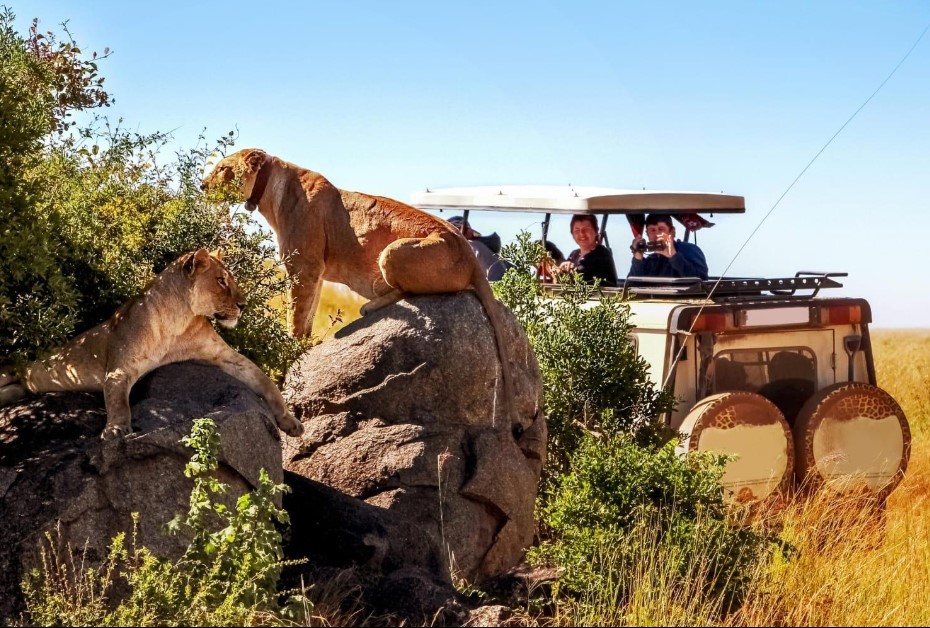
A standard shared safari normally accommodates a maximum of seven travelers in a specially modified 4x4 Land Cruiser. Every traveler receives a window seat, and the vehicle has a pop-up roof for unobstructed wildlife viewing and photography.
Budget camping reduces the cost even further. Travelers stay at public campsites inside or close to the national parks, where tents, mattresses, sleeping bags, meals, and basic facilities are provided.
The main ways to lower your Serengeti safari cost are:
A cheap safari should still include professional guiding, reliable transportation, sufficient food, drinking water, park fees, and suitable camping equipment. Extremely low quotations should be checked carefully to ensure that important services have not been removed.
Serengeti National Park is Tanzania’s most famous wildlife destination and one of Africa’s greatest safari areas. Its name comes from the Maasai word “Siringet,” commonly interpreted as “endless plains.”
The park covers approximately 14,750 square kilometers of grasslands, woodlands, rivers, rocky kopjes, and seasonal wetlands. This enormous ecosystem supports an extraordinary variety of animals throughout the year.
The Serengeti is especially famous for:
Although the migration attracts international attention, the Serengeti is not only a seasonal destination. The Central Serengeti contains resident wildlife throughout the year, making it a dependable safari area in almost every month.
Several important factors determine how much you will pay.
A longer safari requires more park fees, accommodation nights, meals, guide time, and vehicle use. A two-day tour is cheaper, but much of the journey is spent driving between Arusha and the Serengeti.
A three-day package is usually the minimum recommended option for travelers who want a meaningful Serengeti experience. A four- or five-day itinerary provides more relaxed game drives and allows you to include Tarangire, Lake Manyara, or additional time in the Serengeti.
Shared safaris offer the lowest price because the operating costs are divided among several participants. They normally follow a fixed schedule and use English-speaking guides.
Private safaris are more expensive, but they provide greater flexibility. You can choose departure times, spend longer at particular sightings, request specific accommodation, and customize the route.
Private tours are particularly suitable for:
Accommodation can account for a substantial part of the final price.
Budget camping is the least expensive choice. Travelers sleep in tents at public campsites. Basic equipment such as a tent, mattress, sleeping bag, and pillow is normally included.
The campsites usually have shared toilets and showers. Hot water and electricity are not always guaranteed. Charging may be available through solar power or inside the safari vehicle.
A safari chef prepares meals, and the guide manages wildlife activities and transportation.
Budget lodges and permanent camps offer beds, private or shared bathrooms, and greater comfort than public camping. They usually cost more but can still be affordable, especially outside peak season.
Mid-range accommodation normally includes a private bathroom, hot shower, comfortable bed, restaurant, and sometimes Wi-Fi. It is a good option for travelers seeking comfort without luxury prices.
Luxury camps include premium rooms or canvas suites, personalized service, beautiful locations, elaborate meals, and additional amenities. These properties significantly increase the total safari price.
Serengeti safari prices change according to demand.
The high season normally includes July through October and the Christmas and New Year period. These months attract travelers interested in the northern migration, Mara River crossings, dry-season wildlife viewing, and holiday travel.
The Ndutu calving season, particularly January and February, can also be busy and expensive.
The rainy periods may provide lower accommodation prices:
Low-season travel can offer excellent value. Landscapes are green, birdlife is abundant, and popular areas may feel less crowded. Rain normally falls in showers rather than continuously throughout every day, although road conditions can be more challenging.
A significant part of every Serengeti safari payment goes toward conservation and government charges. These may include:
These fees help support conservation, park management, community programs, roads, ranger activities, and wildlife protection.
Because park fees are charged per traveler and often per 24-hour period, they cannot be reduced in the same way as transportation or accommodation expenses.
Private safari prices become more affordable per person when more people share the vehicle. A solo traveler pays most vehicle-related expenses alone, while four or five friends can divide those costs.
Solo travelers seeking the lowest price should normally join a scheduled shared departure. Couples can compare shared camping packages with private budget options, while groups may find private tours surprisingly economical.
Most economical Serengeti safaris depart by road from Arusha. Domestic flights to Seronera, Kogatende, or other Serengeti airstrips save time but increase the cost.
Travelers beginning in Zanzibar must also consider flights to Arusha, Kilimanjaro, or the Serengeti. Booking domestic flights separately can sometimes reduce the total cost, but a complete flight-inclusive package offers easier coordination.
This is one of the shortest possible packages. It is suitable for travelers with very limited time, but the schedule can be demanding.
Day 1: Arusha to Serengeti
Depart early from Arusha and travel through the Ngorongoro highlands toward Serengeti National Park. Enjoy wildlife viewing along the route and during an afternoon game drive. Overnight at a public campsite or budget accommodation.
Day 2: Serengeti, Ngorongoro and Arusha
Take an early game drive before beginning the return journey through the Ngorongoro Conservation Area. Depending on the exact package, the tour may include scenic viewpoints but not a full crater descent.
This option is inexpensive, but travelers should understand that driving time is substantial.
A three-day tour is one of the most popular affordable choices.
Day 1: Arusha to Serengeti National Park
After breakfast, depart Arusha in a 4x4 Land Cruiser. Travel through Karatu and the Ngorongoro Conservation Area before entering the Serengeti. Enjoy an afternoon game drive while searching for lions, elephants, giraffes, zebras, wildebeest, and other animals.
Dinner and overnight are provided at a public campsite or selected lodge.
Day 2: Serengeti to Ngorongoro Area
Begin with an early-morning game drive in Central Serengeti. Predators are often more active during the cooler hours.
Explore the Seronera region, which is known for reliable wildlife viewing. After lunch, continue toward the Ngorongoro Conservation Area. Overnight near the crater rim or at a campsite.
Day 3: Ngorongoro Crater to Arusha
Descend into Ngorongoro Crater for an extensive game drive. The crater supports lions, elephants, buffaloes, zebras, hippos, hyenas, antelopes, and the rare black rhinoceros.
After lunch, ascend from the crater and return to Arusha, normally arriving in the late afternoon or early evening.
This package provides excellent variety while remaining reasonably affordable.
Day 1: Arusha to Tarangire National Park
Drive to Tarangire, a park known for elephants, ancient baobab trees, giraffes, zebras, wildebeest, and seasonal concentrations of wildlife along the Tarangire River.
After a full game drive, continue to your campsite or lodge for dinner and overnight.
Day 2: Tarangire Area to Serengeti
Travel through the Ngorongoro highlands and enter Serengeti National Park. Enjoy game viewing across the plains before reaching your campsite.
Day 3: Serengeti to Ngorongoro
Take morning and early-afternoon game drives in the Serengeti. Later, travel toward Ngorongoro for dinner and overnight.
Day 4: Ngorongoro Crater to Arusha
Descend into the crater, explore its diverse habitats, enjoy lunch, and return to Arusha.
This is one of the best-value options for first-time visitors because it covers three outstanding wildlife destinations.
A five-day safari provides more time for wildlife viewing and reduces the feeling of being rushed.
A typical itinerary includes:
Depending on road conditions and the package selected, Lake Manyara can replace Tarangire or be included as an additional destination.
A properly organized budget package commonly includes:
Always read your quotation carefully. The exact inclusions may differ between operators and packages.
Common exclusions include:
A common tipping guideline is approximately USD 10 per traveler per day for the safari team, depending on service quality and group arrangement. Tipping remains voluntary.
Camping provides a more adventurous and immersive experience than staying in a lodge. At night, travelers can hear the sounds of the African wilderness while sleeping inside secure tents.
Public campsites are generally unfenced. Wildlife may pass near the camping area, so guests must follow instructions from the guide and campsite staff. You should never walk away from the designated area at night without assistance.
A normal camping setup includes:
Travelers should bring a flashlight, comfortable clothing, personal toiletries, sandals, insect repellent, and a warm layer for cool evenings.
Camping is basic, but it makes a Serengeti safari accessible to travelers who would otherwise find lodge prices too expensive.
Yes, an affordable Serengeti safari can be safe when it is arranged by a legitimate and experienced local operator.
Low price should never mean poorly maintained vehicles, unqualified guides, missing park fees, inadequate meals, or unsafe camping equipment.
Before booking, check:
Kilipath African Safaris uses professional driver-guides and safari-ready 4x4 vehicles. Travelers receive guidance throughout the tour and are expected to follow national park regulations.
There is no single bad month to visit the Serengeti because resident animals remain in the ecosystem throughout the year. However, each season provides a different experience.
The southern Serengeti and Ndutu region become important for the migration and calving season. February is especially popular because thousands of wildebeest calves may be born within a short period.
This season offers dramatic predator activity but can be expensive in migration areas.
These months form the main green season. Visitor numbers are lower, some camps offer discounted rates, and landscapes are exceptionally beautiful.
Rain can affect roads and schedules, but the period is attractive to photographers, birdwatchers, and travelers seeking value.
The dry season begins, and wildlife movements become easier to follow. Prices may start increasing as the peak season approaches.
This is the high season. The migration often reaches the Western Corridor and Northern Serengeti, although exact locations depend on rainfall.
Northern Serengeti and Mara River crossings are normally most relevant from July through October. These areas require longer itineraries, private road safaris, or domestic flights, making them more expensive than Central Serengeti packages.
The short rains refresh the landscape, and migrating herds gradually move southward. November can provide competitive prices and fewer vehicles, while the Christmas season usually brings higher demand.
Shared group packages provide the most substantial saving for solo travelers and couples. Vehicle, fuel, guide, and operational costs are divided among participants.
A three-day Serengeti and Ngorongoro itinerary gives budget travelers access to two major destinations. Four days allow Tarangire to be added without making the journey excessively expensive.
Consider April, May, early June, or November if you are comfortable with possible rain. Accommodation rates may be lower, and parks are often less crowded.
Camping is significantly cheaper than permanent tented camps and lodges. It also provides an authentic wilderness atmosphere.
Arusha is the main gateway to Tanzania’s Northern Safari Circuit. Beginning elsewhere may require additional transfers or flights.
Affordable lodges, campsites, and group departures can become fully booked during popular travel periods. Booking early increases your chance of securing the lowest suitable option.
Private airport transfers, premium hotels, domestic flights, balloon safaris, and luxury accommodation are enjoyable but not necessary for a successful wildlife safari.
Do not compare prices without reviewing the inclusions. A quotation that appears cheaper may exclude park fees, crater charges, camping equipment, airport transfers, or taxes.
It is possible to see the Great Migration on a budget, but travelers must understand that the herds move continuously and cannot be guaranteed in a specific place.
Central Serengeti is generally easier and cheaper to include in a shared road safari. Northern Serengeti and Ndutu often require customized private itineraries because of their distance, seasonality, and accommodation requirements.
The approximate migration pattern is:
Rainfall determines the actual movement, so these periods should be treated as general guidance.
Travelers who cannot afford Northern Serengeti can still see large herds and excellent resident wildlife in Central Serengeti. The quality of a safari should not be judged only by whether a river crossing occurs.
Many visitors combine a Zanzibar beach holiday with a Serengeti safari.
The most economical approach is normally:
Travelers should arrive in Arusha at least one day before a shared safari because departures may begin early in the morning.
A fly-in safari directly from Zanzibar to a Serengeti airstrip saves time but generally costs more. It can be worthwhile for visitors with only two or three available days.
When comparing packages, verify whether the price includes:
Domestic safari aircraft often have stricter luggage limits. Soft-sided bags are preferable to hard suitcases.
Solo travelers often face a single-person supplement on private tours and lodge reservations. Joining a shared camping safari is the best solution.
You may travel with guests from different countries, making the safari both affordable and social. The maximum group size is commonly seven passengers per vehicle, with each traveler receiving a window seat.
Shared tours follow fixed schedules. Participants should be punctual, respectful, and comfortable making some decisions as a group.
Large suitcases can often be stored securely in Arusha while travelers take a smaller soft bag or backpack on safari.
Couples can choose between shared and private options.
A shared tour provides the lowest price, while a private budget safari offers more privacy and control over the itinerary. Camping couples normally receive their own tent.
For honeymoons or special occasions, it may be worthwhile to combine budget accommodation with one upgraded lodge night. This provides additional comfort without converting the entire tour into an expensive luxury package.
Families should consider children’s ages, driving distances, meal requirements, and accommodation comfort.
A private vehicle is often recommended because parents can control departure times, rest breaks, and the duration of game drives. Some parks, lodges, and camps offer reduced rates for children, depending on age.
Families with young children may prefer lodges or permanent tented camps with private bathrooms. Older children and teenagers may enjoy camping if they are comfortable with basic facilities.
Pack lightly and choose practical clothing.
Recommended items include:
Ngorongoro mornings and evenings can be cold, so warm clothing is essential. Avoid packing only shorts and light shirts.
Dark blue and black clothing may attract tsetse flies in certain areas, particularly Tarangire. Neutral colors such as khaki, beige, brown, and green are more suitable.
Your vehicle and guide are central to the quality of your safari.
A suitable safari Land Cruiser should include:
An experienced guide does much more than drive. The guide tracks animals, interprets behavior, identifies birds, explains ecosystems, manages park-entry timing, and helps guests position themselves for photographs.
Kilipath African Safaris provides experienced guides who understand the Northern Circuit and focus on creating an enjoyable, informative, and safe wildlife experience.
The Serengeti is one of the world’s greatest wildlife destinations, but visiting it does not have to exceed your travel budget. A shared camping safari allows you to experience its wildlife, landscapes, and unforgettable atmosphere at a reasonable cost.
For the best quotation, provide the following information:
Kilipath African Safaris will use these details to recommend the most suitable available package.
Contact us today to receive a customized cheap Serengeti safari cost and begin planning your Tanzania wildlife adventure.
Planning a budget Ngorongoro Crater safari holiday from Arusha? Compare a crater day trip, a two-day Tarangire and Ngorongoro safari, or a…
Read articleA Tanzania safari from Zanzibar can mean a short mainland trip during your beach holiday or a complete package with flights, game…
Read articleLooking for a group Tanzania safari price from Kilipath African Safaris? A published example for our four-day shared camping safari through Tarangire,…
Read articlePair game drives on Tanzania’s mainland with a few days on Zanzibar’s coast. With Kilipath African Safaris, you can start in Arusha…
Read article

