Lake Manyara vs. Nyerere Safari Prices | Tanzania Guide
A Lake Manyara safari can cost USD 150–220 per person for a shared day trip from Arusha. A published example of a…
Read articleArusha City - Tanzania
Safari & Travel Tips
September 3, 2026 · 13 min read
If you are planning a wildlife photography trip to southern Tanzania, understanding the photography Nyerere National Park safari price is one of the first steps toward building the right itinerary.
Nyerere National Park offers a very different photography experience from Tanzania's more famous Northern Circuit. Its combination of the Rufiji River, lakes, miombo woodland, open plains and riverine habitats provides photographers with opportunities to capture elephants, lions, African wild dogs, hippos, crocodiles, giraffes, buffalo and hundreds of bird species.
TANAPA describes Nyerere as a vast southern wilderness of more than 30,000 square kilometres, with the Rufiji River forming one of its most distinctive photographic features. The park is particularly well known for lions, elephants, buffalo, hippos, crocodiles and African wild dogs.
A photography safari can cost more than a standard sightseeing safari because photographers often prefer a private safari vehicle, additional time at sightings, carefully selected accommodation and longer stays inside the park.
This guide explains what you should budget, what influences the price and how to get the best photography experience from Nyerere National Park.
There is no single fixed photography safari price because the total depends on your accommodation category, safari length, transportation and whether the safari is private or shared.
As a practical planning range, travelers might budget approximately:
| Safari Style | Typical Planning Range per Person |
|---|---|
| Budget 2–3 day safari | USD 500–900+ |
| Mid-range 3–4 day safari | USD 900–1,500+ |
| Private photography safari | USD 1,200–2,000+ |
| Luxury photography safari | USD 1,800–3,500+ |
| Fly-in luxury safari | USD 2,000–4,500+ |
These are planning estimates rather than official fixed package prices. Final prices depend heavily on travel dates, accommodation availability, number of travelers, flights and activities selected.
For photographers, a private safari is usually worth considering because you control how long the vehicle remains at a wildlife sighting.
Nyerere offers photographic diversity that is difficult to reproduce in a safari consisting only of game drives.
A single trip may include:
TANAPA specifically lists photographic and filming activities among the experiences available in Nyerere and notes that photography can be enjoyed throughout the year.
The park's landscapes include woodland, open grasslands, floodplains, riverine forest, sandbanks and Rufiji River channels. That variety allows photographers to create a much broader portfolio than simply photographing animals standing on open plains.
Park fees are one component of the overall safari cost.
TANAPA currently lists the international adult entry fee for Nyerere National Park at USD 70, while the international child rate is listed at USD 20. TANAPA states that conservation fees are generally valid for a 24-hour period and that applicable fees include VAT where specified.
However, entrance fees are only part of your safari package.
Your total safari price may also include:
Because TANAPA tariffs and tourism fees can change, your tour operator should reconfirm the applicable fees when preparing your final quotation.
The longer you stay, the more expensive your safari becomes.
However, photographers should avoid making the trip too short.
A standard tourist may be satisfied with a quick game drive, while photographers frequently need additional time to wait for the correct:
A three- or four-day safari generally provides much better photographic flexibility than trying to experience Nyerere in a single rushed day.
Budget camps or simple lodges help reduce costs while still giving you access to the park.
These are ideal for travelers who prioritize wildlife rather than luxury.
Mid-range camps usually provide comfortable beds, private bathrooms and convenient access to safari areas.
This is often the best balance between comfort and price.
Luxury camps can dramatically increase the price but may provide:
For photographers, location may sometimes be more important than luxury.
A simple camp close to productive wildlife areas can be more useful than a luxurious property requiring long daily drives.
Most travelers enter Nyerere either by road or by small aircraft.
TANAPA notes that travelers can fly from Dar es Salaam to airstrips serving Nyerere, including Mtemere, Siwandu and Beho Beho, while road access is also possible.
Driving is generally the more economical option.
Advantages include:
The disadvantage is travel time.
Flying is more expensive but extremely convenient.
A fly-in safari is particularly useful for photographers who want to maximize the amount of time spent inside the park.
Instead of spending much of the day traveling overland, you can arrive near the safari area and begin exploring much sooner.
Safari prices can change according to the season.
Generally, the dry season attracts more safari travelers.
Accommodation availability becomes tighter and some camps may charge higher rates.
The wetter months may offer better accommodation value.
Photographers can also enjoy:
The best season depends on the type of photography you want.
The dry season is generally excellent for wildlife photography.
Animals increasingly gather near reliable water sources.
Photographers may see:
TANAPA highlights dawn and late afternoon as particularly productive periods for both lighting and wildlife sightings.
This period creates very different imagery.
Landscapes become greener and bird photography can be excellent.
It can be especially rewarding for travelers who prefer colorful landscapes rather than dusty dry-season scenery.
Nyerere is particularly important for photographers hoping to encounter African wild dogs.
TANAPA identifies the park as one of East Africa's important strongholds for the species.
Wild dogs are highly active subjects.
You may photograph:
Because their movements can be unpredictable, patience is essential.
Lion photography can be excellent during early mornings and late afternoons.
Good photographic opportunities can include:
A telephoto lens is especially useful.
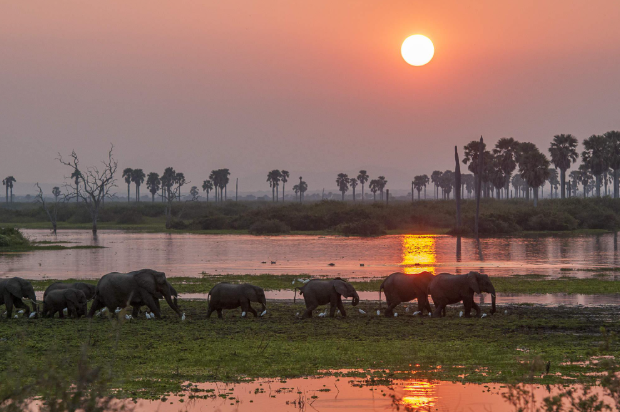
Elephants are one of Nyerere's signature wildlife subjects.
The Rufiji ecosystem can provide beautiful environmental photographs of elephants rather than only close-up portraits.
Photographers can frame elephants against:
These wider environmental images often communicate the feeling of wilderness better than tightly cropped photographs.
The Rufiji River creates excellent opportunities to photograph aquatic wildlife.
TANAPA specifically highlights hippos and crocodiles along the park's river channels, sandbanks and lakes.
Boat safaris can provide different angles than game drives.
Nyerere is extremely rewarding for bird photographers.
TANAPA reports more than 430 bird species on its current wildlife page and highlights species such as fish eagles, bee-eaters and wetland birds.
Photography opportunities can include:
A long telephoto lens is especially valuable.
One feature makes Nyerere particularly distinctive:
A boat safari completely changes the photographic perspective.
Rather than photographing everything from the height of a safari vehicle, you can work much closer to water level.
Possible subjects include:
TANAPA notes that Rufiji boat safaris can provide sightings of hippos, crocodiles, elephants and extensive birdlife.
Travel from Dar es Salaam to Nyerere.
After arriving and checking into your accommodation, begin an afternoon safari.
Focus your photography on:
Finish with golden-hour photography.
Start early.
Morning light is often one of the most productive periods for wildlife photography.
Search for:
Because this is a photography-focused safari, your guide allows more time at promising sightings whenever safari conditions permit.
Continue through the afternoon and photograph sunset landscapes before returning to camp.
Depending on your itinerary, begin with an early activity or combine the safari with a Rufiji River boat experience.
Photograph:
Continue afterward toward Dar es Salaam or transfer to the airstrip for your onward flight.
For photographers, four days is even better.
Dar es Salaam → Nyerere → afternoon safari
Full-day photography game drive
Morning game drive + afternoon boat safari
Early photography session → departure
This schedule gives you more time to return to areas where lions, wild dogs or elephants were previously spotted.
You don't need professional equipment to enjoy Nyerere, but certain lenses can improve your results.
A DSLR or mirrorless camera works well.
Having two camera bodies can be useful because it reduces the need to change lenses in dusty conditions.
One of the most versatile safari lenses.
Ideal for:
Excellent for:
Useful for:
Excellent for medium-distance wildlife and large animals.
A bean bag can be extremely useful.
You can rest your lens against:
It provides additional stability without requiring a tripod.
For standard game drives, a tripod can sometimes be difficult to use inside a safari vehicle.
A monopod or bean bag can be more practical.
Tripods are still useful for:
For serious photography, the safari vehicle matters.
A suitable photography safari vehicle should ideally provide:
For the best experience, photographers should avoid overcrowding the vehicle.
A safari vehicle carrying fewer guests provides more freedom to move from one side to another when wildlife suddenly changes direction.
For wildlife photographers, usually yes.
With a private safari vehicle you can spend longer waiting for:
You also have much greater control over vehicle position.
This is one of the reasons the photography Nyerere National Park safari price can be higher than an ordinary sightseeing safari.
A solo private safari will generally cost more per person because you are paying most vehicle expenses yourself.
Two photographers sharing a vehicle can often reduce the cost significantly.
Three or four photographers may reduce the individual price further, although serious photographers usually prefer keeping vehicle occupancy low.
A private safari is particularly attractive for two travelers.
You can share:
This often creates a better per-person price than traveling alone.
Groups can receive very good value.
However, photographers should consider space carefully.
A vehicle filled with seven travelers may be economical, but it can become difficult when several photographers want to shoot from the same side.
For a dedicated photo safari, fewer passengers per vehicle is usually better.
Boat safari prices vary depending on the operator, duration, camp and whether the activity is private or shared.
Rather than comparing only the cheapest boat excursion, photographers should ask:
A sunset boat trip can provide spectacular photographic opportunities.
Walking safaris add another dimension.
Instead of concentrating exclusively on large animals, photographers may capture:
Walking and boating activities require authorized guides and appropriate safety procedures.
Depending on your package, inclusions commonly include:
Optional items may include:
Always examine your quotation carefully.
Common exclusions include:
Sharing vehicle costs is one of the easiest ways to reduce the per-person price.
You can still enjoy excellent photography without staying at the most expensive luxury lodge.
Road transfers from Dar es Salaam can reduce transportation costs.
Accommodation may be less expensive during lower-demand periods.
This may sound counterintuitive, but photography success depends heavily on time.
A cheap two-day safari that produces few photographic opportunities may offer worse value than a well-designed three- or four-day safari.
Best for:
Expect simpler accommodation but excellent safari opportunities.
Best for most travelers.
You receive:
Best for travelers seeking exclusivity and maximum comfort.
Luxury options may include:
Possible but rushed.
Good introduction.
Excellent balance.
Ideal for serious photographers.
Photographers benefit greatly from repeated opportunities.
You may encounter wild dogs on the first day but have poor lighting.
With additional days, you have another chance.
Both are excellent, but they offer different experiences.
| Feature | Nyerere | Serengeti |
|---|---|---|
| Landscapes | Rivers, woodland, lakes | Open plains |
| Boat safaris | Yes | No traditional river boat safari |
| Wild dogs | Excellent potential | Possible but less central |
| Migration | Not the main attraction | Famous Great Migration |
| Visitor density | Generally lower | Can be higher |
| Bird photography | Excellent | Excellent |
| River photography | Outstanding | More limited |
| Classic plains photography | Good | Exceptional |
If you want remote wilderness and varied photographic environments, Nyerere is particularly attractive.
Nyerere allows photographers to tell a broader visual story.
Instead of returning home with only close-up portraits, you can create images of:
That diversity is one of the park's greatest strengths.
A carefully planned Nyerere photography safari offers far more than simply seeing wildlife.
It allows you to slow down, wait for the right moment and create images that tell the story of Tanzania's southern wilderness.
At Kilipath African Safaris, we can arrange a private photography itinerary based on:
Whether your priority is African wild dogs, elephants, Rufiji River landscapes, birds, lions or sunset photography, the itinerary can be structured to maximize productive time in the field.
A Lake Manyara safari can cost USD 150–220 per person for a shared day trip from Arusha. A published example of a…
Read articleA Nyerere Tanzania wildlife safari can take you from a woodland game drive in the morning to a boat on the Rufiji…
Read articlePlanning a Tanzania safari that combines Lake Manyara National Park and Nyerere National Park is an excellent way to experience the country's…
Read articleDiscover Tanzania’s untamed wilderness without exceeding your travel budget. A budget Ruaha safari adventure offers incredible wildlife encounters, spectacular landscapes, authentic African…
Read article