

Budget Ngorongoro Crater Safari Holiday
Planning a budget Ngorongoro Crater safari holiday from Arusha? Compare a crater day trip, a two-day Tarangire and Ngorongoro safari, or a…
Read articleArusha City - Tanzania
Safari & Travel Tips
September 3, 2026 · 13 min read
A Serengeti safari is one of the most rewarding wildlife experiences in Africa. Our Serengeti safari Northern Circuit packages combine Tanzania’s most celebrated national parks into carefully planned adventures featuring extraordinary landscapes, abundant wildlife and authentic cultural experiences.
Depending on the number of days available, your Northern Circuit safari can include:
The Serengeti is usually the centerpiece of the journey. However, every destination contributes something different. Tarangire is known for elephants and ancient baobab trees, Ngorongoro offers an exceptional concentration of wildlife, and the Serengeti delivers expansive plains, predators and the Great Migration.
Our packages can be arranged as private or shared safaris, with accommodation ranging from public camping to comfortable tented camps and luxury lodges.
Tanzania’s Northern Circuit offers one of Africa’s most complete safari experiences. The parks are connected by road, making it possible to visit several different ecosystems during one itinerary.
The circuit is particularly attractive because it offers:
Your journey can begin from Arusha, Kilimanjaro International Airport or Arusha Airport. Guests arriving from Zanzibar can take a morning flight to Arusha and, depending on the itinerary and arrival time, begin their safari the same day.
Serengeti National Park is famous for its seemingly endless plains and remarkable diversity of wildlife. It covers approximately 14,750 square kilometres and forms part of a larger ecosystem extending into Kenya’s Maasai Mara.
The park supports large populations of lions, leopards, cheetahs, elephants, buffaloes, giraffes, zebras, wildebeest, hippos and many species of antelope. More than 500 bird species have also been recorded within the Serengeti ecosystem.
Game drives take place in a specially equipped 4×4 safari vehicle with a pop-up roof. This allows guests to stand safely and enjoy an unobstructed view while observing or photographing wildlife.
The Serengeti is divided into several important safari regions:
The Seronera Valley in Central Serengeti offers productive wildlife viewing throughout the year. Permanent water sources attract resident animals, making it one of the best areas for seeing big cats.
Central Serengeti is suitable for first-time visitors and travelers who cannot plan their journey entirely around the migration.
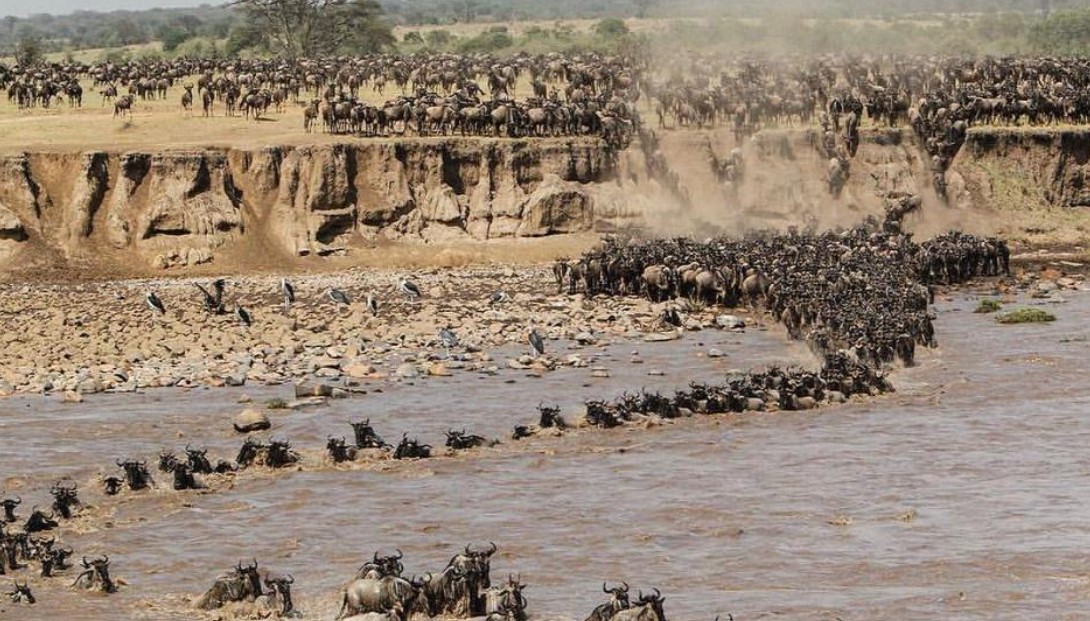
Northern Serengeti is characterized by rolling hills, woodland, open grassland and the Mara River. From approximately July through October, migrating herds may enter this area and attempt dramatic river crossings.
River crossings are natural events and cannot be guaranteed. Nevertheless, spending several nights in Northern Serengeti increases the opportunity to explore different crossing points and follow the herds.
Northern Serengeti is normally included in private safari packages because the distance, accommodation arrangements and flexible routing are not suitable for standard shared-group departures.
The Western Corridor includes the Grumeti River and surrounding woodland. Migrating herds are commonly associated with this region between May and July, although their precise location changes according to rainfall.
The area is also home to crocodiles, hippos, elephants, giraffes and resident predators.
From approximately December through April, large wildebeest herds gather across the short-grass plains of Ndutu and the Southern Serengeti. The calving season is normally most active from late January through February.
Thousands of calves may be born during this period, attracting lions, cheetahs, leopards and hyenas. Ndutu safaris are especially popular with wildlife photographers.
The Great Migration is a continuous movement of wildebeest, zebras and gazelles through the Serengeti–Mara ecosystem. The animals follow seasonal rainfall and fresh grazing rather than a fixed calendar.
A general migration pattern is:
| Period | Typical region | Safari highlight |
|---|---|---|
| December–March | Ndutu and Southern Serengeti | Calving, big cats and large herds |
| April–May | Central and Western Serengeti | Green landscapes and moving herds |
| June–July | Western and Northern areas | Grumeti region and movement north |
| July–October | Northern Serengeti and Maasai Mara | Possible Mara River crossings |
| November | Central and Eastern Serengeti | Herds returning south |
This pattern is only a guide. Rainfall can change the movement of the animals from year to year. Our itineraries are therefore designed according to your travel dates and the regions most likely to offer productive wildlife viewing.
This compact itinerary is suitable for travelers with limited time who want to experience Tanzania’s two most famous wildlife destinations.
Day 1: Arusha to Serengeti National Park
Depart from Arusha early in the morning and travel through the Ngorongoro Conservation Area toward Serengeti National Park. Enjoy wildlife viewing while driving to Central Serengeti. After lunch, continue with an afternoon game drive.
Day 2: Serengeti National Park
Begin with an early-morning game drive when wildlife is particularly active. Explore the Seronera area in search of lions, leopards, cheetahs, elephants and other animals. Later, drive toward the Ngorongoro region for your overnight stay.
Day 3: Ngorongoro Crater to Arusha
Descend into Ngorongoro Crater early in the morning. Explore the crater floor and enjoy a picnic lunch before returning to Arusha.
This itinerary involves long drives, but it offers an excellent introduction to the Northern Circuit.
The four-day package adds Tarangire National Park and provides a more varied experience.
Day 1: Arusha to Tarangire National Park
Day 2: Tarangire or Karatu to Serengeti
Day 3: Serengeti game drive and transfer to Ngorongoro
Day 4: Ngorongoro Crater and return to Arusha
This is one of the most popular options for budget-conscious travelers. It combines elephants, baobab landscapes, the Serengeti plains and the remarkable Ngorongoro Crater.
A five-day itinerary provides more time for wildlife viewing and reduces the pressure of moving between destinations.
Suggested itinerary:
Lake Manyara can be included instead of Tarangire or added when travel time permits. The route can also be adapted around accommodation availability.
A six-day safari allows travelers to spend two or three nights in the Serengeti while also exploring Tarangire and Ngorongoro.
Suggested itinerary:
This option is ideal for couples, families and photographers who want more time at sightings without rushing through the Serengeti.
This comprehensive itinerary can include Lake Manyara, Tarangire, Serengeti and Ngorongoro.
Suggested itinerary:
The additional time provides a more relaxed journey and better opportunities for photography.
This seasonal package is recommended from July through October.
Suggested itinerary:
A domestic flight from Northern Serengeti can reduce driving time. The exact route depends on your budget, accommodation and onward travel arrangements.
From December through March, the itinerary can focus on Central Serengeti, Ndutu and Ngorongoro.
We recommend spending at least two nights in Ndutu. This provides time to follow the herds and search for predators across different parts of the short-grass plains.
Tarangire National Park is a valuable part of many Serengeti safari Northern Circuit packages. It is particularly known for elephants, baobab trees and the Tarangire River.
During the dry season, animals gather around remaining water sources. Visitors may encounter large elephant families, zebras, wildebeest, giraffes, buffaloes, lions and numerous bird species.
Tarangire is approximately two hours from Arusha, making it an excellent first or final safari destination.
Travelers should avoid wearing black or dark blue clothing in areas where tsetse flies may be present. Neutral colors such as beige, khaki, brown and green are generally more comfortable for safari.
Ngorongoro Crater is one of Tanzania’s most impressive natural attractions. Its enclosed ecosystem supports a high concentration of animals within a comparatively small area.
During a crater game drive, travelers may see:
Leopards are possible but are less commonly observed on the open crater floor. Giraffes are generally not found inside the crater, although they may be seen elsewhere in the Ngorongoro Conservation Area.
Temperatures around the crater rim can be cold, especially early in the morning. Pack a warm jacket or fleece.
Lake Manyara is a compact park located below the Great Rift Valley escarpment. Its habitats include forest, woodland, wetland and lakeshore environments.
Wildlife sightings may include elephants, giraffes, zebras, buffaloes, monkeys, hippos and many bird species. The park is historically associated with tree-climbing lions, although sightings are never guaranteed.
Lake Manyara is often included in five-, six- or seven-day Northern Circuit packages. Depending on current conditions and the traveler’s priorities, additional time in Tarangire or Serengeti may sometimes provide greater value.
Budget camping provides an adventurous and economical safari experience. Guests sleep in tents at public campsites, and a safari chef prepares the meals.
Camping equipment normally includes:
Bathrooms and showers are shared with other campsite guests. Facilities are simple but functional. Public campsites are located in designated safari areas, and guests receive instructions from their guide and chef about safety.
Tented camps combine the atmosphere of the wilderness with private facilities. Rooms are generally built on raised platforms and include proper beds, private bathrooms and hot showers.
Many camps are unfenced, allowing wildlife to move naturally through the surrounding area. Camp staff escort guests after dark.
Lodges offer permanent rooms, restaurants, lounges and other facilities. They are a comfortable choice for families or travelers who prefer solid walls and more conventional accommodation.
Luxury accommodation may include spacious suites, exceptional locations, swimming pools, premium dining and personalized service. Luxury packages can also incorporate fly-in transfers and exclusive activities.
The exact inclusions depend on the selected itinerary, but a standard package may include:
Unless specifically stated, the following may not be included:
Always review your written quotation because inclusions can vary between packages.
Safaris are conducted in a 4×4 Land Cruiser designed for Tanzania’s national parks. Typical vehicle features include:
Your guide is responsible for wildlife interpretation, navigation and day-to-day coordination. Guides communicate with one another by radio to locate wildlife while respecting park rules and animal welfare.
Safari prices vary considerably. The main factors include:
Private safari prices are usually calculated according to the group size. Because vehicle costs are divided among the travelers, the per-person price generally decreases as the number of guests increases.
Shared camping packages provide the most economical option. Mid-range and luxury prices depend heavily on the selected camps, seasonal supplements and room availability.
For an accurate quotation, provide:
The Serengeti is a year-round destination, but each season offers a different experience.
This is the dry season across much of Northern Tanzania. Wildlife often gathers near rivers and water sources, and vegetation becomes less dense. Northern Serengeti is particularly popular during this period.
These months are associated with the calving season in Ndutu and the Southern Serengeti. It is an excellent period for seeing young animals and predator activity.
These are generally wetter months. Landscapes are green, visitor numbers may be lower and some properties offer seasonal rates. Roads can become muddy, but wildlife viewing remains possible.
Short rains may begin in November. The rain is often intermittent, and the landscape starts turning green. It can be an attractive transition period for safari.
Your Northern Circuit package can be customized with additional experiences.
A hot-air balloon flight offers an aerial perspective of the Serengeti. Flights normally operate early in the morning and are followed by breakfast. Advance booking is strongly recommended.
A cultural visit provides an opportunity to learn about Maasai traditions, family life and pastoral practices. We prioritize respectful visits and encourage guests to ask before photographing people.
Travelers can visit the Lake Eyasi region to learn about the Hadzabe community and their traditional hunting and gathering practices. This extension usually requires an additional day.
Guided walking safaris are available in selected areas and must follow local regulations. They provide a closer look at tracks, plants, insects and smaller details that are easily missed from a vehicle.
After the safari, fly from Arusha, Kilimanjaro or the Serengeti to Zanzibar. A beach extension can include Stone Town, a spice tour, snorkeling or several relaxing nights on the coast.
Recommended safari items include:
Soft-sided luggage is easier to store inside a safari vehicle. Large suitcases can often be kept safely at the operator’s office while you are on safari.
Kilipath African Safaris creates customized Northern Tanzania itineraries for solo travelers, couples, families and private groups.
When planning your safari with us, you receive:
Our goal is to design a realistic itinerary that gives you enough time to enjoy the parks without unnecessary rushing.
Planning a budget Ngorongoro Crater safari holiday from Arusha? Compare a crater day trip, a two-day Tarangire and Ngorongoro safari, or a…
Read articleA Tanzania safari from Zanzibar can mean a short mainland trip during your beach holiday or a complete package with flights, game…
Read articleLooking for a group Tanzania safari price from Kilipath African Safaris? A published example for our four-day shared camping safari through Tarangire,…
Read articlePair game drives on Tanzania’s mainland with a few days on Zanzibar’s coast. With Kilipath African Safaris, you can start in Arusha…
Read article

