

Budget Ngorongoro Crater Safari Holiday
Planning a budget Ngorongoro Crater safari holiday from Arusha? Compare a crater day trip, a two-day Tarangire and Ngorongoro safari, or a…
Read articleArusha City - Tanzania
Safari & Travel Tips
September 3, 2026 · 13 min read
A Serengeti safari Northern Circuit vacation takes you through Tanzania’s most celebrated wildlife destinations. It combines the endless plains of Serengeti National Park with the Ngorongoro Crater, Tarangire National Park, Lake Manyara National Park, and the landscapes surrounding Arusha.
This route is ideal for first-time safari travelers, couples, honeymooners, families, photographers, and experienced wildlife enthusiasts. You can follow the Great Migration, search for the Big Five, enjoy spectacular African sunsets, and stay in accommodation ranging from authentic safari camps to luxurious lodges.
At Kilipath African Safaris, we organize private and shared Northern Circuit safaris according to your travel dates, preferred comfort level, group size, and budget. Our team is based in Tanzania and understands the practical details that make a safari comfortable, safe, and memorable.
Tanzania’s Northern Circuit offers an exceptional variety of wildlife and landscapes within one safari route. Each destination contributes a different experience.
In Tarangire, you can explore a landscape of ancient baobab trees and watch elephants gathering near the Tarangire River. Lake Manyara introduces you to groundwater forests, Rift Valley scenery, monkeys, birds, and lakeshore habitats. Ngorongoro provides concentrated wildlife viewing inside a vast volcanic caldera. Serengeti completes the journey with open plains, predators, and the seasonal movements of the Great Migration.
The circuit is also relatively convenient because most road safaris begin and finish in Arusha. Travelers can choose a short four-day itinerary or create a longer holiday lasting ten days or more.
A Northern Circuit vacation is particularly suitable if you want:
Serengeti National Park is the central attraction of this Northern Circuit journey. Its plains, kopjes, river valleys, woodlands, and seasonal water sources support an extraordinary concentration of wildlife.
The Serengeti ecosystem is famous for the annual movement of wildebeest, zebras, and gazelles. However, the park is not only a migration destination. Its resident wildlife makes it rewarding throughout the year.
Commonly observed animals include:
The Serengeti also supports hundreds of bird species. Colorful residents and seasonal migrants make the park interesting for both casual observers and dedicated birdwatchers.
Central Serengeti, often called the Seronera area, is known for reliable wildlife viewing throughout the year. Permanent water sources attract resident animals even when the migrating herds have moved into another part of the ecosystem.
The combination of open grassland, acacia woodland, rivers, and rocky kopjes creates excellent habitats for predators. Leopards may be seen resting in trees along river valleys, while lions frequently use kopjes as observation points.
Central Serengeti is an excellent choice for travelers taking their first safari or visiting outside the major migration periods.
Northern Serengeti is especially popular from approximately July to October, when the migrating herds may approach or cross the Mara River. River crossings can be dramatic, but their precise timing cannot be guaranteed because wildlife movements depend on rainfall and grazing conditions.
This region is more remote than Central Serengeti. A private safari or fly-in itinerary is normally the best way to visit it because shared group routes generally do not travel as far as the northern sector.
We recommend spending at least two or three nights in Northern Serengeti if river crossings are one of your priorities.
The Western Corridor includes the Grumeti River and surrounding woodlands. Migrating herds commonly pass through this region between approximately May and July, although seasonal conditions influence the timing.
Visitors may encounter large herds, crocodiles, hippos, elephants, predators, and beautiful riverine scenery.
The short-grass plains around Southern Serengeti and Ndutu become particularly important during the green season. Wildebeest calving is generally associated with January and February, although herds can be present in the broader area from December through March or April.
Thousands of newborn animals attract predators, creating excellent opportunities for wildlife observation and photography.
Ndutu requires a specially designed seasonal itinerary. It is usually arranged as a private safari because standard shared departures do not cover this area.
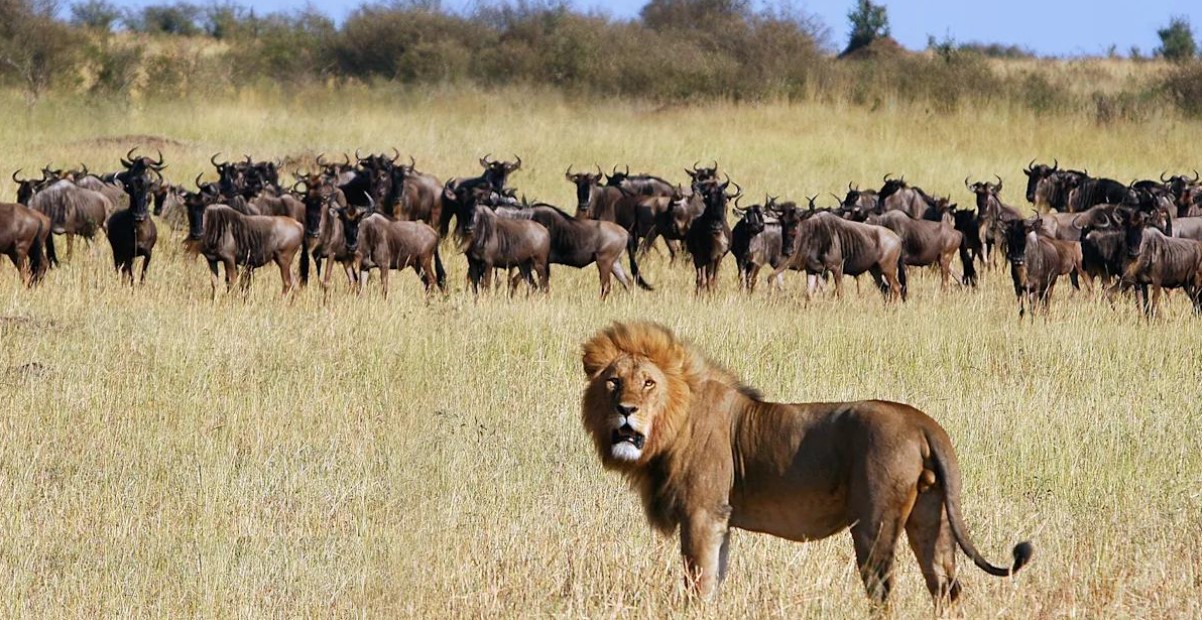
The Great Migration is a continuous movement rather than a single event. Large numbers of wildebeest, zebras, and gazelles travel through the Serengeti–Mara ecosystem in search of fresh grass and water.
The approximate pattern is:
| Period | Typical location | Main experience |
|---|---|---|
| December–March | Ndutu and southern plains | Calving, large herds and predators |
| April–May | Central and western areas | Green landscapes and moving herds |
| May–July | Western Corridor and Grumeti | Herd movement and possible river activity |
| July–October | Northern Serengeti | Mara River season and dry-season wildlife |
| October–December | Northern and Central Serengeti | Herds gradually moving south |
These periods are guidelines rather than fixed promises. Rainfall can change the animals’ route and timing. A reliable local operator should select the most suitable Serengeti region using your dates rather than promoting one location for every month.
Even when the migration is elsewhere, the Serengeti still offers rewarding game drives because its resident wildlife remains present throughout the year.
The Ngorongoro Crater is another highlight of most Serengeti Northern Circuit vacations. The crater is approximately 20 kilometers across and around 600 meters deep, according to the Ngorongoro Conservation Area Authority.
An early descent gives you time to explore its grassland, woodland, wetlands, and lake environments. Wildlife may include lions, elephants, buffaloes, hippos, zebras, wildebeest, hyenas, and several species of antelope.
Ngorongoro is also one of Tanzania’s important locations for searching for the endangered black rhinoceros. A sighting cannot be guaranteed, but the open crater floor can provide favorable viewing conditions.
Because vehicles must use authorized tracks, an experienced guide is essential for planning the game-drive route and interpreting animal behavior. The conservation authority requires visitors to the crater and Oldupai Gorge to be accompanied by a licensed guide. Official regulations also state that gates generally operate between 6:00 a.m. and 6:00 p.m. NCAA regulations.
Tarangire National Park is famous for its elephants, baobab trees, varied birdlife, and seasonal concentration of wildlife around the Tarangire River.
During the dry season, the river becomes an important water source. Elephants, zebras, wildebeest, giraffes, buffaloes, and antelopes may gather in the surrounding areas. Lions and other predators follow the prey animals.
Tarangire offers a different visual character from Serengeti. Its woodland, river valleys, swamps, and enormous baobab trees make it especially attractive to photographers.
The park works well as the first or final destination on a Northern Circuit road safari because it is accessible from Arusha.
Lake Manyara is situated beneath the Great Rift Valley escarpment. The park includes forest, woodland, open areas, wetlands, and lakeshore habitats within a relatively compact destination.
Wildlife changes with water levels and seasonal conditions, but visitors may encounter elephants, giraffes, buffaloes, zebras, monkeys, hippos, and many bird species.
TANAPA describes Lake Manyara as lying approximately 125 kilometers from Arusha, with a normal road journey of around two to two and a half hours. The park is frequently combined with Serengeti and Ngorongoro. TANAPA visitor guide.
Lake Manyara can be included when you have five days or more. For a shorter itinerary, we may recommend prioritizing Serengeti, Ngorongoro, and Tarangire.
The best duration depends on the parks you want to visit, your travel pace, and your budget.
A four-day safari can include Tarangire, Serengeti, and Ngorongoro. It is suitable for travelers with limited time, although it involves several long drives.
A typical itinerary is:
Five days creates a more comfortable experience and allows additional time in Serengeti.
A popular route is:
Lake Manyara can replace Tarangire or be added when travel conditions permit.
A six-day itinerary provides a better balance between wildlife viewing and travel time. It can include Tarangire, Lake Manyara, two or three days in Serengeti, and Ngorongoro Crater.
This duration is recommended for couples, families, and travelers who do not want to rush between destinations.
Seven days allows you to explore more slowly, spend multiple nights in Serengeti, and choose accommodation that minimizes unnecessary driving.
It is also a good duration for photographers because the guide can dedicate more time to sightings and revisit productive areas.
An extended Northern Circuit vacation may include:
This duration works particularly well when following the Great Migration into a remote Serengeti region.
Arrive at Kilimanjaro International Airport or Arusha Airport. Our representative will meet you and transfer you to your hotel.
Depending on your arrival time, you can relax or explore Arusha. Your safari guide will confirm the next morning’s departure and answer any final questions.
After breakfast, travel to Tarangire for your first game drive. Explore baobab-dotted landscapes and search for elephants, giraffes, zebras, antelopes, and predators.
Enjoy lunch during the game drive before continuing to your lodge or tented camp.
Travel toward Serengeti through the Ngorongoro highlands. The route introduces you to changing landscapes, local communities, and broad views across the conservation area.
After entering Serengeti, continue with an afternoon game drive on the way to your accommodation.
Leave early for a full day of wildlife viewing. Your guide will plan the route according to recent sightings, animal movements, and the season.
You may search for lions, leopards, cheetahs, elephants, giraffes, hippos, and migrating herbivores. Lunch can be enjoyed at a picnic site or arranged as a hot meal, depending on your safari program.
A second full day allows you to explore a different section of the park. You can spend longer at interesting sightings and enjoy the experience without rushing toward the exit gate.
An optional hot-air balloon safari can be arranged in advance. The activity normally begins around sunrise and is followed by breakfast in the bush.
Enjoy a final Serengeti game drive before traveling toward Ngorongoro. Depending on your accommodation, you may stay near the crater rim or in Karatu.
A crater-rim lodge provides beautiful views and convenient morning access, while accommodation in Karatu often provides better value.
Descend into Ngorongoro early in the morning. Explore the crater floor and stop for lunch before ascending and returning to Arusha.
You will normally arrive in the late afternoon or early evening. We recommend booking an evening flight with sufficient time for the road journey and possible delays.
Your accommodation has a major influence on the cost and atmosphere of your safari.
Budget camping offers an adventurous and affordable experience. Guests sleep in tents at public campsites, with camping equipment and meals provided by the safari team.
Public campsites normally have shared bathroom and shower facilities. Wildlife may move near unfenced camps, so guests must always follow instructions from guides and camp staff.
Mid-range accommodation offers private rooms or permanent canvas tents with beds and en-suite bathrooms. It provides additional comfort while preserving the feeling of being close to nature.
This category is popular with couples, families, and first-time safari travelers.
Luxury lodges and camps may offer spacious rooms, high-quality dining, beautiful locations, swimming pools, personalized service, and refined interior design.
Some properties are positioned near productive wildlife areas, reducing transfer time and allowing guests to enjoy the wilderness between game drives.
Premium camps provide a high level of privacy and service. They are suitable for luxury honeymoons, special celebrations, and travelers looking for an exclusive experience.
During migration season, mobile tented camps may relocate between different Serengeti regions to remain closer to the herds.
The Northern Circuit can be visited throughout the year, but each season provides a different experience.
This is an excellent period for visiting Ndutu and the southern plains during the wildebeest calving season. Predators are active, and the green landscapes are attractive for photography.
The green season brings dramatic skies, fresh vegetation, newborn animals, and fewer visitors in many areas. April and May can receive heavier rain, and some roads may become muddy.
Travelers who accept occasional rain can enjoy peaceful parks and potential seasonal accommodation offers.
The dry season begins, and wildlife viewing becomes increasingly productive around permanent water sources. Migrating herds may move through western parts of Serengeti.
These are popular months for dry-season safaris. Northern Serengeti becomes important for travelers hoping to witness Mara River activity.
Demand is high, so flights and accommodation should be reserved early.
Short rains can refresh the landscapes. The migrating herds gradually move toward Central and Southern Serengeti, depending on rainfall.
This transition period can provide strong wildlife viewing with fewer vehicles than the peak months.
A Kilipath African Safaris package can normally include:
Exact inclusions are confirmed in your personal quotation.
Items commonly excluded include:
Our safaris use customized 4x4 Land Cruisers with pop-up roofs for wildlife viewing and photography.
Depending on the vehicle, onboard features may include charging sockets, a cooler or refrigerator, seatbelts, first-aid equipment, radio communication, and air conditioning.
Your guide is responsible for much more than driving. A knowledgeable guide reads tracks, understands animal behavior, communicates with other guides, manages park-entry times, and positions the vehicle safely for viewing and photography.
A Serengeti safari can be combined with Zanzibar for a wildlife-and-beach holiday. After several early mornings and adventurous game drives, Zanzibar offers time to relax beside the Indian Ocean.
Flights operate between the safari region and Zanzibar, including connections through Arusha, Kilimanjaro, or Serengeti airstrips.
A combined holiday may include:
We can arrange the safari, domestic flights, transfers, and Zanzibar accommodation as one coordinated itinerary.
Pack light, comfortable clothing in neutral colors. Mornings in Serengeti and Ngorongoro can be cold, while afternoons may become warm.
Recommended items include:
Avoid dark blue or black clothing in areas where tsetse flies are common, particularly Tarangire. Bright white clothing can also become dusty quickly.
Planning a budget Ngorongoro Crater safari holiday from Arusha? Compare a crater day trip, a two-day Tarangire and Ngorongoro safari, or a…
Read articleA Tanzania safari from Zanzibar can mean a short mainland trip during your beach holiday or a complete package with flights, game…
Read articleLooking for a group Tanzania safari price from Kilipath African Safaris? A published example for our four-day shared camping safari through Tarangire,…
Read articlePair game drives on Tanzania’s mainland with a few days on Zanzibar’s coast. With Kilipath African Safaris, you can start in Arusha…
Read article

