

Budget Ngorongoro Crater Safari Holiday
Planning a budget Ngorongoro Crater safari holiday from Arusha? Compare a crater day trip, a two-day Tarangire and Ngorongoro safari, or a…
Read articleArusha City - Tanzania
Safari & Travel Tips
September 3, 2026 · 15 min read
Discover two of northern Tanzania’s most fascinating wildlife destinations with our carefully planned Tarangire safari Lake Manyara deal. This tour combines Tarangire National Park’s enormous elephant herds and ancient baobab trees with Lake Manyara National Park’s beautiful groundwater forest, birdlife, primates, and dramatic Rift Valley scenery.
Designed for travelers with limited time, this safari package provides two rewarding days of wildlife viewing without requiring a journey to the more distant Serengeti. It is a convenient choice for couples, families, solo travelers, honeymooners, photographers, and visitors who want to add a short safari to a Zanzibar beach holiday or Mount Kilimanjaro adventure.
You will travel in a comfortable 4x4 safari vehicle with a professional English-speaking guide who understands wildlife behavior, local ecosystems, and the best places to search for animals. Accommodation, park fees, meals, drinking water, game drives, and transfers can all be arranged as part of one convenient package.
This Tarangire and Lake Manyara safari is normally organized as a two-day, one-night tour starting and ending in Arusha. Depending on your travel plans, pickup can also be arranged from Kilimanjaro International Airport, Arusha Airport, Moshi, or selected hotels in northern Tanzania.
The itinerary can be customized according to your budget, preferred accommodation level, flight schedule, dietary requirements, and the number of people traveling.
Tarangire and Lake Manyara are geographically close enough to combine into a short itinerary, but their landscapes and wildlife experiences are remarkably different.
Tarangire is characterized by open grasslands, seasonal wetlands, acacia woodland, enormous baobab trees, and the life-supporting Tarangire River. The park is especially famous for elephants, but visitors may also encounter lions, giraffes, zebras, wildebeest, buffaloes, warthogs, impalas, and many other species.
Lake Manyara lies beneath the cliffs of the Great Rift Valley. Its environment includes groundwater forest, open plains, acacia woodland, hot springs, marshes, and the alkaline lake. Baboons and blue monkeys are commonly found in the forest, while giraffes, zebras, buffaloes, elephants, and hippos inhabit other areas of the park.
Visiting both parks allows you to experience two distinct sides of northern Tanzania within a relatively short period.
Your safari begins with pickup from your hotel in Arusha after breakfast. You will meet your guide, receive a short safari briefing, and begin the approximately two-hour journey toward Tarangire National Park.
As you leave Arusha, the urban surroundings gradually give way to farms, villages, open plains, and beautiful countryside. Depending on the weather, you may see distant mountain scenery along the way.
After registration at the park entrance, your guide will raise the vehicle’s pop-up roof, and your first game drive will begin.
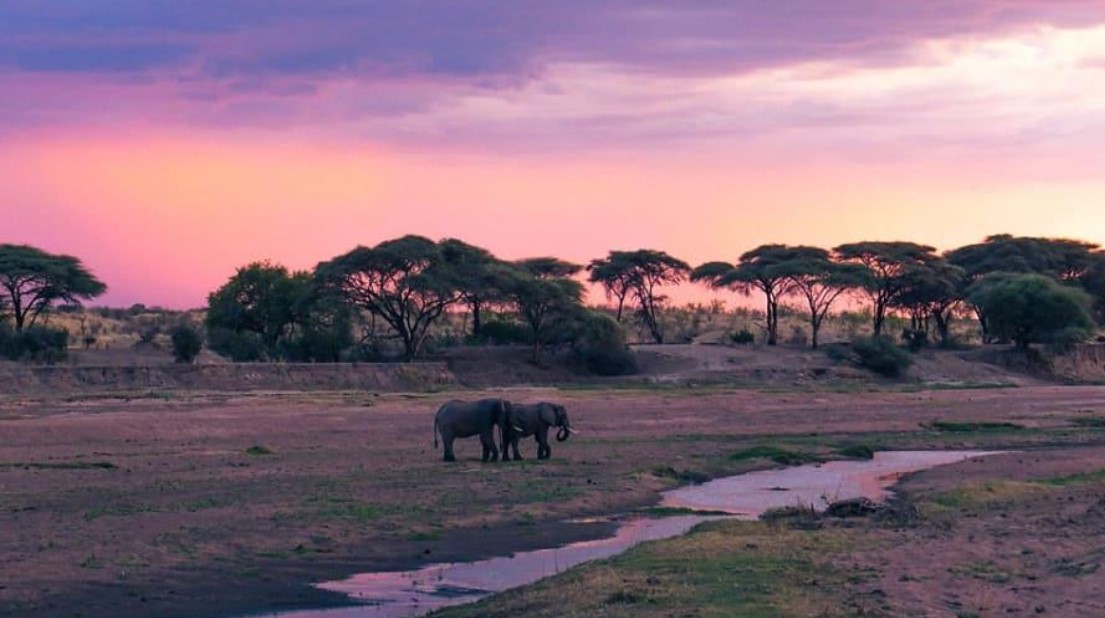
Tarangire National Park is one of the best places in Tanzania to observe elephants. Family groups are often seen walking between the woodland and the river, feeding beneath baobab trees, bathing in muddy pools, or carefully protecting young calves.
During the dry season, the Tarangire River becomes an essential water source. Wildlife from the surrounding ecosystem moves toward the river, creating excellent opportunities to observe different species in the same area.
Animals that may be seen in Tarangire include:
Leopards and cheetahs live in the park but are more difficult to locate. Your guide will search for clues such as alarm calls, animal tracks, fresh sightings reported by other guides, and unusual behavior among prey species.
At lunchtime, you will stop at a designated picnic site and enjoy a packed meal. The safari continues afterward, allowing you to explore additional areas of the park.
Tarangire is also an excellent destination for birdwatching. More than 500 bird species have been recorded in the wider ecosystem. Depending on the season and area visited, you may see hornbills, ostriches, eagles, vultures, rollers, weavers, storks, kingfishers, and colorful lovebirds.
In the late afternoon, you will leave the park and travel to your accommodation near Mto wa Mbu, Lake Manyara, or Karatu. After checking in, you can relax, enjoy dinner, and prepare for the following day.
Meals included: Lunch and dinner
Accommodation: Budget camp, mid-range lodge, or luxury lodge
After breakfast, you will drive to Lake Manyara National Park for another exciting game drive.
The experience begins in a lush groundwater forest fed by water flowing from the Rift Valley escarpment. This green entrance is very different from Tarangire’s more open and arid environment.
Large troops of olive baboons are frequently observed close to the road. Blue monkeys can also be seen moving through the branches, while bushbuck and other animals may appear between the trees.
As the habitat opens, your guide will search for elephants, giraffes, zebras, wildebeest, buffaloes, impalas, warthogs, and other wildlife. Lake Manyara is historically associated with tree-climbing lions, although sightings are never guaranteed. These lions can be difficult to locate because of the vegetation and their wide-ranging movements.
The lake and surrounding wetlands provide habitat for numerous aquatic and migratory birds. Flamingos may be present when water levels and feeding conditions are suitable, but their numbers vary considerably. Other possible sightings include pelicans, storks, herons, egrets, cormorants, and kingfishers.
Hippos can sometimes be observed in the park’s pools, while the Rift Valley escarpment creates an impressive backdrop for wildlife photography.
You will enjoy a picnic lunch during the day and continue exploring the park before beginning the return journey to Arusha. Arrival is generally expected in the late afternoon or early evening, depending on road conditions and the location of your hotel.
Drop-off can be arranged at your Arusha hotel or Arusha Airport. A transfer to Kilimanjaro International Airport can also be organized when requested.
Meals included: Breakfast and lunch
Accommodation: Not included unless a post-safari night is added
Tarangire is sometimes overlooked by travelers rushing toward Serengeti and Ngorongoro, but it deserves its position among Tanzania’s most rewarding wildlife destinations.
Elephants are Tarangire’s signature attraction. Herds of different sizes can be seen throughout the park, particularly near the Tarangire River during dry periods.
Watching elephants interact is one of the safari’s most memorable experiences. Adults communicate, feed, bathe, protect calves, and guide their families across the landscape. Because elephants may approach the road or move around stationary vehicles, travelers can sometimes enjoy remarkably close yet respectful encounters.
The river is the heart of the park. During the dry season, it attracts animals from a broad surrounding area. Predators may patrol nearby because of the concentration of prey.
Even when the landscape is dry, elephants can use their trunks and feet to dig for water beneath the sandy riverbed. Other animals may later drink from the holes they create.
Tarangire’s enormous baobab trees create one of Tanzania’s most recognizable landscapes. Some are believed to be hundreds of years old.
Baobabs store water in their trunks and provide food or shelter for insects, birds, bats, and mammals. Elephants sometimes strip sections of bark to obtain moisture and nutrients.
Lions are the most frequently observed large predators, although every game drive is different. Leopards may rest in trees or hide in dense vegetation, while cheetahs prefer more open country.
Smaller predators include jackals, servals, mongooses, and occasionally caracals. Your guide will help you understand predator behavior and identify signs that are easily missed by an untrained observer.
Lake Manyara is relatively compact but contains several habitats within a small area.
The groundwater forest supports healthy populations of baboons and blue monkeys. Baboons frequently forage on the ground or sit along the roadside, providing excellent opportunities to observe social behavior.
Vervet monkeys may also be seen around woodland areas and picnic sites. Guests should avoid feeding wildlife and keep food properly stored.
Lake Manyara became famous for lions resting on tree branches. Several explanations have been proposed for this behavior, including avoiding insects, enjoying cooler air, obtaining a better view, or simply resting comfortably.
However, the lions move freely, and sightings cannot be promised. A good safari should be appreciated as a complete ecosystem experience rather than being judged by one particular animal.
Elephants may appear in the forest, woodland, or open areas. Buffaloes, giraffes, zebras, wildebeest, impalas, bushbucks, and warthogs are among the park’s other residents.
Vegetation density and seasonal water levels influence which roads are accessible and where animals can be found.
Lake Manyara is attractive to both experienced birdwatchers and first-time safari travelers. Water conditions affect the presence of flamingos, but many other resident and migratory species may be observed throughout the year.
A pair of binoculars and a camera with a zoom lens can greatly improve the birdwatching experience.
A private safari gives you exclusive use of the vehicle and guide. It is ideal for couples, families, honeymooners, photographers, and groups of friends who value flexibility.
With a private tour, you can usually:
A private safari can be particularly valuable for photographers because the guide can position the vehicle according to available space, lighting, animal movement, and park regulations.
The package can be arranged at different comfort levels.
Budget camping is suitable for adventurous travelers who prioritize wildlife experiences and affordability.
A typical camping package may provide:
Camping delivers a close-to-nature experience, although facilities are simpler than those at lodges.
Mid-range accommodation offers a comfortable private room, bed, ensuite bathroom, hot shower, restaurant, and pleasant communal areas.
This is the most popular option because it combines comfort with a reasonable safari price.
Luxury accommodation may feature spacious rooms or tented suites, premium dining, scenic views, swimming pools, personalized service, and additional amenities.
Travelers celebrating a honeymoon, anniversary, or special occasion can request romantic room arrangements or other surprises, subject to availability.
A standard Tarangire and Lake Manyara safari package generally includes:
Your official quotation will confirm the exact inclusions for your selected package.
The following items are normally excluded unless specifically added:
Travelers should read the final quotation carefully before paying a deposit.
Your safari can be combined with additional experiences if you have more time.
Mto wa Mbu is a culturally diverse town near Lake Manyara. A guided visit may include local farms, craft workshops, markets, traditional food, and community projects.
A Maasai cultural visit provides an introduction to traditional homes, clothing, dance, livestock, and community life. Choose a responsibly managed visit and remain respectful when taking photographs.
Where available, the treetop walkway offers a different perspective of the forest. It can be added to the itinerary at an additional cost.
Travelers with another free day can visit Materuni village near Mount Kilimanjaro. The experience may include a waterfall hike, local lunch, and traditional coffee-making demonstration.
Chemka is a natural spring with clear water surrounded by vegetation. It is a relaxing addition before or after a safari.
Travelers interested in a managed wildlife experience can request a visit to Serval Wildlife. This should be planned as a separate excursion because of the distance and time required.
Both parks can be visited throughout the year, but conditions vary by season.
The main dry season generally provides strong wildlife viewing in Tarangire. Animals gather near permanent water sources, vegetation becomes thinner, and elephant concentrations can be impressive.
This is also a popular travel period, so lodges and safari vehicles should be booked early.
Short rains may bring fresh vegetation and dramatic skies. Wildlife remains present, birdwatching improves, and the parks can feel greener.
Rainfall patterns are not completely predictable, and showers often occur in short periods rather than throughout the day.
These months can offer warm weather, attractive landscapes, and rewarding birdlife. They are also convenient for combining Tarangire and Lake Manyara with the Ndutu calving season on a longer private safari.
The long-rain period normally brings greener scenery and fewer visitors. Some accommodations may offer seasonal rates, although heavy rain can occasionally affect road conditions and game viewing.
Pack light, practical clothing in neutral colors such as beige, brown, khaki, olive, or grey.
Recommended items include:
Avoid dark blue and black clothing where possible in areas where tsetse flies occur. Bright camouflage-style clothing should also be avoided.
Mornings can be cool, while afternoons may become warm. Wearing layers makes it easy to adjust as temperatures change.
Tarangire and Lake Manyara provide a wide range of photographic opportunities, from elephant portraits to Rift Valley landscapes.
For better results:
Phones can also capture excellent safari images, particularly in good daylight. A small dustproof bag is useful for protecting equipment.
Responsible tourism helps preserve Tanzania’s wildlife and supports communities living around protected areas.
During the safari:
Park rules are designed to protect both visitors and wildlife.
The Tarangire safari Lake Manyara deal is an excellent addition to a Zanzibar holiday.
You can fly from Zanzibar to Arusha Airport and begin the safari after arriving, depending on the flight time. However, arriving the previous day generally provides a more relaxed start and protects the itinerary from flight delays.
After the safari, you may stay overnight in Arusha or fly back to Zanzibar if the available schedule provides enough connection time. We recommend avoiding very tight same-day connections because road and wildlife-viewing conditions can affect the return time.
Our team can help coordinate domestic flights, airport transfers, safari accommodation, and Zanzibar extensions.
If you have additional days, consider expanding the itinerary.
Add Ngorongoro Crater for an opportunity to explore one of Africa’s most concentrated wildlife areas.
Combine Tarangire, Serengeti, and Ngorongoro Crater for a classic northern Tanzania safari.
Add Lake Manyara or spend extra time in Serengeti for a better-paced itinerary.
Include multiple Serengeti regions, cultural activities, or specialized photographic game drives.
The most suitable route depends on the season, budget, international flights, and wildlife interests.
The total safari price depends on:
A larger private group often receives a lower per-person price because transportation and guide costs are shared among more travelers.
Children may qualify for reduced park fees or accommodation rates depending on their ages and room arrangements.
Contact Kilipath African Safaris with your dates, group size, preferred comfort level, and arrival details to receive an accurate quotation.
Kilipath African Safaris is based in Arusha, the gateway to Tanzania’s northern safari circuit. Our local team understands the parks, driving distances, accommodation options, seasons, and logistical details required to organize a sm
ooth safari.
When you book with us, you receive:
Our objective is not simply to take you from one park to another. We want you to feel welcomed, informed, safe, and genuinely connected to Tanzania.
ooth safari.
When you book with us, you receive:
Our objective is not simply to take you from one park to another. We want you to feel welcomed, informed, safe, and genuinely connected to Tanzania.
Planning a budget Ngorongoro Crater safari holiday from Arusha? Compare a crater day trip, a two-day Tarangire and Ngorongoro safari, or a…
Read articleA Lake Manyara safari can cost USD 150–220 per person for a shared day trip from Arusha. A published example of a…
Read articleA Tanzania safari from Zanzibar can mean a short mainland trip during your beach holiday or a complete package with flights, game…
Read articleLooking for a group Tanzania safari price from Kilipath African Safaris? A published example for our four-day shared camping safari through Tarangire,…
Read article

