

Budget Ngorongoro Crater Safari Holiday
Planning a budget Ngorongoro Crater safari holiday from Arusha? Compare a crater day trip, a two-day Tarangire and Ngorongoro safari, or a…
Read articleArusha City - Tanzania
Safari & Travel Tips
September 3, 2026 · 16 min read
Planning a Serengeti safari is one of the most exciting steps toward experiencing Tanzania’s legendary wildlife, endless plains, dramatic sunsets, and world-famous Great Migration. Good Serengeti safari Tanzania planning helps you choose the right travel dates, safari duration, accommodation style, route, activities, and budget before arriving in Tanzania.
At Kilipath African Safaris, we help travelers design Serengeti safari experiences that match their available time, comfort level, wildlife interests, and budget. Whether you are planning a private luxury safari, a mid-range lodge adventure, a romantic honeymoon, a family safari, or a budget camping trip, the Serengeti offers unforgettable experiences throughout the year.
This complete Serengeti safari Tanzania planning guide explains everything you should consider before booking your safari.
Serengeti National Park is one of Africa’s most celebrated wildlife destinations. Its vast grasslands, river systems, woodland areas, rocky kopjes, and seasonal migration routes create one of the richest safari environments in Tanzania.
The word Serengeti comes from a Maasai expression commonly interpreted as “endless plains,” and the landscape certainly lives up to that description.
A Serengeti safari can offer opportunities to see:
The Serengeti is also one of Tanzania’s best places for predator sightings because of its large populations of herbivores.
For many travelers, Serengeti National Park is the centerpiece of a Tanzania safari.
Successful safari planning begins by answering several important questions.
Before booking, consider:
Once these details are clear, creating the right Serengeti itinerary becomes much easier.
Serengeti is a year-round safari destination, but different months provide different wildlife experiences.
During this period, large numbers of wildebeest are generally found in the southern Serengeti and Ndutu ecosystem.
January and February are especially famous for the calving season.
Thousands of young animals are born during this period, attracting predators such as lions, cheetahs, hyenas, and jackals.
This season is excellent for travelers interested in:
These months typically form part of Tanzania's long rainy season.
Visitor numbers can be lower, landscapes become beautifully green, and some accommodation properties may offer attractive seasonal rates.
Rain does not necessarily mean that game viewing stops. Wildlife remains present throughout the Serengeti.
For travelers willing to accept occasional rainfall, this can be a peaceful time to visit.
June is an important transition period as migration herds generally move through western and central areas.
Safari conditions are becoming drier, and wildlife viewing remains excellent.
These months are among the most popular periods for Serengeti safari planning.
Large migration herds generally move toward the northern Serengeti and the wider Mara ecosystem.
Northern Serengeti becomes especially popular for travelers hoping to witness river crossings.
However, wildlife movements are controlled by rainfall and natural conditions, so exact crossing dates can never be guaranteed.
November often brings shorter seasonal rains.
The plains become greener, wildlife remains abundant, and migration herds begin moving south again.
It can be a rewarding period for travelers looking for excellent safari experiences with slightly fewer visitors than peak season.
The Great Migration is one of the biggest reasons travelers start researching Serengeti safari Tanzania planning.
More than a million wildebeest, accompanied by hundreds of thousands of zebras and gazelles, move through the Serengeti-Mara ecosystem in search of fresh grazing and water.
However, the migration is not a single event.
It is a continuous natural cycle.
The location of the herds depends mainly on rainfall patterns, food availability, and environmental conditions.
A simplified migration pattern is:
Southern Serengeti and Ndutu
Movement toward central and western areas
Western Corridor and movement north
Northern Serengeti and Mara ecosystem
Movement back toward central and southern areas
Because nature cannot be controlled, no safari company can guarantee the exact location of every herd or river crossing.
Good safari planning simply increases your chances of being in the right region during the right season.
The ideal duration depends on your travel schedule and the destinations you want to combine.
A two-day Serengeti safari is possible, particularly if you fly directly into the park.
However, driving from Arusha for such a short trip can feel rushed.
For most first-time travelers, we recommend allowing more time.
Three days can work well for travelers with limited time.
A typical itinerary might include:
Day 1: Arusha to Serengeti
Day 2: Full-day Serengeti game drive
Day 3: Serengeti departure or onward journey
Alternatively, Serengeti can be combined with Ngorongoro.
Four days provides a more balanced experience.
One popular combination is:
Day 1: Arusha – Tarangire
Day 2: Tarangire – Serengeti
Day 3: Serengeti – Ngorongoro area
Day 4: Ngorongoro Crater – Arusha
This route introduces travelers to several different ecosystems.
Five days gives travelers more game-drive time and less rushing.
A typical itinerary could include:
Day 1: Tarangire
Day 2: Serengeti
Day 3: Full-day Serengeti
Day 4: Serengeti – Ngorongoro
Day 5: Ngorongoro Crater – Arusha
This is one of our favorite options for first-time visitors.
Travelers who want deeper wildlife experiences should consider six to eight days.
Longer itineraries can include:
Longer safaris are particularly recommended for photographers and travelers visiting migration regions farther from Central Serengeti.
Here is an example of a classic five-day private safari.
After breakfast, meet your professional safari guide and depart Arusha for Tarangire National Park.
Tarangire is famous for its giant baobab trees, elephant populations, and seasonal wildlife concentrations.
Enjoy game viewing across the park while looking for elephants, giraffes, zebras, lions, antelopes, and other wildlife.
Lunch will be provided during the safari.
Later, drive to your lodge or camp for dinner and overnight.
After breakfast, travel toward Serengeti National Park.
The journey passes through beautiful northern Tanzania landscapes.
Depending on your route, you may travel through the Ngorongoro Conservation Area before descending toward the Serengeti plains.
Enjoy game viewing as you enter the park.
Continue toward your accommodation for dinner and overnight.
Today is dedicated entirely to exploring the Serengeti.
An early start provides excellent opportunities to observe wildlife while temperatures are cooler and animals are active.
Your guide will select game-drive areas according to recent wildlife movements and conditions.
Possible sightings include lions, cheetahs, leopards, elephants, buffalo, giraffes, zebras, wildebeest and many more animals.
Enjoy lunch in the park before continuing your afternoon game drive.
Return to camp or lodge for dinner and overnight.
Enjoy another morning game drive in Serengeti.
This gives you additional opportunities to search for animals you may not have seen previously.
Later, drive toward the Ngorongoro Conservation Area.
Spend the evening near the crater or in nearby Karatu, depending on your accommodation choice.
After an early breakfast, descend into Ngorongoro Crater.
The crater supports a remarkable concentration of wildlife.
Possible sightings include lions, elephants, buffalo, zebras, wildebeest, hippos and several antelope species.
With luck, you may also see the endangered black rhinoceros from a distance.
After lunch and further game viewing, ascend from the crater and return to Arusha.
Central Serengeti, particularly the Seronera area, is one of the most popular parts of the park.
The area contains permanent water sources that help support wildlife throughout the year.
Central Serengeti is particularly well known for predators.
Travelers can potentially see:
Because Central Serengeti offers strong year-round wildlife viewing, it is often included in first-time safari itineraries.
Northern Serengeti becomes especially important during the dry-season migration months.
Its rolling hills, woodlands, river valleys, and lower visitor density create a beautiful wilderness atmosphere.
Many travelers visit northern Serengeti hoping to witness migration herds and possible Mara River crossings.
If Northern Serengeti is your main priority, a private safari is normally the best arrangement because the region is far from standard shared safari routes.
Allow enough time for the journey rather than attempting to rush between Central and Northern Serengeti.
Southern Serengeti and Ndutu become especially important during the green season.
From approximately December through March, migration herds often gather across these nutrient-rich plains.
Calving season usually peaks around January and February.
Because vulnerable newborn animals attract predators, this can be one of the most dramatic wildlife seasons in Tanzania.
Travelers interested in Ndutu should plan early because popular migration camps often have limited availability.
Western Serengeti contains river systems, woodland, and open plains.
Migration herds may pass through this region as they move toward northern areas.
The Grumeti River is one of the region’s important geographic features.
Western Serengeti can provide excellent safari opportunities, particularly during migration months.
Your safari style significantly affects flexibility and price.
A private safari gives you your own vehicle and professional safari guide.
Advantages include:
Private safaris are ideal for couples, honeymooners, families, photographers and groups of friends.
Budget camping provides an adventurous way to experience Tanzania.
Safari camping commonly includes:
Public campsites typically use shared bathroom and shower facilities.
Camping is ideal for travelers who want to maximize wildlife experiences while controlling costs.
Mid-range tented camps provide additional privacy and comfort.
Typical features may include:
Mid-range accommodation is one of the most popular choices for couples and families.
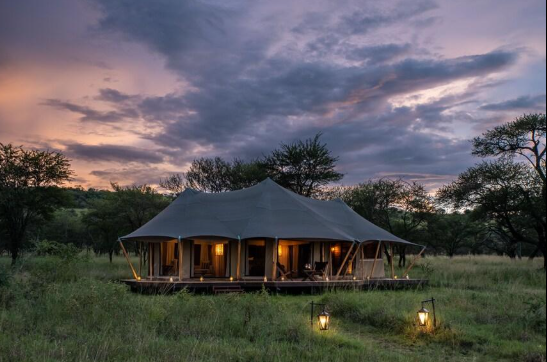
Luxury accommodation may offer:
Luxury safaris are especially popular for honeymoons, anniversaries, and special celebrations.
Packages vary according to itinerary, but a professionally arranged safari commonly includes:
Always check your quotation carefully so you understand exactly what is included.
Depending on your chosen package, exclusions may include:
Your safari consultant should provide a clear list before booking.
Most traditional northern Tanzania safaris use customized 4x4 Land Cruisers.
A safari vehicle normally includes:
The raised roof allows travelers to stand safely inside the vehicle while observing and photographing wildlife.
Both options have advantages.
Driving from Arusha lets travelers experience multiple parks along the Northern Circuit.
It is ideal for itineraries combining:
Driving safaris are generally more cost-effective than flying for many itineraries.
Domestic flights can save time.
You can fly from destinations such as:
into airstrips serving the Serengeti.
Fly-in safaris work particularly well for:
Some travelers choose to drive one direction and fly the other.
Combining safari and Zanzibar is extremely popular.
If you are already staying in Zanzibar, it is possible to fly to mainland Tanzania and begin your safari.
Depending on the itinerary, travelers may fly:
After the safari, you can return to Zanzibar or continue internationally.
A safari-and-beach itinerary gives travelers two very different Tanzania experiences: wildlife adventure and Indian Ocean relaxation.
Serengeti and Ngorongoro are one of Tanzania’s strongest safari combinations.
Serengeti provides vast landscapes and extensive game drives.
Ngorongoro offers a compact wildlife ecosystem inside a spectacular volcanic caldera.
Combining the two destinations increases the diversity of your safari.
A minimum of three or four days is recommended, although five or six days provides a more comfortable experience.
Tarangire adds a completely different ecosystem to a Serengeti itinerary.
The park is particularly known for:
Tarangire is easily incorporated into itineraries beginning from Arusha.
A hot-air balloon safari is one of the most memorable optional activities available in the Serengeti.
Flights generally operate early in the morning.
The experience allows travelers to view the landscape from above while the sun rises over the plains.
After landing, guests normally enjoy a special breakfast experience according to the balloon operator's program.
Balloon safaris are particularly popular among:
Because spaces are limited, advance booking is recommended.
The Serengeti is an exceptional honeymoon destination.
Couples can combine:
Private safari arrangements give couples greater flexibility and privacy.
When booking, mention that you are celebrating your honeymoon so accommodation providers can be informed where appropriate.
Families can enjoy outstanding safari experiences in Tanzania.
A private vehicle is particularly suitable because game-drive schedules can be adjusted around children.
When planning a family safari, consider:
Families with younger children may prefer shorter driving days and lodges offering additional facilities.
Wildlife photographers often benefit from private safari arrangements.
A dedicated vehicle gives photographers more control over:
Photographers should also bring multiple memory cards, spare batteries, protective equipment, and appropriate lenses.
Good Serengeti safari Tanzania planning includes packing carefully.
Recommended items include:
Ngorongoro mornings can be cold, so a warm layer is especially important when your safari includes the crater.
Avoid overpacking.
Soft-sided luggage is often more practical for safari vehicles and domestic flights.
Neutral colors work best.
Consider:
Bright colors are not necessarily prohibited, but neutral safari clothing tends to be more practical.
Very dark clothing can attract heat, while certain dark colors can also be less suitable in areas with tsetse flies.
Comfort is more important than fashion.
Safari packages usually include meals while you are on safari.
Depending on the accommodation, meals may be served as:
Dietary requirements can usually be accommodated when communicated in advance.
Tell your safari consultant if you require:
Early communication helps lodges and camps prepare correctly.
Travelers should arrange comprehensive travel insurance before traveling.
Insurance should ideally cover:
For medical or vaccination advice, consult an appropriate healthcare professional or travel medicine clinic before departure.
Carry any necessary prescription medication in your hand luggage.
Many international visitors arrive through Kilimanjaro International Airport.
Arusha is the main gateway for northern Tanzania safaris.
Depending on your flight schedule, spending one night in Arusha before beginning your safari is often recommended.
This allows you to:
Some travelers also arrive through Zanzibar or Dar es Salaam before connecting to northern Tanzania.
There is no single fixed price for every Serengeti safari.
Your final cost depends on several factors.
Private safari vehicle expenses are divided among participants.
As a result, private safari prices per person are often lower for four travelers than for one traveler traveling alone.
Camping is generally less expensive than luxury lodges.
Mid-range tented camps provide a balance between price and comfort.
Peak migration months can have higher accommodation demand.
Booking early is especially important during:
Longer safaris naturally involve additional park fees, accommodation, vehicle use and guide services.
Traveling to Northern Serengeti may cost more than staying in Central Serengeti because of additional distance and accommodation requirements.
Ideal for travelers with limited time.
Highlights:
A popular compact Northern Circuit itinerary.
Highlights:
Ideal for first-time visitors.
Highlights:
Designed around seasonal migration areas.
Possible destinations:
The exact itinerary depends on travel month.
Perfect for honeymooners and travelers wanting additional comfort.
Possible inclusions:
The best Serengeti safari begins with a well-designed itinerary.
Tell us:
Our team can then design a safari itinerary around your needs.
Whether you want an affordable camping experience, comfortable mid-range safari, private family adventure, romantic honeymoon, migration expedition or luxury Serengeti escape, Kilipath African Safaris can help you create the right journey.
Do not leave your Serengeti adventure to chance.
Good Serengeti safari Tanzania planning allows you to choose the right season, destinations, accommodation, route and safari duration before availability becomes limited.
Contact Kilipath African Safaris with your proposed travel dates and number of guests.
We will help you create a personalized Tanzania safari itinerary and provide a quotation based on your preferred comfort level and travel style.
Your journey across the endless plains of Serengeti starts here.
Planning a budget Ngorongoro Crater safari holiday from Arusha? Compare a crater day trip, a two-day Tarangire and Ngorongoro safari, or a…
Read articleA Tanzania safari from Zanzibar can mean a short mainland trip during your beach holiday or a complete package with flights, game…
Read articleLooking for a group Tanzania safari price from Kilipath African Safaris? A published example for our four-day shared camping safari through Tarangire,…
Read articlePair game drives on Tanzania’s mainland with a few days on Zanzibar’s coast. With Kilipath African Safaris, you can start in Arusha…
Read article

