

Budget Ngorongoro Crater Safari Holiday
Planning a budget Ngorongoro Crater safari holiday from Arusha? Compare a crater day trip, a two-day Tarangire and Ngorongoro safari, or a…
Read articleArusha City - Tanzania
Safari & Travel Tips
September 4, 2026 · 13 min read
A Serengeti safari Ruaha adventure combines two remarkably different sides of Tanzania. The Serengeti delivers sweeping plains, abundant predators, the Great Migration, and some of Africa’s most celebrated wildlife encounters. Ruaha National Park introduces travelers to a quieter wilderness filled with elephants, lions, baobab trees, and the rugged landscapes of Tanzania’s Southern Circuit.
Visiting both parks is ideal for travelers who want more than a standard safari itinerary. You can experience the famous wildlife spectacles of northern Tanzania before flying south to explore a remote park where safari vehicles are fewer and the landscape feels wonderfully untouched.
This guide explains how to combine Serengeti and Ruaha, when to travel, what animals you may encounter, how many days you need, and what to expect from the journey.
The Serengeti and Ruaha complement each other beautifully. Although both offer exceptional game viewing, their scenery, wildlife patterns, atmosphere, and visitor numbers are quite different.
| Safari feature | Serengeti National Park | Ruaha National Park |
|---|---|---|
| Safari circuit | Northern Circuit | Southern Circuit |
| Landscape | Open grassland, kopjes and woodland | Baobabs, rivers, hills and miombo woodland |
| Best known for | Great Migration and big cats | Elephants, lions and remote wilderness |
| Visitor numbers | Moderate to high in popular areas | Generally low |
| Safari atmosphere | Famous and wildlife-rich | Wild, quiet and exclusive |
| Typical access | Road or scheduled flight | Scheduled or chartered flight |
| Recommended stay | 3–5 nights | 3–4 nights |
The Serengeti is excellent for observing large concentrations of grazing animals and predators. Ruaha offers a more secluded adventure, with fewer vehicles gathering around sightings. Together, they provide a much broader impression of Tanzania’s ecosystems.
Serengeti National Park is in northern Tanzania, extending toward the Kenyan border and the Maasai Mara ecosystem. It is normally reached through Arusha, Ngorongoro, or one of its regional airstrips.
Ruaha National Park lies in south-central Tanzania. It forms part of a vast ecosystem associated with the Great Ruaha River and surrounding wildlife areas. Most visitors access it by air from Dar es Salaam, Zanzibar, or another safari destination.
Traveling between the two parks by road would require considerable time. For a practical combined itinerary, flying is normally the best choice. Flight schedules sometimes involve connections or an overnight stay, so the route should be planned around confirmed operating days.
Serengeti means “endless plains,” an appropriate description for its enormous grasslands and distant horizons. It is Tanzania’s most internationally recognized safari destination and supports an extraordinary diversity of wildlife.
Travelers may see:
The park is divided into several safari regions. Central Serengeti offers reliable wildlife viewing throughout the year, while seasonal areas become particularly important as the Great Migration moves through the ecosystem.
Central Serengeti, also known as the Seronera region, is one of the best areas for year-round game viewing. Its river valleys, plains, woodland, and rocky outcrops support permanent wildlife populations.
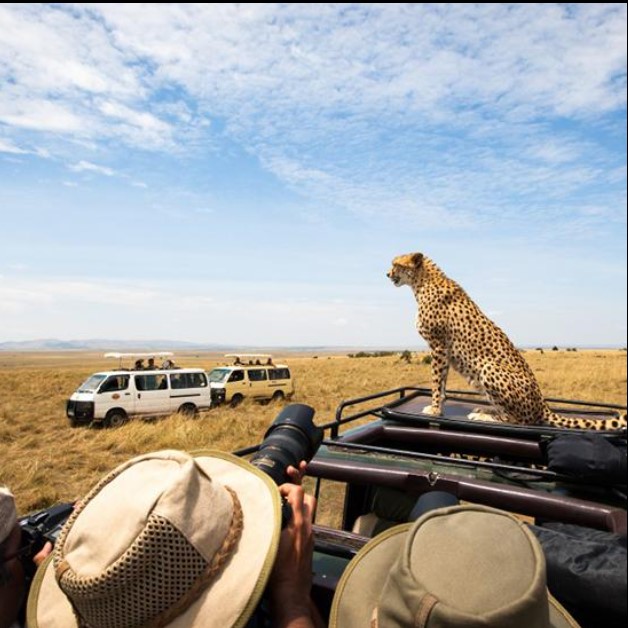
It is particularly well known for lions, leopards and cheetahs. Central Serengeti is also the most convenient area for travelers visiting outside the main seasonal migration periods.
Northern Serengeti becomes especially popular between approximately July and October, when migrating herds may approach or cross the Mara River. River crossings are natural events and cannot be scheduled or guaranteed, but spending several nights in the region increases the opportunity to observe the herds.
From roughly December through March, large numbers of wildebeest gather around the southern Serengeti and Ndutu plains. The calving season generally reaches its height around January and February, attracting lions, cheetahs and hyenas.
The Western Corridor becomes important during the migration’s movement toward the Grumeti region, often from around May into June. Its rivers, woodland and open plains create a different environment from central and southern Serengeti.
Ruaha is distinguished by its scale, isolation, dramatic scenery, and comparatively low visitor numbers. It lies where eastern and southern African ecological zones meet, producing varied habitats and an impressive mixture of animal species.
The park’s landscape includes:
Ruaha is particularly famous for elephants and predators. Its lion population is a major attraction, and visitors may also encounter leopards, cheetahs and African wild dogs. Wild-dog sightings remain unpredictable because these animals travel across large territories.
Other possible sightings include buffalo, giraffes, zebras, greater kudu, lesser kudu, sable antelope, roan antelope, impalas, jackals, hyenas, crocodiles and hippos.
Ruaha is also an excellent destination for birdwatching, especially during the greener months when migratory species supplement its resident birdlife.
A Serengeti safari can include areas used by the Great Migration, but the precise location of the herds depends on rainfall, food availability and natural movement.
Approximate seasonal patterns are:
| Period | Likely migration region |
|---|---|
| December–March | Ndutu and southern plains |
| April–May | Central or western movement |
| May–June | Western Corridor and Grumeti region |
| July–October | Northern Serengeti and Mara River region |
| November–December | Movement toward eastern and southern areas |
These patterns are helpful for planning, but nature does not follow a fixed calendar. No responsible operator can guarantee a river crossing on a specific day.
Ruaha is not part of the Serengeti Great Migration. Its appeal is its resident wildlife, predator populations, diverse antelope, elephants and remote wilderness.
The best period depends on what you want to experience.
This is generally the dry season and one of the most reliable periods for combining both parks. Wildlife in Ruaha often gathers around the remaining water sources, while parts of Serengeti may host migrating herds.
Conditions typically include dry roads, clearer vegetation and comfortable daytime game drives. July through September is a popular period, so early reservations are important.
These months are excellent for travelers interested in the wildebeest calving season around Ndutu and southern Serengeti. Ruaha is greener and quieter during this period, although seasonal rain can affect road conditions and wildlife distribution.
The green scenery, dramatic clouds and young animals can make this an especially rewarding period for photography.
This is Tanzania’s main rainy-season period. Some properties may close temporarily, and transportation can be less predictable. However, travelers can enjoy green landscapes, fewer visitors and excellent birdlife.
A combined trip during this period should be planned carefully around lodge operations and confirmed flight schedules.
Short rains often begin during this period. The landscape becomes greener, migratory birds return, and animal movement toward southern Serengeti may start. Rain showers are frequently temporary rather than continuous, but conditions vary.
Allow at least seven safari days for a satisfying combination. Nine to twelve days provides a more relaxed experience.
A balanced itinerary could include:
Trying to cover both parks in only four or five days would involve too much traveling and insufficient time for game drives.
Arrive at Kilimanjaro International Airport and transfer to your hotel in Arusha. Rest after the international journey and attend a safari briefing.
Transfer to Arusha Airport and take a scheduled flight to Serengeti. Meet your guide at the airstrip and begin your first game drive.
Explore the region selected for the season. Activities may include early-morning drives, full-day wildlife excursions and sunset game viewing.
Fly from Serengeti toward Ruaha. Depending on the available schedule, the journey may require a connection or an overnight stop. Your itinerary should reflect the confirmed flight plan rather than an estimated connection.
Explore the river, baobab woodland, open plains and seasonal water sources. The quieter surroundings make it possible to spend unhurried time at wildlife sightings.
Where permitted and offered by the camp, walking safaris may be available with a qualified armed guide.
Take a scheduled flight from Ruaha to Dar es Salaam or Zanzibar. Continue to your beach hotel or connect with your international departure.
Yes. The itinerary can run in either direction:
The best sequence depends on your international flights, available domestic connections and planned beach extension.
If Zanzibar follows the safari, ending in Ruaha can work well when a suitable flight connection is available. If the Northern Circuit is combined with Ngorongoro or Tarangire, beginning with Ruaha may create a smoother overall route.
Yes. It is particularly suitable for first-time visitors who have enough time and want a comprehensive Tanzanian safari.
Serengeti delivers famous landscapes and classic wildlife encounters. Ruaha adds seclusion, rugged scenery and a feeling of genuine exploration. Together, they reveal far more ecological variety than an itinerary concentrated in one region.
Travelers with fewer than seven days may be better served by focusing on one circuit rather than rushing between distant destinations.
Families can enjoy both parks, although the itinerary needs to match the children’s ages and interests.
Important considerations include:
A private safari vehicle allows families to adjust departure times, return to camp earlier and spend longer at sightings that interest the children.
A Serengeti and Ruaha combination is excellent for honeymooners. Serengeti provides iconic wildlife encounters, while Ruaha offers privacy and a more intimate wilderness atmosphere.
Honeymoon arrangements may include:
Special arrangements depend on the selected camps and should be requested before arrival.
Both destinations offer tented camps and lodges across several comfort categories.
Mid-range accommodation usually provides comfortable beds, private bathrooms, hot showers and full-board meals. These camps offer a strong balance between comfort and overall cost.
Luxury properties may include spacious suites, refined dining, premium guiding, private decks, swimming pools and personalized service.
Some Serengeti camps relocate during the year to follow the broad migration pattern. They can be an excellent option when wildlife location is the main priority.
Ruaha’s smaller bush camps are especially appealing to travelers seeking exclusivity. Some rely partly on solar power and may limit electricity use during particular hours. This is part of their remote character rather than an absence of comfort.
Walking safaris may be available in Ruaha through selected properties and designated areas. They are conducted by trained guides, generally accompanied by an armed ranger or appropriately qualified professional.
A walk focuses on details that are easily missed from a vehicle: tracks, plants, insects, animal behavior and the wider ecosystem.
Walking activities may have age restrictions and depend on weather, wildlife conditions and park regulations. They must be confirmed in advance.
Standard game drives remain the principal activity in Serengeti.
Hot-air balloon safaris are offered in selected parts of Serengeti. A typical experience begins before sunrise and includes a balloon flight followed by breakfast.
Ballooning provides a beautiful aerial perspective of the plains, but wildlife sightings and exact flight paths depend on natural conditions and wind direction.
Space is limited, especially during peak season. Balloon flights should therefore be reserved when confirming the main safari.
A private arrangement is normally the most practical format for combining Serengeti and Ruaha.
The parks belong to different safari circuits and require carefully coordinated flights. A private itinerary offers:
Standard shared safaris generally follow fixed Northern Circuit routes and do not extend to Ruaha.
Inclusions vary, but a comprehensive package may cover:
Possible exclusions include international flights, visas, travel insurance, tips, alcoholic beverages, personal purchases and optional activities.
Always review the final inclusion list before paying a deposit.
The price depends on:
Because flying between circuits adds transportation costs, this combination normally costs more than a road-only Northern Circuit safari. However, it provides a richer and far less repetitive experience.
Request a personalized quotation using exact travel dates, group size, room configuration, accommodation preference and arrival and departure airports.
Yes. Serengeti and Ruaha make a particularly strong photography combination.
Serengeti offers open landscapes, predator action, large herds and classic sunrise scenes. Ruaha provides dramatic baobabs, dusty elephant encounters, river habitats, unusual antelope and fewer nearby vehicles.
Photographers should consider:
A private guide can remain patiently at a sighting while waiting for better light or animal behavior.
Recommended items include:
Morning drives can be cold even when afternoons are hot. Layered clothing works best. Soft bags are recommended because small safari aircraft have stricter luggage limitations than international flights.
Yes. Scheduled safari aircraft usually impose weight and bag-style restrictions. The permitted allowance depends on the airline and route.
Soft-sided bags are generally preferred because they fit more easily into small aircraft compartments. Large rigid suitcases may need to be stored in Arusha, Dar es Salaam or at another agreed location.
Confirm the current baggage allowance before packing, especially when carrying professional camera equipment.
Ruaha is an established safari destination operated under national park rules. Visitors should follow their guide’s instructions and never approach wildlife independently.
At unfenced camps, animals may move through the property. Guests are usually escorted between their rooms and communal areas after dark. Food should not be stored inside tents unless the camp explicitly permits it.
General precautions include:
Tanzania includes malaria-risk areas. Travelers should consult a qualified travel-health professional well before departure for personalized advice on preventive medication, vaccinations and mosquito protection.
Long sleeves in the evening, repellent and correctly used mosquito nets can reduce insect bites. Requirements may vary according to travel history and countries visited before entering Tanzania.
Yes. Zanzibar is one of the most natural extensions to this itinerary. After several days of early game drives, a beach stay provides time to rest beside the Indian Ocean.
A combined holiday might include:
Beach options range from lively resort areas to smaller boutique hotels. Travelers can also explore Stone Town, spice farms, marine areas and historical attractions.
A Serengeti safari Ruaha adventure is best suited to travelers who value wildlife diversity and want to experience both Tanzania’s legendary plains and its quieter southern wilderness.
The most important planning decisions are your travel month, number of nights, preferred accommodation level and domestic flight route. Spending at least three nights in each park gives you time to settle into the landscapes instead of constantly moving between camps.
With thoughtful planning, this journey combines iconic Serengeti wildlife, Ruaha’s baobab-studded wilderness, intimate game viewing, and two distinctly different expressions of Tanzania’s natural beauty.
Planning a budget Ngorongoro Crater safari holiday from Arusha? Compare a crater day trip, a two-day Tarangire and Ngorongoro safari, or a…
Read articleA Tanzania safari from Zanzibar can mean a short mainland trip during your beach holiday or a complete package with flights, game…
Read articleLooking for a group Tanzania safari price from Kilipath African Safaris? A published example for our four-day shared camping safari through Tarangire,…
Read articlePair game drives on Tanzania’s mainland with a few days on Zanzibar’s coast. With Kilipath African Safaris, you can start in Arusha…
Read article

