

Budget Ngorongoro Crater Safari Holiday
Planning a budget Ngorongoro Crater safari holiday from Arusha? Compare a crater day trip, a two-day Tarangire and Ngorongoro safari, or a…
Read articleArusha City - Tanzania
Safari & Travel Tips
September 5, 2026 · 15 min read
A Tanzania wildlife safari Serengeti deal gives you the chance to experience one of Africa's most celebrated wildlife destinations while combining expert-guided game drives, spectacular scenery and carefully selected accommodation into one convenient safari package.
The Serengeti is famous for sweeping grasslands, large predator populations and the annual Great Migration. UNESCO describes Serengeti National Park as covering around 1.5 million hectares of savannah and supporting one of the world's most extraordinary wildlife migrations.
Whether you are planning your first African safari, a honeymoon, family holiday, photography adventure or private wildlife tour, a Serengeti safari can be customized according to your travel dates, budget and preferred level of comfort.
With Kilipath African Safaris, travelers can choose from affordable camping experiences, comfortable mid-range lodge safaris and private luxury safari packages.
Ready to start planning? Contact Kilipath African Safaris for a customized Tanzania wildlife safari Serengeti deal based on your travel dates and budget.
Serengeti National Park is one of Tanzania's most important wildlife destinations.
The ecosystem supports enormous populations of wildebeest, zebra, gazelle and other herbivores, alongside lions, leopards, cheetahs and hyenas.
UNESCO recognizes the Serengeti for its exceptionally large predator-prey ecosystem and extraordinary annual movement of wildebeest and other grazing animals.
For travelers, this means every game drive can be different.
One morning may begin with lions resting beside a rocky kopje. Later you may encounter elephants moving through woodland, giraffes feeding from acacia trees or cheetahs scanning the plains.
During migration periods, enormous groups of wildebeest and zebra can completely transform the landscape.
Common safari sightings can include:
Lion
The Serengeti is one of Africa's premier destinations for observing lions.
Leopard
Often found resting in trees or moving through riverine woodland.
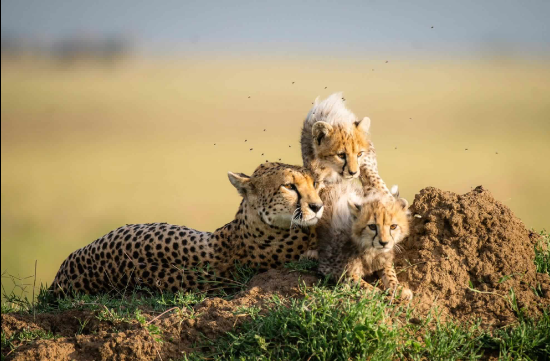
Cheetah
The open grasslands provide excellent habitat for these fast predators.
Elephant
Family groups can frequently be encountered around woodland and water sources.
African Buffalo
Large herds live across different parts of the ecosystem.
Giraffe
Common around acacia woodland and quieter sections of the park.
Zebra
Thousands move through the ecosystem with wildebeest during migration.
Wildebeest
The animal most closely associated with the Great Migration.
Hippo
Often seen around permanent pools and river systems.
Spotted Hyena
Important predators and scavengers that are frequently encountered during Serengeti game drives.
Bird enthusiasts can also enjoy remarkable diversity. UNESCO reports more than 500 bird species occurring permanently or seasonally within Serengeti National Park.
For many travelers, experiencing the Great Migration is the main reason for booking a Serengeti safari.
Millions of grazing animals continuously move through the wider Serengeti ecosystem in response to seasonal rainfall, water and fresh grazing.
However, the animals do not remain in one location throughout the year.
Understanding their approximate seasonal movement helps determine which area of the Serengeti should be included in your safari.
During this period, migration herds generally concentrate around the southern Serengeti and Ndutu region.
January and February are particularly popular because of the wildebeest calving season.
Large numbers of calves attract predators such as:
This makes the period especially attractive for wildlife photographers.
For travelers visiting during these months, we can design a Serengeti and Ndutu safari deal focusing on the areas where migration activity is strongest.
As rainfall patterns change, many herds gradually move north and west.
The landscape is greener during parts of this season, creating excellent photographic conditions.
April and May can also have fewer safari vehicles compared with the busiest months.
Travelers who do not mind occasional rain may therefore find attractive safari value.
Around June, significant numbers of wildebeest may move through western sections of the ecosystem.
Depending on rainfall, travelers may witness dramatic concentrations around the western corridor.
The timing of migration movements can never be guaranteed precisely because wildlife follows natural rainfall and grazing patterns.
The northern Serengeti becomes particularly important between approximately July and October.
This period is associated with the famous Mara River migration season.
Travelers sometimes witness wildebeest gathering near the river before attempting crossings.
River crossings are unpredictable and should never be guaranteed for a specific day.
A well-designed safari instead allows enough time in the northern region to improve your chances of experiencing migration activity.
For travelers specifically interested in Northern Serengeti, a private safari is normally the best option because it provides greater routing flexibility.
As seasonal rains develop, wildebeest gradually begin moving toward central and southern parts of the ecosystem again.
November can therefore be a very rewarding transition month.
Wildlife remains excellent even when the largest migration herds are not in a particular area.
There is no single safari package suitable for everyone.
Your ideal Tanzania wildlife safari Serengeti deal depends on:
Here are some of the most popular options.
A three-day safari is suitable for travelers with limited time who want to experience two legendary wildlife destinations.
Depart Arusha and travel through the Ngorongoro Highlands toward Serengeti National Park.
After entering the Serengeti, begin your first game drive across the plains.
Possible sightings include:
Overnight in Serengeti.
Enjoy an early morning Serengeti game drive when many predators are active.
Continue wildlife viewing before traveling toward the Ngorongoro region.
Overnight near Ngorongoro.
Descend into the Ngorongoro Crater for a wildlife safari.
The crater provides opportunities to see buffalo, zebra, wildebeest, lions, hippos and numerous other animals.
After lunch, drive back to Arusha.
This itinerary works particularly well for travelers combining safari with Zanzibar.
A four-day safari provides more time for wildlife viewing.
Drive from Arusha to Tarangire.
Tarangire is especially well known for elephants and enormous baobab trees.
Enjoy a full game drive before continuing to your accommodation.
Travel toward Serengeti National Park.
Enjoy an afternoon game drive after entering the park.
Begin early with a Serengeti game drive.
Explore the central plains before continuing toward Ngorongoro.
Descend into the crater for your final major wildlife experience.
Return to Arusha during the afternoon.
This is one of the best combinations for travelers wanting multiple Tanzanian ecosystems without extending the trip too long.
Five days provide a much more relaxed safari rhythm.
A typical itinerary may include:
Arusha to Tarangire
Tarangire to Serengeti
Full-day Serengeti wildlife safari
Serengeti to Ngorongoro
Ngorongoro Crater and return to Arusha
The additional Serengeti day allows more time for following wildlife sightings and exploring different areas.
For photographers and first-time safari travelers, the extra time can make a significant difference.
Travelers with more time can include:
or allocate extra nights inside Serengeti.
A six-day itinerary offers more flexibility and reduces the amount of driving required each day.
A seven-day itinerary is excellent for travelers wanting a slower and more immersive journey.
Depending on the season, you can include:
Longer itineraries are particularly useful when planning around migration movements.
A shared safari is one of the most affordable ways to experience northern Tanzania.
Travelers share a safari vehicle with other guests following the same itinerary.
A typical group safari vehicle accommodates a small number of travelers and provides each guest access to wildlife viewing through the pop-up roof.
Private safaris are especially recommended when visiting Northern Serengeti or Ndutu.
Camping is usually the most economical accommodation style.
Public campsites provide a genuine wilderness atmosphere.
Your safari team can provide:
Bathroom and shower facilities at public campsites are shared.
Camping is ideal for adventurous travelers who prioritize wildlife viewing over luxury accommodation.
Mid-range safaris combine excellent wildlife viewing with greater comfort.
Accommodation may include:
Mid-range safaris are among the most popular choices because they offer an excellent balance between comfort and price.
Luxury safari packages prioritize comfort, privacy and high-end accommodation.
Depending on the itinerary, you may stay in beautifully designed lodges or exclusive tented camps overlooking wildlife areas.
Luxury experiences may include:
Luxury packages are particularly popular for honeymoons, anniversaries and special occasions.
Travelers coming from Zanzibar can reduce road travel by flying directly into the Serengeti.
Domestic flights connect Zanzibar and other Tanzanian destinations with Serengeti airstrips.
After landing, your safari guide meets you and begins the game drive directly.
A fly-in itinerary can:
Fly-in safaris are especially useful for travelers with limited holiday time.
Combining Zanzibar and Serengeti is one of Tanzania's most popular holiday combinations.
You can enjoy relaxing days beside the Indian Ocean before or after your wildlife safari.
A typical arrangement may look like:
Zanzibar → Serengeti flight → Safari → Arusha → Zanzibar
or
Zanzibar → Arusha flight → Northern Circuit safari → Zanzibar
Our team can help arrange the safari together with compatible domestic flight options.
Exact inclusions vary depending on the chosen package.
A typical Kilipath African Safaris package can include:
Travel in a specially equipped 4x4 Land Cruiser with a pop-up roof for wildlife viewing.
Your guide helps locate wildlife, explains animal behavior and shares knowledge about Tanzania's landscapes and ecosystems.
Applicable national park entrance and conservation fees can be included in the quoted package.
Accommodation is arranged according to your selected category.
Options include:
Safari itineraries generally include meals according to the specified meal plan.
Drinking water is supplied during game drives.
Daily wildlife drives are included according to your itinerary.
Airport or hotel transfers can be incorporated into your safari package.
Always review your final quotation for the exact inclusions attached to your booking.
Depending on your package, additional expenses may include:
Your consultant should clearly explain exclusions before you confirm your booking.
Serengeti is a year-round wildlife destination.
The best month depends on your safari goals.
| Travel Period | Safari Highlights |
|---|---|
| January–February | Calving season around southern Serengeti/Ndutu |
| March | Calving and predator activity |
| April–May | Green landscapes and fewer visitors |
| June | Western migration movement |
| July–September | Northern Serengeti and migration season |
| October | Northern/central transition |
| November | Short rains and movement south |
| December | Southern migration areas becoming increasingly active |
Remember that migration timing varies according to rainfall.
No responsible safari operator should guarantee that a river crossing will occur on a specific date.
The Serengeti is especially rewarding for photographers.
Its open landscapes provide excellent opportunities for photographing wildlife against clean backgrounds.
Potential subjects include:
Private safari vehicles are usually preferable for serious photographers because they provide more flexibility.
You can stay longer at sightings and position the vehicle more carefully when park regulations allow.
Travelers frequently ask whether they can see the Big Five.
The traditional African Big Five are:
Serengeti provides opportunities to see several of these animals.
Combining Serengeti with Ngorongoro Crater can improve the overall variety of wildlife encountered during a northern Tanzania safari.
Wildlife sightings, however, are always natural and cannot be guaranteed.
A balloon safari is one of the most memorable optional experiences available.
The experience usually begins before sunrise.
Guests travel to the launch site and watch the balloon being prepared before floating above the Serengeti landscape.
From the air, you may see:
Because availability can be limited during high season, booking in advance is recommended.
A private Serengeti safari is ideal for couples seeking both adventure and privacy.
It can be designed around:
Honeymoon travelers can also request special accommodation arrangements where available.
Families can enjoy Serengeti safari experiences with carefully planned driving times and suitable accommodation.
Private safaris are particularly useful because parents have greater control over:
When traveling with young children, it is important to select family-friendly accommodation.
Solo travel does not mean you have to miss the Serengeti.
Shared safaris can significantly reduce the cost for individual travelers.
You join other guests traveling along the same route while still enjoying professionally guided game drives.
Private safaris are also possible for solo travelers who prefer complete flexibility.
Serengeti and Ngorongoro are frequently combined because they provide very different safari landscapes.
Serengeti is dominated by expansive plains, migration routes and large predator populations.
Ngorongoro Crater concentrates many animals within a comparatively compact volcanic caldera.
Combining both destinations creates one of Tanzania's strongest wildlife itineraries.
Tarangire provides another excellent contrast.
The park is famous for:
A Tarangire–Serengeti–Ngorongoro itinerary is therefore an excellent choice for first-time visitors.
Planning a Serengeti safari involves much more than simply booking accommodation.
Migration locations, driving distances, flight schedules and park geography all affect the quality of your trip.
Kilipath African Safaris helps travelers design itineraries that make practical sense.
Being based in Tanzania provides direct knowledge of the northern safari circuit.
Your safari can be adjusted according to:
Our wildlife safaris use appropriately equipped 4x4 vehicles designed for Tanzanian safari conditions.
Experienced guides are essential for understanding wildlife behavior and finding rewarding sightings.
Choose from camping through to comfortable tented camps and luxury safari lodges.
Safari arrangements can also be coordinated for travelers arriving from Zanzibar.
There is no single fixed Serengeti safari price.
The total depends on several factors.
Private safari costs can be divided between travelers sharing the vehicle.
Therefore, per-person pricing generally improves when more guests travel together.
A three-day safari naturally costs less than a seven-day migration itinerary.
Camping is generally the most economical.
Mid-range lodging increases comfort while luxury camps can significantly increase the total trip cost.
July through October and the peak calving period can be especially popular.
Accommodation demand may therefore affect pricing.
Shared safari packages are normally less expensive.
Private safaris cost more but provide substantially greater flexibility.
Fly-in safari packages include additional aviation costs.
For the most accurate quotation, request a personalized itinerary based on your dates.
The cheapest safari is not always the best value.
Focus on what is actually included.
Before booking, compare:
A price that initially looks inexpensive may become much more expensive once essential fees are added.
A complete quotation allows you to compare safari offers properly.
Travelers visiting between approximately July and October should consider booking well in advance.
Northern Serengeti accommodation can become limited during the migration season.
Popular camps may sell out months ahead.
The same applies to peak holiday dates in December and January.
Booking early provides:
Pack lightweight, comfortable clothing in neutral colors.
Recommended items include:
Morning temperatures can feel surprisingly cool, especially around Ngorongoro, so carrying a warm layer is important.
Soft-sided bags are generally easier to manage in safari vehicles and on small aircraft.
If your safari includes bush flights, baggage limits may be stricter than international airline allowances.
Your consultant can confirm the current limit for the specific airline used.
The Serengeti is not simply a tourist attraction.
It is one of the world's most significant natural ecosystems and has been a UNESCO World Heritage Site since 1981.
Travelers should therefore:
Responsible tourism helps protect this remarkable ecosystem for future generations.
A journey through Serengeti is more than a traditional holiday.
It is an opportunity to watch lions move across open plains, see elephants beneath acacia trees, hear wildebeest calling across the grasslands and experience an ecosystem that supports one of Earth's most remarkable wildlife spectacles. UNESCO identifies the Serengeti migration and its predator-prey relationships as features of outstanding global natural importance.
Whether you want an affordable shared safari, private wildlife adventure, family safari, honeymoon journey, photography expedition or luxury fly-in experience, Kilipath African Safaris can customize your Tanzania wildlife safari Serengeti deal according to your dates, budget and preferred travel style.
Send us:
Your travel dates
Number of travelers
Number of safari days
Preferred accommodation level
Whether you prefer private or shared safari
Your approximate budget
From there, we can create a personalized Serengeti itinerary designed around your wildlife interests.
Explore Tanzania. Experience Serengeti. Let Kilipath African Safaris create your unforgettable African safari.
Planning a budget Ngorongoro Crater safari holiday from Arusha? Compare a crater day trip, a two-day Tarangire and Ngorongoro safari, or a…
Read articleA Tanzania safari from Zanzibar can mean a short mainland trip during your beach holiday or a complete package with flights, game…
Read articleLooking for a group Tanzania safari price from Kilipath African Safaris? A published example for our four-day shared camping safari through Tarangire,…
Read articlePair game drives on Tanzania’s mainland with a few days on Zanzibar’s coast. With Kilipath African Safaris, you can start in Arusha…
Read article

