Lake Manyara vs. Nyerere Safari Prices | Tanzania Guide
A Lake Manyara safari can cost USD 150–220 per person for a shared day trip from Arusha. A published example of a…
Read articleArusha City - Tanzania
Safari & Travel Tips
September 5, 2026 · 13 min read
A Tanzania safari tour Nyerere trip takes you deep into one of Africa’s most peaceful and wildlife-rich wilderness areas. Located in southern Tanzania, Nyerere National Park offers vast landscapes, the life-giving Rufiji River, rewarding game drives, exciting boat safaris and memorable encounters with elephants, lions, African wild dogs, hippos and crocodiles.
Formerly part of the Selous Game Reserve, Nyerere is an excellent choice for travelers who want an authentic safari away from the busier routes of northern Tanzania. Its combination of woodland, open plains, lakes and river channels creates a varied safari experience that is ideal for couples, families, photographers, honeymooners and small private groups.
Whether you want a short fly-in safari from Zanzibar or Dar es Salaam, a private driving adventure or a longer southern Tanzania itinerary, our team can personalize your Nyerere safari according to your travel dates, budget and preferred accommodation.
Start planning your Nyerere safari today. Request a customized itinerary, accommodation options and a transparent quotation from our Tanzania safari specialists.
Nyerere National Park delivers something increasingly rare: an immense wilderness with relatively few safari vehicles.
Travelers can spend time watching wildlife without feeling rushed or surrounded by large crowds. The park’s river systems and diverse habitats also allow visitors to combine several types of safari activity within one journey.
According to Tanzania National Parks, the Rufiji system supports elephants, hippos, crocodiles and extensive birdlife, while Nyerere’s woodland and floodplain habitats provide refuge for lions, leopards and African wild dogs. TANAPA wildlife and habitats
Nyerere National Park lies in southern Tanzania and protects the northern part of the wider Selous ecosystem. It is named in honor of Julius Nyerere, Tanzania’s founding president.
The Rufiji River is the heart of the park. Its channels, sandbanks, lagoons and oxbow lakes attract animals throughout the year, especially during the dry season. Away from the river, the landscape changes into miombo woodland, grasslands and palm-lined areas.
Visitors normally reach Nyerere by:
Flying is the most convenient choice for travelers with limited time. An overland journey may suit adventurous guests who want to see rural Tanzania and combine Nyerere with other southern destinations.
Nyerere’s enormous and varied ecosystem supports an impressive selection of wildlife. Sightings can never be guaranteed because the animals roam freely, but every drive offers the possibility of an exciting encounter.
Nyerere is recognized as an important habitat for the endangered African wild dog. These intelligent and highly social predators live in packs and may travel considerable distances while hunting.
Finding them requires patience, local knowledge and some luck. Your guide will look for tracks, recent reports and activity around areas where prey is concentrated. Watching a wild dog pack interact is often one of the most memorable moments of a southern Tanzania safari.
Lions are among Nyerere’s principal predators. They may be observed resting in shade, walking through open areas or watching herds near water sources.
Early morning and late afternoon are generally productive periods because temperatures are cooler and predators tend to be more active.
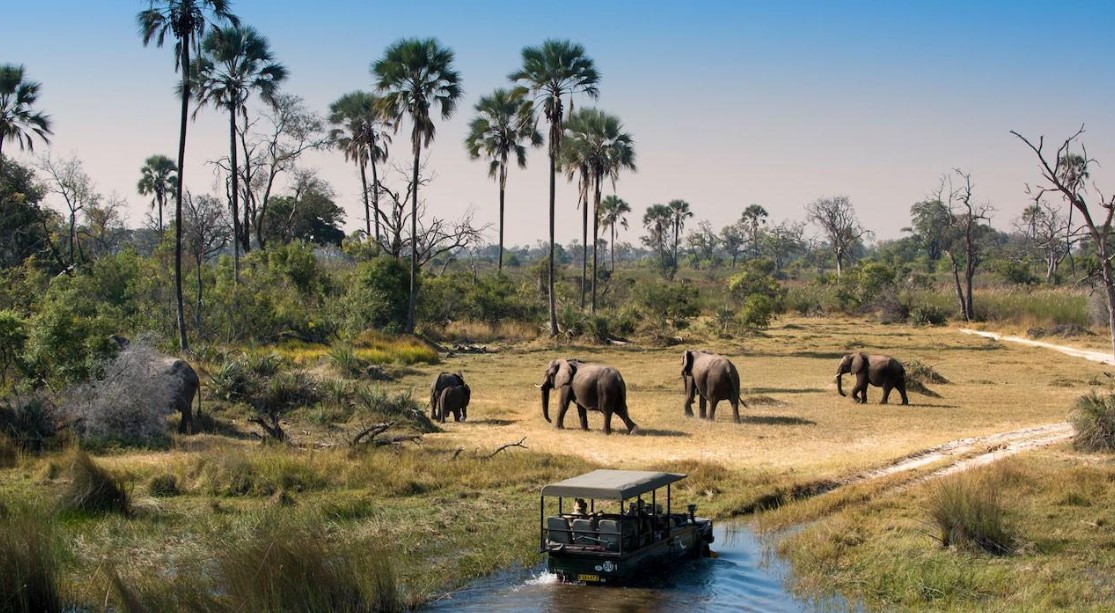
Elephants are closely associated with the park’s rivers, lakes and woodlands. Visitors may see solitary bulls, breeding families or herds approaching the water to drink and bathe.
Observing elephants from a safari vehicle or boat reveals two very different perspectives. From the river, guests can sometimes watch them drinking along the bank while hippos and water birds occupy the nearby channels.
The Rufiji River and its interconnected lakes provide excellent habitat for hippos and Nile crocodiles. Hippos often gather in the water during the day, while crocodiles rest on exposed sandbanks or move quietly along the river’s edge.
Guests should always follow their guide’s safety instructions and maintain an appropriate distance from these powerful wild animals.
Nyerere supports buffaloes, giraffes, zebras, impalas, waterbucks, wildebeest and several other antelope species. Sable antelope and Lichtenstein’s hartebeest are among the distinctive animals associated with southern Tanzania’s woodland ecosystems.
These herbivores also sustain the park’s predator populations, creating fascinating opportunities to observe natural behavior.
With more than 430 species recorded, Nyerere is a rewarding destination for birdwatchers. African fish eagles, kingfishers, bee-eaters, hornbills, herons and numerous wetland birds may be seen around the Rufiji River.
Birding remains productive throughout the year, while migratory species add variety during the wetter months.
One of Nyerere’s greatest advantages is its variety of safari experiences. Depending on your camp, season and itinerary, you may combine game drives with a boat safari and guided walking experience.
Game drives allow visitors to cover a large area while searching for predators, elephants, giraffes and plains game. Our safaris use a suitable 4x4 vehicle with an experienced English-speaking guide.
A private safari gives you control over the pace of the day. You can spend longer at interesting sightings, focus on photography and discuss preferred departure times with your guide.
Morning drives are ideal for cooler conditions and active predators. Afternoon drives often finish with beautiful golden light near the river or lakes.
A boat safari is a signature Nyerere experience. Instead of observing everything from a vehicle, visitors explore the channels and lakes connected to the Rufiji River.
Possible sightings include:
Boat safaris provide excellent photographic opportunities, especially when the water is calm. Activities are operated under local rules and depend on water levels and weather conditions.
A walking safari introduces travelers to smaller details that are easily missed from a vehicle. Accompanied by qualified professionals, guests may learn about animal tracks, plants, insects, dung, birds and the relationships between different parts of the ecosystem.
The objective is not to approach dangerous animals closely. Instead, the experience encourages a deeper understanding of the bush while following strict safety procedures.
Guided walks should be arranged in advance because availability and operating conditions vary between camps.
Nyerere’s combination of river, lake, woodland and floodplain habitats makes it particularly appealing to bird enthusiasts. A private birding itinerary allows the guide to move slowly and dedicate additional time to identifying and photographing species.
Low visitor density, open river scenery and diverse wildlife make Nyerere a strong photography destination. A private vehicle is recommended for serious photographers because it provides more freedom when choosing positions and waiting for the right moment.
Tell us in advance if photography is your main priority. We can recommend a suitable vehicle arrangement, a patient guide and camps located near productive wildlife areas.
This example can be adjusted according to your flight schedule, accommodation preference and starting location.
Take a morning flight from Zanzibar or Dar es Salaam to an airstrip serving the Nyerere area. Your guide will meet you upon arrival and transfer you to your selected camp or lodge.
After lunch and time to relax, begin your first safari activity. Depending on arrival time and camp location, this may be an afternoon game drive or a Rufiji River boat safari.
During the boat excursion, look for hippos, crocodiles, elephants and colorful river birds. Finish the day with sunset views before returning for dinner and your first night in the wilderness.
After an early breakfast, depart for a full-day exploration of Nyerere National Park. Your guide will choose the route according to recent wildlife activity, road conditions and seasonal animal movements.
Search for lions, elephants, buffaloes, giraffes, antelopes and African wild dogs. You may carry a picnic lunch or return to the camp, depending on distances and the day’s plan.
The full-day drive gives you time to explore woodland, open plains and areas around the lakes. Return to your accommodation for dinner and an evening beneath the southern Tanzania sky.
Begin the morning with an optional guided walking safari. Learn how guides interpret tracks, identify plants and recognize signs left by wildlife.
After breakfast or lunch, continue with another game drive. Revisit a productive area or explore a different part of the park. Because wildlife encounters change every day, repeated drives can produce completely different experiences.
Spend your final evening relaxing at camp and listening to the natural sounds surrounding your accommodation.
Enjoy breakfast followed by a short game drive or direct airstrip transfer, depending on your flight time.
Fly to Dar es Salaam, Zanzibar or your next safari destination. If your schedule allows, we can also arrange an additional night in Nyerere or connect your journey with Ruaha, Mikumi or the Tanzanian coast.
A three-day itinerary is ideal for travelers who have limited time in Zanzibar or Dar es Salaam. It normally includes flights, two nights of accommodation, game drives and a boat safari, subject to flight schedules.
Although short, it provides a valuable introduction to the Rufiji ecosystem.
Four nights allow for a more relaxed experience. Guests can enjoy additional game drives, dedicate more time to photography and include both boating and walking where available.
This duration is especially suitable for honeymooners, families and travelers who prefer not to rush.
Combining Nyerere with Ruaha National Park creates a complete southern Tanzania safari. Nyerere offers river systems, wetlands and boat trips, while Ruaha is known for dramatic landscapes, baobab trees and predator viewing.
The parks can be connected by scheduled or charter flight. A combined itinerary normally requires at least six or seven days for an enjoyable pace.
Nyerere is one of the most convenient safari destinations to combine with Zanzibar. Travelers can experience the beach and wildlife in one itinerary without traveling to northern Tanzania.
A typical combination may include:
We can organize the safari portion or prepare a complete package that includes selected Zanzibar accommodation.
Nyerere can be visited during much of the year, but conditions and wildlife distribution change with the seasons.
The dry season is generally considered the easiest period for traditional wildlife viewing. Vegetation becomes thinner and animals gather near rivers, lakes and remaining water sources.
July through October is popular, so early accommodation reservations are advisable.
The short rains refresh the landscape and can create attractive photographic conditions. Visitor numbers may be lower than during the peak dry season, although rain can occasionally affect roads and activities.
These months can offer lush scenery, good birding and fewer visitors. It is an appealing period for travelers who value atmosphere and photography as much as concentrated wildlife viewing.
Heavy rainfall can make some roads difficult or inaccessible. Certain camps may close temporarily, and flight schedules or activities can be affected.
However, exact conditions vary each year. Contact us before booking so we can confirm which camps, flights and activities are operating.
Accommodation around Nyerere ranges from adventurous tented camps to high-end riverside lodges.
These properties provide essential comfort in or near the wilderness. Facilities vary, so travelers should check whether rooms have private bathrooms, permanent electricity and hot water.
Mid-range camps normally offer comfortable beds, private bathrooms, good meals and attentive service. They are ideal for guests who want an authentic safari atmosphere without choosing the most expensive luxury category.
Luxury properties may feature spacious suites, swimming pools, premium dining, river views and highly personalized service. Some include selected activities in their rates, while others charge separately.
We compare location, comfort, activity structure and value—not only the room price—before recommending accommodation.
Exact inclusions depend on the itinerary, but a private package may include:
Common exclusions may include international flights, visas, travel insurance, gratuities, alcoholic drinks, personal purchases and activities not mentioned in the confirmed itinerary.
Always read the final quotation carefully. We provide a clear list of inclusions and exclusions before payment.
The price of a Tanzania safari tour Nyerere trip depends on:
Fly-in packages generally cost more than road-based itineraries because domestic flights are included. However, flying saves valuable travel time and is often the best option for a short safari from Zanzibar.
Families and small groups may reduce the per-person cost by sharing a private vehicle. Contact us with your dates and group size for an accurate quotation.
Pack lightly, especially when using a small domestic aircraft.
Recommended items include:
Bush flights may have strict baggage limits. Confirm the current allowance shown on your ticket before departure.
Avoid extremely bright clothing during wildlife activities. Neutral shades such as khaki, beige, olive and brown are practical.
A Nyerere safari from Zanzibar is one of the easiest ways to add wildlife to a beach holiday. Scheduled flights can take travelers from Zanzibar to an airstrip near the park, although routes and operating times depend on the date.
For the smoothest trip:
We coordinate transfers, flights, accommodation and park activities so that the beach-to-bush transition is straightforward.
Both destinations offer excellent wildlife, but their character is different.
| Feature | Nyerere National Park | Serengeti National Park |
|---|---|---|
| Safari atmosphere | Remote and peaceful | Iconic and more popular |
| Signature landscape | Rufiji River and woodlands | Open plains |
| Boat safaris | Major attraction | Generally not a standard activity |
| African wild dogs | Important stronghold | Possible but less central |
| Great Migration | Not the main attraction | Major seasonal highlight |
| Zanzibar access | Convenient fly-in option | Available by domestic flight |
| Vehicle density | Usually lower | Can be higher in famous areas |
| Best for | Variety, solitude and river wildlife | Migration and classic plains safari |
Choose Nyerere if you want boating, wild landscapes and fewer vehicles. Choose Serengeti if witnessing the Great Migration is your highest priority.
Wildlife tourism has the greatest value when it respects animals, protects habitats and supports local employment.
During your safari:
Nyerere’s conservation priorities include protecting the Rufiji catchment, preserving wildlife corridors and promoting low-impact tourism. About Nyerere National Park
A Nyerere safari brings together river scenery, remote wilderness and some of southern Tanzania’s most exciting wildlife experiences. With game drives, boat trips, walking opportunities and convenient flights from Zanzibar or Dar es Salaam, the park can be adapted to many different travel plans.
Kilipath African Safaris can help you arrange:
Send us your travel dates, number of guests, starting location and accommodation preference. We will prepare a personalized itinerary and quotation for your Tanzania safari.
Request your free Nyerere safari quotation today and begin planning your southern Tanzania adventure.
A Lake Manyara safari can cost USD 150–220 per person for a shared day trip from Arusha. A published example of a…
Read articleA Nyerere Tanzania wildlife safari can take you from a woodland game drive in the morning to a boat on the Rufiji…
Read articlePlanning a Tanzania safari that combines Lake Manyara National Park and Nyerere National Park is an excellent way to experience the country's…
Read articleDiscover Tanzania’s untamed wilderness without exceeding your travel budget. A budget Ruaha safari adventure offers incredible wildlife encounters, spectacular landscapes, authentic African…
Read article