

Lake Manyara vs. Nyerere Safari Prices | Tanzania Guide
A Lake Manyara safari can cost USD 150–220 per person for a shared day trip from Arusha. A published example of a…
Read articleArusha City - Tanzania
Safari & Travel Tips
September 5, 2026 · 16 min read
A Tanzania safari Nyerere travel guide is essential for travelers who want to explore one of Africa’s largest, quieter, and most rewarding wildlife destinations. Nyerere National Park offers a completely different safari atmosphere from Tanzania’s famous Northern Circuit. Instead of busy safari tracks and large concentrations of vehicles, visitors can experience wide rivers, woodland, open plains, wetlands, boat safaris, walking adventures, and excellent wildlife viewing in a much more secluded setting.
Formerly part of the Selous Game Reserve, Nyerere National Park is located in southern Tanzania and forms one of the most important wilderness areas in East Africa. Its landscapes are shaped by the mighty Rufiji River, creating an exceptional habitat for elephants, lions, hippos, crocodiles, buffalo, wild dogs, giraffes, antelopes, and hundreds of bird species.
For travelers looking for a peaceful safari, a romantic African holiday, a photographic adventure, or a safari extension from Zanzibar or Dar es Salaam, Nyerere deserves serious consideration.
Nyerere National Park is particularly attractive because it combines excellent wildlife viewing with a feeling of genuine wilderness.
Unlike some of Tanzania’s better-known safari parks, Nyerere receives comparatively fewer visitors. This means wildlife encounters can often feel more private and relaxed.
Some of the main reasons travelers choose a Tanzania safari in Nyerere include:
For visitors who want something beyond a traditional game drive, Nyerere is one of Tanzania’s most versatile safari destinations.
Nyerere National Park is located in southern Tanzania, southwest of Dar es Salaam.
The park forms part of the broader Selous ecosystem and covers an enormous wilderness area. Much of the visitor activity is concentrated around the northern section of the park, especially near the Rufiji River.
The Rufiji is Tanzania’s largest river and plays a major role in the park’s ecosystem. It creates lakes, channels, sandbanks, wetlands, and fertile areas that attract wildlife throughout much of the year.
Because of its southern location, Nyerere is generally combined with destinations such as:
It can also be combined with Serengeti, Ngorongoro, Tarangire, or other northern parks through domestic flights.
Many travelers still recognize the destination by its former name, the Selous Game Reserve.
A large northern section of the former reserve was designated as Nyerere National Park in 2019. The park was named in honor of Julius Nyerere, Tanzania’s first president.
You may therefore see travel companies, lodges, maps, or older guidebooks using both names.
When researching accommodation or flights, terms such as “Selous,” “Nyerere,” or “Selous/Nyerere” may sometimes refer to the same general safari region.
Wildlife diversity is one of the strongest reasons to visit Nyerere.
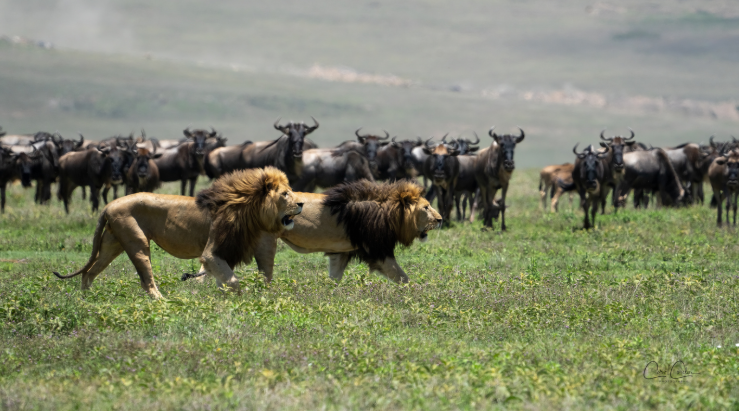
Lions are regularly seen throughout the safari areas of the park.
Visitors may find them resting beneath trees during the heat of the day or moving across open areas during cooler morning and evening periods.
Because vehicle traffic is lower than in many heavily visited parks, lion sightings can sometimes feel especially peaceful.
Nyerere forms part of a major elephant ecosystem.
Elephants can frequently be seen moving between woodland, floodplains, rivers, and water sources.
Watching elephants drinking along the Rufiji River is one of the classic safari experiences in southern Tanzania.
Nyerere has historically been one of Tanzania’s important habitats for African wild dogs.
These highly social predators travel in packs and can cover large distances.
Wild dog sightings are never guaranteed, but Nyerere is considered one of the stronger destinations in Tanzania for travelers hoping to encounter them.
Large herds of African buffalo are common in suitable areas.
They may be found near rivers, wetlands, woodland edges, and open grasslands.
The waterways of Nyerere provide excellent habitat for hippos.
Boat safaris often offer particularly good opportunities to observe them in the Rufiji River.
Nile crocodiles are another common sight along the river.
Visitors may see them resting on sandbanks or floating almost completely submerged in the water.
Giraffes are frequently encountered in wooded and open areas.
Their height makes them easy to spot above bushes and acacia trees.
Nyerere supports numerous herbivore species, including:
These animals support healthy predator populations across the ecosystem.
Leopards are present, although sightings can be more difficult than lions.
Patience, experienced guides, and early or late game drives provide the best opportunities.
Nyerere is also an outstanding destination for bird enthusiasts.
The combination of riverbanks, wetlands, woodland, lakes, and savannah supports hundreds of bird species.
Possible sightings include:
Birdwatching is particularly rewarding around the Rufiji River and nearby lakes.
The Rufiji River is one of the defining features of a Nyerere safari.
Its channels and lakes create a distinctive landscape that separates Nyerere from many other Tanzanian parks.
Wildlife gathers around the river because it provides permanent or semi-permanent water.
Travelers may see:
Sunset along the Rufiji can be particularly beautiful, especially during a boat safari.
One of the biggest advantages of choosing Nyerere is the opportunity to experience wildlife from the water.
A boat safari usually takes place along sections of the Rufiji River or associated waterways.
Instead of watching animals from a safari vehicle, guests can observe river wildlife while cruising slowly through the landscape.
Boat safaris can offer sightings of:
Sunset boat trips are especially popular because temperatures become cooler and the landscape takes on beautiful golden colors.
Boat safari availability can depend on water conditions, camp location, local regulations, and the season.
Nyerere is one of Tanzania’s best-known destinations for guided walking safaris.
Walking allows visitors to discover aspects of the ecosystem that are easily missed from a vehicle.
Rather than focusing only on large animals, guides may explain:
Walking safaris are normally conducted with professional guides and according to park safety regulations.
They may range from short bush walks to longer wilderness experiences depending on the camp and itinerary.
Traditional 4x4 game drives remain the main safari activity in Nyerere.
Most safari vehicles have open viewing arrangements or raised roofs that allow travelers to photograph wildlife easily.
Early morning drives are particularly rewarding because animals are often more active before temperatures rise.
Afternoon game drives can also be excellent as wildlife begins moving toward water sources.
A full-day game drive gives travelers more time to explore different habitats and search for predators.
Nyerere can be visited during much of the year, but conditions vary considerably between seasons.
The dry season is generally considered one of the best periods for wildlife viewing.
Vegetation becomes thinner and animals concentrate around water sources.
Typical advantages include:
July, August, September, and October are especially popular.
November often marks the beginning of the short rains.
The landscape starts becoming greener while wildlife viewing can remain excellent.
Visitor numbers may also be lower than during peak dry-season months.
The landscape is usually greener and attractive.
These months can offer excellent birdwatching and pleasant safari conditions, although occasional rainfall should be expected.
This period corresponds with the main rainy season.
Heavy rain can affect roads, accessibility, and some accommodation operations.
Certain camps may close temporarily.
Travelers planning a safari during these months should confirm availability carefully.
A Nyerere safari from Zanzibar is one of the most popular southern Tanzania safari combinations.
Short domestic flights allow travelers to leave Zanzibar in the morning and reach the safari region without spending many hours driving.
Depending on flight schedules, travelers can arrange:
A fly-in safari works particularly well for travelers enjoying a beach holiday who want to add wildlife without committing to a long overland journey.
Nyerere can also be reached from Dar es Salaam.
Travel options may include:
Flying is usually the fastest option.
Traveling by road can be more affordable depending on group size and itinerary, but journey times vary significantly based on road conditions and the location of the selected camp.
Several airstrips serve safari camps in and around Nyerere.
Domestic flights may operate from:
Flight schedules vary depending on season, passenger demand, and airline.
When booking a fly-in safari, it is important to check baggage restrictions because smaller aircraft often have stricter weight limits than international airlines.
Soft-sided safari bags are usually recommended.
The ideal duration depends on your travel schedule and interests.
A 2-day safari is suitable for travelers with very limited time, especially when flying from Zanzibar.
However, the experience will be fast-paced.
Three days is a very popular choice.
It usually provides enough time for several game drives and may allow a boat safari depending on flight schedules.
A 4-day safari offers a more relaxed pace.
Travelers can often combine game drives, a boat safari, and possibly a walking safari without rushing.
Longer stays are excellent for:
Longer itineraries also increase the chance of encountering less predictable species such as wild dogs or leopards.
Fly or drive to Nyerere.
After arrival, meet your safari guide and transfer toward your accommodation.
Depending on arrival time, enjoy an afternoon game drive or boat safari along the Rufiji River.
Dinner and overnight at your safari lodge or camp.
Start early for a full-day game drive.
Explore woodland, open plains, river areas, and wildlife-rich water sources.
Search for elephants, lions, buffalo, giraffes, antelopes, wild dogs, and other wildlife.
Enjoy lunch before continuing with the afternoon game drive.
Return to camp for dinner and overnight.
Enjoy an early morning game drive or walking safari.
Return for breakfast before transferring to the airstrip or beginning your road journey to your next destination.
A longer itinerary gives travelers more flexibility.
Arrival in Nyerere followed by an afternoon boat safari.
Full-day game drive.
Morning walking safari followed by another game drive.
Early morning wildlife activity and departure.
The exact schedule depends on accommodation location, weather, flight times, and park regulations.
Nyerere offers accommodation for several travel styles.
Budget options usually provide simple rooms or tented accommodation outside or near the park.
These are suitable for travelers prioritizing wildlife experiences over luxury.
Mid-range camps typically offer:
These camps are popular with couples and first-time safari travelers.
Luxury camps may provide:
Luxury properties around the Rufiji River can be especially scenic.
Camping can be arranged depending on itinerary structure and park regulations.
Camping safaris are usually more adventurous and are suitable for travelers who enjoy being close to nature.
A camping package may include:
Travelers should confirm bathroom arrangements and campsite facilities before booking.
Nyerere is extremely well suited to luxury safari travel.
Many camps are located in isolated areas with beautiful river or wilderness views.
A luxury safari may include:
Because visitor numbers are lower than in many northern parks, Nyerere can offer an especially exclusive atmosphere.
For honeymooners, Nyerere combines romance, privacy, and adventure.
Couples can enjoy:
Combining Nyerere with Zanzibar is particularly popular.
A couple can enjoy several days of safari before relaxing on Zanzibar’s beaches.
Families can also enjoy Nyerere, although itinerary design should consider the ages of children.
Game drives are suitable for most families, while walking safari restrictions may apply to younger guests.
Boat safari age restrictions may also vary between operators.
Families should choose accommodation with:
Private vehicles are recommended because they allow families to adjust safari duration and rest periods.
Nyerere is an excellent photography destination.
The low number of safari vehicles gives photographers more freedom to position for sightings without heavy congestion.
Popular photographic subjects include:
A private safari is particularly useful for serious photographers because the guide can spend longer at individual sightings.
Pack lightweight, comfortable clothing in neutral colors.
Useful safari items include:
For the rainy season, add a lightweight rain jacket.
Travelers using small domestic aircraft should also consider baggage weight restrictions.
Neutral safari colors are best.
Good options include:
Bright colors are generally unnecessary.
Dark blue and black clothing can attract tsetse flies in certain parts of Tanzania, so neutral colors are often more practical.
Nyerere safaris are generally very safe when travelers follow the instructions of professional guides.
Important guidelines include:
Wildlife camps may be unfenced, so animals can occasionally move through camp areas.
Staff normally escort guests after dark when necessary.
Yes.
Solo travelers can visit Nyerere through private or scheduled safari packages.
Fly-in safaris are convenient because transfers between airstrips and camps are normally coordinated in advance.
Solo travelers should book through a reputable safari operator and ensure airport transfers, flights, accommodation, park fees, and safari activities are clearly confirmed.
Both parks offer exceptional experiences, but they are very different.
The Serengeti is famous for:
Nyerere is famous for:
Travelers wanting the Great Migration should prioritize the Serengeti.
Travelers wanting a quieter and more diverse activity-based safari may prefer Nyerere.
Nyerere and Ruaha are often combined in Southern Circuit itineraries.
Nyerere provides river landscapes, boat safaris, wetlands, and excellent wildlife diversity.
Ruaha is characterized by dramatic baobabs, dry landscapes, large elephant populations, and strong predator viewing.
A Nyerere and Ruaha combination is one of Tanzania’s finest choices for experienced safari travelers.
Mikumi is easier to reach overland from Dar es Salaam and can work well for shorter road safaris.
Nyerere generally offers a stronger wilderness atmosphere and wider range of activities.
Travelers with limited budgets or time may prefer Mikumi.
Travelers seeking a more immersive safari often choose Nyerere.
Travelers can encounter several members of the traditional Big Five, including:
Rhino sightings are not normally part of a typical Nyerere safari experience.
Travelers whose main objective is checking all five species from a list may therefore prefer combining Nyerere with other Tanzanian destinations.
However, the quality of safari experiences should not be judged only by the Big Five.
Nyerere offers rare species, beautiful landscapes, river wildlife, wild dogs, walking safaris, and boat safaris that many other destinations cannot match.
Absolutely.
Nyerere is especially worthwhile for travelers who appreciate:
It is also one of the easiest major safari parks to combine with Zanzibar.
The cost of a Nyerere safari depends on several factors.
These include:
Fly-in safaris generally cost more than road safaris because domestic flights are included.
Luxury camps also significantly increase the final package price.
Traveling as a couple, family, or small group can reduce per-person transport costs compared with traveling alone.
A typical safari package may include:
Depending on the package, it may also include:
Always check inclusions before making payment.
Common exclusions may include:
Exact exclusions differ between safari companies.
A safari-and-beach holiday is one of the best ways to experience Tanzania.
A common itinerary might look like:
Nyerere safari.
Zanzibar beach holiday.
Another option is to enjoy Zanzibar first and finish with safari before flying home.
Both arrangements work well depending on international flight schedules.
Travelers with six to ten days can consider combining Nyerere and Ruaha.
A typical itinerary could include:
This combination provides contrasting environments and outstanding wildlife experiences.
Travelers with more time can combine Nyerere with the Northern Circuit.
For example:
Domestic flights can reduce travel time between northern and southern Tanzania.
This type of itinerary is ideal for travelers wanting a comprehensive Tanzania safari.
Selecting a reputable safari company is important.
Look for an operator that provides:
Local Tanzanian operators can often provide strong destination knowledge and flexible itinerary planning.
Kilipath African Safaris can arrange customized Tanzania safari itineraries based on your travel dates, budget, comfort level, and preferred activities.
Possible arrangements include:
Each itinerary can be designed around the number of days available and the type of safari experience you want.
A Tanzania safari Nyerere travel guide reveals why this remarkable Southern Circuit destination deserves a place on any Tanzania itinerary.
Nyerere combines outstanding wildlife with the Rufiji River, peaceful game drives, walking safaris, boat excursions, excellent birdwatching, and a genuine wilderness atmosphere.
It is particularly attractive for travelers coming from Zanzibar or Dar es Salaam, as well as couples, honeymooners, photographers, and returning safari travelers who want something different from the traditional Northern Circuit.
Whether you choose a short 2-day fly-in safari or a longer Nyerere and Ruaha adventure, the park offers one of Tanzania’s most memorable wildlife experiences.
For a customized safari, Kilipath African Safaris can create an itinerary based on your dates, budget, accommodation preference, and preferred activities.
A Lake Manyara safari can cost USD 150–220 per person for a shared day trip from Arusha. A published example of a…
Read articleA Nyerere Tanzania wildlife safari can take you from a woodland game drive in the morning to a boat on the Rufiji…
Read articlePlanning a Tanzania safari that combines Lake Manyara National Park and Nyerere National Park is an excellent way to experience the country's…
Read articleDiscover Tanzania’s untamed wilderness without exceeding your travel budget. A budget Ruaha safari adventure offers incredible wildlife encounters, spectacular landscapes, authentic African…
Read article

