

Lake Manyara vs. Nyerere Safari Prices | Tanzania Guide
A Lake Manyara safari can cost USD 150–220 per person for a shared day trip from Arusha. A published example of a…
Read articleArusha City - Tanzania
Safari & Travel Tips
September 11, 2026 · 10 min read
A photography Nyerere National Park safari trip is one of Tanzania's most rewarding adventures for travelers who want wildlife photography away from the busier northern safari circuit. Vast miombo woodlands, open floodplains, lakes, river channels, palm-fringed landscapes, and the mighty Rufiji River create an exceptional variety of backgrounds for photographing African wildlife.
Nyerere National Park is especially interesting because photographers can combine traditional game drives with boat safaris and, where arranged with authorized guides, walking experiences. Tanzania National Parks highlights photographic safaris, Rufiji River boat trips, and guided walking safaris among the park's major activities.
Whether you want to photograph elephants beside the river, lions resting on a sandy track, colorful kingfishers, hippos in the water, or African wild dogs moving through the woodland, Nyerere offers opportunities for both experienced photographers and travelers carrying a camera for the first time.
One of the biggest advantages of photographing Nyerere is the diversity of its landscape.
Instead of photographing wildlife only against open grassland, you may encounter animals around waterways, wooded areas, floodplains, lakes, sandbanks, and palm trees. These changing environments allow photographers to create a much broader collection of images during a single safari.
The Rufiji River is particularly important. It flows through the northern sector of the park and creates channels, wetlands and oxbow lakes that attract wildlife, particularly around water sources. TANAPA describes the river system as an important photographic area and notes its populations of hippos and crocodiles.
The park is also enormous. TANAPA currently describes Nyerere as covering more than 30,000 square kilometers, providing an impressive sense of wilderness.
For photographers, this means photographs can often capture not just an animal but also the scale and atmosphere of the surrounding African landscape.
Wildlife diversity is one of the strongest reasons to plan a photography Nyerere National Park safari trip.
Nyerere is particularly famous for African wild dogs. These endangered predators can be fascinating photography subjects because packs are highly social and constantly interacting.
Photographers may capture dogs greeting one another, resting together, traveling across the landscape, playing, or preparing to hunt.
TANAPA identifies Nyerere as an important stronghold for African wild dogs.
A fast shutter speed is useful when photographing them because their movements can change very quickly.
Lions are among the major predators found throughout the park.
Early mornings can produce beautiful images when lions are active and temperatures remain comfortable. During the middle of the day, lions frequently rest, allowing photographers to concentrate on portraits and details.
Late-afternoon sunlight can create wonderful golden tones on a lion's coat.
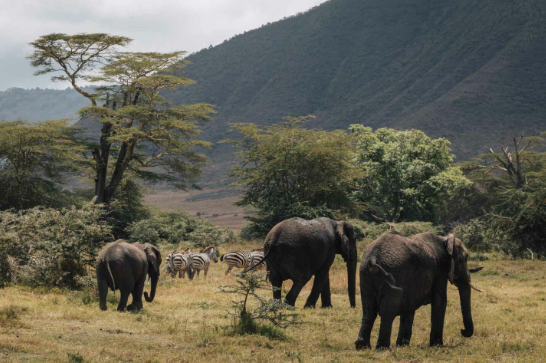
Elephants provide some of the most memorable photographic scenes in Nyerere.
They can be photographed walking through woodland, drinking, interacting within family groups, or appearing beside the Rufiji River and its lakes.
Try photographing both close portraits and wider environmental compositions. A wide photograph showing an elephant surrounded by palms, water and wilderness can sometimes communicate Nyerere better than a tightly cropped portrait.
The Rufiji River system provides excellent habitat for both hippos and crocodiles.
A boat safari offers a completely different perspective from a safari vehicle.
You may photograph hippos with only their eyes and ears visible above the surface, crocodiles resting on sandbanks, or animals approaching the river to drink.
Nyerere also supports buffalo, giraffes, waterbuck, impala, sable antelope and other plains and woodland species.
These animals are excellent subjects for landscape-oriented wildlife photography.
Instead of zooming in every time, experiment with including trees, sky, riverbanks, or woodland around the animal.
Bird photographers should not overlook Nyerere.
TANAPA reports more than 430 bird species, while its general park information highlights fish eagles, bee-eaters, kingfishers, skimmers and wetland birds around the Rufiji ecosystem.
River environments can be especially productive.
Photographers may encounter African fish eagles watching the water, colorful kingfishers sitting on branches, bee-eaters catching insects, herons searching along shallow water and numerous waterbirds around lakes.
A telephoto lens in the 300–600 mm range is particularly useful for smaller birds.
For birds in flight, try continuous autofocus, burst shooting and a fast shutter speed.
One feature that makes a Nyerere photography safari different from many traditional East African safaris is the possibility of exploring by boat.
Boat safaris provide low-angle views across the water and opportunities to photograph animals from perspectives that are impossible from a vehicle.
Possible subjects include:
TANAPA specifically promotes Rufiji River boat safaris for seeing hippos, crocodiles, elephants and birdlife.
A zoom lens is particularly useful on the boat because wildlife distances can change quickly.
Keep your camera strap secure and protect equipment from water spray and dust.
Different seasons offer different photographic opportunities.
The dry months are generally excellent for wildlife viewing.
As vegetation becomes thinner and water becomes increasingly important, animals may concentrate closer to permanent water sources.
This period can be excellent for photographing predators, elephants, buffalo and other large mammals.
Dry conditions also create earthy tones, dusty roads and dramatic evening light.
Photographers who love landscapes and colorful backgrounds may prefer the greener period.
Rain transforms the scenery, producing fresh vegetation, dramatic skies and attractive light.
TANAPA's park information notes that although June to around November forms the main dry period, the park can be green and especially beautiful from December through February, with many areas remaining accessible.
Bird photography can also be excellent during greener months.
Heavy rains can make some routes more difficult and some tourism operations may have seasonal limitations.
For serious photographers traveling during this period, itinerary planning should consider current road, camp and airstrip conditions.
Light matters just as much as wildlife.
The best photographic periods are normally early morning and late afternoon.
TANAPA also recommends dawn and late afternoon for good light and wildlife sightings in Nyerere.
Morning light is soft and warm.
Animals may also be more active before temperatures rise.
It is an excellent time for predators, backlit subjects and environmental portraits.
Midday sunlight can produce difficult shadows, but that doesn't mean you should stop taking pictures.
Use this period for:
Late afternoon can produce some of the most beautiful photographs of the safari.
Positioning an elephant, giraffe, palm tree or safari vehicle against the setting sun can produce memorable silhouettes.
You do not need professional equipment to enjoy a Nyerere photography safari, but choosing versatile lenses makes the experience easier.
A DSLR or mirrorless camera with good autofocus is ideal.
Travelers who own two camera bodies can keep different lenses attached, reducing the need to change lenses in dusty environments.
A lens such as:
100–400 mm, 200–500 mm or 150–600 mm
is excellent for wildlife.
Long focal lengths are especially useful for birds and animals that remain farther from the vehicle.
A 70–200 mm lens is extremely useful when wildlife approaches closer.
It is also excellent for environmental portraits and animals in groups.
Bring something around 16–35 mm or 24–70 mm for:
A complete photography safari should tell the story of the journey rather than contain only close-up wildlife portraits.
Bring enough storage and power for several days.
Useful items include spare batteries, multiple memory cards, lens-cleaning cloths, a dust blower, beanbag or camera support, protective camera bag, rain cover and a portable backup drive if required.
Dust can become part of everyday safari life, particularly during the dry season.
Avoid changing lenses unnecessarily when traveling on dusty roads.
A private safari can be especially valuable for serious photographers because the itinerary can be designed around photography.
You can spend longer observing interesting behavior instead of immediately moving to the next sighting.
When photographing from the vehicle, use the window opening or pop-up roof depending on the animal's position.
Avoid placing a lens directly against a running vehicle because vibration can reduce image sharpness.
When possible, ask the guide to switch off the engine during important stationary photography opportunities.
Communication with your guide is extremely important.
Tell the guide whether you need:
Experienced safari guides understand that photographers sometimes prefer waiting twenty minutes for one strong photograph rather than seeing five additional animals quickly.
Travel from Dar es Salaam toward Nyerere or take a domestic flight depending on the package selected.
After arriving and settling into your accommodation, enjoy an afternoon activity where timing allows.
The first evening is an excellent opportunity to photograph your camp, river scenery and sunset.
Start early to take advantage of the soft morning light.
Search for lions, elephants, giraffes, buffalo, wild dogs and antelope.
Spend enough time with interesting sightings to photograph behavior rather than simply recording the animal.
Enjoy lunch before continuing through different habitats in the afternoon.
Finish with golden-hour photography.
Begin with another morning game drive.
In the afternoon, experience a Rufiji River boat safari.
Photograph hippos, crocodiles, birds and animals visiting the water.
Stay alert as the sun drops because reflections and silhouettes can turn the river into one of the most photogenic parts of the trip.
Take advantage of the final morning light if your departure schedule allows.
After breakfast, travel or fly onward to Dar es Salaam, Zanzibar or your next destination.
Yes.
A photography Nyerere National Park safari trip combines extremely well with Zanzibar.
Travelers can enjoy wildlife photography first and then continue to the coast for beaches, Stone Town, local culture and marine activities.
Flight arrangements may make a southern Tanzania safari particularly convenient for visitors already staying in Dar es Salaam or Zanzibar.
TANAPA lists flights from Dar es Salaam to park airstrips including Mtemere, Siwandu and Beho Beho among the options for reaching Nyerere.
The best wildlife photographs come from natural behavior.
Never pressure a guide to chase, surround or disturb an animal simply to obtain a photograph.
Keep noise low around wildlife and avoid blocking an animal's movement.
Flash should not be used when it could disturb wildlife.
Commercial photographers should also be aware that Tanzania has specific rules relating to commercial photography and filming inside national parks, including permit requirements.
Regular tourists taking personal holiday photographs should still always follow park and guide instructions.
Absolutely.
Nyerere combines many of the characteristics wildlife photographers look for: large wilderness areas, varied habitats, predators, elephants, birds, rivers, interesting light and multiple ways of exploring.
It is particularly attractive for photographers wanting more than classic savanna photographs.
You can return home with images ranging from intimate lion portraits to wide Rufiji River landscapes, colorful bird photographs and elephant silhouettes.
For dedicated photographers, a private safari is usually the best choice.
A private vehicle gives more freedom over departure times, positioning and how long you remain at each wildlife sighting.
This becomes especially valuable when waiting for behavior.
A lion may initially be sleeping, but after thirty minutes it could stand, interact with cubs or begin walking.
Photography often rewards patience.
Couples, families and small groups who are particularly interested in photography should therefore consider requesting a private photographic safari vehicle.
A photography Nyerere National Park safari trip offers much more than taking photographs of African animals.
It is an opportunity to document one of Tanzania's great southern wilderness areas through changing landscapes, wildlife behavior, river scenes, birds and dramatic natural light.
The combination of game drives and Rufiji River experiences makes Nyerere especially appealing for photographers who want variety.
Spend mornings following wildlife through the woodland, photograph elephants around water in the afternoon, watch hippos from a boat and finish the day capturing the sunset over the Rufiji.
For travelers searching for a quieter and highly photogenic Tanzanian safari destination, Nyerere deserves serious consideration.
Kilipath African Safaris can arrange customized Nyerere National Park trips for solo photographers, couples, private groups and professional photography teams.
Your itinerary can include private safari vehicles, experienced guides, game drives, Rufiji River boat safaris, suitable accommodation and domestic flight arrangements from Dar es Salaam or Zanzibar.
For serious photographers, we can also structure the safari around early departures, golden-hour photography and extra time at wildlife sightings so you have the flexibility needed to capture the moment rather than rush from one location to another.
Contact Kilipath African Safaris to start planning your photography Nyerere National Park safari trip in Tanzania.
A Lake Manyara safari can cost USD 150–220 per person for a shared day trip from Arusha. A published example of a…
Read articleA Nyerere Tanzania wildlife safari can take you from a woodland game drive in the morning to a boat on the Rufiji…
Read articlePlanning a Tanzania safari that combines Lake Manyara National Park and Nyerere National Park is an excellent way to experience the country's…
Read articleDiscover Tanzania’s untamed wilderness without exceeding your travel budget. A budget Ruaha safari adventure offers incredible wildlife encounters, spectacular landscapes, authentic African…
Read article

