

Budget Ngorongoro Crater Safari Holiday
Planning a budget Ngorongoro Crater safari holiday from Arusha? Compare a crater day trip, a two-day Tarangire and Ngorongoro safari, or a…
Read articleArusha City - Tanzania
Safari & Travel Tips
September 16, 2026 · 10 min read
A guided Tarangire safari trip takes travelers into one of northern Tanzania’s most distinctive wildlife destinations. Famous for large elephant herds, ancient baobab trees, the Tarangire River, seasonal wetlands and excellent birdlife, Tarangire National Park offers a safari experience that feels both wild and remarkably scenic.
The park covers approximately 2,850 square kilometres and forms part of the much larger Tarangire ecosystem. The Tarangire River is particularly important during the dry season, when wildlife gathers around the remaining water sources. Tanzania National Parks describes Tarangire as especially well known for its elephants, baobab landscapes and rich concentration of animals.
For first-time safari travelers, couples, families and photographers, having an experienced guide can make the visit much more rewarding. A professional safari guide does more than drive: they help interpret animal behaviour, identify birds, choose productive game-viewing areas and explain the ecology of the park.
Tarangire contains different habitats, including open grasslands, acacia woodland, riverine vegetation, seasonal swamps and baobab-covered areas. Wildlife movements change throughout the year, so local knowledge can be especially useful.
On a guided Tarangire safari trip, your guide can help determine where to spend more time according to recent wildlife movements, weather and the season.
A guided safari may offer several advantages:
TANAPA advises visitors to remain on designated tracks, observe park rules, keep appropriate distances from wildlife and follow ranger or guide instructions.
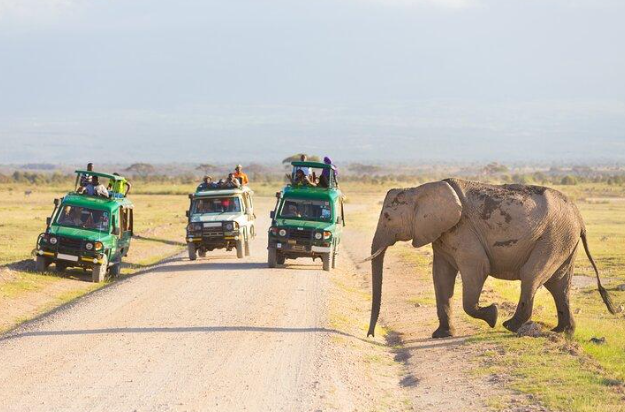
Elephants are one of Tarangire's signature attractions.
Families may be seen crossing roads, feeding beneath baobab trees, drinking near the river or moving through woodland. During favorable conditions, visitors can sometimes spend considerable time quietly observing the interaction between adults, juveniles and calves.
TANAPA highlights Tarangire as one of Tanzania's major elephant destinations and notes the strong concentration of wildlife around the park's water sources during the dry season.
For photographers, an elephant standing beside a huge baobab is one of Tarangire's classic safari scenes.
Tarangire's landscapes are dramatically different from the endless grasslands normally associated with parts of the Serengeti.
Massive baobabs rise above grassland and woodland, producing some of the most recognizable scenery in Tanzania's northern safari circuit.
These trees also play an ecological role. TANAPA's park literature explains that baobabs can provide habitat and shelter for insects, birds and small mammals.
The river gives the national park its name and plays an important role in the ecosystem.
As surrounding areas become drier, animals increasingly rely on permanent and seasonal water sources. This can concentrate wildlife in relatively small areas and create productive game viewing.
Wildlife regularly associated with the ecosystem includes elephants, zebras, wildebeest, buffalo, giraffes and various antelope species. Predators including lions and leopards also occur in the park.
Every game drive is different, and wildlife sightings can never be guaranteed. However, Tarangire supports an impressive variety of species.
Travelers may encounter:
Elephants – Tarangire's most famous residents.
Lions – Frequently searched for around plains, river systems and areas where prey concentrates.
Giraffes – Commonly associated with woodland and acacia landscapes.
Zebras and wildebeest – Their distribution changes according to water and grazing conditions.
Buffalo – Often found in herds, particularly around productive feeding and water areas.
Warthogs – Frequently spotted grazing or moving between bushes.
Hyenas – Important predators and scavengers within the ecosystem.
Leopards – Present but generally more difficult to locate than many large herbivores.
The Silale Swamp and Tarangire River loops can be particularly interesting for elephants, buffalo and birdlife.
A skilled guide constantly scans open plains, trees, riverbanks and termite mounds while also listening for alarm calls that may indicate nearby predators.
A guided Tarangire safari trip is not only about large mammals.
Tarangire is considered one of Tanzania's important birding areas, and TANAPA lists more than 550 bird species associated with the park.
Possible sightings include ostriches, kori bustards, lovebirds, bee-eaters and various birds of prey.
Bird-focused travelers benefit considerably from a knowledgeable guide because many species are easier to locate by sound than by sight.
Even visitors who arrive with little interest in birding often find themselves appreciating Tarangire's colorful birdlife by the end of their safari.
Tarangire can be visited throughout the year, but the experience changes significantly between seasons.
June through October is one of the most popular periods for wildlife viewing.
As water becomes scarce outside the park's main water sources, animals increasingly gather around the Tarangire River, swamps and remaining pools.
TANAPA describes this period as particularly important for wildlife concentrations.
Travelers visiting during these months may experience:
Advance accommodation reservations are advisable during the peak dry-season period.
The short rains can transform the landscape.
Fresh vegetation begins appearing, and the park can become greener and particularly attractive for photography.
Wildlife may spread over a larger area when more water becomes available, meaning your guide's local knowledge becomes valuable.
January and February can provide another appealing period between the main rainy seasons.
TANAPA's climate information identifies January and February as relatively dry months within Tarangire's rainfall cycle.
The longer rains generally occur between March and May.
The landscape becomes lush, birdlife can be rewarding and visitor numbers may be lower than during the peak dry season.
Some tracks can become muddy, making a capable 4x4 particularly important. TANAPA recommends four-wheel-drive vehicles during wetter conditions.
A typical game drive begins after entering the park with your professional guide in a safari vehicle.
Most Tanzania safari vehicles are designed for wildlife viewing, often using a raised or pop-up roof that allows guests to observe and photograph animals comfortably.
Your guide may explore areas around:
Rather than rushing from animal to animal, a good guided safari allows time to observe behaviour.
You may watch elephants interacting beside the river, giraffes browsing among acacias or lions resting in the shade.
This slower approach can make the safari much more memorable.
Tarangire is accessible from Arusha and is therefore suitable for travelers who have only one free safari day.
TANAPA's current visitor information estimates the road journey from Arusha at roughly 2.5–3 hours, depending on conditions and exact starting point.
A typical day trip might follow this pattern:
Early morning: Depart from Arusha.
Morning: Arrive at Tarangire National Park and begin the first game drive.
Midday: Stop for lunch at an appropriate picnic or designated area.
Afternoon: Continue wildlife viewing through another section of the park.
Late afternoon: Leave Tarangire and return toward Arusha.
A day trip provides an excellent introduction, although spending at least one night in or near Tarangire allows travelers to enjoy the destination at a more relaxed pace.
Travelers with more time can stay overnight.
A two-day itinerary gives your guide greater flexibility to explore different areas and revisit productive locations.
Travel from Arusha to Tarangire and spend much of the day game driving.
Look for elephants, giraffes, zebras, wildebeest and predators while exploring river valleys and baobab landscapes.
Stay overnight at a lodge, tented camp or campsite depending on your safari style.
Start early when temperatures are cooler and wildlife may be particularly active.
Continue exploring before leaving Tarangire for Arusha, Karatu, Lake Manyara or your next northern Tanzania destination.
Tarangire fits naturally into Tanzania's famous Northern Safari Circuit.
The Tanzania Tourism Board highlights Tarangire together with Ngorongoro and Serengeti as part of northern Tanzania's signature safari route.
A multi-day journey could include:
Tarangire National Park
Elephants, baobabs and beautiful river landscapes.
Ngorongoro Crater
A compact wildlife-viewing destination inside one of Tanzania's best-known conservation landscapes.
Serengeti National Park
Vast plains, predators and seasonal wildlife movements.
Lake Manyara National Park
A contrasting landscape of forest, lake environments and escarpment scenery.
This combination allows travelers to experience several ecosystems rather than repeating the same environment each day.
Travelers can choose between several accommodation styles.
Camping is suited to travelers seeking a closer connection to the natural environment and a more budget-conscious safari.
Safari tented camps combine the atmosphere of sleeping in the bush with more comfortable facilities.
Depending on the camp category, tents may have private bathrooms, proper beds and dining areas.
Lodges generally provide permanent buildings, restaurants, private rooms and additional facilities.
TANAPA notes that accommodation around Tarangire includes public and special campsites as well as lodges and tented camps inside and around the park.
Your choice should depend on your budget, comfort expectations and the amount of time you want to spend inside the ecosystem.
Tarangire offers more than traditional vehicle-based game viewing.
TANAPA currently lists experiences including guided walking safaris, photographic safaris, bush meals, river and swamp loops, and optional balloon safaris.
Walking activities require authorized supervision and must follow park regulations.
These experiences can complement regular game drives, especially for travelers spending multiple nights in the area.
For a comfortable guided Tarangire safari trip, consider packing:
TANAPA specifically recommends neutral-colored clothing, drinking water, sun protection and insect repellent when exploring Tarangire.
Avoid overly bright clothing when possible, and follow your guide's advice regarding wildlife safety.
Tarangire can be exceptional for wildlife photography.
The combination of elephants and giant baobabs creates natural compositions that are difficult to reproduce elsewhere.
For better photographs:
Use morning and late-afternoon light when possible.
Give animals space rather than trying to approach too closely.
Include landscapes instead of photographing only close-up wildlife.
Use baobabs to frame elephants and other subjects.
Keep your camera ready because animal interactions can happen quickly.
A telephoto lens is useful for wildlife, while a wider lens can capture elephants beneath baobabs and the scale of Tarangire's landscapes.
Yes. Tarangire can work very well for families, particularly because travelers may encounter several wildlife species within a relatively compact safari experience.
Children often enjoy observing elephants because their social behaviour is easy to follow.
A private guided safari can provide additional flexibility for families because stops, lunch timing and the pace of the game drive can be adapted more easily.
Families with young children should discuss driving times and accommodation arrangements before confirming the itinerary.
Both can work well.
A shared safari is useful for travelers looking to reduce costs while meeting other travelers.
A private safari provides greater flexibility because the vehicle and guide are dedicated to your party.
Private trips are especially attractive for photographers, honeymoon couples, families and travelers who want to spend longer at particular sightings.
Neither approach is automatically better—the right choice depends on budget, travel style and desired flexibility.
Travelers sometimes focus entirely on Serengeti and Ngorongoro, but Tarangire offers a different atmosphere.
Its combination of elephants, enormous baobabs, seasonal wetlands, riverine environments and excellent birdlife gives the park its own identity.
For travelers who want variety, including Tarangire alongside Serengeti and Ngorongoro creates a much broader picture of Tanzania's northern ecosystems.
A guided Tarangire safari trip offers much more than simply checking animals off a list. It is an opportunity to watch elephant families move beneath giant baobabs, explore the Tarangire River ecosystem, photograph Tanzania's distinctive landscapes and learn how wildlife survives in one of East Africa's fascinating seasonal environments.
Whether you choose a one-day safari from Arusha, an overnight Tarangire experience or a longer journey combining Tarangire with Serengeti and Ngorongoro, planning the route with an experienced local team can help you make better use of your safari time.
Kilipath African Safaris can arrange private or shared Tanzania safari itineraries, professional guides, 4x4 safari transportation, accommodation and customized Northern Circuit combinations.
Ready to explore Tarangire? Contact Kilipath African Safaris and start planning your guided Tarangire safari trip in Tanzania.
Planning a budget Ngorongoro Crater safari holiday from Arusha? Compare a crater day trip, a two-day Tarangire and Ngorongoro safari, or a…
Read articleA Lake Manyara safari can cost USD 150–220 per person for a shared day trip from Arusha. A published example of a…
Read articleA Tanzania safari from Zanzibar can mean a short mainland trip during your beach holiday or a complete package with flights, game…
Read articleLooking for a group Tanzania safari price from Kilipath African Safaris? A published example for our four-day shared camping safari through Tarangire,…
Read article

